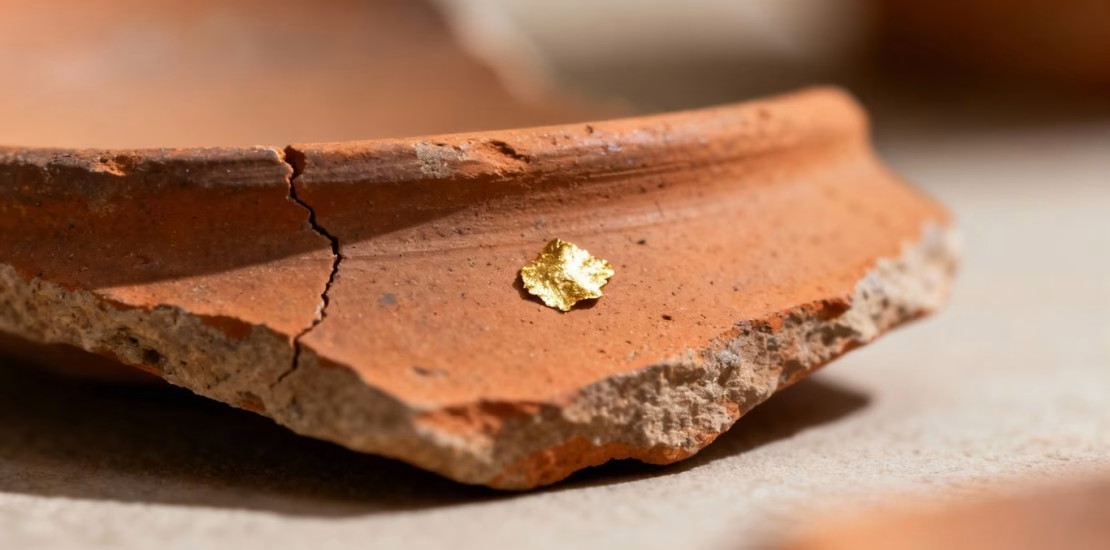
Do you own a piece of jewelry or an object that appears to be gold and you want to know if it's genuine? There are several ways to check, and one of them uses a simple ceramic plate. It's a fairly common method, but you need to know how to do it properly to avoid damaging your item. In this article, we'll explain the ceramic test for gold in detail: an explanation and a simple technique to help you determine its authenticity.
Key Takeaways
- The test for unglazed ceramics involves rubbing a gold object on an unglazed ceramic surface. A yellow or gold mark indicates that the object is probably gold.
- If a black scratch appears on the ceramic, it means that the object is not gold, but potentially another metal.
- Warning: This test may leave a slight mark on your gold item, so use it with caution, especially on valuable coins or antique jewelry.
Understanding the ceramic test for gold
Do you have an object that might be gold and you're wondering how to verify its authenticity without consulting an expert? There are simple methods you can try at home. One of them uses an unglazed ceramic surface. It's a fairly well-known technique, but you need to know how to use it properly to avoid damaging your item.
Identifying the authenticity of your gold items
When we think of gold, we often picture sparkling jewelry, antique coins, or ingots. But how can you be sure that what you're holding is real gold? There are several tricks, and the ceramic method is particularly interesting because it doesn't require sophisticated equipment. The idea is to rely on the physical properties of gold, especially its hardness and its reaction with other materials.
The test of unglazed ceramic
This test is quite straightforward. It involves rubbing your object on a ceramic surface that doesn't have a glossy glaze, such as the underside of a cup or plate. Here's how to do it:
- Find a suitable surface: Find a piece of unglazed ceramic. The underside of a plate or an unglazed tile will do. Make sure it's clean.
- Rub gently: Take your gold object and rub it firmly but gently on the ceramic surface. It's best to test on an inconspicuous area of the object first to minimize the risk of scratching.
- Observe the track: Look at the color of the mark left on the ceramic. If the mark is yellow or gold, it's a good indicator that your object is gold. If the mark is black or gray, there's a good chance it's not pure gold, but perhaps a plating or another metal.
Caution: This test may leave a slight mark on your item, especially if it is plated or made of a very soft alloy. Proceed with care, particularly if the item has significant sentimental or historical value.
The characteristics of gold and methods of identification
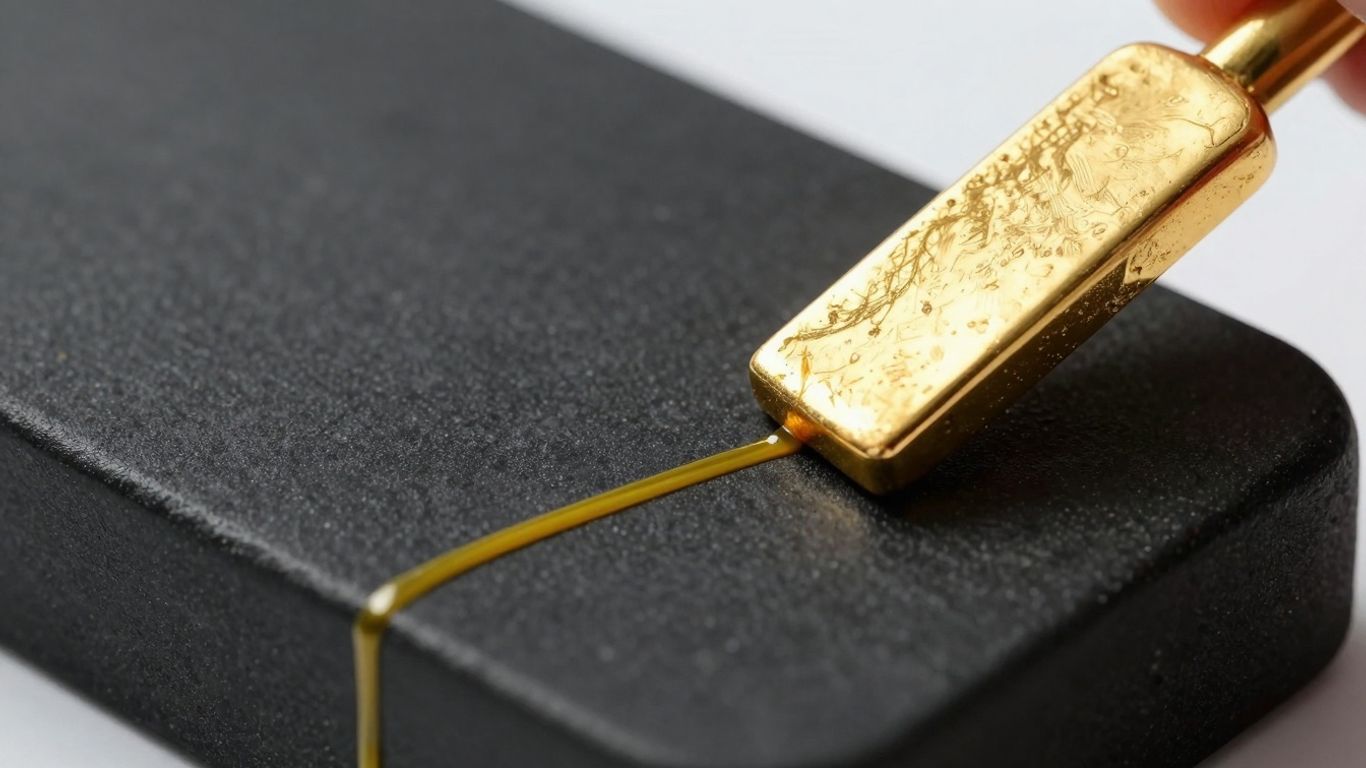
Gold, this yellow metal that has shone for millennia, has always fascinated us. But what makes it so special, and how can you be sure that what you have in your hands is genuine gold? Understanding its physical properties is a first step to better appreciating it and identifying its purity.
Physical properties of gold
Pure gold, also known as 24-karat gold, is a fairly soft metal. Its malleability is incredible: theoretically, it could be hammered into a sheet ten times thinner than a sheet of paper. Its ductility is also remarkable, allowing it to be drawn into very fine wires. These qualities, while impressive, make it impractical for making objects that need to withstand everyday wear and tear. This is why it is often alloyed with other metals to make it stronger.
Here are some key properties of gold:
- Malleability : Ability to be deformed without breaking. This is what allows it to be easily worked.
- Ductility : Ability to be drawn into very thin wires. Useful for certain applications, such as in electronics.
- Conductivity Gold conducts heat and electricity very well. That's why it's found in some electronic devices, often in the form of thin layers.
- Corrosion resistance It does not rust or tarnish easily, unlike many other metals. This is one of its great qualities that explains its longevity.
Pure gold is a precious metal, but its softness makes it vulnerable to scratches and deformation. For jewelry and other everyday objects, alloys are therefore used, where gold is mixed with other metals to improve its durability while preserving its color and value.
Other identification methods
Beyond ceramics, other methods can help you verify the authenticity of your gold items. For example, you can use a magnet. Gold is not magnetic, so if your item is attracted to a strong magnet, it is not pure gold. However, be aware that some fake jewelry uses metals that are also not magnetic, so this test alone is not foolproof. It should always be combined with other checks.
Here are some simple tests you can do:
- The Magnet Test As mentioned, gold is not magnetic. If your item is attracted to a magnet, there's a good chance it's not solid gold. However, some non-magnetic metals can be used to create counterfeit goods.
- The bite test An old method, often seen in movies. Pure gold is soft and should leave a slight indentation if you gently bite into it. Be careful, this test can damage your items, so use it cautiously on an inconspicuous area.
- Observation of the hallmarks Gold items often bear hallmarks indicating their purity (for example, 750 for 18 karat, or 999 for 24 karat). Look for these marks, which are often small and discreet, using a magnifying glass if necessary. Gold-plated jewelry sometimes has different markings, such as "gold plated" or the names of specific manufacturers.
- The sound test If you have a gold coin that you are certain is genuine, you can compare the sound it makes by ringing your suspect item against it. Pure gold has a distinctive sound, often described as a bell. A dull or different sound may indicate forgery.
Gold, this precious metal, possesses unique characteristics that make it easy to recognize. Its bright yellow color and malleability are clues. But to be sure, there are simple methods to verify its authenticity. Want to learn more about how? identify gold Discover our tips on our website!
In conclusion: is your gold really gold?
There you have it, now you know how to use that famous ceramic plate to get an idea of the authenticity of your gold items. It's a fairly simple trick, accessible to everyone, that can save you from many surprises. Remember, however, that this test isn't foolproof and can leave a small mark. If you have the slightest doubt, or if the item in question is very valuable, it's best to consult a professional. They have the tools and expertise to give you a definitive answer. Keep that in mind: it's better to be sure of what you own, especially when it comes to gold!
Frequently Asked Questions
How can I tell if my jewelry is really gold using the ceramic test?
To perform this test, you need a ceramic surface that isn't glazed, like the underside of a plate. Gently rub your jewelry on it. If a black mark appears, it's not gold. However, if you see a yellow or gold mark, that's a good sign—your jewelry is probably gold!
Can this ceramic test damage my gold jewelry?
Yes, there is a slight risk. Rubbing can leave a light scratch on your jewelry, especially if it's made of very pure gold. That's why you have to do it very carefully, on an inconspicuous area, and without pressing too hard.
What is unglazed ceramic and where can I find it?
Unglazed ceramic is simply a ceramic surface without a glossy glaze, like the underside of a cup or plate that isn't decorated. You can also find unglazed ceramic tiles in DIY stores.