

Ever wonder how the price of gold is determined every day? It's a fascinating process that has evolved over time. Gold fixing is a bit like a global auction for the precious metal. We'll explore how it works, who participates, and why it's so important to the market. Get ready to go behind the scenes of how the price of gold is set.
Key Takeaways
- Gold fixing is a procedure that establishes a daily reference price for the yellow metal by comparing supply and demand.
- The London Bullion Market Association (LBMA) plays a central role as the benchmark body for the physical gold market.
- The London fixing traditionally takes place twice a day, at 10:30 and 15:00 GMT, marking key moments for global transactions.
- Historically, the process was less transparent, but it has been modernized to become more electronic and regulated, partly following concerns about possible manipulation.
- The price of gold is influenced by a variety of factors, including demand from jewelers and investors, central bank actions, and its status as a safe haven in times of uncertainty.
What is the gold fixing?
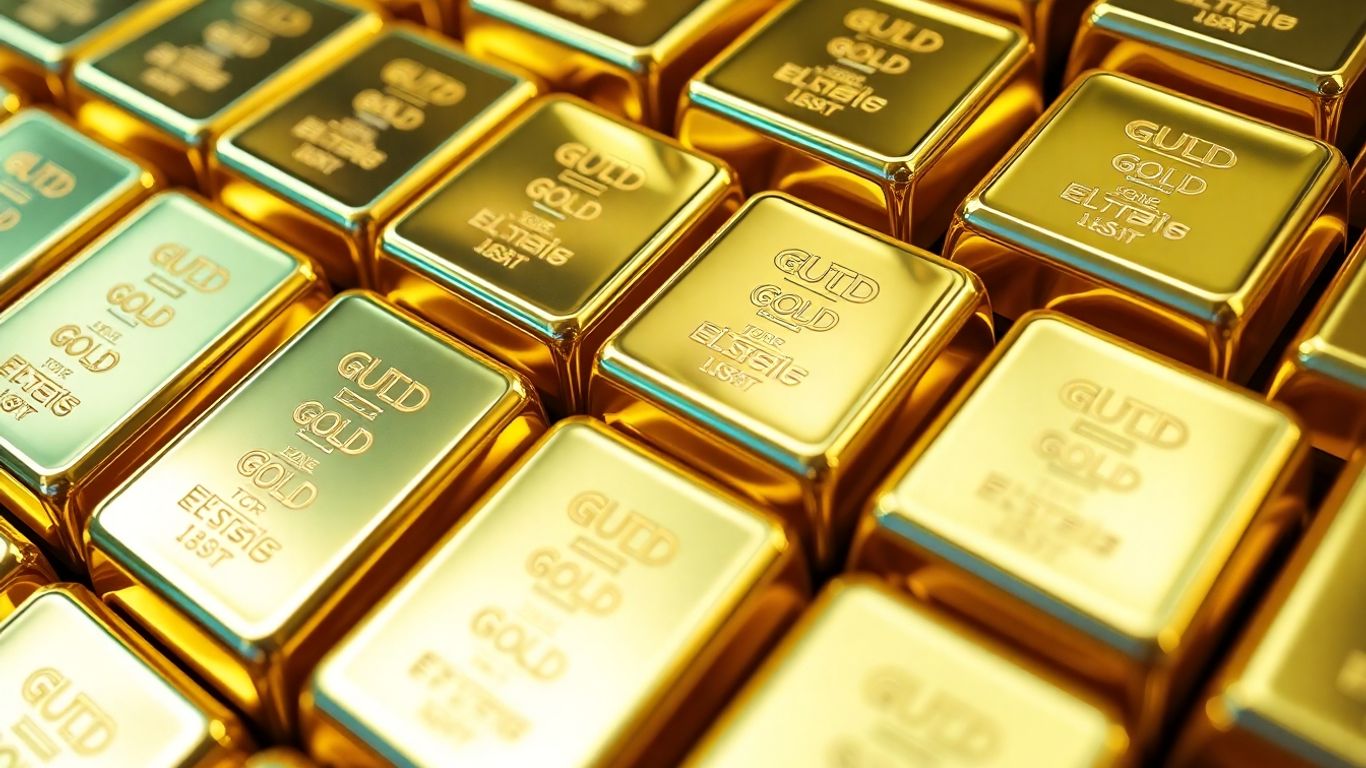
You may be wondering what exactly a gold fixing is, a term often heard in the world of finance and investment. Simply put, it's a process that determines a reference price for gold twice a day. It's not a price that changes every second, as you might see in real-time markets, but rather an official quotation that serves as the basis for many important transactions.
Imagine: before, this process took place quite discreetly, over the phone, between a few large banks. It was a bit like a private club where the decision was made on the gold priceBut over time, things have evolved towards more transparency and security.
Gold fixing is essentially a method for establishing a daily price for the yellow metal. The principle is quite straightforward: you compare supply (how much gold people want to sell) and demand (how much gold people want to buy) at a given time. The price at which these two forces balance is the fixing price. It's a bit like a silent auction that takes place twice a day.
This fixed price then serves as a reference for many transactions, particularly those of high value, for example, over 50,000 euros. It offers a certain stability compared to the constant fluctuations of the market in real time, which is appreciated for large volumes.
The LBMA, or London Bullion Market Association, plays a central role in this entire process. It is an association that brings together major players in the precious metals market. It established the current gold pricing system, which succeeded the old one.
The process of determining the price of gold
You might be wondering how the price of gold is actually set every day. It's not just a matter of guesswork; there's a whole system behind it. Basically, it's all about those who want to sell gold versus those who want to buy it. It's a bit like a big auction, but on a global scale and for a precious metal.
Confrontation of supply and demand
The basic principle for setting the price of gold is quite simple: it involves matching supply and demand. Imagine a room where buyers and sellers meet. If more people want to buy than sell, the price rises. Conversely, if there are more sellers, the price falls. The goal of fixing is to find the price at which the maximum number of transactions can take place, that is, where supply and demand balance. If more gold is offered than demanded, the price is lowered to encourage buying and reduce supply. If, on the other hand, there is more gold demanded than offered, the price is revised upwards to increase supply and reduce demand. This process therefore follows a 'trial and error' at the end of which supply and demand reach a balance: the price of gold can then be established worldwide for the day.
The role of banks and market players
This process is primarily conducted by major banks and key players in the precious metals market. They represent both sellers (sometimes central banks adjusting their reserves) and buyers (investors, jewelers, manufacturers). The LBMA (London Bullion Market Association) plays a central role in organizing these meetings, whether in person or, more recently, electronically. These institutions are members of the LBMA, which brings together companies from many countries, all committed to maintaining high standards in the trading of physical precious metals.
The evolution towards an electronic system
Historically, the fixing process was conducted at physical meetings. However, the market is evolving. The move to an electronic system was an important step, particularly to increase transparency. This change was partly motivated by concerns about price manipulation, following fines imposed on some banks for their involvement in questionable practices. The new electronic system, administered by the LBMA, aims to make the process more open and less prone to manipulation by relying on algorithms to find the equilibrium price.
The gold market, while brilliant, has its dark corners and its little hassles. Understanding how it works is a bit like learning to navigate a maze, but with shiny coins! There are times when everything is clear, and others when you have to be a little more attentive.
The price of gold is therefore determined by a supply and demand mechanism, where major market players, coordinated by institutions such as the LBMA, seek to find an equilibrium price. The move towards electronic systems aims to increase the transparency of this process, which is essential for the gold prices on international markets.
The historical and current importance of the fixing
Gold fixing is an old story, really. It's been around for a long time, and it's evolved quite a bit. Before, it was a bit like a club of banks deciding the price, the old-fashioned way, by telephone. Imagine this: a small group agreeing on the price of gold for the whole world. That was the London Gold Fixing, and it lasted almost 100 years, from 1919 to 2015.
The legacy of London Gold Fixing
This system, the London Gold Fixing, really left its mark on the market. For decades, it was THE benchmark. The participating banks, like Barclays or Société Générale, met twice a day, in the morning and in the afternoon, to set a price. This price was based on what these banks themselves wanted to buy or sell. If there were more people wanting to sell than buyers, the price fell, and vice versa. It was supposed to reflect supply and demand, but over time, it raised questions.
- Fixed twice a day : 10:30 a.m. and 15:00 p.m. London time.
- Determined by banks : a small group of large banks.
- Based on participant orders : the price was adjusted according to their proposals.
It is said that this system, although historic, lacked a bit of transparency. Criticism focused on the fact that this small circle of banks could potentially influence the price, especially when considering financial products that track the price of gold.
The transition to the LBMA Gold Price
Faced with these criticisms and a need for modernity, the system changed in 2015. Out with the telephone, hello to the electronic system! The LBMA (London Bullion Market Association) took over with the LBMA Gold Price. The idea was to make everything more open and more transparent. The process is now managed by electronic auctions, in which many stakeholders can participate. This allows for a better comparison of real market supply and demand.
Fixing as a global reference
Despite the changes, the principle of setting a reference price twice a day remains extremely important. Whether it's the old fixing or the new LBMA Gold Price, this price serves as the basis for many transactions around the world. Central banks, major investors, jewelers—everyone looks at this price to determine how to value gold. It's a bit like the thermometer of the physical gold market, and it helps stabilize trade, especially for large quantities. That's why, even though the approach has evolved, the idea of this reference price is still there and firmly anchored in the global financial landscape.
Factors influencing the price of gold
The price of gold, you know, is a bit like the weather: it changes all the time and a lot of things play a role. You can't just say 'it costs this much' and that's it. It's a mix of a lot of things that make the price go up or down. It's not just a question of how much you can find, but also who wants it and why.
Demand from jewelers and investors
When we talk about demand, there are two big chunks: people who make jewelry and those who want to invest their money. Jewelers, especially in countries like India or China, want a lot of it. If people there buy more jewelry, it drives up the price of gold everywhere. It's the same for investors. If the stock market is scary or the economy is doing badly, many people say to themselves, 'Hey, I'll buy gold, it's safer.' That's what we call a safe haven. When there's uncertainty, gold becomes more attractive, and therefore its price increases. It's pretty logical, right?
The impact of central banks and monetary reserves
Central banks, you know, the ones that manage countries' money, also have a role. They keep large quantities of gold, a bit like insurance. If a central bank decides to sell some of its reserves, it puts more gold on the market, and that can lower the price. Conversely, if they buy it, it can support the price. It's a bit like if a big buyer entered the market, it changes the situation. Gold is also a bit of a barometer of global economic health. When central banks accumulate it, it can show a certain caution about the future.
Gold as a safe haven in times of uncertainty
This is perhaps the most well-known point: gold is a safe haven. What does that mean? It means that when things are going wrong around them—economic crises, wars, political instability—people tend to turn to gold. Why? Because gold doesn't lose its value like a currency that can collapse. It's survived the centuries; it's still there. So, if you hear about major economic problems, expect the price of gold to rise. It's a bit of a safety reflex when the world gets a little chaotic. That's why many investors keep it in their portfolio, to balance things out when other investments are too risky.
Market changes and transparency
The world of gold fixing, like many financial markets, has not remained static. It has undergone significant changes, particularly to address criticisms of its opacity and the risk of manipulation. You may be wondering how we got to this point and what has changed.
Past criticism of the system's opacity
Historically, the fixing process, while serving as a benchmark, lacked transparency. Decisions were made by a select group of banks, and transaction details were not always publicly available. This raised questions about the fairness of the system and opened the door to suspicions of collusion or price manipulation. Imagine: a price that influences billions, but whose exact formation remains rather unclear to the average person. Not ideal, is it?
Scandals and the need for regulation
These doubts were not unfounded. Investigations and sanctions revealed that some banks were involved in gold price manipulation. These cases highlighted the system's vulnerability and necessitated stricter regulation. It's a bit like discovering that the rules of a game aren't being fully respected, forcing a rethink of the game itself.
Improvements to the fixing process
In response to these challenges, major changes were introduced. The move to an electronic system, administered by the LBMA (London Bullion Market Association), marked a significant milestone. This new system aims to increase transparency by broadcasting buy and sell orders in real time and anonymously. The goal is clear: to make the process fairer and more reliable for all market participants. Gold fixing has thus moved from a sometimes opaque procedure to a more open electronic mechanism.
Here are some of the key improvements:
- Introduction of an electronic platform: Managed by an independent stock market operator, it centralizes transactions.
- Extended participation: New banks have been admitted, diversifying the players involved.
- Stricter rules: The LBMA has put in place a more rigorous regulatory framework to prevent abuse.
- Regulated reference price: The price set by the LBMA is now a regulated price, which strengthens its credibility.
The gold fixing and financial markets
The gold fixing, while a price-determining process, is intimately linked to the financial markets as a whole. It is not an isolated island, but rather a benchmark that influences and is influenced by a multitude of other instruments and currencies. Understanding these connections helps you better understand the overall dynamics of the gold market.
The influence of the US dollar exchange rate
The US dollar plays a major role in determining the price of gold. Historically, and still today, the price of gold is quoted in US dollars on international markets. This means that when the dollar weakens against other major currencies, gold generally becomes cheaper for holders of those other currencies. Conversely, a strong dollar makes gold more expensive for them. This relationship may seem simple, but it has important implications. For example, if you are in Europe and the euro strengthens against the dollar, the price of gold in euros could fall, even if the price in dollars remains stable. It's a bit like buying an imported product; its price in your local currency depends not only on the price of the product itself, but also on the exchange rate.
Gold in international transactions
Gold is a globally traded commodity, and its reference price, established at the fixing, serves as the basis for countless transactions. Think of it as a wholesale price for gold. Central banks, major financial institutions, commercial banks, and dealers use this price for their own operations, whether to adjust their reserves, for hedging transactions, or for investments. The London fixing, in particular, is a key moment when much of this international trading is coordinated. It's a bit like the whistle that starts or ends an important trading period for many players.
The relationship between fixing and derivatives
The gold fixing has a direct connection with the world of derivatives, such as futures and options. These financial instruments allow investors to speculate on the future price of gold or hedge against price fluctuations. The price set at the London fixing often serves as a reference point for valuing these contracts. For example, a gold futures contract might be settled based on the fixing price on a given date. This creates an interdependence: the fixing influences derivatives, but the demand and supply generated by these derivatives can also, in turn, influence the price of physical gold and therefore the fixing itself. It's a kind of feedback loop where the reference price and the instruments derived from it feed off each other.
The price of gold can fluctuate a lot, much like the prices of things we buy and sell. It's important to know how it works to manage your money well. Want to learn more about how gold influences the markets? Come discover on our website how to buy or sell gold easily. Learn more aboutgold purchase.
So what can we learn from this?
So, now you know how the gold fixing works. It's a bit like a big auction that takes place twice a day in London, and which sets a reference price. This price is the result of all the people who want to buy gold and those who want to sell it. It's a system that has evolved, especially to be more transparent, and it's the LBMA that plays a central role in all of this. Gold is truly a unique metal, a safe bet when times are uncertain. I hope all this has enlightened you and that you have a clearer view of this famous fixing!
Frequently Asked Questions
What is the gold fixing?
The gold fixing is a bit like a big auction that takes place twice a day in London. Buyers and sellers agree on a price for gold. Imagine you want to sell your toys: you say how many you want, and if others want to buy them at that price, the sale goes through. For gold, it's big banks and companies that do this. The price changes until everyone agrees on a price that suits the majority.
Who decides the price of gold?
These meetings are attended by major banks and gold companies. They meet twice a day in London to exchange offers to buy and sell. If more people want to buy than sell, the price rises. If more people want to sell, the price falls. It is by finding a balance between all these exchanges that the final price is decided.
Why is gold called a 'safe haven'?
They say gold is a 'safe haven' because, even when the economy is bad or there are problems in the world, gold often retains its value. It's as if, in a storm, your little gold boat is safer than other things that could sink. People buy gold when they're afraid for their money, to give themselves peace of mind.
When does gold price fixing take place?
The price of gold is set twice a day in London. The first time is in the morning, around 10:30 a.m., and the second time is in the afternoon, around 3:00 p.m. It is at these times that the price is officially decided for the day, taking into account all the bids and offers.
What is the LBMA and why is it important?
The LBMA is like the gold and silver professionals' club in London. It's very important because it sets the benchmark price for gold for the entire world. It also ensures that gold bars are of good quality, like a kind of quality seal. If a bar is approved by the LBMA, we know it's pure and well-made.
Does the price of gold change all the time?
Yes, the price of gold can change quite often. There's a price fixed twice a day, but outside of these times, it can also vary a little all the time. It's a bit like the price of fruit at the market; it depends on many things like the weather (for fruit) or the global economy (for gold).
