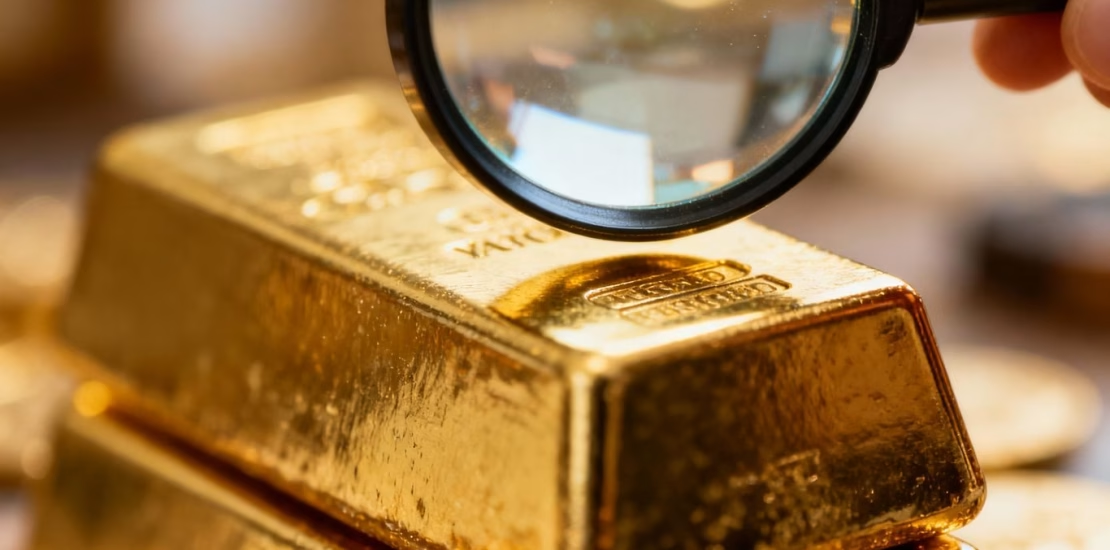
Are you wondering what documents you need to have with you when you want to have gold certified? It's a perfectly normal question, especially if you want to be sure you don't forget anything. Whether it's a family heirloom or a gold bar you bought, having the right documents is a guarantee that everything will go smoothly. Let's look at what you need to gather to ensure your gold certification is done under the best possible conditions.
Key Takeaways
- To have your gold certified, you will need proof of purchase to prove that it is yours, your identity document for the formalities, and an old certificate if you have one, as it helps with traceability.
- Certificates vary depending on the type of gold: an antique piece of jewelry will have details about the stones and design, while a gold ingot will mainly be described by its purity and serial number.
- There are several ways to obtain certification: you can go to specialized laboratories for a very precise analysis, contact jewelers who know the subject well, or consult numismatic experts for rare pieces.
- The certification process begins with the preparation of your gold item. Next, an expert conducts analyses to determine its exact characteristics before issuing the certificate.
- Having a certificate for your gold is a real plus for buyer confidence and resale value. Remember to keep it safe, as its validity can be important.
Understanding the essential documents for gold certification
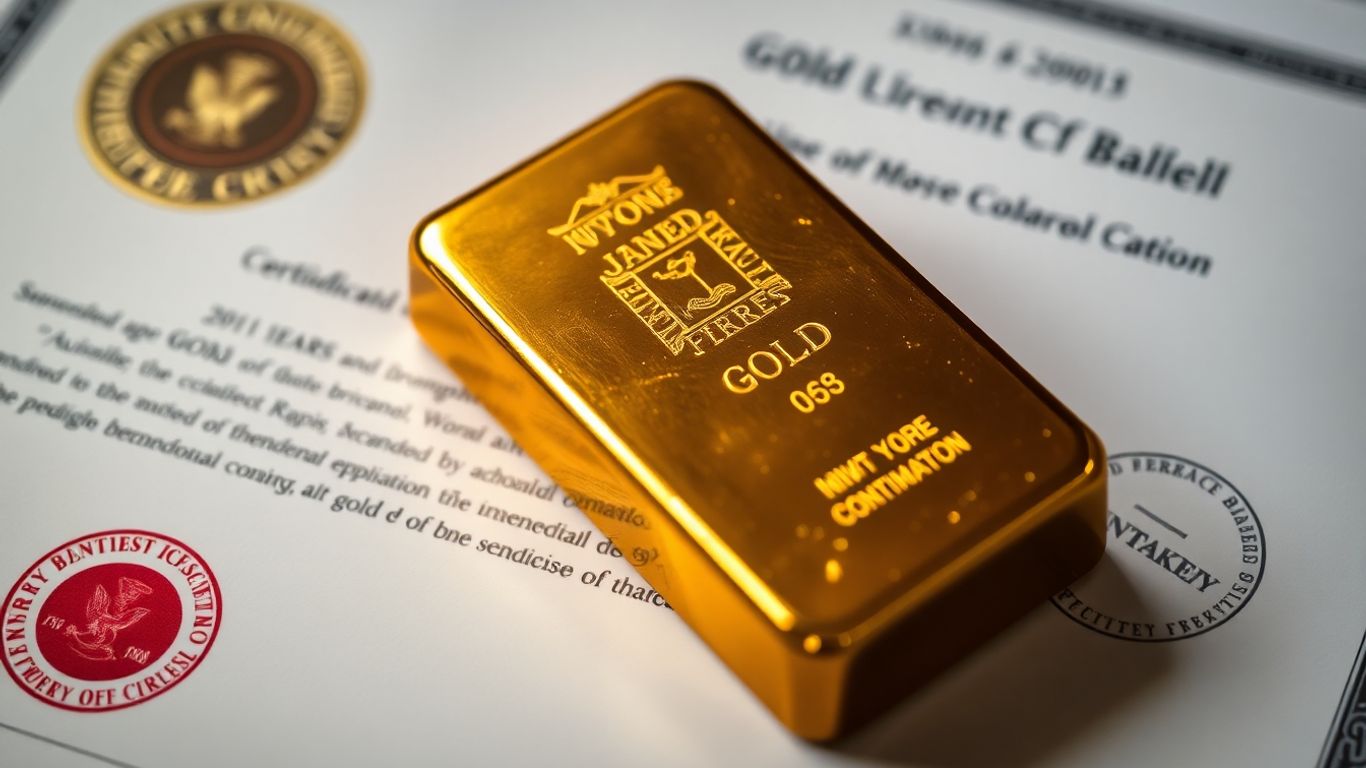
So, you've decided to have your gold certified—that's an excellent step! But before you start the analyses and appraisals, you need to make sure you have the right documents on hand. It's a bit like preparing a loan application; everything needs to be in order for it to go smoothly. Here's what you'll need to gather:
Proof of purchase: irrefutable proof of ownership
This document is like an identity card for your gold item. It serves to prove that you are indeed the rightful owner of the item you wish to have certified. Without this proof, it can be difficult to prove that the gold truly belongs to you. It could be the original invoice, a sales receipt, or any other document attesting to the purchase. If you happen to have lost this document, don't panic! Try to find a bank statement showing the transaction, or any other document that could serve as proof. It's better to have something than nothing at all.
The owner's identity: an essential security formality
For security reasons and to prevent fraud, it is essential to present a valid form of identification. This can be your national identity card, passport, or even your driver's license. The important thing is that the document includes your full name, a recent photograph, and your signature. This is a necessary formality for the expert to verify that the person requesting certification is indeed who they claim to be. It's a protective measure for everyone involved.
The old certificate: an asset for traceability
If you have a certificate for this gold in the past, presenting it can be extremely helpful. It provides additional information about the history of your item and makes it easier for the expert to confirm its authenticity and purity. It's a bit like having a complete medical file for a patient; it saves time and allows for a more precise analysis.
Gathering these documents in advance will save you valuable time and greatly simplify the certification process. Think of it as a preparatory step that ensures a smooth process.
The specific characteristics of certificates according to the type of gold
When discussing gold certification, it's important to understand that not all documents are identical. The type of gold you own—whether it's jewelry, a bar, or even an antique coin—will influence the details included on the certificate.
Key information of a gold bullion certificate
For gold bars, the certificate is generally quite straightforward. Its main purpose is to confirm the value of the gold as an investment asset. You will therefore find precise information such as the exact weight of the bar, often expressed in grams or ounces. Purity is also a key element, generally very high for bars intended for international trade, often 99,99% pure gold (also known as 24-karat). The name of the smelter or refinery that produced the bar is also mentioned, guaranteeing that the product was manufactured according to rigorous standards. And of course, a unique serial number is included for traceability, sometimes accompanied by a security seal.
Specific details of an antique jewelry certificate
With jewelry, the certificate can be a bit more detailed. Beyond the weight and purity of the gold (for example, 18 karat, meaning 75% pure gold), it can describe other aspects. If your piece contains gemstones, the certificate can indicate their type, weight, and even quality (color, clarity, cut). It can also mention details about the design, any engravings, the maker's name, or even the date of creation. It's a bit like a complete identity card for your piece, particularly useful for collectors or if you want to sell a piece of jewelry with a story.
The reference standards for each certification
There are organizations that define the rules for these certificates, and they differ between jewelry and bullion. For gold bullion, the global benchmark is the LBMA (London Bullion Market Association). If a bullion bar is certified by an LBMA member, it means it meets very high quality and purity standards, making it easily tradable on international markets. For jewelry, it's a bit more varied. There isn't a single universal standard. Certificates can be issued by independent laboratories, gemological experts, or professional jewelers' associations. The standards may vary depending on the country or the type of certification sought.
Understanding these differences is important. A jewelry certificate gives you a detailed description of the item, while a bullion certificate confirms its value as a standardized investment asset. Both are important, but for different reasons.
Here is a table summarizing the key information generally found on certificates according to the type of gold:
| Object type | Key information about the certificate |
|---|---|
| Ancient jewel | Purity (carats), Weight, Description (stones, engravings, manufacturer) |
| Gold bar | Purity (‰), Weight, Serial Number, Name of Smelter |
The different ways to obtain a gold certification
So, you own gold and are wondering how to obtain a certificate to prove its authenticity and value? That's an excellent idea, and fortunately, several options are available. The choice will depend somewhat on what you own (jewelry, ingot, coin) and the level of accuracy you require.
Use accredited laboratories for accurate analysis
For a thorough analysis and a certificate with real weight, specialized laboratories are often the best option. They have state-of-the-art equipment, such as spectrometers, capable of determining the exact composition of your gold with great precision. They can identify its purity (fineness) and the presence of other metals. The certificate issued by these laboratories is generally recognized internationally, which is a major advantage if you are planning to sell abroad or if you want maximum assurance.
- Advantage: Scientific precision, recognized certificate, ideal for ingots and high-value coins.
- Disadvantages: May be more expensive, sometimes requires travel.
- What they analyze: Purity (in ‰ or carats), exact weight, presence of other metals.
Accredited laboratories offer the highest level of reliability for certifying your gold. This is the best option if you are looking for scientific expertise and international recognition.
Consult specialized jewelers for a practical approach
Some jewelry stores, especially those that trade in gold or offer buyback services, can also help you obtain a certificate. This is often more convenient because you may already know the jeweler. They can perform tests on-site to verify the gold's purity. However, it's important to choose a reputable jeweler and ensure they use reliable analytical methods. A certificate issued by a jeweler may be less formal than a laboratory certificate, but it may be sufficient for jewelry or small quantities of gold.
- Ease : Often more accessible and faster.
- Cost : Generally cheaper than a laboratory.
- Boundaries : Less scientific precision means the certificate may be less internationally recognized.
Consult numismatic experts for collector coins
If your gold is in the form of antique or collectible coins, a numismatic expert will be your best ally. These specialists know not only the composition of metals, but also the history, rarity, and numismatic value of each coin. They can provide you with a detailed certificate that takes all these aspects into account, which is essential for collectors.
- Specialization: Ideal for old coins.
- Expertise: Assessment of historical and collectable value.
- Certification: Includes details about the coin, its year, its provenance and its rarity.
The gold certification process: steps and analysis
So, you've decided to have your gold certified—that's an excellent step! But before you start the analyses and appraisals, you need to make sure you have the right documents on hand. It's a bit like preparing a loan application; everything needs to be in order for it to go smoothly. Here's what you'll need to gather:
The meticulous preparation of the ingot or jewel
Before entrusting your treasure to an expert, it's important to prepare it properly. If you have jewelry, make sure it's clean, free of dust or dirt that could interfere with the analysis. For a gold bar, if it's still in its original sealed packaging, that's ideal. Do not break this seal yourself.Because it's proof of integrity. If you need to remove it for any reason, have a professional do it. It's a bit like keeping the box of a collectible intact; it adds to its value.
Key steps in expert analysis
Once your gold is in the expert's hands, several steps will take place. First, there will be a visual inspection. The expert will examine the hallmarks, any engravings, and the overall condition of the object. Next comes the analysis of its composition. Several methods can be used for this. The most common is X-ray fluorescence, which allows the proportion of different metals to be determined without damaging the gold. In some cases, a more advanced analysis, such as cupellation, may be necessary to obtain a very precise measurement of purity, especially for ingots intended for investment. The goal is to determine the fine gold content with certainty.
Understanding the detailed information in a certificate
Once the analysis is complete, the expert prepares a certificate. This document serves as your proof. It summarizes everything that was found: the exact purity of the gold (often expressed in carats for jewelry or in thousandths for ingots), its precise weight, and sometimes details about its origin or manufacturer. For an ingot, you will often find a serial number that corresponds to the one engraved on the ingot itself, as well as the name of the refiner. For jewelry, the description may be more detailed, including the presence of precious stones or particular stylistic elements. It's a bit like a birth certificate for your gold.
It is important to read and keep this certificate carefully. It will be your main selling point when reselling or transferring ownership. A clear and precise certificate strengthens the confidence and value of your gold item.
The importance of the certificate for the value and resale of gold
When you own gold, whether it's a family heirloom or an inherited ingot, you might wonder about its true value. That's where a certificate comes in. Think of it as your gold item's official ID card. It's not just a piece of paper; it's tangible proof of what you own.
How a certificate strengthens buyer confidence
Imagine you want to sell your gold. Without a certificate, a potential buyer might have doubts. They don't know the exact purity or weight of the gold. The certificate provides all this information. It specifies the gold content (for example, 18 carats or 750 parts per thousand) and its precise weight. For a gold bar, it also confirms its origin and authenticity. It's a bit like selling a work of art without knowing who the artist is or when it was painted. The certificate is the guarantee that provides reassurance and facilitates the transaction. Without a certificate, your gold is a bit like a book without a title or author: we know it's a book, but we don't really know what it's about or what its literary value is.
The impact of the certificate on the resale value of gold
If you're considering selling your gold, having a certificate is a major advantage. For a buyer, it provides security. They know they're buying something whose quality and authenticity have been verified by a professional. This avoids unpleasant surprises and builds trust. As a result, a certified item generally sells better and at a fairer price. Buyers are willing to pay a little more for this peace of mind. It's a built-in added value that can make a significant difference in a transaction, especially for antique coins or valuable jewelry.
The validity and conservation of your certificate of authenticity
Your gold certificate is an important document that proves the value of your asset. It's essential to know how to store it properly to ensure it remains valid for as long as possible. Think of it as a treasure: it must be protected!
- Sheltered storage: Keep it in a dry, dark place to prevent the paper from getting damaged or the ink from fading.
- Physical protection: Place it in a plastic sleeve or binder to protect it from tearing and soiling. If you have the purchase invoice, keep it with the certificate.
- Safe place: Store it with your other important documents, such as your bank papers or property deed. A home safe or a bank safe deposit box are good options.
It's important to remember that the certificate is a document that proves the origin and quality of your gold. Therefore, its proper preservation is essential to guarantee its future value. Although the certificate itself doesn't have an expiration date, periodic reappraisal by an expert can be helpful to obtain an up-to-date estimate of your gold's value, especially if the gold market has fluctuated significantly.
When you sell gold, having a a certificateIt's like having an ID card for your precious metal. This little piece of paper proves that your gold is genuine and of good quality. This makes your gold easier to sell and often increases its value. Think about it: a buyer will be more confident if they know exactly what they're buying. That's why this document is so important, especially if you want to resell your gold later. Want to know how to get this certificate or learn more about selling gold? Visit our website for all the information!
In summary, to properly certify your gold
So, now you know what you need to have on hand to get your gold certified. It might seem like a lot at first, but once you've gathered these few documents, everything becomes much simpler. Think of it like a little pre-trip preparation: you need to double-check that you have your passport and tickets. Having the right documents is truly the key to a smooth process and peace of mind. Remember, a certificate is proof of the quality and authenticity of your gold, and that's priceless.
Frequently Asked Questions
Why is it so important to have a certificate for my gold?
Having a certificate for your gold is like having an official ID card for your treasure. It proves that it's indeed gold, its purity (fineness), and its weight. When you want to sell it, it greatly reassures the buyer and can even increase the price. It's proof of quality and authenticity that makes things simpler and safer for everyone.
Where can I get my gold certified?
To have your gold certified, you have several options. You can go to specialized laboratories that have highly precise machines for analyzing gold. Alternatively, some jewelry stores that are knowledgeable about precious metals can also help you. If you have antique coins, a numismatic expert (a coin specialist) will be best placed to advise you.
What documents do I need to provide to have my gold certified?
To have your gold certified, you'll need some documents. The most important is proof of purchase, such as an invoice or receipt, which proves that the gold belongs to you. You'll also need to present a valid form of identification (ID card, passport). If you've already had a certificate for this gold before, showing it can also help.
How does gold certification work?
When you bring your gold in to be certified, the expert will first examine and prepare it. Then, they will use special tools to analyze its composition, that is, its purity and exact weight. Once they have all the information, they will write a certificate summarizing everything. It's a bit like a health check-up for your gold.
Is the certificate for a piece of jewelry the same as that for a gold ingot?
No, it's not exactly the same. For a piece of jewelry, the certificate can provide a wealth of details about the design, any gemstones set in it, in addition to the gold's quality. For a gold bar, the emphasis is primarily on its purity (often very high, such as 99.99%) and its weight. The reference standards are also slightly different.
How long is a certificate of authenticity valid?
Generally, a certificate of authenticity for gold doesn't expire. It's a bit like a birth certificate for your gold. However, if you plan to resell your gold later, especially if it's a gold bar, it's always best to have a recent certificate or have its value verified by an expert at the time of sale. For antique jewelry, the certificate helps prove its history and value, even if it's a bit old.