

Wondering what silver is used for? That's understandable, as this precious metal has a rich history and truly diverse applications that go far beyond jewelry. It's found in our daily lives, often without us even realizing it. Let's explore together why silver is so important, whether for your investments or for industry.
Key points
- Silver is a more accessible investment than gold, easy to resell and internationally recognized.
- It is essential in renewable energy, electronics, the medical sector and advanced technologies.
- Historically, silver has served as currency and a safe haven since ancient times.
- Its uses include jewelry, goldsmithing, medals, and chemistry.
- Its unique properties, such as its conductivity and antibacterial effects, make it valuable for industry and medicine.
Silver: an accessible and diversified investment
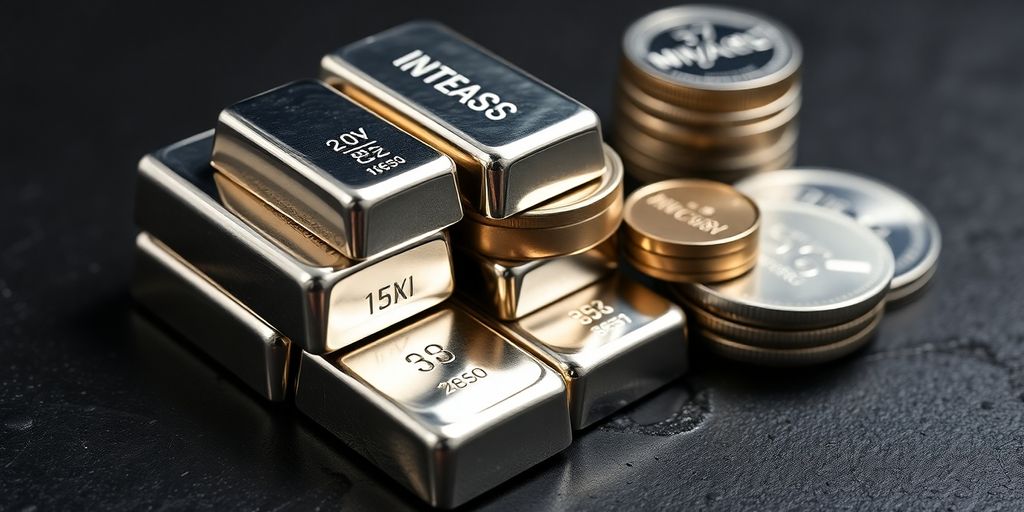
Silver is like gold's affordable cousin, and frankly, it has a lot going for it for investors. If you're looking to diversify your assets without committing all your savings, silver is a great option. It's much cheaper than gold, allowing you to buy more for the same amount of money. It's a bit like choosing between a small luxury car and a comfortable sedan: both get you places, but one is more affordable to start with.
And then, the silver market is quite liquid. This means that if you decide to resell it, you'll generally find a buyer quite easily, whether a professional or an individual. It's reassuring to know that your investment isn't tied up indefinitely. In addition, the silver you buy, whether in the form of bars or coins, is a standardized product. Bars, for example, are often certified by internationally recognized smelters, such as those accredited by the LBMA (London Bullion Market Association). This guarantees a certain quality and recognition around the world, a bit like a brand of trust.
Silver is a precious metal, yes, but it's also increasingly strategic for industry. This dual nature makes it particularly attractive for a long-term investment.
Here's why you might consider money:
- Cheaper than gold: You can acquire a larger amount of precious metal for a given budget.
- Resale made easy: Its liquidity on the secondary market is a major asset.
- Standardization: Silver investment products are usually certified and internationally recognized, which simplifies their exchange.
- Diversification: It helps spread risks in your investment portfolio.
Silver, an industrial and strategic metal for the future
Silver is much more than just a precious metal used in jewelry. It's an industrial component that's absolutely vital to our technological and energy future. You may be wondering why this metal is so sought after? Well, its unique properties make it indispensable in many growing industries.
Essential in renewable energies
You've probably heard about the boom in solar panels. Did you know that silver plays a key role? Its exceptional electrical conductivity allows for better capture and conversion of solar energy. Without silver, the efficiency of these panels would be much lower. It's even estimated that the demand for silver in the photovoltaic sector could deplete a significant portion of global reserves by 2050. This underlines its strategic importance!
A key component of electronics
Look around you: your smartphone, your computer, your television... all these devices contain silver. It's used in printed circuit boards, switches, and even in the antennas of microchips. Its ability to conduct electricity is superior to that of copper, making it irreplaceable for certain components, especially when it comes to miniaturization. Even a simple 'on/off' button on a device often contains silver.
Essential in the medical and pharmaceutical sector
It may be less well known, but silver has remarkable antibacterial properties. Silver ions can destroy bacteria without harming healthy cells. This makes it a valuable ally in the fight against infections, especially at a time when antibiotic resistance is becoming a major problem. It is found in certain bandages, medical devices, and even nanoparticles used in pharmaceuticals.
At the heart of cutting-edge technologies
Silver is also used in other fields, such as the automotive industry, where it improves the performance of electrical components. It is also used in communications technology and the development of artificial intelligence. Its versatility and unique properties make it a metal of the future, with demand constantly growing with technological innovations.
Money throughout history: a thousand-year-old safe haven
Silver, that shiny and precious metal, has a history that goes back to the dawn of time. You know, since ancient times, it hasn't just been used to make beautiful jewelry or art objects; it's been a pillar of our economies. Greek, Roman, and even Chinese civilizations used it to mint their first coins. It was the most common means of payment, the one that enabled large-scale exchanges, whether for local trade or major expeditions.
During the Middle Ages, silver continued its momentum, becoming a central element of the European monetary system. Think of denarii and gros tournois, those coins that circulated everywhere and ensured the stability of trade. It was truly the metal of the people, the one that made everyday life easier, unlike gold, which was often reserved for kings and the very wealthy.
And then there was this incredible period when mining in Latin America exploded. The Spanish, in particular, brought back phenomenal amounts of silver, which ended up shaping world trade. Coins like the Spanish peso, which is in some ways the ancestor of the dollar, were minted with this silver, becoming international benchmarks.
Monetary support since Antiquity
Silver has been used as currency since the 500th century BC, with the first coin minted from electrum (an alloy of gold and silver) by Croesus, king of Lydia. In France, the first silver coins date back to XNUMX BC, minted by the Greeks at Massalia. Greek drachmas, famous for their owl image, were made from silver extracted from the mines of Laurium and financed numerous military campaigns.
A pillar of the European monetary system in the Middle Ages
During the Middle Ages, silver played a crucial role in the European monetary system. Coins such as denarii and gros tournois, minted in silver, were widely used for commercial transactions, ensuring a degree of economic stability across the continent.
A store of value against inflation and crises
Silver has always been considered a reliable store of value. Its ability to retain its purchasing power over time makes it an excellent hedge against inflation and periods of economic uncertainty. Even after the abandonment of bimetallism, solid silver coins continued to be minted in France until 1980, such as the famous 5 franc Semeuse and 50 franc Hercule coins, which still retain their appeal to investors today.
The many facets of silver metal
Silver metal is much more than just an investment. As you know, it's been used for thousands of years, but its modern applications are just as fascinating. First, there's its precious side, found in jewelry and goldsmithing. Its malleability and brilliance make it a material of choice for creating magnificent pieces. Think silver wedding bands, necklaces, earrings... It's a metal that lends itself to all shapes and all desires.
But silver isn't just for show. There's also the whole market for medals and collectible coins. These objects often have historical and cultural value that goes beyond that of the metal itself. Collecting silver coins is a bit like collecting pieces of history, and that has a special charm.
And then there's its role in chemistry. Silver is an excellent catalyst. This means it helps speed up certain chemical reactions without being consumed itself. It's super useful in lots of industrial processes, even if we don't necessarily think about it in our daily lives.
Silver is truly a multifaceted metal. It combines beauty, history, and scientific utility, making it a unique element in our world.
The unique properties of silver in industry
You may be wondering why silver is so special in the industrial world. Well, this metal has some unique qualities that make it truly unique, which explains its presence in many of the products you use every day.
Electrical conductivity superior to copper
It's often said that copper is a good conductor, and it's true. But silver does even better! It's simply the best conductor of electricity known. This property is super important for many applications, especially when you want electricity to flow as efficiently as possible. Think of printed circuit boards, switches, or even the antennas of your electronic devices: silver plays a key role in ensuring optimal performance. It remains conductive even if it begins to oxidize a little, which is a significant advantage over other metals.
An essential material for electronic components
Thanks to its malleability, silver can be worked into very tiny electronic components. It's found in the manufacture of almost every electronic device, from smartphones to computers to cars. It's often used to coat electrical contacts because it ensures a good connection and lasts a long time. Even silver-based ink can be used to create electrical paths on non-conductive surfaces—much like wires but more discreet.
Antibacterial properties for pharmacy
It may be less well known, but silver also has interesting properties in the health field. It can attack bacteria by penetrating their cells and preventing them from multiplying, without harming healthy cells. This is why silver ions are used as antibacterial agents. This is a promising avenue, especially given the current problems of antibiotic resistance.
Investing in physical silver: formats and advice
Wondering how to invest in physical silver? It's a great way to diversify your assets. Silver, like gold, is a safe haven that can protect you against inflation and economic downturns. But how do you actually go about it? There are several ways to acquire physical silver, each with its own advantages.
Silver bars: an advantageous format
Silver bars are a very popular option for investors. They are generally made with high purity, often 999,9‰, and are minted by internationally recognized refiners, such as those certified by the LBMA (London Bullion Market Association). The main advantage of bars is their price per gram, which is generally more advantageous than that of coins, especially for larger formats. They are often delivered in sealed blister packs, accompanied by a certificate of authenticity that guarantees their weight, purity, and traceability. This guarantees security and ease of resale.
Silver coins: an affordable alternative
If bullion seems a bit too large for you, silver coins are a great alternative. Historically, many coins were minted in silver, such as the famous 5 Francs Semeuse or Hercule in France. These coins, although older, retain numismatic and metallic value. They are often a more affordable way to start your investment, as their purchase price is generally lower than that of bullion of equivalent weight. Additionally, they may offer an additional premium due to their rarity or condition. This is a more accessible way to hold physical silver.
Tips for optimal investment
To ensure your investment in physical silver is a success, here are a few points to keep in mind. First, consider diversifying your purchases over time. Buying regularly, even in small amounts, helps smooth out market fluctuations and avoid buying all your silver at the peak. Next, preservation is important. You can store your precious metals at home in a secure safe, or opt for external storage solutions offered by professionals, often insured and with easy resale options. Finally, find out about taxes. In France, investment silver benefits from favorable tax regimes, including VAT exemption on purchases and favorable tax regimes for resales depending on the holding period. Don't hesitate to consult experts for guidance.
Want to invest in physical silver? It's a great idea to protect your savings. There are several ways to:buy money, such as ingots or coins. These formats are easy to understand and handle. To help you make the best choices, we've prepared some practical tips. Find out how to get started investing in precious metals on our website!
So, ready to get started?
So, you've seen everything you can do with silver. It's not just something to look pretty in a window, eh. Whether you're thinking about investing for the future, or you're just curious to know how this metal is used in lots of everyday things, we've covered it all. It's pretty crazy to think that this metal, which we find in our jewelry, is also found in our smartphones or even in solar panels. So, if the idea of owning a little precious metal ever crosses your mind, you now know that silver has plenty of strings to its bow. It's a little more accessible than gold, and it can be a good way to start diversifying what you own.
Frequently Asked Questions
What is money used for in everyday life?
Silver is super practical! You can use it to make jewelry, decorative objects, and even coins or medals. It's also a super important metal for many modern inventions, like solar panels and telephones!
Why should I invest in silver?
Investing in silver is a great idea! It's cheaper than gold, so it's easier to buy. Plus, it's easy to resell when you need it. Consider buying bars or coins; they're the easiest.
Does money protect against economic problems?
Money is a bit like a safe haven. When prices rise everywhere (inflation), money retains its value. It's also useful when there are economic problems. That's why people have been buying it for a very, very long time!
Is money important for new technologies and ecology?
Yes, absolutely! Silver is super important for making lots of things that help the planet, like solar panels for clean energy. It's also essential for computers, phones, and even hospitals!
Has money always been used like this?
It's true that silver has been used since ancient times! People used it to make coins, jewelry, and even trade. It's a precious metal that has survived through the ages.
How to buy silver to invest?
To buy silver properly, you should look at bars or coins. It's easier for you. Buy products that are guaranteed by recognized labels, like the LBMA. And if you can, buy a little regularly to make it easier.