Are you wondering which insurance policies cover gold stored in a private safe deposit box? That's an excellent question, because protecting your investment is just as important as making it. Between standard home insurance, bank offers, and specialized contracts, it's not always easy to know where to start. This article will shed light on the different options to ensure your gold is well protected.
Key Takeaways
- Your current home insurance policy may cover your gold, but often with low limits and strict conditions. It's essential to check your policy and declare the exact value of your valuables.
- Banks offer safe deposit boxes, but insurance is rarely included, and you are often responsible for the contents. Additional insurance is frequently necessary.
- There are insurance policies that specialize in covering precious metals, offering more suitable guarantees and higher insured amounts, but they come at a cost.
- Private storage companies offer solutions that include insurance, combining physical security and financial protection. Compare offers carefully.
- Regardless of the solution chosen, proof of ownership and a detailed inventory of your gold are essential to assert your rights in the event of a claim.
Understanding the specifics of insurance for gold in a private vault
When investing in gold, whether in the form of bars, coins, or even jewelry, the question of security quickly arises. A safe is often the first thing that comes to mind, and that's a good idea. But be aware that insurance coverage for gold isn't as straightforward as it might seem. Simply storing it safely isn't enough to guarantee peace of mind.
Difference between standard insurance and specific coverage for precious metals
Your standard home insurance policy usually covers your belongings inside the house. But when it comes to precious metals like gold, things get more complicated. Standard policies often have very low coverage limits for cash, jewelry, and precious metals. Therefore, it is rare for your home insurance to cover the full value of your stored gold. For adequate protection, it is often necessary to take out a specific extension or a dedicated contract.
The items covered by the guarantee (ingots, coins, jewelry, etc.)
The good news is that specialist insurance policies can cover a wide range of gold items. This includes:
- Ingots and ingots: Whether they are 1 gram or several kilos, if they are properly declared and stored.
- Gold coins: Whether it be Napoleons, Eagles or other investment currencies.
- Gold jewelry: If they are considered valuable assets and not just accessories.
- Other valuable items: Like gold watches, for example.
It is important to make a list of everything you intend to insure.
Requirements related to proof of ownership and declaration of contents
For your insurance to be valid in the event of a claim, you must be able to prove that the gold belongs to you and that you declared it. Insurers generally require:
- Purchase invoices: They attest to the origin and value of your goods.
- Certificates of authenticity: Often supplied with ingots and certain coins.
- Detailed inventory: A detailed list of the contents of your safe, with an estimate of their value.
Failing to properly declare the contents of your trunk can result in you not receiving compensation in the event of an accident. It's a bit like buying a sports car and not telling your insurance company it has a high-powered engine; in the event of an accident, that could cause problems.
The key to good insurance coverage lies in transparency. You must accurately declare what you store and provide the necessary documentation. Without this, even with a safe deposit box, your gold might not be covered in case of theft or damage.
The limits of home insurance for gold stored at home
Your home insurance is a bit like a survival insurance policy: it can help you out in many situations, but it has its limits, especially when it comes to valuables like gold. You might think your policy covers everything in your house, but the reality is often more complicated.
Conditions for effective processing (certified safe, prior declaration)
For your home insurance to cover gold stored at home, there are often conditions to meet. It's not simply a matter of saying "I own gold." You often have to prove that you've taken serious steps to protect it. For example, many insurers require that your gold be kept in a certified safe. And be careful, not just any safe will do! It must meet specific standards for resistance to theft and burglary. Furthermore, you must have declared the presence of these valuables to your insurer beforehand. Forgetting this step means risking having your claim denied.
- Prior declaration required: Inform your insurer of the presence and value of your gold.
- Certified safe: Gold should generally be stored in a safe that meets specific security standards.
- Detailed inventory: Prepare a detailed list of the coins, ingots or jewelry you own, with their estimated value.
Failure to declare all of your valuables may result in a reduction, or even a cancellation, of your compensation in the event of a claim.
Compensation limits and common exclusions
Even if you've met all the requirements, it's important to know that standard home insurance policies have coverage limits. For valuables like gold, these limits are often quite low. Sometimes it's just a few thousand euros, which may be far from sufficient if you own a significant amount of precious metals. There are also exclusions to be aware of. For example, some policies may exclude coverage in the event of theft committed by someone with access to your home, or if the theft is considered "hidden" (i.e., without any apparent signs of forced entry). It's therefore essential to carefully read the fine print of your policy to understand exactly what is covered and what isn't.
Risks of insufficient protection or lack of coverage
If you don't take these precautions, you expose yourself to significant risks. Imagine a burglary and your gold bars disappearing. Without adequate home insurance and without having declared your gold, you could lose your entire investment. It's a bit like buying a sports car and refusing comprehensive insurance: you're exposed to the slightest scratch, let alone a major accident. The financial loss can be considerable, and there will be no one to reimburse you. That's why it's so important to carefully review your current coverage and, if necessary, look for solutions better suited to the value of your gold.
Bank insurance and guarantees associated with rented safe deposit boxes
Renting a safe deposit box at a bank may seem like a reassuring solution for storing your gold. Banks offer secure storage spaces, often equipped with advanced surveillance systems. This option provides significant physical protection against household risks such as theft or water damage.
What is included in the rental of a bank safe deposit box?
When you rent a safe deposit box, the bank provides you with secure storage space. The main advantages lie in the physical security of the premises: controlled access, surveillance, and protection against major disasters that could affect your home. Furthermore, in the event of your death, the procedure for accessing the box through a notary is generally well-defined, which can simplify matters for your heirs. This provides valuable peace of mind, especially if you hold valuable assets.
Amounts and types of risks covered by the bank
It's important to know that the bank, as the lessor of the space, is not automatically liable for the full value of the contents of your safe deposit box in the event of a loss. Its liability is often limited to a maximum amount stipulated in the rental agreement. This limit may be insufficient to cover the value of your gold, especially if it consists of bars or collectible coins.
Here's an overview of common limits:
- Compensation ceiling: The bank sets a maximum coverage amount, which can be quite low.
- Types of risks covered: The bank's guarantee is generally limited to direct damage caused to the bank's premises (fire, flood, burglary of the bank's premises).
- Excludes: Very high-value items, such as gold, may be subject to specific exclusions or require prior declaration and additional insurance.
Customer responsibility in taking out supplementary insurance
This is where your role becomes crucial. The cost of renting a bank safe deposit box, which can range from €90 to over €400 per year depending on the size and the bank, doesn't always include specific insurance for the contents. You are therefore often responsible for taking out additional insurance to cover the actual value of your gold. Without this step, in the event of theft or loss, you may not be compensated for the full value of your valuables. It is therefore essential to carefully read your rental agreement and check what is covered, and especially what is not. Consider requesting quotes for supplementary insurance to get a clear idea of the total cost.
Specialized insurance and contracts dedicated to precious metals
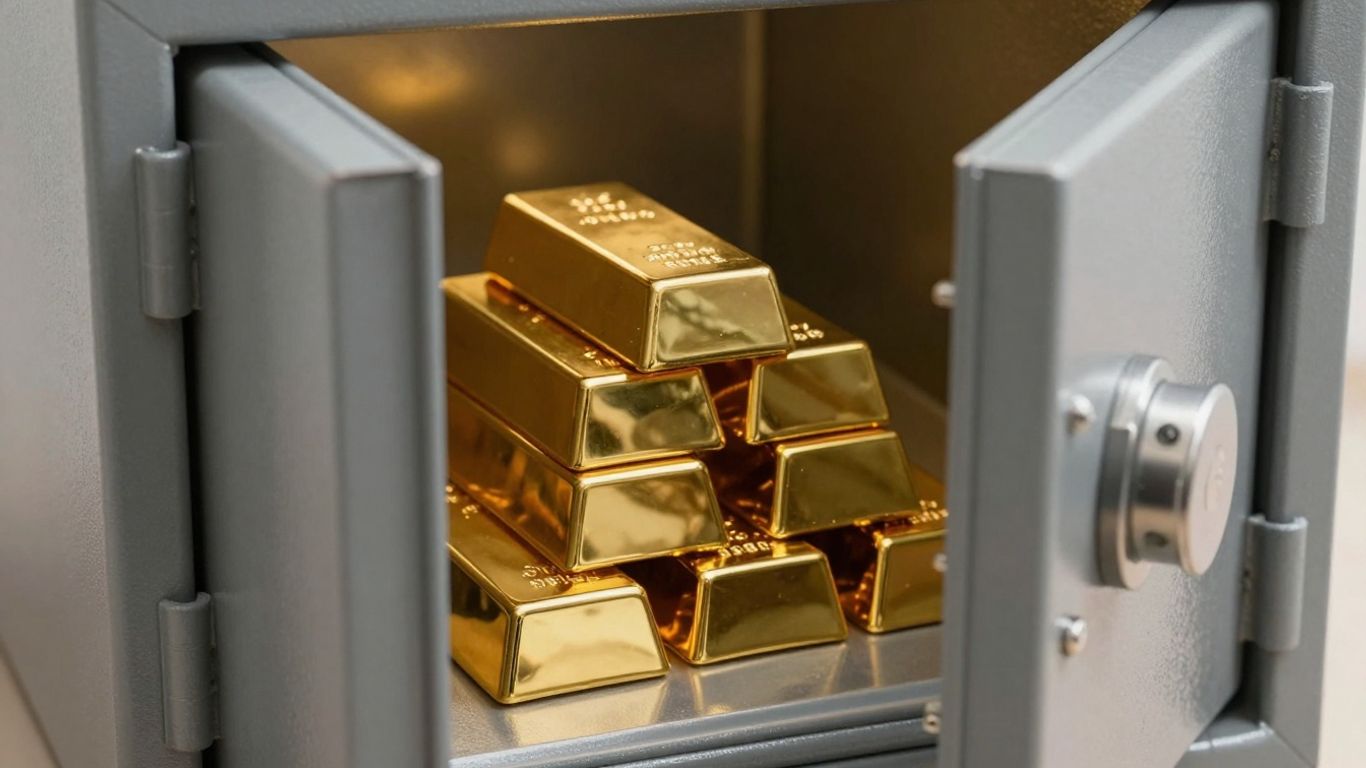
Specific offers proposed by insurers for stored gold
If your current home insurance isn't sufficient, or if you store a significant amount of gold, more targeted solutions exist. Insurers specializing in valuables, or those offering policies specifically for precious metals, can provide you with more suitable coverage. These policies are designed to take into account the specific characteristics of gold, such as its fluctuating value and its physical nature.
Amount insured, annual cost and subscription terms
These customized contracts generally allow you to define an insurance amount that corresponds precisely to the value of your gold. The annual cost will depend, of course, on this value, but also on the included guarantees and the level of security required (for example, whether you store the gold at home in a certified safe or use an external storage service).
To take out a policy, you will often be asked to provide proof of purchase (invoices, certificates of authenticity) and to describe the contents of your safe deposit box in detail. The insurer may also require specific security measures for your home.
Here is an overview of the types of warranties you might find:
- Extended coverage Protection against theft, loss, accidental damage, and sometimes even against natural disasters.
- Compensation amount based on the actual value The insurance adjusts to the current value of your gold, which is important given its fluctuations.
- Global Insurance : If you store your gold abroad, some policies offer international coverage.
Comparison of the main insurance companies on the French market
It's difficult to provide a comprehensive comparison because offers are constantly evolving and depend heavily on your personal circumstances. However, here are some providers and types of contracts to consider:
| Insurance Company | Type of Contract | Specific Coverage for Gold | Maximum Insured Amount | Special conditions |
|---|---|---|---|---|
| AXIS | Home Insurance + Valuables Option | Can cover gold under certain conditions. | Up to €30 | A certified safe is often mandatory. |
| Allianz | Multi-risk insurance + Jewelry/metals extension | Specific extension for precious metals. | Up to €50 | Professional assessment required beyond a certain threshold. |
| MAIF | Home Insurance + Valuables Coverage | Coverage for valuable assets. | Up to €20 | Prior declaration and proof of purchase/expertise required. |
| Generali | Premium Home Insurance | Coverage for valuable assets. | Up to €40 | Specific safety devices recommended. |
| Groupama | Home Insurance + Valuables Option | Can cover gold, often with limits. | Up to €25 | A detailed inventory is required upon subscription. |
It is important to note that even with these insurance policies, there are often exclusions. For example, normal wear and tear, simple loss, or damage caused by gross negligence are generally not covered.
Before signing up, carefully read all the clauses of the contract, especially the exclusions and your obligations. Good insurance is insurance that truly protects you in case of hardship, without any unpleasant surprises.
Private storage providers with integrated insurance
Given the complexity of insuring your valuables, you might be tempted by storage solutions that include coverage. This is where companies specializing in the secure storage of gold and other precious metals come in. These companies offer comprehensive services, from the physical safekeeping of your assets to their insurance, all within highly secure facilities, often outside the traditional banking system.
How companies specializing in secure gold storage operate
These providers operate somewhat like banks, but with a high level of specialization in valuables storage. You rent space in their vault, which is then monitored 24/7. The main advantage is that these facilities are specifically designed for maximum security, far exceeding what an individual could achieve at home. They manage the logistics, physical security, and often the administrative aspects related to storing your valuables. This is an attractive option if you're looking for complete peace of mind regarding the safety of your gold. Be sure to compare the different offers to find the one that best suits the value of your assets. To learn more about off-site storageThere are dedicated guides available.
Automatic or optional insurance coverage
The issue of insurance is central. Most of these companies offer insurance integrated into their storage service. This coverage is often calculated based on the declared value of your assets. It is essential to check whether this insurance is automatically included in the rental price or if it represents an additional cost. The coverage amounts can vary, and it is important to ensure they correspond to the total value of your gold. Sometimes, for very high amounts, additional insurance may be necessary. Therefore, you should read the terms and conditions carefully.
Here is an overview of the points to check regarding the proposed insurance:
- Coverage amount: Is it sufficient for the value of your gold?
- Types of risks covered: Theft, fire, water damage, natural disaster?
- Franchises and exclusions: Are there any amounts you would have to pay in the event of a claim? What cases are not covered?
- Procedure in case of a disaster: How to report a claim and what documents to provide?
Criteria for choosing a formula adapted to the value of the gold held
Choosing the right policy will depend directly on the quantity and value of your gold. If you have a few bars or coins, standard insurance might suffice. For larger sums, you may need to opt for a premium policy or negotiate specific terms. Also, consider the provider's reputation and track record regarding security and claims handling. Don't hesitate to request detailed quotes and compare the services offered by several companies before making a decision. Transparency regarding costs and coverage is essential.
The obligations of justification and traceability of the insured content
When you entrust your gold to a private safe, whether your own or that of a service provider, it is absolutely essential to be able to prove what you have stored there. This is an often overlooked step, but it is crucial in the event of a loss. The insurer will need to know exactly what has been lost in order to compensate you.
Importance of inventory, invoices, and certificates of authenticity
For your insurance to be truly effective, you must be able to prove ownership and value of your gold. This requires several key documents:
- The detailed inventory: Keep a detailed list of everything you store. For each coin or ingot, note the weight, purity, serial number (if any), and any other distinguishing characteristics. Remember to update this list regularly.
- Purchase invoices: Keep all your gold purchase receipts safe. These documents not only prove that you own the gold, but they also indicate its value at the time of purchase. This provides a solid basis for appraisal.
- Certificates of authenticity: For gold bars, a certificate of authenticity is essential. It attests to the origin, weight, and purity of the gold. Investment gold bars are generally sold with this type of document, often in sealed packaging. This certificate is a bit like your gold bar's passport; it guarantees its quality and facilitates its resale. Valuing gold for an inheritance also asks for this kind of evidence.
Procedure to follow in the event of a claim to assert your rights
If the worst happens and you are the victim of theft or another loss covered by your insurance, the procedure is generally as follows:
- Rapid declaration of the claim: Contact your insurer as soon as possible, respecting the deadlines mentioned in your contract (often 2 working days for a theft, for example).
- Providing evidence: Present all the documents you have gathered: inventory, invoices, certificates, photos of the property before the incident if you have any. The stronger your evidence, the smoother the process will be.
- Expertise: The insurer will likely send an expert to assess the damages and verify the consistency of your claim with the available evidence.
It is crucial to declare the exact value of your safe. Underreporting could limit your compensation, while fraudulently overreporting could void your coverage. Transparency is key.
Documents and evidence accepted by French insurers
In France, insurers are fairly standardized in the evidence they accept. Here's what is generally taken into account:
- Original purchase invoices: They must be clear and detailed.
- Certificates of authenticity: Essential for ingots, they must be issued by recognized refiners.
- Detailed inventories: A well-maintained list, dated and signed by yourself.
- photographs: Good quality photos of your belongings, ideally dated or taken in a context that proves their existence before the disaster, can complete your file.
- Bank statements : They can be used to prove the origin of the funds used to purchase the gold.
Remember that keeping these documents in a safe place, separate from where the gold is stored, is also good practice.
Common risks and precautions to take to optimize your coverage
Even with a safe, your gold isn't completely safe. It's essential to know the common traps to avoid unpleasant surprises.
Risks associated with storing items at home or in an undeclared safe
If you keep your gold at home, even in a safe, you could face insurance problems. Standard policies often have limitations. For example, home insurance may not cover the full value of your gold bars or coins if the safe isn't certified or if you haven't declared the presence of these valuables. It's a bit like having a super lock on your door but forgetting to tell your insurance company that you have a collection of rare stamps inside. Insurers base their coverage on declared physical security measures. If the safe isn't listed or doesn't meet their standards, coverage may be very limited, or even nonexistent, in the event of theft.
Typical cases of uncompensated claims (hidden theft, lack of insurance)
Imagine the scenario: a discreet burglary, where the thieves know exactly where to look. If your gold isn't specifically covered by adequate insurance, you could lose your entire investment. This is the risk of "hidden theft" or simply the lack of coverage. Banks, for example, often offer safe deposit boxes without built-in insurance; it's up to you to purchase additional protection. Not doing so is a bit like leaving your luxury car uninsured. Just one bad day can have disastrous financial consequences. Less than 10% of stolen items are recovered by the police, so without insurance, the loss is often permanent.
Tips to avoid unpleasant surprises and enhance your security
To sleep soundly, several precautions are necessary. First, make a precise inventory of everything you store. Keep purchase invoices, certificates of authenticity, and any proof of ownership safe and sound. Next, carefully review your insurance policy. Is gold explicitly mentioned? What are the coverage limits? Are there any specific exclusions? If your home insurance isn't sufficient, consider an extension or specialized insurance for valuables. Don't forget that physical security also matters: a well-anchored and discreet safe is a plus. For complete peace of mind, consider storage with specialized companies. offers maximum security.
Not insuring your gold is taking a huge risk. A small annual premium can save you from a monumental financial loss. Think of it as an investment in the security of your wealth.
Which solution should I choose for insuring my gold in a private safe?
So, you have your gold, safely tucked away in your private safe, but the question of insurance is nagging at you. That's understandable; you don't want any unpleasant surprises. It's true that there's no single answer that suits everyone. The choice really depends on your situation, the amount of gold you own, and your risk tolerance.
Factors to analyze according to value and storage method
To begin, you need to determine the value of your gold. If you have a few coins or a small ingot, the approach will differ from that of someone who owns several kilograms of gold. The total value of your precious metal assets is the first criterion. Next, where is this gold stored? Is it in a home safe, a rented bank safe deposit box, or perhaps with a specialized provider? Each location has its own implications in terms of security and, consequently, insurance.
Arbitration between home extension, dedicated insurance, and service provider with insurance
You have several options. Extending your home insurance is often the first idea that comes to mind. It's generally the cheapest solution, but be aware that compensation limits are often low for precious metals, and there are strict conditions (certified safe, prior notification, etc.). You really need to read the fine print.
Then there are specialized insurance policies for valuables, including precious metals. With these, you're guaranteed coverage for the actual value of your gold, but the annual cost may be higher. It's a bit like tailor-made insurance for your wealth.
Finally, if you use a private storage service, insurance is sometimes included. This is convenient, as everything is handled by the same provider. You just need to check exactly what this integrated insurance covers and whether it's sufficient for the value of your gold.
Here is a small table to help you visualize the options:
| Type of insurance | Benefits | Drawbacks | Estimated cost (indicative) | Compensation ceiling | Specific conditions |
|---|---|---|---|---|---|
| Home insurance extension | Cheaper, easy to add | Low ceilings, frequent exclusions, strict conditions (certified safe, declaration) | €50 – €200/year | Often limited | Certified safe, prior declaration of contents |
| Specialized insurance | Comprehensive coverage, tailored to the actual value of gold | More expensive | 1% – 2% of the insured value | Real value of gold | Accurate description of contents, proof of purchase |
| Provider with insurance | Practical (all-in-one), often with high physical security | It may be more expensive, depending on the provider; insurance is sometimes optional. | Variable | Variable | Check the contract terms, the storage security level, and any exclusions. |
The importance of carefully reading the clauses and exclusions of the contract
Regardless of the solution you choose, the most important advice is to read your contract carefully. Don't just skim the pages. Look for exclusions, coverage limits, deductibles, and reporting requirements. This is where unpleasant surprises often lurk. For example, insurance might cover theft but not fire damage, or vice versa. Or, it might require that your safe be bolted to the wall, which you may not have done.
Never take insurance for granted. Carefully reading the terms and conditions is your best ally to avoid any unpleasant surprises in the event of a claim. It's a bit like checking the recipe before cooking a complicated dish: it's best to be sure of each step for optimal results.
In short, carefully consider the value of your gold, the security level of your current storage, and compare the costs and coverage of different options. It's better to pay a little more for insurance that truly protects you than to risk losing your entire investment through negligence.
Are you wondering what the best way is to protect your gold by keeping it in a private safe? That's an excellent question! There are several options for ensuring the safety of your valuables. To help you make the right choice, we've prepared a... complete guideDiscover how to secure your gold and find the perfect solution for you. Visit our website to learn more and make the best choice for your investment.
In summary: protect your investment
So, now you know how to approach the question of insurance for your stored gold. Whether you choose a personal safe deposit box, bank storage, or even a specialized storage solution, it's crucial not to neglect the protection of your valuables. Good insurance provides guaranteed peace of mind, and that's priceless. Think carefully before leaving your gold unattended.
Frequently Asked Questions
Is my home insurance sufficient to cover my gold?
Often, your home insurance doesn't cover all the gold you own. There are limits, and sometimes you have to pay extra to ensure your gold is properly protected. If you have a lot of gold, your standard insurance probably won't be enough. It's best to check the details of your policy or take out specialized insurance.
What is a private safe and why is it important to insure my gold?
A private safe is like a small, very sturdy box where you can keep your valuables, such as your gold. For your insurance to be valid, your gold often needs to be stored in a certified safe. This shows the insurer that you've taken care to protect it, and it can help you get a better payout if something happens.
What types of gold items are typically covered by insurance?
Insurance policies can cover different types of gold. This can include gold bars, gold coins, and even gold jewelry. The important thing is that you can prove the gold belongs to you and that you declared it to your insurer. Without this proof, it will be difficult to receive compensation.
How can I prove that the gold in my safe belongs to me?
To prove that the gold is yours, you must keep all important documents. This includes purchase invoices, certificates of authenticity that come with the bars or coins, and even photos of your items. If you have a claim, these documents will be essential for the insurer to reimburse you.
What insurance policies do banks offer for rented safe deposit boxes?
When you rent a safe deposit box at a bank, insurance is sometimes included, but it's not always enough to cover the full value of your gold. Often, the bank offers basic protection, and it's up to you to decide if you need to add extra insurance for complete peace of mind.
What are the specialized insurance policies for precious metals?
There are insurance policies specifically designed for those who own precious metals like gold. These policies are often more comprehensive than standard insurance. They can cover higher amounts and offer guarantees tailored to the needs of gold investors. You should compare offers to find the one that best suits you.