
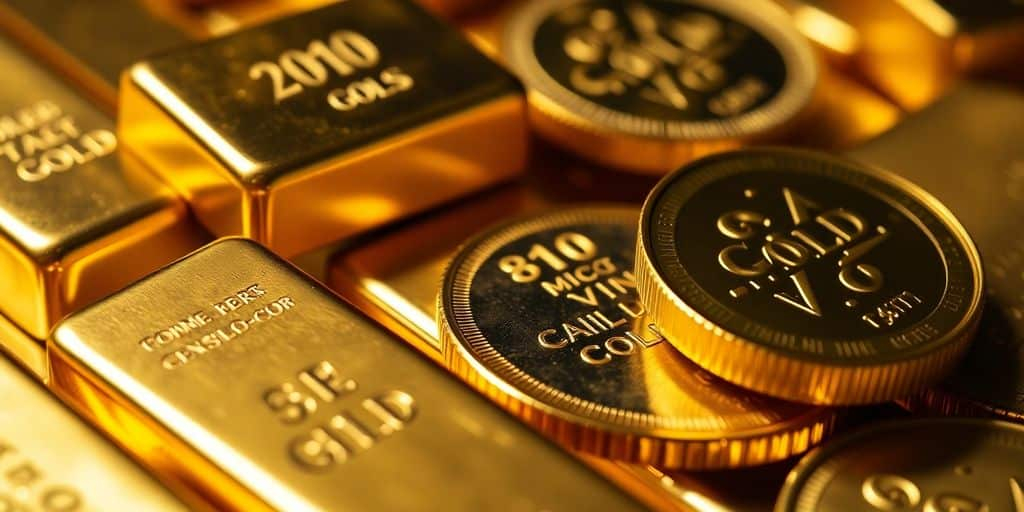
In the world of gold investing, there are two distinct options: gold bars and gold coins. Each of these forms of gold has its own characteristics, advantages, and disadvantages. This article answers the question: What is the difference between gold bars and coins? We'll explore the specifics of each option in detail to help you make the best choice for your needs.
Key points
- Bullion bars are often purer and without a premium, while coins may have historical value.
- Gold coins are more liquid and easy to resell in small quantities.
- Investing in bullion generally requires a higher budget.
- Gold coins can be collected, adding sentimental value.
- The choice between bars and coins depends on your investment goals and budget.
Characteristics of Gold Ingots
Weight and Purity
When we talk about gold bars, the first thing that jumps out at us is their weight and their purity. Generally, ingots are made of fine gold, with a purity of 999,9‰ (i.e. 99,99%). This is the standard for LBMA (London Bullion Market Association) certified bars. Ingots come in a variety of sizes, from small 1 gram bars to the large 12,5 kg bars used by central banks.
Certificates of Authenticity
A gold bar isn't just a shiny block of metal. It's an investment, and like any serious investment, it must be accompanied by a certificate of authenticity. This certificate is like the bar's identity card. It includes important information such as:
- The name of the assayer-founder (which must be on the list of LBMA certified founders).
- The exact weight of the ingot (in grams, ounces or kilos).
- The purity level of gold (normally 999,9‰).
- The mention “FINE GOLD” (or “FINE GOLD”, “FEINGOLD”, etc.).
- A unique serial number.
Without this certificate, it's a bit like buying a car without papers: it immediately becomes more complicated to resell and you risk getting ripped off.
Manufacturing Methods
Gold bars are not all created equal. There are two main manufacturing methods:
- The casting: This is the simplest method. The gold is melted and then poured into a mold. The shape and size of the ingot depend on the mold used. It's like making a cake, but with gold.
- Minting: Here, it's a little more sophisticated. Cast ingots are cut to give them a precise dimension. They can also be given different shapes (flat, rectangular, round, etc.). Some struck ingots are even transformed into pendants.
In short, there's something for every taste and every use! Whether you buy gold in bars or coins depends on your goals.
Characteristics of Gold Coins
Types of Parts
So, gold coins aren't just shiny things! There are lots of different types. There are investment coins, like the Canadian Maple Leaf or the American Eagle, which are mainly there for their gold content. And then there are collectibles, which can be worth a fortune just because of their rarity or their history. It's a bit like comparing a new car to a classic car: both run, but one has a soul and a history that the other doesn't.
Historical Value
Gold coins are like little time capsules. Each coin tells a story, that of a country, a reign, an event. Some pieces are downright miniature works of art., engraved with incredible precision. Think of the Napoleon, for example, it tells us about the French Empire, its influence, its aesthetics. It is much more than a simple piece of metal, it is a witness to history.
Condition and Rarity
The condition of a coin is super important. A coin in perfect condition—that is, without scratches or wear—is worth much more than a damaged one. And rarity is the Holy Grail for collectors. A coin minted in small quantities, or one of which few have survived, can fetch astronomical sums. It's a bit like looking for a treasure hidden, except the treasure is the coin itself!
Here are some factors that influence the value of a coin:
- The state of conservation
- Scarcity
- The year of striking
- Collectors' demand
Investing in gold coins is a bit like playing detective. You have to do your research, know the history, assess the condition, and above all, be patient. But when you find that rare coin, it's a real treat!
The Benefits of Gold Bars
Long Term Investment
Gold bullion is often seen as a solid long-term investment. Why? Well, gold tends to maintain its value, or even increase, during times of economic uncertainty. It's a bit like having a security net financial. It is an investment that can weather crises without too much damage. We can find investment bars of different sizes, which allows you to choose exactly the amount of your investment.
Ease of storage
Another advantage of ingots is their ease of storage. Compared to coins, they take up less space and are easier to stack. There's no need to handle them with white gloves or store them in individual capsules. A safe, or even a good hiding place at home, may suffice.
It's true that storing ingots is less of a hassle. There's no need to worry about their condition like you do with coins. You just set them down and (almost) forget about them!
No Purchase Bonus
One of the major advantages of bullion is the lack of a purchase premium. Unlike coins, where you pay extra for rarity, history, or condition, with bullion, you mainly pay for the gold price that they contain. It's more direct, simpler. Basically, you pay for weight and purity, without frills. It's ideal for those who want buy gold without worrying about a coin's premium or other parameters.
Here is a small comparison table to summarize:
| Advantage | Description
The Benefits of Gold Coins
Gold coins, unlike bullion, offer specific advantages that can appeal to different types of investors. They often combine intrinsic value with other assets, which makes them interesting.
High Liquidity
One of the main advantages of gold coins is their liquidity. It is generally easier to resell gold coins than bullion., especially if you need small amounts of money quickly. Coins are more easily traded on the market, whether with precious metals dealers or even between individuals. It's a bit like having cash in a more stable form.
Fractionability
Another major advantage is their fractionalizability. If you own a large bar and need to sell only a small portion of your investment, it's complicated. With coins, you can sell only what you need. This is super convenient if you need small amounts of gold for one reason or another.
Collectible Aspect
Some gold coins have a value that goes beyond their weight in gold. They can be sought after by collectors, which increases their value. This is called numismatic value.
Owning gold coins is a bit like holding a piece of history in your hands. Some coins tell fascinating stories, which adds an emotional dimension to the investment. It's more than just a financial investment; it's also a collectible.
Here are some examples of sought-after parts:
- Napoleons
- Sovereigns
- 20 Francs Marianne
The Disadvantages of Gold Bullion
So, gold bars are great, but don't kid yourself, they also have their little flaws. It's not always a joy, and there are some things you should know before you take the plunge.
Difficulty of Resale
Reselling a bar isn't like reselling a coin. First, you have to find a buyer who can afford it. Not everyone has the means to buy a large piece of gold like that. Then, you often have to go through professionals, which involves fees. It's less liquid than coins, clearly.
High Initial Investment
Clearly, it's not cheap. An ingot, even a small one, already costs a certain amount. It's not the basic investment to start with. You need to have a little budget set aside before thinking about it. If you want to get started with gold, it might be better to start with coins, just to get your hands dirty without breaking the bank. Think about the profitability of selling an ingot before you start.
Less Variety
An ingot is an ingot. There aren't 36 models. It's raw gold. If you're looking for something a little more fun, with a story, a cool design, this isn't where you'll find what you're looking for. At least with the pieces, there are collections, limited editions, things that are a bit different.
Basically, bullion is good for those who already have some experience and a decent budget. If you're a beginner, or if you want something easier to resell, coins might be a better option.
The Disadvantages of Gold Coins
Variable Bonuses
One of the main disadvantages of gold coins is this whole thing about premiums. Basically, the premium is the extra you pay above the actual value of the gold in the coin. This premium can vary greatly depending on the rarity, condition, or demand for a specific coin. Sometimes, you can end up paying much more than the gold is actually worth, just to get a particular coin. It's a bit like buying a classic car: you're paying for the story, not just the metal.
Condition to Check
The condition of coins is a bit of a lottery. A damaged coin is worth less than one in perfect condition, it makes sense. But assessing the condition of a coin is not always easy, especially if you're not an expert. You have to watch out for scratches, wear, and excessive cleaning (yes, cleaning a coin can actually decrease its value!). In short, you have to be vigilant and know what you're doing, or trust a professional to avoid unpleasant surprises. It is important to know how gold coins are valued.
Risk of counterfeiting
Okay, let's be clear, zero risk doesn't exist. Even if it's less common than with banknotes, there are fake gold coins. And then it's a disaster. You think you're buying gold, and in fact, you have something that's worthless. To avoid this, there are a few things you can do:
- Buy from trusted sellers (banks, recognized numismatists, etc.).
- Check certificates of authenticity.
- Have the parts appraised if you have any doubts.
It's always a good idea to research the specific characteristics of the coins you want to buy (weight, dimensions, etc.) and compare them with official data. A small magnet can also help: gold isn't magnetic, so if your coin sticks to the magnet, there's a problem.
Basically, don't hesitate to sell gold coins If you have any doubts, prevention is better than cure, as they say.
How to Choose Between Bullion and Coins
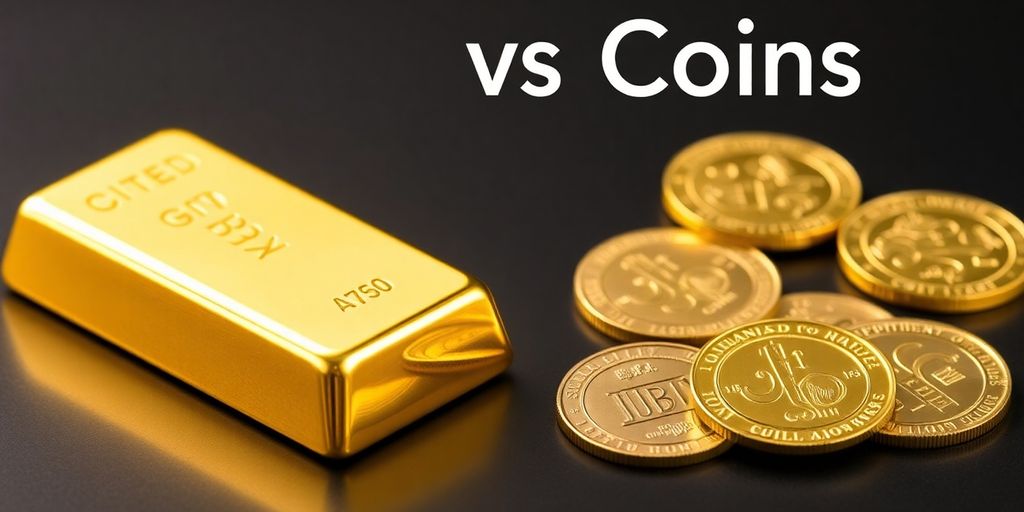
So, gold bar or coin? That's the million-dollar question, right? Actually, there's no universal answer. It all depends on what you're looking to do with your investment. It's a bit like choosing between a sports car and a truck: both can get you around, but they're not designed for the same purposes!
Investment Objectives
What do you want to do with your gold? Are you thinking of a long-term investment, like retirement in 30 years? Or do you want to be able to sell quickly if necessary? Bullion bars are often seen as a long-term investment. They're harder to sell quickly, especially the larger ones. Coins, on the other hand, are great. liquidsYou can sell them quite easily, especially the well-known coins like the Napoleons or the 20 Francs.
Budget Available
How much are you willing to invest? Bullion bars, especially large ones, require a larger initial investment. It's like buying a house: you need a substantial down payment. Coins are more like buying stocks: you can start with a small amount and gradually increase your investment. If you're on a budget, coins are probably a better choice.
Personal Preferences
And then there are your personal tastes! Are you interested in history and collecting? Gold coins often have numismatic value, meaning a value linked to their rarity and history. It's a bit like collecting stamps: there's an exciting and cultural side. Bullion bars are rawer, more direct. They're pure gold, without embellishments.
Basically, if you're looking for a simple, straightforward investment with a substantial budget, bullion can be a good option. If you prefer flexibility, liquidity, and the collectible aspect, coins are probably a better option. Be sure to clearly define your goals and preferences before you get started!
Appraisal and Market Value
How to Estimate an Ingot
So, how do you go about valuing a gold bar? It's not that complicated, but you have to be methodical. The basis is to know the current price of gold. Next, we look at the weight of the ingot and its purity. A certified ingot is always better, as it guarantees its authenticity.
Here are the key steps:
- Check the weight and purity (normally indicated on the ingot).
- Check the real-time gold price (in euros per gram or ounce).
- Multiply the weight in fine gold by the current price.
- Take into account any bonuses or discounts applied by sellers.
Keep in mind that prices may vary slightly from one seller to another. Always compare multiple offers before making a decision.
How to Estimate a Room
Valuing a gold coin is a little different. In addition to the price of gold, there is the numismatic value that comes into play. A rare or mint condition coin can be worth much more than its weight in gold.
To estimate a room, we look at:
- His type (Napoleon, Sovereign, etc.).
- His year of hitting.
- Its condition (VG, TGB, SUP, FDC, etc.). Exceptional condition can increase the price.
- Its rarity (the number of copies minted).
| État de Conservation | Description ### Facteurs Influençant La Valeur
Several factors can influence the value of gold, whether in bars or coins. The price of gold, of course, is the first. But there are also:
- Supply and demand: If many people want to buy gold, prices rise.
- The global economic situation: In times of uncertainty, gold tends to be a safe haven.
- Interest rates: Low rates can make gold more attractive.
- Exchange rates: Fluctuations can affect the price of gold in different currencies.
In short, it's a bit like the weather, you have to check the forecast to avoid being surprised!
Where to Buy Gold Bars and Coins
So, are we embarking on our gold adventure? Great! But before you become Scrooge McDuck, you need to know where to find these precious ingots and coins. Don't panic, I'll guide you.
Specialized Stores
Specialty stores are a bit like entering a golden Aladdin's cave. You'll find experts there who can advise you, show you the different options, and answer all your questions. This is ideal if you want direct contact and reassuring. Plus, you can see and touch the products before you buy. It's a little more expensive, it's true, but you have the guarantee of authenticity and personalized service. Remember to check if the store is well-established and has good references. You can even find stores specializing in gold buying in Paris. here.
Online Markets
The web is the realm of convenience, right? It's the same for gold. There are online platforms where you can buy bars and coins from the comfort of your couch. It's often cheaper than in stores, but beware of scams! Always check the seller's reputation, reviews from other buyers, and product certifications. Make sure the site is secure (https://) and offers reliable payment methods. It's convenient, but be careful.
Auctions
Auctions are a bit like the Wild West of gold. You can get some good deals, but it's also risky. You have to be a bit of a connoisseur to avoid getting ripped off. The advantage is that you can sometimes find rare coins or bars at attractive prices. The disadvantage is that you have to be quick to react and not get carried away by the atmosphere. And above all, always check the authenticity of the lots before bidding. It's exciting, but you have to keep a cool head.
Before you dive in, take the time to compare prices, research sellers, and verify the authenticity of the products. Gold is a serious investment, so you might as well do it right.
Conservation of Gold Ingots and Coins
So, we've invested in gold, great! Now, don't let your investment go to waste by leaving our bars and coins lying around. Here are some tips for storing them like a pro.
Best Storage Practices
Storage is key. We're not going to leave our precious bars and coins out in the open, are we?
- Avoid humidity : Humidity is the enemy. It can oxidize gold, although this is rare. A dry place is ideal.
- Protect from direct light : Direct sunlight isn't great either. It can damage some pieces, especially those with collectible value.
- Use suitable containers : For coins, clear plastic capsules are perfect. For bars, keep them in their original packaging if possible. Otherwise, a soft cloth pouch will do the trick.
Security and Insurance
Security is no joke. Especially if you have a nice collection.
- Home safe If you have a lot of gold, a safe is a good investment. Secure it securely to the floor or wall to discourage thieves.
- Renting a bank safe : It's a safe option, but it comes at a cost. It's up to you to decide if it's worth it.
- Insurance Insure your gold! Check that your home insurance covers precious metals. If not, there are specific insurance policies available. Remember to carefully assess the value of your gold so that you're properly compensated in the event of a problem. coin liquidity is an asset, but security is paramount.
Always keep track of your purchases: invoices, certificates of authenticity, etc. This can be useful in case of theft or loss, and it is essential if you ever need to resell your gold.
Parts Maintenance
So, be careful! Above all, do not clean your coins! We agree ?
- Do not clean Cleaning a piece often devalues it. Patina (the thin layer that forms over time) is part of its history and can increase its value. If a piece is really dirty, it's best to seek expert advice.
- Handle with care : Avoid touching parts with your fingers. Use cotton gloves if you must handle them. Finger grease can leave marks.
- Regular check : From time to time, take a look at your rooms to check that there are no problems (humidity, marks, etc.).
The Impact of Market Fluctuations
The gold market, like any other market, is subject to ups and downs. Understanding how these fluctuations affect gold bars and coins is incredibly important for any investor. Let's break it down together, without any hassle.
How the Market Affects Bullion
Gold bullion is often considered a investment long term. As a result, their value is extremely sensitive to major economic trends. If inflation skyrockets, for example, people rush to buy gold, which drives up the price of bullion. It's a bit like when everyone wants the same toy: the price explodes!
- Interest rates: When they are low, gold becomes more attractive.
- Inflation: The higher it is, the more sought-after gold is.
- Geopolitical crises: They create uncertainty, and gold is seen as a safe haven.
Basically, bullion is a barometer of global economic health. If things are bad, they tend to do well, and vice versa.
How the Market Affects Coins
Gold coins are a little different. In addition to the price of gold, their value is influenced by other factors, such as their rarity, condition, and collector appeal. As a result, the market can be more volatile. A rare coin can see its value explode even if the price of gold stagnates. It's a bit like finding an old video game in perfect condition: it's worth a fortune!
- Collector demand: It can drive up prices.
- Condition: A piece in perfect condition is worth more.
- Rarity: The rarer a coin is, the more valuable it is.
Market-Based Purchasing Strategies
So, how do you make the right purchase? That's the million-dollar question! There's no magic answer, but here are a few tips:
- Monitor the gold price: Look at charts, trends, and analyses. It gives you an idea of what's going on. You can track the price of gold in real time on specialized sites.
- Diversify: Don't put all your eggs in one basket. Buy bars, coins, a little of each.
- Buy gradually: Rather than investing a large sum at once, spread your purchases out over time. This smooths out fluctuations.
Basically, you have to be smart and patient. Gold is a long-term investment, so don't panic if it fluctuates a bit. The important thing is to understand the market and adapt your strategy accordingly.
Conclusion on Gold Bars and Coins
Summary of Differences
So, gold bars or coins? It's a bit like choosing between a car and a motorcycle. Gold bars are like the big cars, perfect for a substantial, long-term investment. They're often more economical to buy because you don't pay a high premium. Coins, on the other hand, are more manageable, easier to resell quickly, and can even have collector's value. Basically, It all depends on what you are looking for !
Tips for Investing
Before you get started, ask yourself the right questions. What's your budget? What's your goal? Do you want a long-term investment or something more liquid? If you have a large budget and want to invest for the long term, bullion may be a good option. If you have a more limited budget or want to be able to resell quickly, coins may be a better option. Don't forget to research the gold coins before purchasing, as their value may vary depending on their condition and rarity.
Final Thoughts
Investing in gold, whether in bars or coins, is a way to diversify your assets and protect yourself against inflation. But be careful, it's not a miracle investment. The price of gold can fluctuate, so you have to be prepared to take risks. The important thing is to do your research, compare prices, and not put all your eggs in one basket. And above all, enjoy yourself! After all, it's your money, and it's up to you to decide how you want to invest it.
Investing in gold, whether in bars or coins, is a personal decision that should be carefully considered. It's important to consider your financial goals, budget, and risk tolerance before taking the plunge. Don't hesitate to seek professional advice to help you make the right choice.
Here are some points to remember:
- Bullion is more suitable for large, long-term investments.
- Coins are more liquid and may have collectible value.
- The price of gold can fluctuate, so you have to be prepared to take risks.
In conclusion, investing in gold bars and coins is an excellent way to secure your financial future. Whether you're a beginner or an experienced investor, it's essential to be well informed before making a purchase. To learn more about our offerings and how to get started, click here. invest in gold, visit our website today!
In Summary
So, to put it simply, gold bars and coins aren't quite the same thing. Gold bars are big and heavy, perfect for those who want to invest seriously without worrying too much about the details. Coins, on the other hand, are more accessible, easier to resell, and often full of history. If you're looking to get into gold, think carefully about what you want: a solid investment or a small treasure to collect. In any case, gold remains a safe bet, so make your choice and good luck with your purchases!
