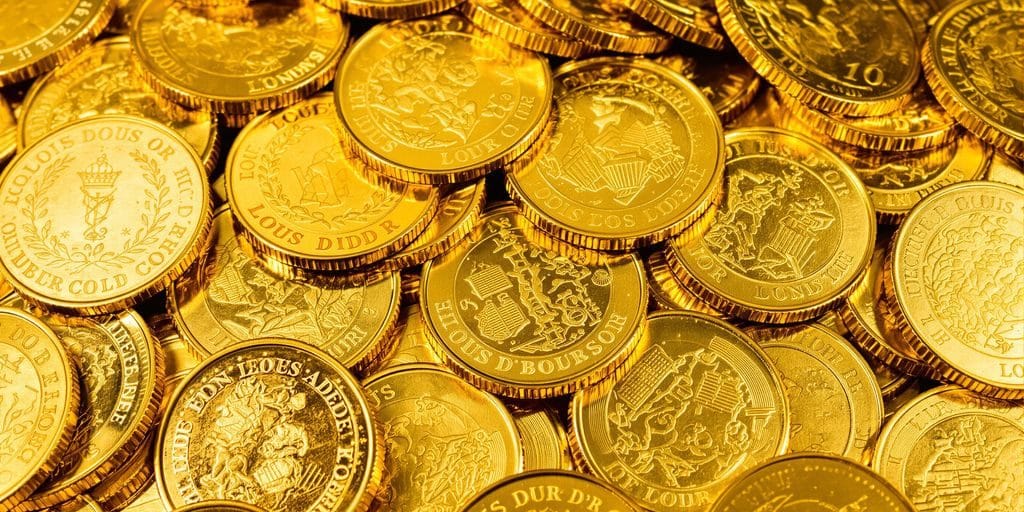
Wondering which Louis d'Or costs the most? That's a great question, as these French gold coins have a fascinating history and a value that can surprise you. Between their rich history and the details that make them unique, understanding what drives their price up is essential if you're interested in numismatics or investing in precious metals. So, let's dive into the world of Louis d'Or coins to discover what makes some of them so valuable.
Key Takeaways
- The Louis d'Or, minted between 1640 and 1792, is a historic French gold coin. Its value depends not only on its weight in gold, but also on its rarity, condition, and numismatic appeal.
- The most sought-after Louis d'Or coins are often the first strikes, such as those during the reign of Louis XIII, which can fetch very high prices at auction.
- Rarity, year of minting, production workshop and royal effigy are determining factors in assessing the price of a Louis d'Or.
- Auctions are often where price records are broken for exceptional coins, sometimes transforming these coins into true works of art.
- Although the Gold prices influences the price, the numismatic value of a Louis d'Or can make it rise well beyond its simple intrinsic value, making it more expensive than a modern gold coin of similar weight.
Understanding the value of Louis d'Or
To fully understand the value of a Louis d'Or, you need to know that it's not just a matter of gold weight. Much like classic cars, the condition of the coin plays a huge role in its price, especially if you're targeting the collector market. There are systems for assessing the quality of coins, much like grades, that help determine their true value.
What is a Louis d'Or?
The term "Louis d'Or" originally referred to gold coins minted in France between 1640 and 1792, during the reigns of several kings. However, in everyday language, it is often used to refer to all French gold coins, including the 20 Francs. Napoleon which followed. These historic coins, although no longer in circulation, have seen their popularity and value increase considerably in recent years.
Factors influencing the price of a Louis d'Or
Several factors affect the price of a Louis d'Or. Of course, the price of gold is the main factor, as it fluctuates daily. But that's not all. The year it was minted, the mint where it was made, and especially the coin's condition are all determining factors. A rare, well-preserved coin can be worth much more than its simple gold value. For example, some very old coins, such as those of Louis XIII, are particularly sought-after and can fetch considerable sums on the auction market.
The Louis d'Or compared to other gold coins
Compared to other gold investment coins, such as the 20 Franc Marianne Coq, the Louis d'Or, especially the older ones, often carries a higher numismatic premium. This means that its value often exceeds its weight in gold, thanks to its history and rarity. This makes it an attractive investment for those looking to diversify their wealth with tangible assets steeped in history. If you're looking to invest in gold, it's worth knowing these differences to make the best possible choice.
The most sought-after Louis d'Or
Some Louis d'Or coins are distinguished by their rarity and historical importance, which makes them particularly prized by collectors and numismatists. The Louis d'Or Louis XIII is often cited as one of the most sought-after coins. Its value is not limited to its weight in gold; it also reflects exceptional craftsmanship and a pivotal period in French monetary history.
Several factors contribute to the desirability of these pieces:
- The rarity of first strikes: The earliest series of Louis d'Or, particularly those issued under Louis XIII, were often produced in more limited quantities. The fewer coins available, the higher their numismatic value can be.
- The numismatic appeal of the different royal effigies: Each king placed his own effigy on the coins, and some representations are more appreciated than others. For example, coins bearing the effigy of Louis XIII, the creator of the Louis d'Or, have a special significance.
- The state of conservation: A coin in perfect condition, with no visible wear, retains its appeal and value better. Coins that have survived the centuries without being overly handled are obviously rarer and therefore more sought-after.
It's not uncommon for exceptional coins, such as a 10 Louis d'Or coin bearing the image of Louis XIII, to fetch considerable sums at auction. Coins have been known to sell for tens, even hundreds of thousands of euros, well beyond their intrinsic gold value. It is this combination of rarity, history, and beauty that makes these numismatic treasures so valuable.
Louis d'Or price records
You may be wondering which coins fetch the highest prices at auction. Well, some Louis d'Or coins, especially rare or particularly well-preserved ones, can actually fetch astronomical prices, far beyond their intrinsic gold value. This is where the magic of numismatics comes in.
Record auctions of rare coins
It's not uncommon for exceptional pieces, such as a 1640 Louis XIII Louis d'Or, to break records. Examples have been seen selling for considerable sums, sometimes over €200, or even approaching €000 at public auctions. These figures are staggering, aren't they? It shows how much rarity and condition can influence a piece's value.
How to reach huge sums
For a Louis d'Or to reach such sums, several factors come into play. It requires a coin of exceptional rarity, often linked to a specific year of minting, a particular mint, or a small quantity produced. The state of preservation is also essential: a coin in perfect condition, without visible wear, will always be more sought after. Finally, the history of the coin, if it belonged to a famous collection for example, can also increase its value. The price of gold itself plays a role, of course, but for these exceptional coins, it is the numismatic premium that makes all the difference. It is important to know that the price of gold has undergone significant changes, moving from the gold standard to a fluctuating asset. follow the evolution of the price of gold.
Art and collecting: factors of value
Beyond their weight in gold, the most prized Louis d'Or coins are true works of art. Their numismatic value can far exceed their metallic value. Think of them like paintings or sculptures: their appeal lies in their history, beauty, and rarity. It's this combination that makes a simple Louis d'Or a treasure coveted by collectors worldwide.
Investing in Louis d'Or
If you're considering adding Louis d'Or coins to your collection or investment portfolio, it's good to know where to look and how to proceed. The gold coin market can seem complex, but with a little information, you can make informed purchases.
Where to buy authentic Louis d'Or?
Finding authentic Louis d'Or coins requires a bit of research. Auctions are a traditional place to unearth rare coins, but you can also turn to specialized numismatists or dedicated online platforms. It's essential to choose reputable sellers to avoid counterfeits and ensure the coin's quality. At some specialists, you can find Louis d'Or coins from different eras, such as those of Louis XIV, XV, or XVI, selected by experts.
Tips for buying and reselling
When you buy a Louis d'Or, several factors come into play: the condition is essential, because a coin in perfect condition will be worth much more than a damaged one. The year of minting and the production workshop also play a role in its rarity and therefore its value. Think about resale from the moment you buy it: a coin in high demand will be easier to sell. The gold market, like that of investment gold coins, is quite liquid, but the numismatic value of a Louis d'Or can make it even more attractive to collectors.
Louis d'Or as a safe investment
Historically, gold has been considered a safe haven. The Louis d'Or, as a French gold coin, is part of this tradition. It offers stability in the face of economic fluctuations and can be a good way to diversify your assets. Its value depends not only on the price of gold, but also on its history and rarity, which can make it more resilient than other assets in times of uncertainty.
The history and evolution of Louis d'Or
The history of the Louis d'Or is closely linked to that of France and its currency. You may be wondering where this very special gold coin comes from? Well, it all began during the reign of Louis XIII, in 1640. At that time, Cardinal Richelieu, advising the king, had the idea of creating a new currency to restore the image of the French monetary system, which was lagging behind Spain and England. It was Claude de Bullion, then Superintendent of Finance, who brought this project to fruition. The first Louis d'Or, also called the "piece of pleasure," was a rather imposing gold coin, worth one hundred pounds at the time, and it was the largest French gold coin ever minted.
The creation of the Louis d'Or under Louis XIII
Before the Louis d'Or, the Écu d'Or was in circulation. But to compete with neighboring powers, a more prestigious and heavier currency was needed. The Louis d'Or was designed for this. It must be said that the idea was to make a coin that weighed more than those of other countries, to demonstrate the power of the kingdom. It's a bit like, today, wanting to have the most beautiful car on the market.
The Louis d'Or at its peak under Louis XIV
It was during the reign of Louis XIV, the famous Sun King, that the Louis d'Or really took off. Not only did it symbolize the return of French prestige, but its production was also a minor revolution. Thanks to Jean Warin, the General Engraver of the Mints, the coins were struck in series with incredible precision thanks to a balance wheel. Louis XIV, who greatly loved beautiful things, was also knowledgeable about numismatics, and he even passed on this love of beautiful coins to those around him. The king's effigy on the coin was remarkably faithful, a bit like a very accomplished portrait.
The end of the Louis d'Or and the advent of the Franc
Unfortunately, the costly wars under Louis XV and Louis XVI eventually took their toll on the French economy. Attempts at paper money, such as assignats, did little to improve matters, widening the deficit. Then came the French Revolution, and with it, the end of the monarchy and the Louis d'Or. In 1792, a new decimal monetary system was implemented, marking the birth of the Franc. Later, Napoleon Bonaparte took up the torch with the 20 Franc Gold coins, which are often confused with the Louis d'Or, but which represent a new era, that of the Empire. The history of gold is also the history of French currency.
Identify the most expensive Louis d'Or
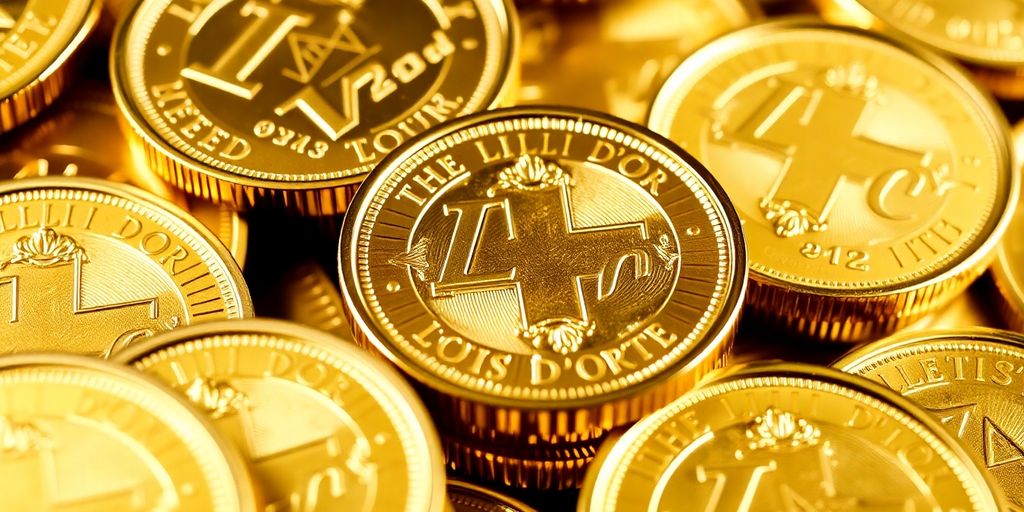
To determine which Louis d'Or can reach the top in terms of value, you have to look beyond its weight in gold. Several factors come into play when determining a coin's price.
The characteristics of the most valued parts
What makes a Louis d'Or particularly sought-after is often a combination of historical and numismatic factors. The rarest coins, such as those minted under Louis XIII, can fetch considerable sums. For example, a 10 Louis d'Or from this period, if in good condition, can sell for several thousand euros, or even more than €200 at exceptional auctions. The quality of the minting, the fine details, and the history of the coin play a major role. It should be noted that some coins, due to their rarity and beauty, are considered almost works of art.
The importance of the state of conservation
The state of preservation is absolutely essential. A piece that has survived the centuries without too much damage, without significant scratches, with minimal wear, will have a much higher value than a damaged piece. We are talking here about the quality of preservation: a piece
Looking for the Louis d'Or the most precious That's an interesting question! Knowing which Louis d'Or is worth the most can help you get a good deal. If you want to know more about how to find these rare and valuable coins, take a look at our guide on our website.
So, which Louis d'Or costs the most?
So, now you know what makes a Louis d'Or so special and why some of them are worth a small fortune. We're talking about pieces that have survived the centuries, steeped in history and rare craftsmanship. If you come across one of these gems, whether it's a Louis d'Or from Louis XIII or another rare coin, you might be holding a treasure. Remember that their value depends not only on the gold they contain, but also on their history and condition. So, the next time you come across an old coin, take a closer look—who knows what you might discover!
Frequently Asked Questions
What exactly is a Louis d'Or?
A Louis d'Or is a French gold coin that circulated between 1640 and 1792. It bears the portrait of the king who was in power at the time of its minting. It is a coin steeped in history, and some are particularly sought after by collectors.
Why are some Louis d'Or worth more than others?
The price of a Louis d'Or depends on several factors. First, there's the amount of gold it contains. But what really drives up the price is its rarity, the year it was made, the condition it's in, and even the workshop where it was created. The oldest and best-preserved pieces are often the most expensive.
Which Louis d'Or is the most valuable?
The most expensive Louis d'Or is usually a very rare piece, often linked to a particular year of minting or an exceptional state of preservation. Louis XIII coins, for example, are highly sought after because they are among the oldest. A 10 Louis d'Or coin of Louis XIII even reached a record price at auction.
How do I know if my Louis d'Or is valuable?
To determine if your Louis d'Or is valuable, carefully examine its year, its condition (is it damaged or like new?), and whether it has any specific mint marks. If you think you have a rare coin, it's best to have it appraised by a numismatist, a specialist in ancient coins.
Where can you buy Louis d'Or?
To purchase Louis d'Or coins, you can contact professional numismatists, precious metal dealers, or auction houses. It is important to ensure the coin's authenticity and good condition before purchasing.
Is the value of a Louis d'Or just the price of the gold it contains?
The value of a Louis d'Or doesn't depend solely on its weight in gold. Its appeal to collectors, known as its numismatic value, plays a very important role. A coin that has survived the centuries and is in perfect condition can be worth much more than just gold price it contains.