
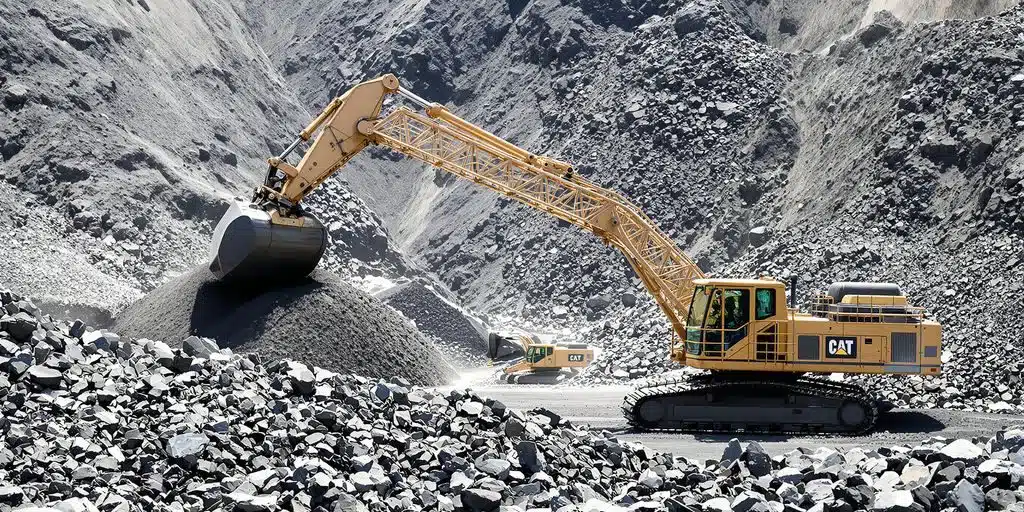
Wondering how to extract minerals from the ground? Surface mining is a fairly straightforward method for extracting minerals. So, let's take a look at the different methods and the equipment you need to successfully complete this type of project. It's a fairly broad field, but we'll try to simplify things so you have a good idea of what's involved.
Key Takeaways
- Surface mining involves removing minerals directly from the surface, forming a large pit.
- It differs from underground mining by its direct access to the deposit.
- Quarries are a specific type of open-pit mining for dense rocks.
- The choice of equipment such as shovels, drills and trucks depends on the nature of the deposit and the volume to be extracted.
- Drilling and blasting are often necessary to fragment the rock before extraction.
Opencast mining methods
Surface mining, also called open-pit mining or surface excavation, is a mining method that involves removing rock or minerals directly from a pit dug at the Earth's surface. It is an approach that allows the use of large equipment, such as hydraulic excavators and heavy-duty trucks, to move enormous volumes of material. Unlike underground mining, it is generally considered less risky.
The type of rock and how the deposit is organized will dictate how you proceed. If you're working with soft rock, the process is fairly continuous: it's extracted and transported in a chain of operations. However, if the rock is hard, it must first be fractured, often with explosives, before it can be loaded and removed. This is a major difference from underground methods.
It should be noted that this technique is particularly suited to deposits that are located near the surface and are relatively flat or organized in layers. Quarries, for example, which extract construction materials such as limestone or granite, are a specific form of open-pit mining. They target deposits of dense, well-consolidated rock, intended to be transformed into aggregates or dimension stone. Coal deposits, often found in layers near the surface, are also frequently mined in this manner. Many metals, such as gold, silver, and copper, are also extracted using open-pit methods when their location permits.
The choice of open-pit mining depends on many factors, including the topography of the site, the nature of the deposit, the quantity of ore to be extracted, the distance to the processing sites, and even the expected lifespan of the mine.
Essential equipment for surface mining
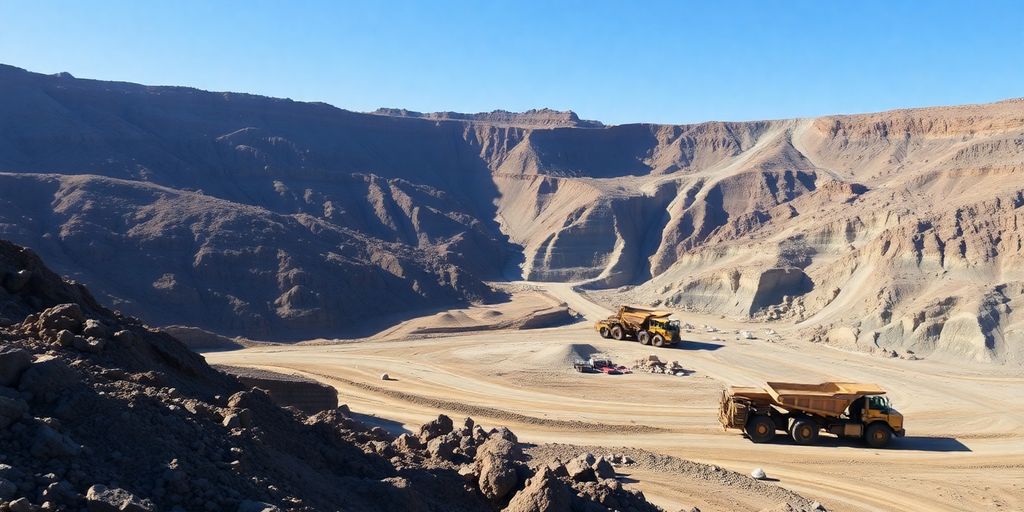
To successfully conduct open-pit mining, you'll need a well-chosen set of equipment. Choosing this equipment is a key step that directly impacts the efficiency and profitability of your mining project. You need to consider everything from how you'll dig to how you'll move the extracted material.
Selection of excavators and transport equipment
When we talk about surface mining, excavators and haul trucks are often the first machines that come to mind. It's important to match them well. An excavator that's too small to load a large truck will take much longer, and conversely, a truck that's too small for the excavator's capacity will make unnecessary trips back and forth. The idea is to optimize each movement. For example, a large hydraulic excavator can load several trucks, but the trucks must be sized to match the excavator's capacity to avoid half-loading or overloading. Also, think about maintenance: large machines require special facilities, and sometimes they are repaired directly on site because they are difficult to move.
Importance of drills and explosives
If you're working with hard rock, drills and explosives are essential. Drills prepare the ground by creating holes where explosives will be placed. This combination will fracture the rock, making it easier to extract. The choice of drill type and explosives will depend on the nature of the rock and the configuration of the deposit. Proper blast planning is necessary to ensure the safety and efficiency of the operation.
Role of auxiliary equipment
Beyond the main machinery, there are a whole host of auxiliary equipment that play an important role. These include loaders, graders for maintaining access roads, tankers for water or fuel, and even safety equipment. These machines, although less visible, are necessary for the entire process to run smoothly. They ensure smooth operations and the safety of personnel.
The process of mining and blasting
The process of quarrying and blasting is a key step in surface mining. It involves breaking up the rock so that it can be moved and processed.
Mechanical drilling and shot preparation
First of all, the ground must be prepared. This begins with drilling holes into the rock. The size and depth of these holes depend on the nature of the rock and the quantity of material to be extracted. For example, to exploit a 15-meter-high rock vein, about sixty holes may be drilled 15 meters deep, ensuring that they are correctly positioned in relation to the working face. This step is essential for efficient blasting and to recover the maximum amount of ore.
Use of explosives for fracturing
Once the holes are drilled, explosives are introduced. The choice of explosive will also depend on the rock to be processed. Ammonium nitrate is often used for hard rock. The goal is to create controlled fragmentation of the rock. Proper explosive management is essential for safety and to optimize extraction efficiency. It is important to ensure that the energy released by the explosive is sufficient to break the rock, but not excessive to avoid dispersing the material or causing stability problems.
Materials transportation management
After blasting, the fragmented ore must be transported. This involves the use of suitable transport equipment, such as trucks or conveyors. Planning access roads and loading areas is important to ensure a smooth and efficient flow of materials. The disposal of spoil, i.e., rock that is not ore, must also be considered. This entire process must be organized to minimize downtime and maximize mine productivity.
Types of surface-mined minerals
Surface mining is truly a versatile method that allows for the extraction of a wide variety of materials. It can be used for everything from precious metals to simple construction materials.
Extraction of precious metals such as gold
Gold, as you know, is the king of precious metals. It's found in deposits where its concentration can be surprisingly low, sometimes just a few parts per million. Yet even at these low levels, extraction can be profitable. This is where techniques like heap leaching come into play, making it possible to recover this yellow metal even when it's widely dispersed in the rock. Gold isn't just for jewelry; it's also used in industry for its electrical properties and in medicine, particularly in dentistry. Its price fluctuates, but it remains a safe haven, a bit like insurance against inflation, because its production is limited to what is extracted each year.
Mining of copper and nickel ores
Copper and nickel are other metals that are often mined in open pits. Nickel, for example, is often found in the form of laterite, and can be mined even if it is only 0,2%. For copper, it's a similar story; grades of 0,11% to 0,2% can be enough to make mining economically viable. These metals are essential for many industries, from electronics to construction, and their open pit mining allows for large volumes.
Case of construction materials and coal
Beyond metals, surface mining is widely used for construction materials such as limestone, granite, and gravel. These deposits are often close to where they are needed, which limits transportation costs. Quarries, which are a specific form of surface mining, supply these rocks, which are then crushed to make concrete or dimension stone. Coal, too, when found in layers near the surface, is a prime target for surface mining. The giant excavators seen in German coal mines are a good example; they are among the largest rolling machines in the world.
Factors influencing the choice of equipment
Choosing the right equipment for surface mining is a lot like choosing the right tools for a major DIY project. If you choose the wrong ones, things can quickly become complicated and expensive. Several factors will influence your choice, and you should think carefully about them.
Topography and characteristics of the deposit
The shape of the terrain and how the ore is laid out are extremely important. Is the site flat, sloping, or uneven? The depth of the deposit and the nature of the surrounding rocks (are they hard, soft, unstable?) will dictate the type of machinery you can use. For example, on very uneven terrain, you won't use the same shovels or trucks as on a flatland.
- Flat land: Allows the use of larger and heavier equipment, such as electric shovels and large dump trucks.
- Steep slopes: Require equipment with better grip and more efficient braking systems. Articulated loaders may be more suitable.
- Hard rock: Requires powerful drills and suitable explosives for fragmentation, as well as robust excavators.
- Loose or sandy soil: May require equipment with tracks to avoid getting stuck, and special attention during transport to avoid damaging the terrain.
Ore volume and transport distance
The amount of material you need to move and the distance you need to travel are also key factors. If you have a huge amount of ore to move over a long distance, you'll need large trucks and high-capacity shovels to make it cost-effective. For smaller volumes or short distances, more modest equipment may be sufficient.
It is necessary to find the right balance between the size of the equipment and the volume to be processed to optimize costs and time.
Estimated mine life
How long will the mine be in operation? If it's a long-term project, you may want to invest in more durable and efficient equipment, even if it costs more upfront. For a short-term project, you could opt for less expensive machinery or even rent it. The mine's lifespan also influences the choice of spare parts and the maintenance you'll need to plan for.
- Long duration : Invest in robust, reliable equipment with good technical support and readily available parts.
- Short duration: Flexibility with leasing or purchasing used equipment, focusing on the ability to complete the task without unnecessary extra cost.
- Maintenance : Planning for parts and technician availability is essential, especially for specialized or very large equipment.
Gold: a precious metal extracted in the open air
Gold, that fascinating metal, is one of the main reasons why open-pit mining is so widespread. We often hear about gold deposits with very low grades, sometimes around 1 to 5 parts per million (ppm). Even concentrations of 0,75 ppm can be mined if conditions are favorable, as seen in some Australian mines. This shows the extent to which enormous volumes of rock must be moved to recover a significant quantity of this precious metal.
Uses of gold in jewelry and industry
Gold, as you may know, is primarily used for jewelry, representing a huge portion of its global consumption. It is often alloyed with other metals such as copper or silver to obtain different colors and greater resistance. But that's not all! Gold is also an excellent electrical and thermal conductor, which makes it essential in electronics, particularly for contacts that must not oxidize. Even in medicine, it is found in dental prostheses or to coat certain medications.
Gold as a safe haven and its price
Gold is often considered a safe haven, a secure investment in times of economic uncertainty. Its price is set twice daily in London by the LBMA (London Bullion Market Association), but it also fluctuates in real time. These prices, which you can monitor continuously, are determined by supply and demand on global markets. Knowing how to read these fluctuations can be useful if you're interested in investing in gold.
Gold-specific extraction methods
Gold is found using techniques such as geological mapping or geophysical surveys. Once a deposit is identified, it is determined whether it is profitable to dig there. If the deposit is shallow, open-pit mining is often preferred. Gold can occur in various forms: native gold in nuggets, fine veins in the rock, or disseminated in microscopic particles. After extraction, the ore often undergoes complex processing. For example, electrowinning recovers gold from a solution by making it adhere to cathodes. This gold concentrate is then melted at very high temperatures and refined to achieve a very high purity, often greater than 99,99%, before being transformed into ingots.
Gold, the shiny metal found in the earth, is often mined in open pits. It's a bit like digging a large hole to retrieve it. Large machines are used to remove the earth and uncover this yellow treasure. If you want to know more about how gold is obtained and how you can buy it, visit our website!
In conclusion: gold, a value that stands the test of time
So, now you have a better idea of how gold is extracted, whether open-pit or by other methods. It's a job that requires significant resources and good organization, but the result is this precious material that has always fascinated. Whether you're a precious metals enthusiast, an investor, or simply curious, I hope this information has enlightened you. Gold has this particularity of remaining a safe bet, a bit like a common thread through the ages, whether for jewelry, industry, or even medicine. Remember that the Gold prices fluctuates, but its appeal seems much more stable. So, the next time you see a piece of gold jewelry, maybe you'll think a little more about how far it's come to get to you.
Frequently Asked Questions
What is surface mining, basically?
Surface mining is like digging a large pool to look for treasure in the earth. First, you remove the topsoil, then use large machines to extract the ore you're interested in. It's different from digging tunnels underground because you can see the whole sky above you.
What are the most important tools for surface digging?
To dig in the open air, you need super-strong tools! Think huge shovels to lift the earth, big trucks to transport what you find, and machines that make holes to place explosives in. These explosives help break up large rocks so they can be removed more easily.
How does the digging and the 'boom' go?
Before digging, you first have to make holes in the rock. Then you put explosives in them to make a 'boom!' sound and break the rock into small pieces. After that, you use big shovels and trucks to take away everything you've broken.
What kind of treasures can be found by digging in the open air?
There are many interesting things to be found in the earth! For example, we often look for gold, copper, nickel, but also coal or stones to build houses. It all depends on what's under our feet.
How do you decide which machines to use?
To choose the right machinery, you need to consider the terrain, how much ore there is to be extracted, and whether it needs to be transported far. If the mine is to remain open for a long time, you need very robust and durable machinery.
Why is gold so special and how is it found?
Gold is incredibly valuable! It's used to make shiny jewelry, but it's also used in electronics because it conducts electricity well. Plus, even if its price fluctuates, many people keep it because they believe it will retain its value even if silver or other things lose value.
