
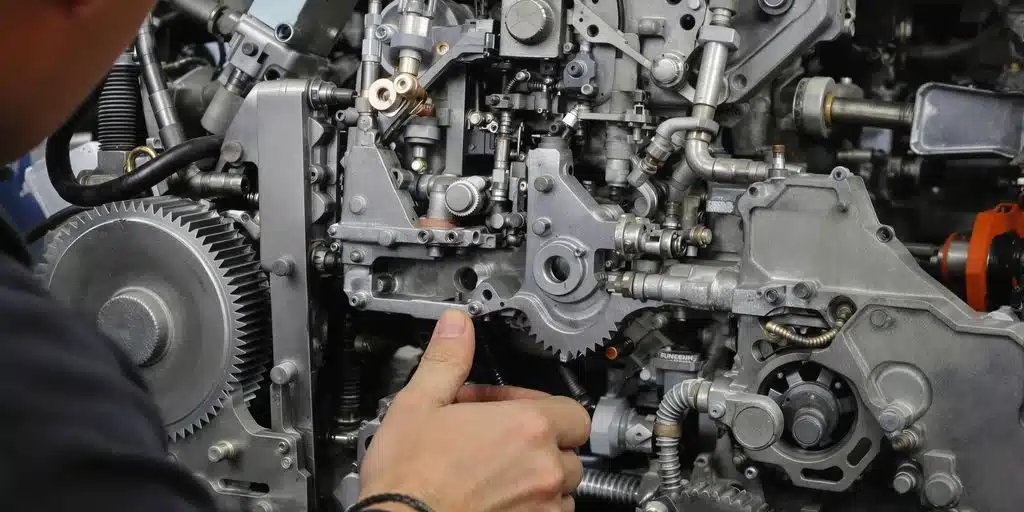
Wondering how to optimize your equipment management to avoid unpleasant surprises? It's time to take a smarter approach. Adopting a preventive maintenance strategy for your equipment means choosing peace of mind and operational efficiency. Together, we'll see how to implement an approach that will save you time and money.
Key Takeaways
- Understanding the basics of preventive maintenance, its objectives and its different forms is the first step.
- An effective preventive strategy is based on the analysis of feedback, manufacturers' recommendations and compliance with standards.
- Approaches such as systematic and condition-based maintenance pave the way for predictive and prescriptive maintenance.
- Assessing the criticality of equipment and digitalizing processes are essential to optimize management.
- The benefits of proactive maintenance include reduced breakdowns, improved safety and increased productivity.
Understanding the basics of preventive maintenance

To get started with preventive maintenance, you first need to understand the basics. It's an approach that aims to prevent problems before they occur, rather than reacting once a piece of equipment has broken down. Think of it like getting your car checked regularly: you'd rather change the brake pads before they completely fail, right? It's exactly the same principle for your machinery.
Definition and objectives of preventive maintenance
Preventive maintenance is a set of planned actions to reduce the likelihood of equipment failure or deterioration in its operation. The main objective is to keep machinery in good working order, ensure production continuity, and extend the lifespan of your assets. Essentially, we aim to anticipate problems to avoid unpleasant surprises and costly downtime.
The different types of preventive maintenance
There are several ways to approach preventive maintenance. We can mainly distinguish:
- Systematic maintenance: It's based on a pre-established schedule. For example, changing a machine's oil every six months, or checking a component every thousand hours of operation. It's a simple approach to implement, but it can sometimes lead to over-maintenance if the intervals are too short.
- Conditional maintenance: Here, we don't rely solely on time, but rather on the actual condition of the equipment. Sensors or regular inspections are used to monitor key parameters (temperature, vibrations, pressure, etc.). Intervention is triggered only when these indicators show signs of weakness. This is a more refined method that allows for optimized interventions.
It is important to note that even a well-planned maintenance operation can introduce risks if not carried out carefully. The risk of accidentally damaging a component during disassembly, for example, always exists.
The benefits of a preventive strategy
Adopting a preventive maintenance strategy means choosing to be proactive. The benefits are numerous: fewer unplanned breakdowns, better planning of interventions, increased safety for your teams, and a longer lifespan for your equipment. This directly translates into greater productivity and reduced costs in the long term. Consider, for example, the corrosion resistance of marine equipment; appropriate preventive maintenance can greatly improve their sustainability.
Implement an effective preventive maintenance strategy
To implement a preventive maintenance strategy that really works, you have to think carefully. It's not just a matter of changing parts randomly or when they break. You need an organized approach. You start by looking at the most important pieces of equipment, the ones whose downtime would cause the most problems. This is called assessing the criticality of the equipment. Then you have to look at the costs. How much does it cost when a machine stops without warning? Often, it's much more expensive than you imagine, between lost production, emergency repairs, and sometimes penalties. You also have to think about how you're going to manage all of this. Do you have the right people? The right tools? This is where digitalization comes in. Using computerized maintenance management software (CMMS) can really help keep track of everything and schedule interventions. Think of it as a way to make your work simpler and more efficient. Basically, it's about moving from a reactive approach to an anticipatory approach. It's a shift in mindset, but the benefits are enormous. We can even go further by using sensors to monitor the condition of machines in real time. This lets us know when a part is starting to wear out before it breaks. It's a bit like having a doctor for your machines, telling you when to pay attention. The idea is to make maintenance less expensive and more predictable. We can even use advanced sensor technologies for that.
Key approaches to preventive maintenance
There are several approaches to preventive maintenance, each with its own benefits and applicable to different types of equipment and situations. Understanding these approaches will help you choose the best strategy for your equipment fleet.
Systematic preventive maintenance
This is the most common approach. It involves scheduling maintenance at regular intervals, whether based on time (e.g., monthly, annually) or usage (e.g., every 1000 hours of operation, every 500 cycles). The idea is to perform tasks like cleaning, lubricating, replacing wear parts, or general inspections before a problem arises. It's a bit like changing your car's oil every recommended mileage. The goal is to reduce the risk of breakdown by intervening in a regular and predictable manner.
Conditional preventive maintenance
Here, we don't rely on a fixed schedule, but rather on the actual condition of the equipment. Sensors, data analysis, or visual inspections are used to monitor wear, temperature, vibrations, or other parameters that indicate that intervention is necessary. For example, if a bearing starts to vibrate abnormally, it is replaced before it breaks. This is a more refined approach that optimizes interventions and avoids replacing parts that are still in good condition. It's a method that is gaining popularity, particularly with technological advances in the field of on-board electronics for vehicles, for example. electronics in the automobile industry.
Towards predictive and prescriptive maintenance
These two approaches go even further. Predictive maintenance uses algorithms and data analysis to anticipate future failures with great accuracy, based on trends and patterns. It doesn't just say that a part is worn out, but predicts when it's likely to fail. Prescriptive maintenance goes even further by proposing specific actions to avoid that failure, analyzing possible causes, and suggesting the best solutions. It's a bit like having an expert who not only sees a problem coming, but also tells you exactly what to do to fix it and why.
Optimizing equipment management through maintenance
To truly optimize your equipment management, you need to look beyond simple repairs. It's a question of overall strategy.
Assess the criticality of equipment
It's essential to know which equipment is most important to your production. If a machine breaks down, which one will cause the most damage? You need to rank your assets according to their importance. For example, a main production line will be more critical than a backup machine.
- Identify key equipment : those whose shutdown blocks all production.
- Determine the consequences of a breakdown : loss of production, impact on safety, repair costs.
- Prioritize maintenance actions : focus efforts on the most critical elements.
A good criticality assessment helps you allocate your resources where they are most needed, avoiding wasting time and money on less important items.
Analyze the costs of unplanned shutdowns
Unplanned breakdowns are expensive. It's not just the cost of the repair itself, but also everything lost during the downtime: lost production, overtime to repair, lost orders, and so on. These costs need to be quantified to fully understand the value of preventive maintenance. Consider tracking this data to get a clear idea of the financial impact of unforeseen events. It's a bit like tracking the price of gold to understand its value. in real time.
Digitize maintenance processes
Using digital tools can be a real game-changer. Computerized maintenance management software (CMMS) centralizes all information: service history, schedules, spare parts, and more. This makes planning easier and more efficient. Additionally, with IoT and sensors, you can continuously monitor the condition of your machines. It's an approach that allows you to anticipate problems before they arise, much like anticipating needs by exploring new technologies. in mining exploration.
In summary, good equipment management requires a detailed analysis of its criticality, an assessment of the costs of breakdowns and the adoption of digital tools for better planning and more precise monitoring.
The concrete benefits of proactive maintenance
By taking a proactive approach to equipment maintenance, you reap tangible benefits that go far beyond simply preventing breakdowns. It's a strategy that directly impacts your productivity, the safety of your teams, and the longevity of your assets.
Reduce the frequency of breakdowns and machine downtime
The most obvious benefit is the drastic reduction in unplanned downtime. By performing regular inspections and maintenance, you identify potential problems before they escalate. This means less unplanned downtime, which directly translates to more stable and reliable production. Think of it like regular car maintenance: a timely oil change prevents costly and unexpected engine breakdowns. The same logic applies to your industrial machinery.
Improve asset safety and lifespan
Well-maintained equipment is inherently safer. The risk of accidents due to mechanical failures is significantly reduced, protecting your staff. Furthermore, by ensuring that each component is operating in optimal condition, you extend the useful life of your machinery. This means you get the most out of your investment and delay the need for costly replacements. It's a bit like taking care of an old tool: with proper maintenance, it can continue to serve you for years to come.
Increase overall productivity
Fewer breakdowns, greater safety, and longer equipment life inevitably lead to increased productivity. Your teams can work without interruption, production lines run more smoothly, and the quality of finished products is often improved because the machines are operating in ideal conditions. A good preventive maintenance strategy also means better work organization and resource optimization. Think about how a well-coordinated team with reliable tools can accomplish more work. That's exactly what you get with proactive maintenance. For example, in the aerospace industry, compliance with maintenance protocols is essential to ensure flight safety and aircraft performance.
Tools for preventive maintenance
For truly effective maintenance, you need to equip yourself with the right tools. Without them, you risk wasting time and missing out on important information. Fortunately, technology today offers us some truly compelling solutions for managing your equipment.
The contribution of CMMS software
Computerized Maintenance Management System (CMMS) software has become an essential ally. It allows you to centralize all information related to your equipment: maintenance history, preventive maintenance plans, spare parts inventory management, etc. Good CMMS software helps you plan your interventions optimally and monitor their progress. This allows you to easily identify the equipment that requires the most attention and adapt your strategy based on the data collected. It's a bit like having a complete dashboard for all your maintenance.
The use of sensors and data analysis
To take this a step further, installing sensors on your machines is a great idea. These sensors collect real-time data on the operating status of your equipment: temperature, vibrations, pressure, etc. This information is then analyzed to detect anomalies or signs of degradation before a breakdown occurs. Think of it as
To keep your machines running smoothly and without any problems, it's important to do preventative maintenance. It's like going to the doctor to check that everything is okay before you get sick. There are plenty ofsuper useful tools for that. These tools help spot small issues before they become big problems. Want to know how these tools can help your business? Come discover on our website how to choose the right tools for top-notch maintenance!
Bottom line: your gear, your peace of mind
There you have it, you now have all the information you need to implement an effective preventive maintenance strategy. Remember, the goal is to keep your equipment in good working order, reduce unexpected issues, and ultimately make your life easier. Think of it like regular maintenance for your car: it avoids major hassles and allows you to drive more peacefully. So, go ahead, adapt these tips to your situation, and see the difference it can make in your daily life. Your machines will thank you, and so will you!
Frequently Asked Questions
What is preventive maintenance and why is it important?
To get started, you first need to understand what preventive maintenance is. It's a bit like servicing your car before it breaks down. We check the condition of parts, clean, lubricate, and replace worn parts—all to avoid major problems. The goal is to keep your machines running smoothly and avoid unexpected breakdowns.
What are the different types of preventive maintenance?
There are several ways to perform preventive maintenance. Sometimes you follow a schedule, like an annual doctor's visit. Other times, you check the machine's condition—for example, if it's making a strange noise or getting too hot—and intervene when necessary. Later, you can even use sensors to predict when a part is going to break.
What are the concrete benefits of performing preventive maintenance?
Adopting a preventative strategy is great for several reasons! First, you'll see far fewer breakdowns, meaning fewer unplanned shutdowns that waste time and money. Your machines will also last longer, and everyone will be safer while working. Basically, it makes everything simpler and more efficient.
How to decide when to perform maintenance and on which machines?
To properly organize your interventions, first consider which machines are most important. If one machine stops, does the entire factory shut down? Also, look at what your equipment manufacturers say; they often provide good advice. And don't forget to consider the rules and laws that apply to your industry.
What tools can help me organize my preventive maintenance?
Modern tools like CMMS (Computerized Maintenance Management System) software are like super-intelligent assistants. They help you record all your work, plan future ones, and even analyze what happened. This allows you to better manage your parts inventory and plan your teams' work.
How can artificial intelligence and IoT improve maintenance?
Artificial intelligence (AI) and the Internet of Things (IoT) are game changers! IoT involves putting sensors on your machines so they can communicate their status. AI analyzes all this information to predict failures before they happen. It's like having a superpower to anticipate problems!
