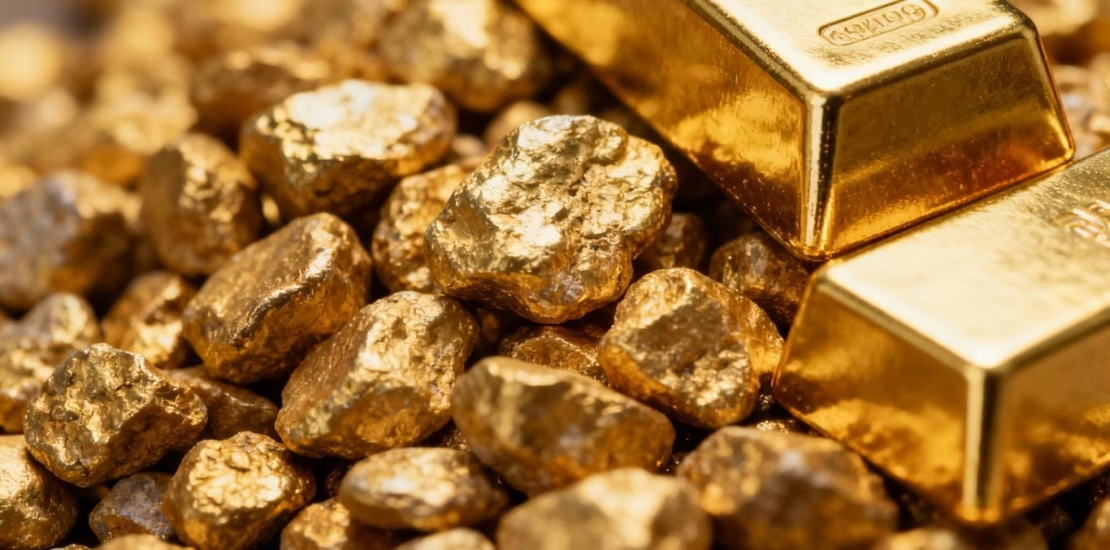
Are you wondering if the gold you hold in your hands has the same value whether it's freshly mined or has already had a previous life? It's a legitimate question, especially now that we're increasingly concerned about the impact of our choices. Is recycled gold of the same quality as new gold? Let's delve into the fascinating world of this precious metal to separate fact from fiction and understand what lies behind these two origins.
Key points
- Recycled gold and new gold share the same purity and physical properties once the remelting and purification process is complete.
- Choosing recycled gold significantly reduces the environmental impact associated with mining, energy consumption, and greenhouse gas emissions.
- Ethical gold (Fairmined) is distinguished by production standards that guarantee respect for human rights and the environment, while second-hand gold brings a historical and emotional dimension.
- Recycled gold may have a lower production cost, influencing the global market and offering an investment alternative while retaining its safe-haven status.
- The manufacture of gold bars and coins, whether new or recycled, must comply with strict international standards such as those of the LBMA to guarantee their quality and acceptance on the market.
The intrinsic quality of recycled gold
Purity and properties of recycled gold
So, is the gold we recover, the gold that's already had a first life, as good as the gold that comes straight from the mine? The short answer is yes. Gold is a bit like water: it doesn't lose any of its properties, no matter how many times it changes form. When we recycle gold, we melt it at a very precise temperature, around 1064°C. That's where the magic happens: the metal goes from solid to liquid, and during this process, we can purify it. We separate the gold from other metals and impurities. If all goes well, we obtain gold of a purity that can be almost identical to that of new gold. In short, recycled gold retains its value and fundamental characteristics.
The process of transforming recycled gold
Gold recycling is a bit like giving an old piece of jewelry or an electronic component a second chance. Here's how it works, basically:
- Collection and sorting: We collect everything that contains gold: old jewelry, broken coins, electronic waste (yes, even that!).
- Melting and refining: The whole thing is heated to a very high temperature to melt the gold. That's where it's separated from the other materials.
- Purification: Chemical or electrolytic treatments are used to eliminate the last traces of impurities and obtain very pure gold.
- Fitness: The purified gold is then ready to be melted down and mixed with other metals if necessary, to create new jewelry, ingots or coins.
It's a cycle that requires a certain amount of know-how, but avoids digging the earth any further.
Comparison with new gold: a fundamental equality
When comparing recycled gold to new gold, there isn't really a difference in terms of intrinsic quality. Gold is still gold. Its purity, if the recycling process is carried out properly, can reach 99,99%, just like mined gold. The difference lies more in the environmental impact and origin. Recycled gold has a lighter environmental footprint because it avoids the negative impacts of mining. But once it's transformed, you have a precious metal in your hands that has the same properties and value as if it were freshly mined. It's a smart way to enjoy the benefits of gold without increasing our ecological footprint.
The ecological benefits of recycled gold
When we think of gold, we often imagine distant mines and extraction processes that can leave their mark. But have you ever considered the environmental impact of the gold you own? Choosing recycled gold is a concrete step for the planet. It's a smart way to enjoy the beauty and value of this precious metal while minimizing our ecological footprint.
Reducing mining impact
Mining new gold can have a significant environmental impact. Consider the altered landscapes, the potentially enormous water consumption, and the use of sometimes harmful chemicals. By choosing recycled gold, you directly reduce the demand for this newly mined gold. It's a bit like choosing to repair an item rather than buy a new one: you limit the need for new resources. Fewer mines in operation means less deforestation, less soil and water pollution. This approach helps preserve ecosystems and reduce the pressure on our Earth's natural resources. It's a process that fits perfectly within the principles of a circular economy, where the goal is to reuse what already exists.
Reduced energy consumption
The gold recycling process is often less energy-intensive than mining. It's worth noting that there's no need to dig tunnels or process enormous quantities of rock to find a few grams of gold. Methods for recovering and purifying existing gold generally require less energy. Less energy consumed means fewer greenhouse gas emissions associated with this production. This is a significant advantage, given the importance of reducing our overall energy consumption to combat climate change. It's an often underestimated point, but one that carries considerable weight in the environmental balance.
Limiting greenhouse gas emissions
Directly linked to reducing energy consumption, gold recycling also helps limit greenhouse gas emissions. Mining, transporting materials, refining—all of these processes generate CO2. By using gold already in circulation, we avoid some of these polluting steps. According to some estimates, producing raw materials from recycled metals can significantly reduce air pollution and decrease CO2 emissions. It's therefore a cleaner way to meet our demand for gold. It's a sensible choice for a more sustainable future. If you're looking to invest responsibly, recycled gold is a path worth exploring. reduce your impact.
Choosing recycled gold means opting for a more sustainable approach that respects our planet's resources. It's an alternative that combines the preciousness of gold with a heightened environmental awareness, proving that it's possible to have both.
Recycled gold versus ethical and second-hand gold
So, we're talking about gold, but not just any gold. We've seen that recycled gold is great for the planet, but how does it compare to other options like ethical gold or secondhand gold? That's a good question, because behind every gram of gold, there's a story and issues at stake. Let's take a closer look.
Definition of ethical (Fairmined) gold
When we talk about ethical gold, we often think of the "Fairmined" label. It's not just a trendy name; it's a genuine commitment. The idea is to ensure that the gold you buy comes from small, often artisanal, mining operations. Here, the emphasis is on respect for people and the environment. This means that miners must work in good conditions, be paid fairly, and that the environment around the mine must be protected as much as possible. The Alliance for Responsible Mining (ARM) established these fairly strict rules. So, if you choose Fairmined gold, you know you're supporting a fairer and more responsible model, far removed from large-scale mining operations that can sometimes cause problems.
Second-hand gold: a historical and emotional dimension
Second-hand gold is a bit like rummaging through an attic. We're talking about antique jewelry, vintage pieces—basically, anything that's already had a life before ending up in your hands. The advantage is that it's often more affordable than new gold, and then there's that little something extra: a story. Each piece can tell a tale, bear the imprint of the past. You can find it at antique shops, markets, or even online. But be careful, you still need to be a little vigilant. Make sure of the quality and authenticity. Look for hallmarks, ask for advice, or have it checked by an expert. It's a way to own gold while giving a second life to objects that already have a soul.
Selection criteria for responsible gold
So, how do you choose the gold that suits you best, while being a little more responsible? It's a bit like grocery shopping, you have to look at the labels and ask yourself the right questions.
- The origin: Where does this gold come from? Is it recycled, ethical (Fairmined), or second-hand? Each option has its advantages.
- Transparency: Is the seller clear about the origin and manufacturing process? Good traceability is reassuring.
- The impact: What is the environmental and social impact of this gold? Recycled gold is great for the planet, Fairmined gold is good for working conditions, and it's an opportunity to give new life.
- The quality : Regardless of its origin, make sure the gold is of good purity and meets the standards you expect, especially if you are aiming for an investment.
Choosing gold is more than just a transaction. It's an act that can have an impact. By learning about the different options, you can make a choice that aligns with your values, whether it's for jewelry, an investment piece, or simply for the pleasure of owning this precious metal.
The economic impact of recycled gold
When we talk about recycled gold, we often think about the environmental aspect, and that's understandable. But there's also a whole economic side that's really interesting to consider. In fact, the gold we recover has a direct impact on the market and on our wallets. It's not just about the planet, it's also about money.
Production cost and resale price
So, let's talk money. The thing is, producing gold from scratch costs a fortune. It involves mining, transporting, refining—all with machines that consume energy and sometimes use products that aren't very environmentally friendly. When you recycle gold, you avoid a good portion of these steps. This means the production cost is often lower. Lower costs for the producer can mean a better price for you, the buyer. Of course, there are still costs involved: collecting old jewelry, sorting it, and purifying it requires labor and technology. But overall, recycled gold has the potential to be more affordable.
Influence on the global gold market
Just imagine: the more recycled gold that enters the market, the less needs to be extracted from mines. It makes sense, doesn't it? This increased availability of recycled gold can have an effect on prices. It can help stabilize the Gold pricesor at least to limit the large price spikes that occur when supply becomes scarce. More and more companies, particularly in the jewelry sector, are choosing to incorporate recycled gold into their creations. This is pushing the market in this direction and shows that recycled gold is not just a niche market, but a real and significant alternative.
Recycled gold as a safe haven asset
We all know that gold is a bit like the safe haven of the economy. When things get tough, when markets panic, people turn to gold. And recycled gold does exactly the same thing. It retains its safe-haven status. In fact, its more consistent availability thanks to recycling could even make the gold market more stable. Less dependence on the vagaries of mining is rather good news for those looking to secure their assets. Buying recycled gold is also often a more conscious choice, which can attract investors who want their money to have meaning, beyond just returns. It's a way of thinking about investing differently, aligning your finances with your values. To learn more about the different forms of investment, you can look into... gold ingots.
Recycled gold isn't just an eco-friendly alternative; it's also an economic driver that can make this precious metal more accessible and the market more stable. It's an approach that makes sense for your wallet and for the planet.
The manufacture of gold bars and coins
Gold bullion manufacturing process
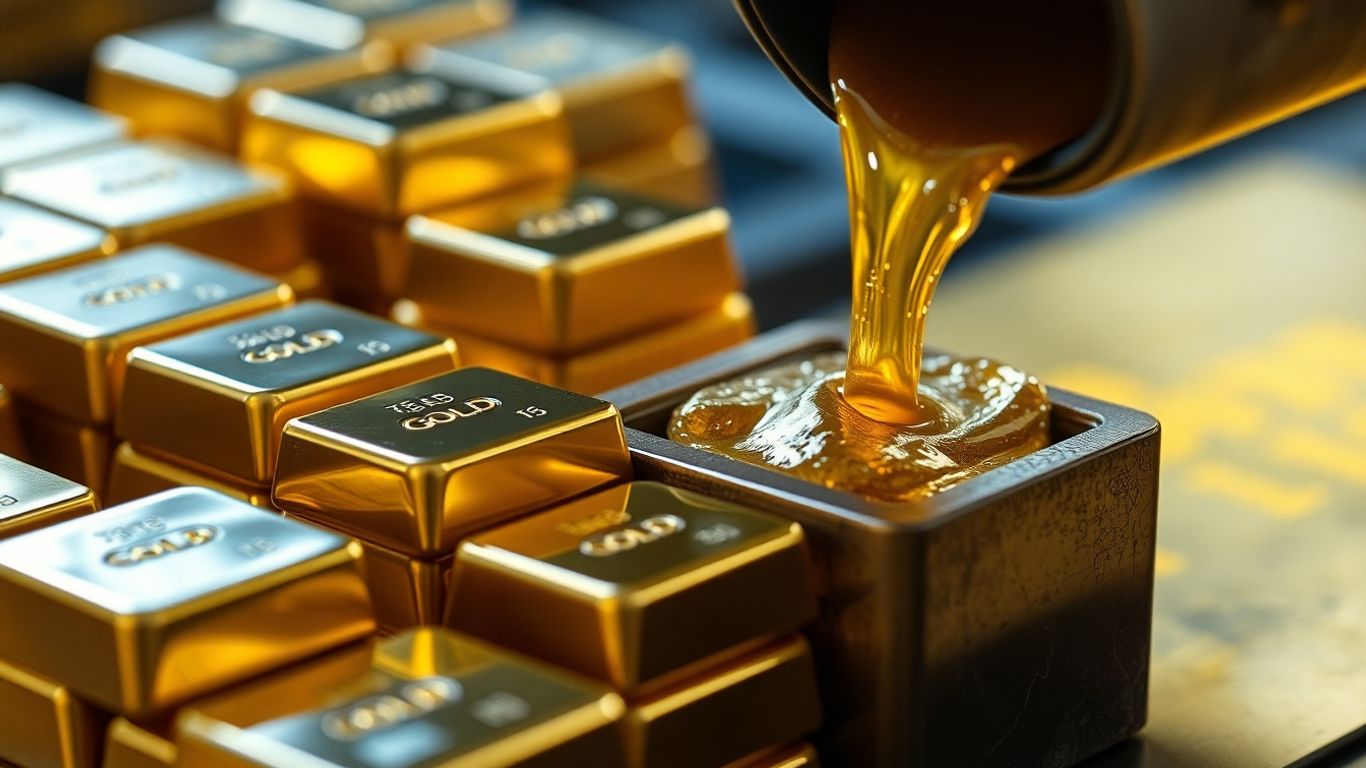
When we talk about gold bars, we often picture those imposing ingots we see in movies, but in reality, there's a whole science behind their creation. To make a gold bar, whether it's as small as a gram or larger, the process begins with melting the gold. Recycled gold is used, such as old jewelry, nuggets, or even coins, which are melted at a very precise temperature. Once the gold is liquid, it's poured into molds or stamped to give it its final shape. It's a bit like baking cakes, but with precious metal! There are two main methods: stamping, where sheets of gold are cut and pressed to create a clean, uniform shape, and casting, where molten gold is poured into a mold before cooling. Both techniques aim to produce a quality product, but stamping often results in a smoother, more precise finish.
International quality standards (LBMA)
For these gold bars to be accepted worldwide, they must adhere to very specific rules. This is where the LBMA, the London Bullion Market Association, comes in. Essentially, they set the highest standards for gold refining. If a gold bar is certified "Good Delivery" by the LBMA, it means it is of impeccable purity (often 99,99%) and meets all the requirements for trading on international markets. It's a bit like a quality label that reassures everyone, from central banks to individual investors. Each gold bar must have a certificate of authenticity detailing its weight, purity, unique serial number, and signed by the refiner. This is extremely important for traceability and to ensure you know exactly what you're buying.
Differences between old and modern ingots
If you look at old ingots, you might notice they're a bit less uniform, with rougher shapes. That's normal; the manufacturing techniques were different. Modern ingots, on the other hand, are the result of technological advances that allow for near-perfect purity and an impeccable finish. They are much more standardized and meet the strict standards of the LBMA. Older French ingots, for example, often still bear the mold marks, giving them a more handcrafted look, but they aren't necessarily recognized on the global market in the same way as modern certified ingots. It's a bit like comparing a classic car to a new one: both have their charm, but their performance and compliance with current standards are very different.
Gold in history and its uses
You know, gold, that shiny yellow metal, has fascinated humanity for millennia. It's even found in some of the oldest archaeological discoveries, like in Varna, Bulgaria, where gold objects dating back to the end of prehistory were unearthed. At that time, it was mainly used to adorn the powerful and for religious rituals. It's pretty amazing to think that this same metal is still so sought after today.
Gold, a precious metal since Antiquity
The history of gold is truly rich. Imagine, the first gold coins were minted by the kings of Lydia around the 8th century BC. This is, in a way, the beginning of the entire monetary system we know today. Later, the Romans were already stockpiling enormous quantities of gold, and in the Middle Ages, ingots became the preferred way to store wealth. It's a tradition that has endured through the ages, and even today, gold ingots, like those certified by the LBMAcontinue to be a symbol of wealth and security.
Gold as a safe haven and monetary pillar
Gold has always played a key role in the monetary stability of nations. Consider the gold standards that governed international trade for so long. Even after the abandonment of this system, gold has retained its status as the ultimate safe-haven asset. In times of economic uncertainty, when financial markets are turbulent, gold tends to maintain its value, or even appreciate. This is why central banks around the world hold enormous quantities of it in their reserves.
Various uses of gold: jewelry, industry and medicine
But gold isn't just for investment or luxury jewelry. You'd be surprised how much it's used in other fields. In industry, for example, its thermal and electrical conductivity, and especially its resistance to oxidation, make it a material of choice for electronic contacts. And in medicine, it's even found in dental prostheses or as a coating for certain medications. It's truly a multifaceted metal!
- Jewelry: This is its most well-known use, representing a large part of global consumption. It is often alloyed with other metals to obtain different colors and greater strength.
- Industry: Essential for electronics, connectors and printed circuit boards, thanks to its conductivity and corrosion resistance.
- Medicine : Used in dentistry, radiology and even in some drug treatments.
- Finance : Its function as a safe haven and store of value is recognized worldwide.
Gold, through its longevity and versatility, has traversed the ages, maintaining a place of honor, whether for its beauty, its economic value, or its technological applications.
Gold has spanned the ages, used to craft magnificent jewelry, precious coins, and even ingots for investment. Its brilliance has always fascinated humankind, who have used it to display wealth or as a decorative object. Want to learn more about the fascinating history of gold and how it has been used throughout history? Visit our website to discover all its secrets and how you too can own some. invest in this precious metal.
So, recycled gold or new gold: which to choose?
Ultimately, as you've probably gathered, there's no single answer to the question of whether recycled gold is of the same quality as new gold. What is certain is that recycled gold has a much smaller impact on our planet. Less mining, less pollution—it's a choice that's good for the Earth. And what about quality? Well, once melted and purified, it's just as good as gold straight from the mine. So, if you're looking to do something for the environment without sacrificing purity, recycled gold is an excellent option. But if tradition or the idea of pristine metal appeals to you more, new gold also has its charms. The important thing is that you now understand what lies behind each option so you can make the choice that best suits you.
Frequently Asked Questions
Is recycled gold really as pure as new gold?
Absolutely! When gold is properly recycled, it regains its original purity. Imagine melting down an old piece of jewelry to make a brand new one: once the cleaning process is complete, the gold is the same. It hasn't lost its qualities; it has simply returned to its purest state, ready to be transformed again.
Why is recycled gold said to be better for the planet?
It's simple: to obtain new gold, you have to dig into the earth, which damages the environment and consumes a lot of energy. By using existing gold, you avoid all of that. Less extraction, less pollution, less energy expended… it's a bit like giving a second life to an object instead of manufacturing a new one that would require more resources.
How can I be sure that a piece of jewelry is made with recycled gold and in a responsible manner?
To be sure, you should look at the labels. There are certifications, such as those that guarantee the gold comes from sources that respect the environment and workers. Sometimes, jewelers clearly indicate whether their gold is recycled. Don't hesitate to ask them; it's their job to inform you!
Is recycled gold cheaper than new gold?
Often, yes! Because the complicated and costly steps of mining are avoided, the production cost of recycled gold can be lower. This can translate into a more affordable price for you. That's good news for your wallet and for the planet.
Is it easy to find jewelry made from recycled gold?
More and more brands and jewelers are offering creations made from recycled gold. It's a growing trend! You can also have your old gold jewelry transformed into new pieces. It's a great way to give a new life to what you already own.
What is the difference between recycled gold and ethical gold?
Recycled gold is gold that has already been used and is melted down again. Ethical gold, on the other hand, comes from mines that adhere to strict rules: fair labor practices, environmental protection, and miners' rights are guaranteed. These are two different approaches, but both aim to make gold more responsibly sourced.