
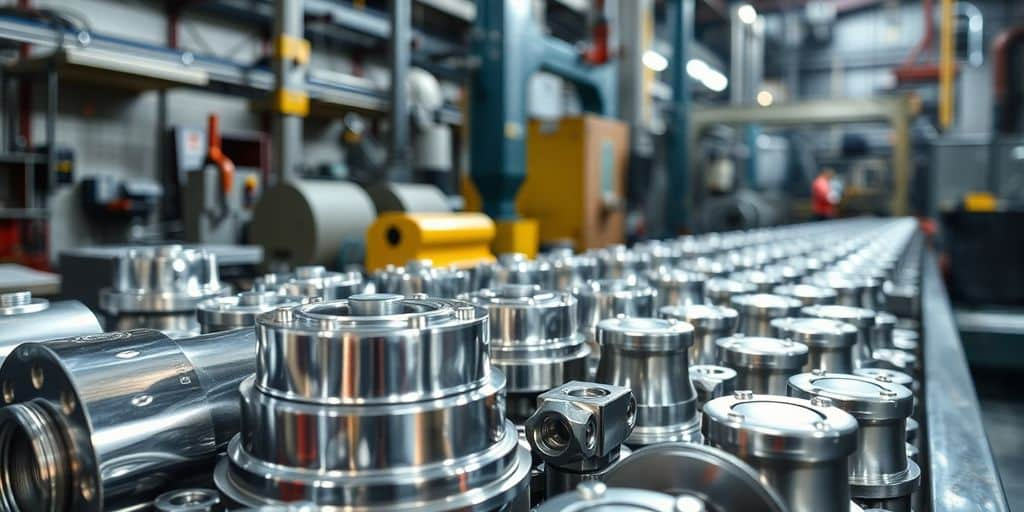
Silver, often considered simply a precious metal, actually plays a fundamental role in many modern industries. As an exceptional conductor of electricity and heat, it has become essential in fields ranging from electronics to medical technology. In this article, we will explore emerging trends in the industrial use of silver, highlighting its various applications and impact on the global economy.
Key points
- Silver is crucial in solar panels, improving energy efficiency.
- Its use in electronics is ubiquitous, from smartphones to electric cars.
- In the medical sector, its antibacterial properties make it a valuable ally.
- The impact of industrial demand on the price of silver is significant, influencing the markets.
- The environmental challenges associated with silver mining require sustainable mining practices.
Innovative Applications of Silver in Industry
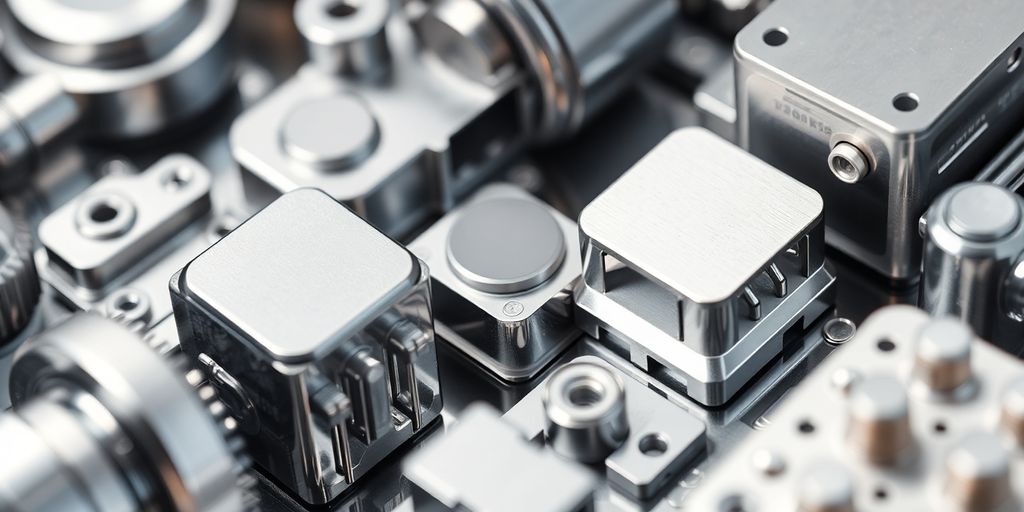
Silver is much more than a shiny metal for grandma's jewelry! In fact, it's everywhere in industry, often where you least expect it. We're not just talking about coins, but also super high-tech applications. It's a bit like the Swiss Army knife of metals, always ready to help.
Solar Panels
Money is a key player in the production of green energy. Thanks to its exceptional conductivity, it is an essential component in the photovoltaic cells of solar panels. Imagine this: every ray of sunlight captured and transformed into electricity is a little bit thanks to money. Isn't that cool?
Electronic Components
In our smartphones, computers, and even electric cars, silver is everywhere! It provides electrical and thermal conduction, making our high-tech gadgets marvels of functionality. It's a bit like the invisible hero of our digital lives. It's safe to say that silver is a key element in the evolution of the gold market. evolution of the gold market.
Medical Technologies
Silver not only connects us to the world, it also keeps us healthy. Its antibacterial properties make it a valuable ally in medical equipment and bandages. It's like the quiet superhero that fights germs.
Silver is truly a multifaceted metal. From solar energy to medicine to electronics, it is essential to our modern world. And this is just the beginning, as researchers continue to discover new applications for this precious metal.
Money and Technology
Money isn't just for Grandma's jewelry! In fact, it's everywhere in modern technology. We're talking about smartphones, computers, and even cleaner energy solutions. It's a bit like the unsung hero of our gadgets and advances. environmentalists.
Use in Smartphones
Did you know that your smartphone contains money? Yes, the one in your pocket! Silver is used for its exceptional electrical conductivity. It ensures a reliable and fast connection between components. Without money, your phone would perform much less well. It's a bit like oil in an engine, except this one's there to keep your favorite apps running.
Advances in Renewable Energy
Silver plays a crucial role in the development of renewable energy. It is used in solar panels, in particular.
- Improving the efficiency of photovoltaic cells
- Reduction of production costs
- Increased sustainability of solar installations
Silver helps harness the sun's energy more efficiently, making solar power more accessible and affordable for everyone. This is an important step toward a greener future.
The Impact on Medical Devices
Silver has well-known antibacterial properties, which is why it's found in many medical devices. From bandages to surgical instruments, silver helps prevent infections and improve care. It's a valuable ally for health. Moreover, if you're looking to invest, consider: investment silver coins because they are increasingly in demand in this sector.
Money in the Energy Sector
Money, as we know, isn't just for show. In fact, it plays a super important role in the energy sector. Let's see how—it's pretty crazy!
Role in Solar Panels
Now that's the big one. Silver is an essential component of solar panels. Why? Because it's a super conductor. As a result, it helps convert sunlight into electricity super efficiently. Without silver, our solar panels would be much less efficient. It's a bit like quiet hero solar energy.
Use in Batteries
We don't think about it as much, but silver is also used in certain batteries, particularly those found in electric cars. Okay, it's not all batteries, but those that use silver have better conductivity and a longer lifespan. It's a bit like putting premium fuel in your car; it boosts performance! And with the growing demand for electric vehicles, silver has a bright future in this field. It's a bit like invest in physical silver for the future.
Applications in Energy Storage Systems
Energy storage is the future! And guess what? Money has a place in it. It's used in certain storage systems to improve their efficiency and sustainability. This is crucial because solar and wind energy are great, but you need to be able to store it when the sun goes down or the wind dies down. Money helps make that possible.
Silver is truly a key player in the energy transition. Its use in solar panels, batteries, and energy storage systems makes it a precious metal for a more sustainable future. It's not just a shiny metal, it's a metal that gets things done!
In short, silver is much more than just a precious metal. Its role in the energy sector is crucial and continues to grow. Demand for silver is expected to increase further in the coming years, with the development of renewable energy and storage technologies.
Money and the Photographic Industry
Silver has long been an essential component in the photography industry, though its role has evolved with the advent of digital technology. We'll take a look at how silver has shaped the history of photography and how it's adapting to new technologies. It's amazing how a single metal can have so many different impacts, right?
Importance in Film Development
The money is an essential in the development of traditional silver films. Silver halide crystals are sensitive to light, and it is this sensitivity that allows images to be captured on film. No money, no film photos! It's kind of like the secret ingredient in a recipe, you know?
Transition to Digital
With the advent of digital, you might think silver would disappear completely from the equation. Well, not quite! Even though digital cameras no longer use film, silver still finds applications in certain sensors and printing technologies. That's a great example of adaptation, right?
Future Prospects for Photography
Although its use has declined, silver could still play a role in future photographic technologies. Research into new types of sensors and printing processes could revive interest in this precious metal. Who knows, maybe we'll see a strong comeback of silver in photography, in one form or another! In the meantime, we can always appreciate gold in industry for its other innovative applications.
Money as a Safe Haven
Silver, often seen as gold's little brother, also has its role to play as a safe haven, especially in times of uncertainty. Let's take a look at this together.
Investing in Times of Uncertainty
When markets are turbulent and the economy is on a roller coaster, many people turn to safer assets. Silver, like gold, can serve as a shield against inflation and financial crises. It's a way to protect your savings when everything else seems to be faltering. It's not a miracle solution, but it can help you sleep soundly.
Comparison with Gold
Gold is often the first thing that comes to mind, and rightly so. It has a long history as a safe haven, especially in times of warBut silver has its advantages. It's generally more affordable, making it accessible to more people. Plus, it has strong industrial demand, which can support its price even when investors aren't panicking. It's kind of like having a Plan B, you know.
Silver Buying Strategies
If the idea of investing in silver appeals to you, there are several ways to do it. You can buy physical silver, such as coins or bars. The advantage is that you have something tangible. You can also invest in exchange-traded funds (ETFs) that track the price of silver. This is simpler, but you don't have the cash in hand.
Here are some strategies to consider:
- Progressive purchase: Buy small quantities regularly to smooth out the purchase price.
- Diversification: Don't put all your eggs in one basket. Combine money with other assets.
- Monitor the market: Be attentive to trends and factors that influence the price of silver.
Investing in money is a bit like playing cards. You need to know the rules, assess the risks, and have a strategy. It's not a game of chance, but it does require a little thought and monitoring. And above all, never invest more than you can afford to lose.
The Impact of Demand on Prices
So, let's talk about what drives silver prices, because it's a bit of a roller coaster ride sometimes! Basically, the more people want silver, the higher the price goes, and vice versa. But there's a lot of other stuff that comes into play.
Market Fluctuations
The silver market is a bit like the Wild West. It's always changing! Prices can go up or down in the blink of an eye, and it's often due to economic news, political events, or even rumors. It's almost as if everyone is trying to guess what's going to happen, and it creates sudden movements. The monetary policies of central banks have a direct impact on the demand for money. When interest rates are low, money becomes a more attractive investment option. In addition, policies quantitative easing may influence borrowing costs and liquidity levels.
Trend Analysis
To try to understand where the market is going, we look at the trendsIs industrial demand increasing? Are investors flocking to silver as a safe haven? Is mining production declining? All of these things give clues.
- Look at price charts over several years.
- Follow reports from analysts and experts.
- Pay attention to economic and political news.
It's a bit like trying to read a crystal ball, but with data and analysis. You can never be certain, but you can get a clearer picture of what's going on.
Forecasts for the future
So, what's next? That's the million-dollar question! Forecasts are always tricky, but we can take a guess. If demand for solar panels and electronics continues to rise, that could push silver prices higher. But if the global economy slows, that could calm things down. Basically, it's a mix of factors that will determine the future of money.
Environmental Challenges of the Silver Industry
The extraction and use of silver, while essential to many industries, is not without consequences for our planet. We'll take a look at the environmental challenges this industry poses and what we can do to minimize the damage. It's not always pretty to see, but it's important to talk about.
Impacts of Extraction
Mining is a bit like open heart surgery for the Earth. This often involves deforesting areas, moving mountains of earth, and using not-so-nice chemicals to separate the silver from the rest. Just imagine the construction site! The consequences could be disastrous: soil and water pollution, destruction of natural habitats, and even health problems for local communities. It's not exactly a joy.
Sustainable Mining Practices
Fortunately, all is not lost! More and more mining companies are realizing their responsibility to the environment. They are beginning to adopt sustainable mining practices, such as reducing the use of toxic chemicals, restoring mine sites after mining, and working with local communities to minimize negative impacts. It's a little more expensive, but it's an investment in the future.
Environmental Regulations
Governments also have a role to play. They implement environmental regulations to oversee the mining industry and ensure it meets certain standards. These regulations may concern mining waste management, water quality protection, and post-mining site restoration. Enforcing these regulations isn't always easy, but they're essential for protecting our environment.
The silver industry absolutely must consider its environmental impact. By adopting sustainable mining practices and complying with environmental regulations, we can minimize damage and ensure a cleaner future for all. It's a significant challenge, but it's one we must meet.
Silver in Jewelry and Decorative Arts
Silver isn't just for collectible coins or the bullion we see in movies. In fact, it has a special place in the world of jewelry and decorative arts. It's found everywhere, from necklaces to sculptures, and it adds a touch of understated elegance that we love. It's a metal precious which has crossed the ages without ever going out of fashion.
Current trends
Silver is super trendy right now, especially in a minimalist style. We're seeing a lot of fine jewelry, delicate rings, and understated bracelets, which highlight the simplicity and purity of the metal. Designers are also playing with different textures, like brushed or oxidized silver, to create a more modern look. And then there's the return of ethnic jewelry, with patterns inspired by cultures around the world. It's almost as if silver is constantly reinventing itself. Besides, if you're looking to diversify your savings, consider silver, an option for diversify your investments.
Comparison with other precious metals
Silver has one distinct advantage: it's more affordable than gold or platinum. This makes it accessible to a wider range of people, which partly explains its popularity. But be careful, this doesn't mean it's less noble! Silver has its own charm, a particular shine that sets it apart from other metals.
- Gold is often associated with luxury and opulence.
- Platinum is known for its strength and rarity.
- Silver is synonymous with elegance and sobriety.
Silver is a metal that pairs easily with other materials, such as leather, wood, or gemstones. This allows you to create original and personalized jewelry that reflects the personality of the wearer.
Market Outlook
The silver market in jewelry and decorative arts has bright prospects ahead. Demand is constantly increasing, driven by new trends and growing consumer interest in artisanal and ethical products. More and more designers are using silver in their collections, and luxury brands are getting involved as well. In short, silver has everything going for it and is sure to continue to shine in the years to come. Silver is an undervalued precious metal.
Key Players in the Silver Industry
The silver industry is a bit like a play with several actors playing crucial roles. There are mining companies, investors, and, of course, production trends that influence the entire show. It's a sector with a long history, but it continues to evolve with new technologies and environmental concerns.
Main Mining Companies
When we talk about giants When it comes to the silver industry, we immediately think of mining companies. These companies are responsible for a large part of global production. They often operate on a large scale, with mines located all over the world. Some of the best known include:
- Fresnillo plc (Mexico)
- KGHM Polska Miedz SA (Poland, Chile)
- Pan American Silver Corp. (Peru, Mexico, Bolivia)
- Hochschild Mining plc (Peru, Argentina)
- Hecla Mining Company (United States, Mexico, Canada)
These companies don't just mine silver; they also produce other metals like gold, copper, and zinc. It's a complex business that requires significant investment and specialized expertise.
Role of Investors
Investors are the industry's financiers. They can be individuals, investment funds, or even banks. Their role is to inject capital into mining companies, allowing them to finance new projects, improve their technologies, or expand their operations. Without these investments, the silver industry would struggle to grow.
Investors have varying risk appetites. Some prefer mining stocks, others ETFs (exchange-traded funds), and still others physical silver (coins, bars). Each option has its pros and cons, and it's important to do your research before taking the plunge.
Production Trends
The silver industry is constantly evolving. Mining companies are always looking to improve their extraction methods, reduce costs, and minimize their environmental impact. Current trends include:
- The increasing automation of mining operations
- Exploration of new geographical areas
- Adopting more sustainable mining practices
- Increased investment in research and development
These trends are essential to ensure the sustainability of the silver industry and to meet the growing demand for this precious metal.
Silver Investment Opportunities
Silver isn't just for grandma's jewelry, is it? It's a metal with more than one trick up its sleeve, especially when it comes to investing. So, shall we get started?
Investing in Physical Silver
Physical money can be coins, bars... In short, something tangible! It's a bit like buying real estate, except it's money. The main advantage is that you have something tangible in your hands. On the other hand, you have to think about storage and security. It's not like you can just leave a silver bar lying around on the coffee table.
- Silver Coins: Easy to buy and sell, ideal for small budgets.
- Silver bars: More attractive for large investments, but require more security.
- Storage costs: Not to be overlooked, especially if you don't have a safe at home.
Investing in physical silver can be a good hedge against inflation, but it's important to research the associated costs before taking the plunge.
Alternative Investment Options
If you don't want to lug around bullion, there are other options, don't worry! We're talking mining stocks, exchange-traded funds (ETFs), and more. It's a bit like investing in the stock market, but in silver. It's simpler, but you still have to be careful. Silver is increasingly recognized as an essential industrial metal. in the current technological era.
- Mining stocks: Investing in companies that extract silver. Potentially more profitable, but riskier.
- Silver ETF: Funds that track the price of silver. Simpler and more diversified, but less control.
- Futures: For professionals, this is speculating on the future price of silver. Very risky, avoid if you're not an expert.
Risk Analysis
Like any investment, money has its risks. The price can fluctuate quite a bit, especially since silver is used in industry. If demand drops, so does the price. So you have to be prepared to see your investment fluctuate. But hey, that's the game, my poor Lucette! It's important to understand the production trends before investing.
- Market Volatility: The price of silver can rise and fall rapidly.
- Industrial Demand: Silver is used in electronics, solar panels, etc. If demand drops, so does the price.
- Economic factors: Inflation, interest rates, etc., can influence the price of money.
Basically, investing in silver is like playing cards: you have to know the rules, be willing to take risks, and above all, not bet more than you can lose. But with a little flair, it can pay off big! Silver can offer investment benefits, especially in times of economic uncertainty. Remember to consult a financial advisor before making any decisions. They can help you assess your risk tolerance and choose the investment options best suited to your situation. Money is a portfolio diversification potential interesting.
Money and Portfolio Diversification
Benefits of Diversification
So, we're talking about portfolio diversification, and money has its place! The idea is not to put all your eggs in one basket. Imagine this: you have stocks, bonds, real estate... and moneyWhy silver? Well, it tends not to move the same way as other assets. When stocks fall, silver can rise, and vice versa. This is called low correlation. It's a bit like having a wild card in your investment game.
- Reduction of overall portfolio risk.
- Potential for improving long-term returns.
- Protection against market volatility.
Investment Strategies
How do you actually do this? There are several options available to you. You can buy physical silver, like coins or bars. It's nice; you have something tangible in your hands. But you have to think about storage and security. Another option: ETFs (Exchange Traded Funds) that track the price of silver. It's simpler and more liquid, but you don't have the physical silver. You can also invest in shares of mining companies that extract silver. This is a little riskier, but the potential for profit is higher. In short, there's something for everyone and every investor profile. Don't forget to diversify a portfolio for better risk management.
Risk Assessment
Be careful, money is not without risk! Its price can be quite volatile, as it depends on supply and demand, but also on global economic conditions. You must therefore be prepared to see your investment fluctuate. Before you start, do your research, assess your risk tolerance, and only invest money that you can afford to lose. That's the basics! Make sure you understand the risks associated with investment before making a decision.
Money can be a valuable asset in a diversified portfolio, but it's essential to understand the risks and opportunities before investing. A sound strategy and a realistic assessment of your financial situation are essential for success.
Portfolio diversification is essential for effective money management. By investing in different types of assets, such as gold and silver, you can reduce risk and increase your chances of profit. Don't wait any longer to secure your financial future! Visit our site to discover how to invest wisely.
To learn more about diversifying your portfolio, visit our website!
In Summary
So there you have it, we've covered the emerging silver trends in the industry. It's crazy how versatile this metal is, right? Whether it's in electronics, medicine, or even renewable energy, silver is everywhere. And with the rise of technology, its demand isn't going to stop there. If you're thinking about investing, silver might be an option to consider. But as always, do your research and stay informed. Who knows, maybe silver will become the new king of precious metals in the years to come!
