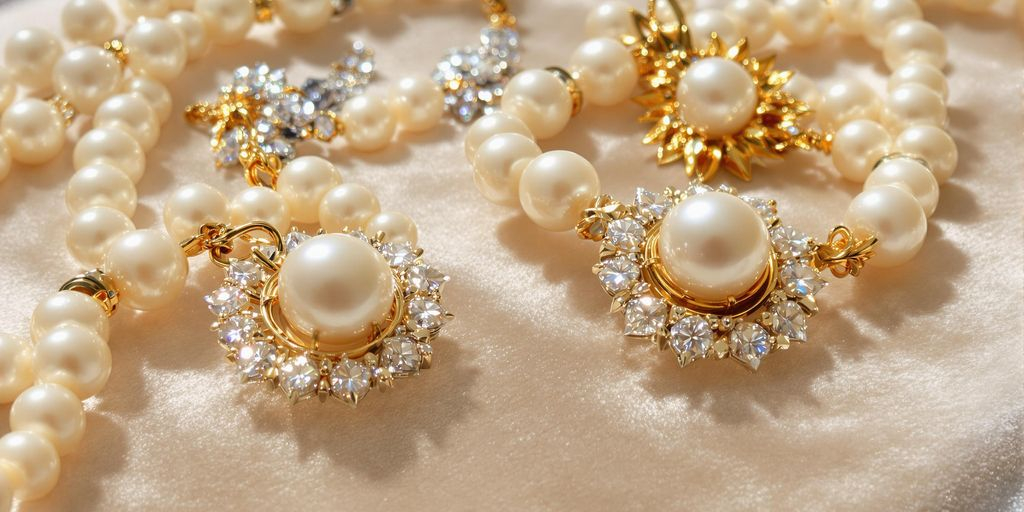
Pearls, with their unique beauty, are often a central element in many jewelry pieces. But beyond their appearance, questions arise about their true value. In this article, we'll explore whether the pearls in my jewelry actually add value, examining various criteria such as size, color, and authenticity, as well as the impact of design and market trends.
Key points
- The size, color and luster of pearls influence their value.
- It is essential to verify the authenticity of pearls to ensure their value.
- Jewelry design and brand reputation can increase the value of pearls.
- Pearl market trends are evolving, influencing their price and demand.
- Pearls have rich cultural and historical symbolism, adding a dimension to their value.
Pearl Value Criteria
The size of the pearls
Okay, let's talk size, because yes, it matters! The bigger a pearl, the more valuable it is. It's a bit like everything else, right? But be careful, a large, poor-quality pearl will never be worth a small, perfect pearl. It's a balance to be found. Imagine, you find a huge pearl, but with flaws everywhere. Meh. Whereas a small, round, and shiny one, then we start talking. It's like sell jewelry, you have to look at all aspects.
The color of pearls
Color is a matter of taste, but it also affects price. White pearls are often the most sought-after, but pink, gray, and even black can be worth a fortune, especially if they have a beautiful intensity and a particular shine. It's a bit like choosing a paint for your house; everyone has their own preferences, but some colors are rarer and therefore more expensive.
The luster of pearls
Ah, luster! It's what makes a pearl shine, what gives it its luster. The higher the luster, the more valuable the pearl. It's like a mirror; the cleaner it is, the more light it reflects. A pearl with a dull luster is like a dirty mirror; it's unattractive. Luster is truly what brings a pearl to life.
Luster is often considered one of the most important criteria. It reflects the quality of the nacre and how light reflects off the pearl's surface. A pearl with good luster will have a deep luster and intense shine.
Here are some examples of luster types and their impact on value:
- Excellent: Sharp and clear thinking.
- Well: Clear reflection, but slightly less vivid.
- Poor: Low and diffuse reflection.
The importance of authenticity
We often wonder if the pearls in our jewelry are real. It's a legitimate question, because authenticity plays a major role in a pearl's value. A genuine pearl, whether natural or cultivated, will always be more valuable than an imitation. But how can you tell the difference? That's what we're going to see.
How to recognize a genuine pearl
Recognizing a genuine pearl requires a little attention. The overall appearance is a good starting point. A genuine pearl will rarely have a perfectly spherical shape. Observe its surface carefully: natural pearls often have small imperfections, irregularities that reflect their natural formation. Imitations, on the other hand, are often too perfect, too smooth. Luster, that particular shine, is also a key indicator. A real pearl will have a deep, warm glow, unlike the sometimes plastic appearance of fakes.
Tests to verify authenticity
If visual observation isn't enough, there are simple tests you can perform at home. The tooth test, for example, involves gently rubbing the pearl against your teeth. A genuine pearl will have a slightly rough, almost sandy surface, while an imitation will be smooth. You can also check the temperature: a real pearl will be cool to the touch for a few moments before warming up, unlike plastic, which will quickly reach room temperature. For a more in-depth assessment, there are jewelry appraisal experts who can use specific tools.
The differences between natural and cultured pearls
It's important to distinguish between natural and cultured pearls. Natural pearls are formed without human intervention, making them extremely rare and therefore very expensive. Cultured pearls, on the other hand, are the result of human intervention: a foreign body is introduced into the oyster, stimulating the formation of the pearl. Although cultured, these pearls are considered authentic because the formation process remains natural. The main difference lies in their price and rarity. Freshwater pearls are often smaller and less expensive than saltwater pearls.
It's good to know that even cultured pearls can have imperfections. These small marks aren't necessarily a defect, but rather a sign of their authenticity. A pearl that's too perfect can be a sign of imitation.
Here is a simplified comparison table:
| Characteristic | Natural Pearl | Cultured Pearl |
|---|---|---|
| Training | Natural, without human intervention | With human intervention (introduction of a nucleus) |
| Scarcity | Very rare | More common |
| Price | Very high | Variable, generally more affordable |
| imperfections | Common | Less frequent, but possible |
In short, the authenticity of a pearl is a determining factor in its value. Learning to distinguish them is essential for making an informed purchase or for sell jewelry in pearls with full knowledge of the facts.
The impact of design on value
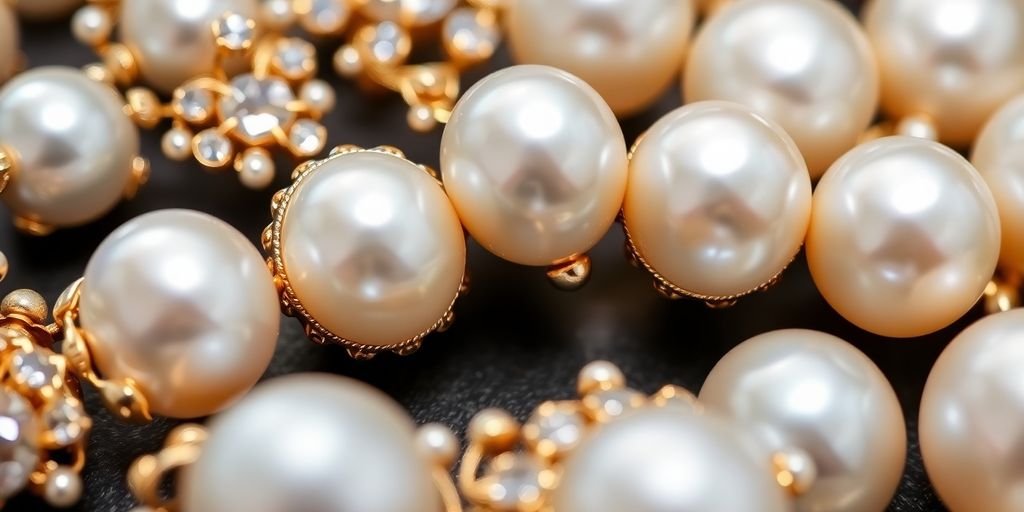
The design of a pearl jewelry piece plays a decisive role in its overall value. An innovative and aesthetically pleasing design can significantly increase the appeal and, consequently, the price of a piece of jewelry. But how exactly does design influence the value of pearls? Let's explore this in more detail.
Pearl Jewelry Styles
There are a multitude of jewelry styles incorporating pearls, each with its own appeal and value. From classic necklaces to modern earrings, delicate bracelets, and bold rings, the way pearls are used in a piece of jewelry can transform its appearance and price. For example, a simple pearl necklace authenticity can be elegant and timeless, while a more intricate design, incorporating other gemstones and precious metals, can make it more luxurious and expensive.
Famous brands and their influence
Luxury jewelry brands have a significant impact on the value of pearl jewelry. A piece from a prestigious brand enjoys increased recognition and trust, which often translates into a higher price. These brands invest in the quality of materials, craftsmanship, and design, which justifies their high-end positioning. Consider houses like Mikimoto or Tiffany & Co., whose pearl creations are synonymous with luxury and elegance. The brand's history and reputation add intangible, but very real, value to the jewelry.
The importance of craftsmanship
Craftsmanship is a key factor in determining the value of pearl jewelry. Careful work by skilled artisans ensures not only the jewelry's durability but also its aesthetic appeal. Mounting techniques, the choice of complementary materials, and attention to detail all contribute to the overall quality of the jewelry. A piece of jewelry made by hand, with impeccable finishes, will always have more value than a piece of mass-produced jewelry.
Quality craftsmanship is reflected in careful attention to detail, meticulous finishing, and increased durability. A piece of jewelry that is well-designed and carefully crafted will better stand the test of time, retaining its value and appeal.
Here are some elements that highlight the importance of craftsmanship:
- The precision of pearl setting.
- The quality of the welds and finishes.
- The choice of materials (precious metals, quality clasps).
In summary, design, brand, and craftsmanship are interdependent elements that significantly influence the value of pearl jewelry. Creative design, combined with a prestigious brand and quality craftsmanship, can transform a simple piece of jewelry into a highly sought-after collector's item. It's therefore important to consider these factors when evaluating your pearl jewelry.
Pearl Market Trends
Evolution of pearl prices
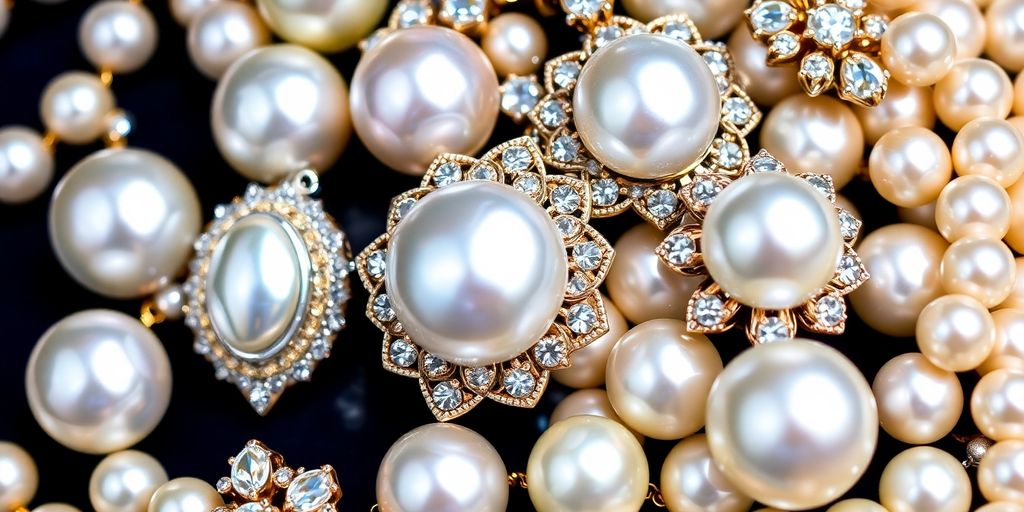
The pearl market, like any luxury market, is subject to fluctuations. Prices are influenced by various factors, including pearl quality, origin, and global economic conditions. There is a growing demand for rare pearls, which can lead to a significant increase in their value. Akoya pearls, for example, are always highly prized, but South Sea and Tahitian pearls, with their impressive colors and sizes, are gaining popularity. It is important to monitor price trends to make an informed investment. For those looking to sell jewelry, understanding these trends is essential.
Current market demand
The demand for pearls is constantly evolving. While classic pearl necklaces remain a timeless choice, there is a growing interest in more modern and bold designs. Younger generations, in particular, are embracing pearls in a more casual way, pairing them with more contemporary outfits.
Here are some observed trends:
- Baroque pearls: Their irregular shape is highly sought after for a unique look.
- Mixture of materials: Pearls are often paired with other gemstones or metals like rose gold or silver.
- Customization: The ability to create custom jewelry with specific beads is becoming increasingly popular.
Influence of celebrities and trends
The influence of celebrities and fashion trends on the pearl market is undeniable. When an actress or influencer wears a particular pearl jewelry piece, it can create an immediate buzz. Jewelry designers closely monitor these trends to offer collections that meet public demand.
Social media plays a crucial role in spreading these trends. Photos of celebrities wearing pearls inspire consumers and encourage them to adopt this style. Therefore, it's essential to stay informed about the latest public appearances and collaborations between brands and influencers.
In summary, the pearl market is dynamic and influenced by many factors. Understanding these trends is essential to appreciating the value of your pearl jewelry and making informed choices when purchasing.
Pearls in culture and symbolism
Meaning of pearls throughout history
Pearls, much more than simple ornaments, have survived the ages, taking on profound meanings. They are found in the most ancient funerary rituals, as evidenced by the pearl discovered in a tomb dating back to 5500 BC. They symbolized protection and wealth in the afterlife. Each civilization then attributed a unique value to the pearl.
- The Arabs saw it as a symbol of wealth.
- The Egyptians associated it with love.
- Indians, to happiness.
- The Chinese believed it had healing properties.
The pearl, with its pearly luster, is a universal symbol that transcends time. It embodies purity, innocence, and wisdom.
Pearls in traditions and rituals
Pearls hold a prominent place in many traditions and rituals around the world. In some cultures, they are given as wedding gifts, symbolizing purity and fidelity. In Asia, pearl powder was used in traditional medicine for its supposed benefits to the skin and mind. Tahitian pearls, with their dark, mysterious color, are considered symbols of strength and wisdom.
Their role in gift giving and celebrations
Giving a pearl is a meaningful gesture. It's a gift that expresses love, affection, and respect. Pearls are often given on special occasions, such as birthdays, weddings, or births. They symbolize beauty, elegance, and sophistication. Moreover, the pearl is a exceptional gift to mark the important moments in life.
| Used | Associated meaning |
|---|---|
| Wedding | Purity, fidelity, lasting happiness |
| Birthday | Love, affection, appreciation of the person |
| Birth | Welcome, prosperity, good fortune for the child |
Pearl Jewelry Appraisal
How to get your jewelry appraised
When it comes to pearl jewelry, appraisal can seem a bit mysterious. But in reality, it's a fairly simple process. The first step is to gather all the information you can about your piece. Knowing the origin of the pearls, the type of clasp, and any certificates of authenticity you may have are super important. These details can significantly influence the value of your jewelry.
Next, you need to do a little research. Look to see if similar jewelry has sold recently, either online or at auction. This will give you an idea of the market price. But be careful, every piece of jewelry is unique, so take this with a grain of salt.
Jewelry appraisal experts
If you want an accurate estimate, it's best to hire an expert. But how do you choose the right one? Here are some points to consider:
- Reputation: Find out about the expert's reputation. Are they well-known in the field? Do they have good references?
- The experience: An expert with many years of experience will likely have a better understanding of the pearl market.
- Specialization: If your jewelry is particularly old or rare, seek out an expert who specializes in this type of jewelry. They will be better able to assess its historical and cultural value.
Having your jewelry appraised by an expert is a bit like going to the doctor. You want someone who is knowledgeable, reliable, and who will take the time to thoroughly examine your jewelry. Don't hesitate to ask questions and ask for an explanation of the appraisal method.
Mistakes to avoid when evaluating
There are a few pitfalls to avoid when getting your pearl jewelry appraised. Here are the most common ones:
- Rely only on online estimates: Online appraisal tools can give a general idea, but they are not a substitute for professional expertise. They do not take into account all the factors that can influence the value of a piece of jewelry. For example, the pearl size play an important role.
- Not checking the expert's references: Before entrusting your jewelry to an expert, make sure they are qualified and trustworthy. Ask for references, check their certifications, and read online reviews.
- Forgetting to take into account the condition of the jewelry: The condition of a pearl jewelry piece can have a significant impact on its value. A damaged or poorly maintained piece of jewelry will be worth less than one in perfect condition. Consider pearl care.
Ultimately, appraising pearl jewelry is a process that requires a bit of research and patience. But with the right information and experts, you can get an accurate and fair estimate of the value of your precious jewelry. Remember that the color of a pearl is also an important factor.
Pearls and their care
Pearls are delicate and require special care to maintain their beauty over time. Unlike diamonds or gold, they are organic and can be damaged by chemicals, excessive heat, or lack of hydration. Here are some tips for keeping your pearl jewelry vibrant.
Tips for preserving the quality of pearls
To keep your pearls looking beautiful for as long as possible, here are some simple tips to apply every day:
- Wear your pearls regularly: Your skin's natural moisture helps maintain its luster. It's a little counterintuitive, but it's true!
- Store them separately: Avoid placing them in contact with other jewelry that could scratch them. A small, soft fabric pouch is ideal.
- Thread your pearls onto silk thread: Silk thread is soft and strong, and allows the pearls to breathe. Check the condition of the thread regularly and have it replaced if necessary. Worn thread can break and cause you to lose your pearls!
Products to avoid for cleaning
Some products can be very harsh on pearls. It's best to avoid them completely:
- Chemicals: Perfumes, hairsprays, household cleaning products... all of these products can dull the luster of pearls. Put on your pearl jewelry after applying perfume and getting dressed.
- Aggressive soaps: Avoid soaps containing bleaching agents or strong fragrances. Choose a mild, neutral soap.
- Hard brushes: They can scratch the surface of the pearls. Use a soft cloth to clean them.
Recommended maintenance frequency
The cleaning frequency depends on how often you wear your pearls. Here's a general idea:
- After each use: Gently wipe your pearls with a soft cloth to remove any traces of perspiration or cosmetics.
- Once a month: Clean your pearls with a slightly damp cloth and mild soap. Rinse them with clean water and dry them thoroughly.
- Once a year: Have your pearl jewelry checked by a professional. They will be able to clean your pearls thoroughly and check the condition of the thread. Consider having your pearls checked by a professional. estimate your jewelry to know their current value.
Keep in mind that pearls are delicate gemstones. Regular and proper care is essential to preserve their beauty and value over the years. By following these simple tips, you can enjoy your pearl jewelry for a long time.
Pearls are beautiful jewels, but they require special care to remain beautiful. To keep them in good condition, it's important to clean them regularly with a soft cloth and store them away from direct light. Avoid exposing them to chemicals like perfumes or lotions. If you'd like to learn more about pearl care and discover our tips, visit our website!
In Summary
In conclusion, pearls in your jewelry can really make a difference in terms of value. They not only add a touch of elegance, but also the potential for financial appreciation. Whether for a family heirloom or a personal purchase, it's important to carefully assess the quality and authenticity of pearls. Ultimately, whether you choose to keep them or sell them, know that these little wonders of nature have a story and value of their own.
Frequently Asked Questions
What are the criteria for assessing the value of a pearl?
The size, color, luster and surface of the pearl are important criteria in assessing its value.
How do you know if a pearl is genuine?
To verify the authenticity of a pearl, one must observe its shape, luster, and surface. Tests can also be performed.
What are the differences between natural and cultured pearls?
Natural pearls are formed without human intervention, while cultured pearls are created with a nucleus inserted into a mollusk.
How does jewelry design influence its value?
The style of jewelry, brand, and quality of craftsmanship can greatly influence the value of pearl jewelry.
What are the current trends in the pearl market?
Pearl prices fluctuate regularly, and demand is influenced by fashion trends and celebrities.
How do I care for my pearl jewelry?
To preserve your pearls, avoid harsh chemicals and clean them gently. Store them in a dry place.