Wondering what the difference is between fine gold and pure gold? That's a great question, as these terms are often used interchangeably, but they have important nuances, especially when it comes to investing or jewelry. It all comes down to the purity of this precious metal. Let's take a look at this together so you can see things more clearly the next time you come across these terms.
Key takeaways
- Understanding gold purity: carats and thousandths. The karat system divides gold into 24 parts, with pure gold being 24 carats (99,9%). Thousandths are more precise, with 999 thousandths corresponding to 99,9% gold.
- 24-karat gold is the standard for pure gold. It is prized for bullion bars and investment coins because it retains its value better. Its color is bright yellow, but it is very soft and susceptible to scratches.
- The distinction between fine gold and pure gold is subtle. Pure gold is gold in its most elemental form. Fine gold often refers to an industry standard of at least 99,5% purity, typical of bullion.
- Gold alloys are created for jewelry. By mixing pure gold with other metals (copper, silver), we obtain stronger and more durable alloys, such as 18-carat gold (75% gold).
- Investment gold prioritizes purity. LBMA-certified bars and coins (Good Delivery standard) have a very high purity (often 999,9‰) to guarantee their value on international markets.
Understanding the terminology: fine gold and pure gold
When we talk about gold, we often hear the terms 'fine gold' and 'pure gold'. Wondering if they're the same thing? Well, not quite, although the difference is subtle and the two terms are often used interchangeably. It all comes down to the degree of purity of this precious metal. Let's break it down together so you know exactly what we're talking about next time.
What is pure gold?
Pure gold is a bit of an ideal, the metal in its most elemental state. It's considered 99,9% pure. This is the standard you'll find in ingots and investment coins. Its color is a very intense, almost radiant yellow. However, you should know that it's also incredibly soft. Imagine being able to bend it with your fingers—that's kind of what it is. This extreme malleability makes it very easy to scratch and deform. That's why you almost never see it in the jewelry you wear every day.
Definition of fine gold
Fine gold is very similar to pure gold, but with a slightly more technical definition in certain contexts. Fine gold is generally defined as a metal with a purity of at least 99,5%. This is the standard often found for investment bars, for example. So-called 'Good Delivery' bars, those accepted by major financial institutions, must have a minimum purity of 99,5%. This is a fairly strict measure that ensures consistent quality for large transactions.
The subtle distinction between 'pure' and 'fine'
So, to summarize, 'pure' refers to gold in its purest possible state, ideally 99,9% (or 24 carats). 'Fine' refers to an industry standard of very high purity, often set at a minimum of 99,5%. In practice, when we talk about investment gold, the two terms often converge on products of extremely high purity, such as 999,9 thousandths. The difference is minimal, but it exists, especially when you look at technical standards. For your jewelry, on the other hand, alloys are almost always used, because pure or fine gold is simply too fragile for everyday use. We'll come back to this later, but these alloys also allow you to create various gold colors, such as rose gold or white gold.
Measuring the purity of gold
When we talk about gold, we often hear terms like 'carats' or 'thousandths'. But what does that really mean? Basically, it's a way of measuring the amount of pure gold in an object. The higher the number, the more gold there is. It's a bit like percentages, but on a different scale.
The carat system: a scale of measurement
The karat system is a fairly old method for assessing the purity of gold. The scale ranges from 0 to 24. For example, if a piece of jewelry is made of 18-karat gold, it means it's composed of 18 parts pure gold out of a total of 24 parts. The rest is other metals, such as copper or silver, added to make it stronger. 24-karat gold is the ultimate, considered 99,9% pure gold. That's why it's also called 'fine gold'.
Here's a little preview:
| Carats | Golden Share | Purity (%) |
|---|---|---|
| 24K | 24/24 | 99.9% |
| 18K | 18/24 | 75% |
| 14K | 14/24 | 58.3% |
The thousandths system for increased precision
In the investment world, the thousandths system is often used, which is more precise than carats. It ranges from 0 to 1000. If an ingot is marked 999 thousandths, this means that it contains 99,9% pure gold. This is the standard for investment gold, such as bullion. For example, we're talking about ingots with a purity of 999,9‰, which is truly the best of the best. This system allows for a more precise comparison between different gold products.
24-carat gold: the benchmark for pure gold
24-karat gold is truly the benchmark when it comes to pure gold. It is composed of 99,9% gold, with very few impurities. That's why it is often called 'fine gold'. However, this gold is very soft and scratches easily. Imagine playing with very soft modeling clay, it's a bit like that! That's why it is generally not used for everyday jewelry, which needs to be more resistant. For jewelry, we prefer to use alloys, such as 18-karat gold (75% gold), which is mixed with other metals to make it stronger and less expensive, while maintaining a beautiful golden color. 24-karat gold is more reserved for investment, like gold ingots or certain specific pieces, where its maximum purity is sought for its intrinsic value.
The characteristics of gold according to its purity
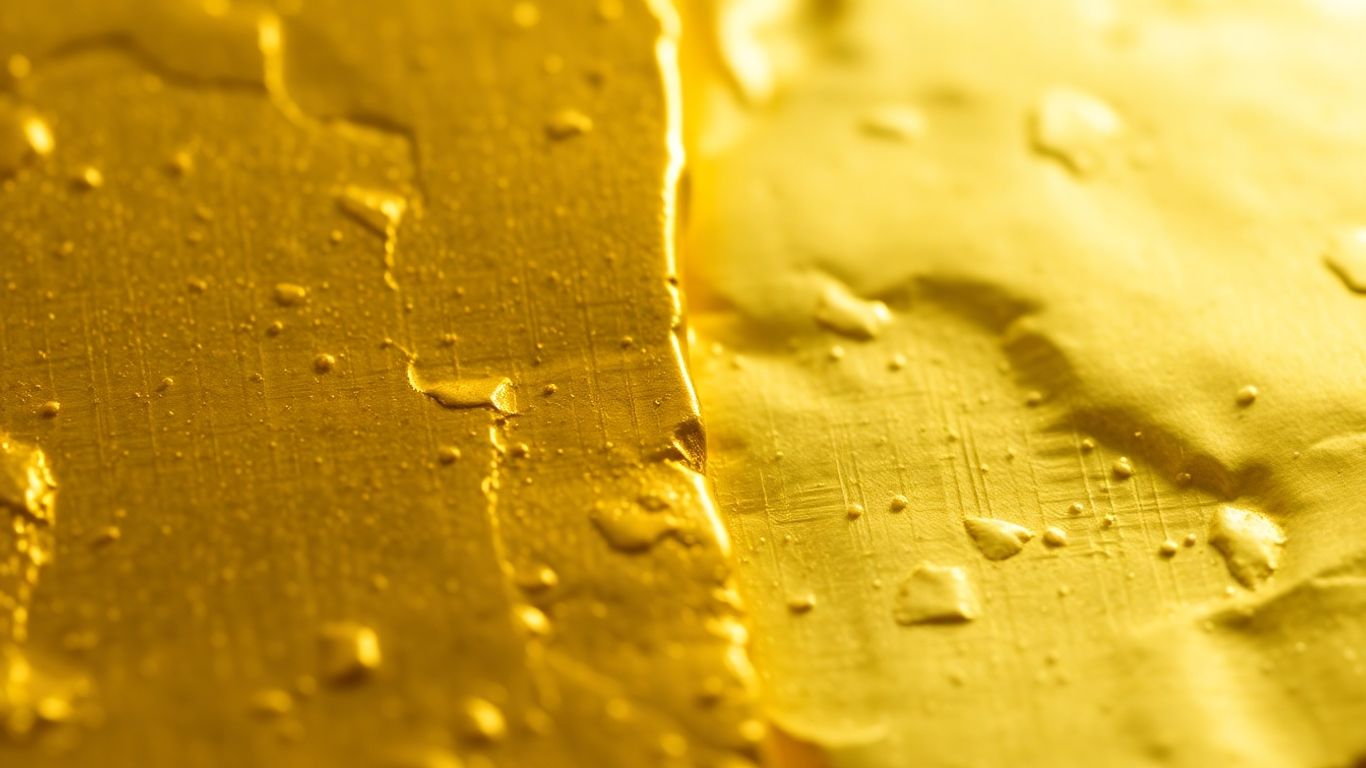
When we talk about gold, we often think of that bright yellow color and its value. But have you ever thought about how its purity influences its properties? It's quite fascinating to see how a metal can change its behavior based solely on what it contains. Pure gold is like the raw, most natural version, and it has its own unique characteristics.
The color and shine of 24-carat gold
24-karat gold is the ultimate, 99,9% gold. Its color is an intense, deep, almost orangey yellow. It's this rich hue that makes it instantly recognizable. It has a rather unique natural shine, a luster unlike that of more commonly seen alloys. It's truly the most vivid and pure color gold can offer. If you've ever seen 24-karat gold, you've probably noticed this difference.
The malleability and fragility of pure gold
This is where it gets interesting. Pure gold is incredibly soft. Imagine: it's 99,9% gold, with almost no other metals to make it harder. This high malleability means it can be stretched, bent, and shaped very easily. This is great for some applications, such as very thin gold leaf used in decoration. However, for jewelry you wear every day, like a ring, it's not ideal. It scratches and becomes damaged very quickly. Think of your favorite ring becoming misshapen or covered in small scratches after a few weeks of normal use. This is the downside of its purity.
Here's a quick summary of what this entails:
- Very malleable: Easy to work with to create complex shapes or very thin sheets.
- Sensitive to scratches: Pure gold is easily damaged by contact with other surfaces.
- Lack of resistance: It does not hold its shape well under pressure or shock.
Pure gold is a bit like raw treasure. It has immense value thanks to its purity, but it also requires a certain amount of care in its daily use. It's this combination of pure beauty and fragility that makes it so fascinating and sought after for very specific uses.
The cost of pure gold
Obviously, the purer the gold, the more expensive it is. 24-karat gold, being almost entirely gold, is logically more expensive than alloys like 18-karat gold (which contains 75% gold) or 14-karat gold (58,3% gold). It's a question of the quantity of precious metal. If you're buying gold as an investment, such as bars or coins, you'll find that their purity is often very high, which explains their price. For jewelry, alloys are often used to strike a good balance between the beauty of gold, its durability, and its cost. It's a bit like choosing between a perfectly ripe but fragile fruit, and another that's a little less perfect but keeps better.
To give you a better idea, here is how purity translates into carats and thousandths:
| Carats | Purity (%) | Thousandths |
|---|---|---|
| 24K | 99.9% | 999 |
| 22K | 91.7% | 916/917 |
| 18K | 75% | 750 |
| 14K | 58.3% | 583/585 |
Uses of gold according to its purity
So, we've seen what pure gold and fine gold are. But what's the point of all this, concretely? Well, the purity of gold changes everything about its use. 24-karat gold, the kind that's almost entirely pure, isn't really the kind of thing you're going to put on your finger or in your ear every day. It's too fragile for that. But then, where does it really shine?
When we talk about 24-karat gold, we immediately think of bars and investment coins. Makes sense, right? Its value is directly linked to its purity. It's a bit like having cash, but in a super-precious and stable version. Central banks have tons of it to balance their economies, and investors use it to keep their money safe. It's also the gold found in certain traditions, where purity symbolizes something sacred, untouchable. Think of religious objects or ornaments in some cultures.
Pure gold is the ultimate symbol of intrinsic value, used where purity is paramount: to guard one's wealth and in spiritual practices.
Gold alloys for everyday jewelry
Okay, what about your everyday jewelry? That's where alloys come in. 24-karat gold is far too soft to withstand everyday bumps and scratches. Imagine your favorite ring becoming misshapen or covered in marks after a few weeks. Not great, eh? To avoid that, pure gold is mixed with other metals. This is called an alloy. These mixtures make the gold stronger, more durable, and even allow you to play with colors. This is how you get classic yellow gold, rose gold, or even white gold (although for the latter, it's a little more complex).
Here is a small table to give you an idea of the most common titles found in jewelry:
| Title in Carats | Purity in Gold | Typical composition |
|---|---|---|
| 24 carat (fine gold) | 99,9% | Pure gold |
| 18 carats | 75% | 75% Gold, 25% other metals (copper, silver) |
| 14 carats | 58,3% | 58,3% Gold, 41,7% other metals |
| 9 carats | 37,5% | 37,5% Gold, 62,5% other metals |
Color variations of gold
Have you ever noticed that not all gold jewelry has the same shade? It's because of the alloys! Pure gold is that intense, bright yellow color. But when you add other metals, the color changes. For example, adding copper gives more pinkish or even red hues. Adding silver can lighten the yellow or even give a greenish tint. And for white gold, it's a little different: yellow gold is mixed with white metals like palladium or nickel, then often coated with a thin layer of rhodium to give it that distinctive silvery sheen and protect it from scratches. It's this ability to change color that makes gold so versatile for jewelry design.
Gold in the world of investment
When we think of investing in gold, we often imagine shiny bars or antique coins. And that's exactly it! Physical gold is like the grandfather of safe investments. It has survived the ages and crises without ever losing its value. That's why it's called a 'safe haven'. Basically, when everything else fails, gold holds its own. It's a bit like having insurance for your money, but in a much more tangible and valuable form.
Gold bars and coins: high purity standards
When you buy gold to invest, the first thing to look at is its purity. For bars and coins, we aim for the highest possible purity. We often talk about 999 thousandths, which means that it contains 99,9% pure gold. This is the equivalent of 24-karat gold, the best of the best. Why this requirement? Because when you invest in gold, you want its value to be directly linked to the Gold prices, not diluted by other metals. It's like buying pure water; you know exactly what you're getting.
Here's a quick overview of the purity standards you'll encounter:
- Investment bars: Typically 999,9‰ (24 carats). This is the standard to ensure maximum value.
- Investment coins: Often 900‰ or 920‰, but some, like the Austrian Philharmonic, reach 999,9‰. The purity is always clearly indicated.
The Good Delivery standard and the LBMA
For your bars to be accepted worldwide, they must meet one golden rule: the 'Good Delivery' standard. The LBMA (London Bullion Market Association) sets the rules. Think of it as an international quality label for physical gold. The foundries that produce these bars must be extremely rigorous: purity, weight, and manufacturing are all controlled. When you buy an LBMA-certified bar, you can be sure it's top-notch and that you can easily resell it anywhere. It's a guarantee of trust and liquidity.
Why choose investment gold?
Investing in gold, whether in bars or coins, means choosing a tangible asset that has proven itself over the centuries. It's a bit like having a cash reserve that doesn't lose value over time or with economic upheavals. Unlike banknotes, which can soar with inflation, gold retains its purchasing power. Plus, in France, it's pretty tax-friendly: no VAT on purchases. It's a smart way to diversify your assets and protect yourself during uncertain times. It's a kind of safety net for your money, but in a physical and valuable form.
Identify the quality of gold
So, how do you know if what you're holding in your hands is really gold, and what quality is it? It's a legitimate question, especially when you're looking to invest or simply check the value of a piece of jewelry. Fortunately, there are several ways to check, some very simple, others a little more technical. You don't need to be an expert to have a good idea of the authenticity of your gold.
Hallmarks are like the identity card of your gold jewelry. They are small, often discreet, marks engraved on the metal. They give you valuable information about the purity of the gold. Think of them as an official guarantee. If you see a hallmark, it's already a good sign, because it means the manufacturer wanted to attest to the quality of their work and the material used. It's a way to ensure that you're buying what you're being sold.
The different European hallmarks and their meaning
In Europe, the thousandths system is primarily used to indicate the purity of gold. It's fairly easy to understand once you understand the code. For example, a piece of jewelry marked '750' means it contains 750 thousandths of pure gold, which corresponds to 18-carat gold. This is the most common standard for fine jewelry. If you see '999', it's near-pure gold, often used for ingots. Here's a quick recap to help you navigate:
| Carat | Thousandths | Percentage of gold |
|---|---|---|
| 10K | 417 | 41,7% |
| 14K | 583 | 58,3% |
| 18K | 750 | 75% |
| 22K | 916 | 91,7% |
| 24K | 1000 | 99,99% |
It's important to know that 24-carat gold, although the purest, is quite soft and easily scratched. This is why it is less commonly used in jewelry than 18-carat gold, which offers a better compromise between purity and strength.
Tests to verify the authenticity of gold
Beyond hallmarks, there are tests you can perform yourself to verify whether your item is indeed gold. These are fairly reliable methods, although nothing replaces the advice of a professional for a thorough appraisal.
- The magnet test: Gold is not magnetic. If your jewelry is attracted to a magnet, it's probably not pure gold. Be careful, though, as some non-magnetic metals can also be used to imitate gold.
- The ceramic test: Take a piece of unglazed ceramic (such as the bottom of a cup) and gently rub your jewelry against it. If a gold streak appears, that's a good sign. A black streak often indicates another metal.
- The water test: Gold is a dense metal. If it floats on the surface of water, it's not gold. A real gold jewel sinks.
- The nitric acid test: This is a more chemical test. A drop of acid is applied to a small, inconspicuous part of the jewelry. If the metal reacts (changes color, foams), it is not pure gold. Pure gold, however, does not react.
It's important to note that these tests, while useful, are not 100% foolproof. For high-value pieces or persistent doubts, consulting a jeweler or expert remains the best approach. They have more precise tools to determine the exact composition of your gold.
Identifying the quality of gold is important to know what you have in your hands. Is it a real treasure or just a shiny object? There are simple tips to help you see things more clearly. For example, looking at color and weight can already provide clues. Want to learn more and become a gold pro? Visit our website to discover all our tips and tricks.
So, which gold should you choose?
There you have it, now you know the difference between fine gold and pure gold. Basically, when we talk about fine gold, we're mainly thinking of 24-karat gold, the purest possible, almost 100%. This is what we use for ingots and investment coins, because it holds its value better. Pure gold is a bit of a similar battle; it's really gold in its rawest form. But be careful, for jewelry, this super-pure gold is often too soft. It scratches and deforms easily. That's why other metals are added to make it stronger, like 18-karat gold, which is great for everyday or luxury jewelry. So, if you want to invest, aim for the purest possible gold. If it's to treat yourself to a beautiful piece of jewelry, a little less pure may be more practical and last longer. Think carefully before you go crazy!
Frequently Asked Questions
What is the difference between fine gold and pure gold?
Basically, pure gold is gold in its most natural state, without any mixture. Fine gold is a bit of the same idea, but in the investment world, it's considered 'fine' at 99,5% purity or higher. 24-karat gold is the benchmark for pure gold, meaning it's 99,9% gold. It's the best for bars and coins!
Why isn't 24 karat gold used for everyday jewelry?
Imagine you're playing with very, very soft play dough. It's a bit like 24-karat gold! It's so pure that it's very soft and easily warps or scratches. For jewelry you wear every day, people prefer to mix pure gold with other metals to make it stronger and more durable. This is called an alloy.
What is the karat and thousandths system for measuring gold?
There are two systems used to determine how pure gold is. Karats are a scale from 1 to 24, with 24 karats being the purest. Millimeters are more precise, ranging from 0 to 1000. For example, 999 millimeters means 99,9% pure gold. This is the system used primarily for bullion bars and investment coins.
How to recognize a real gold jewel?
To determine if your jewelry is actually gold, you need to look for special little marks called hallmarks. These hallmarks are like signatures that guarantee the purity of the gold. If you have any doubts, it's best to seek the advice of a jeweler or expert.
Why is gold considered a safe haven?
Gold is seen as a safe haven because it retains its value even when the economy is struggling. Unlike cash or stocks, which can lose significant value in times of crisis, gold remains stable. It's like a safe for your money when everything else is uncertain.
What are the advantages of investing in gold bars or coins?
Investing in gold bars or coins means owning a tangible asset—that is, you can touch it. It's also a way to protect your money against inflation and crises. Moreover, in France, purchasing investment gold is often VAT-exempt, making it more financially attractive.