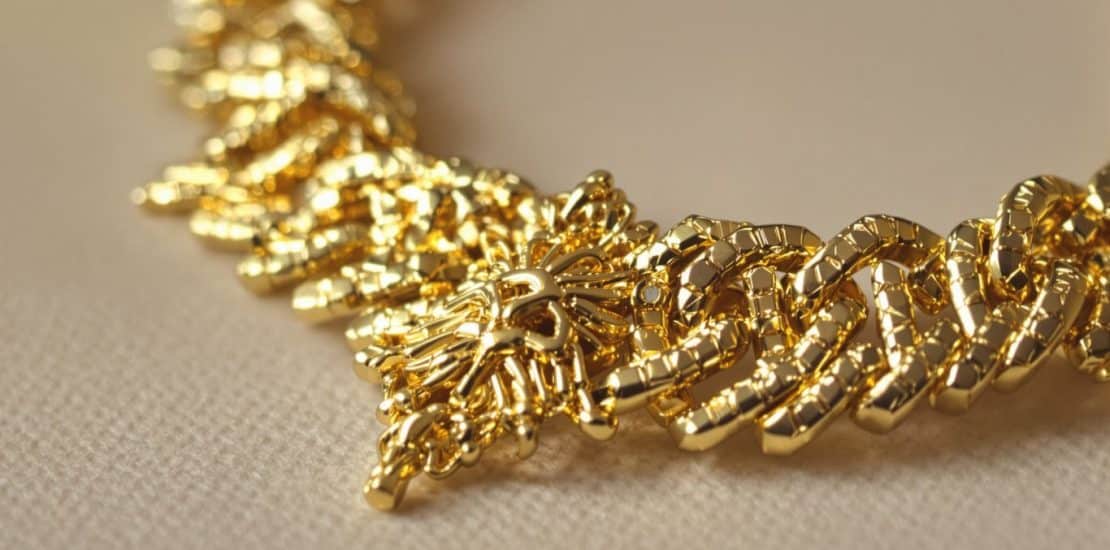
Wondering how to choose gold jewelry that's both beautiful and ethical? It's a great idea! The world of jewelry can sometimes seem complex when you're trying to understand where the materials come from and how they're crafted. This article is here to guide you. Together, we'll explore the various certifications and labels that can help you gain clarity. You'll discover what makes a truly responsible piece of gold jewelry and how to make informed choices for your next purchase.
Key Takeaways
- Traceability is essential: knowing where the gold comes from ensures that it has been extracted under good conditions.
- Several labels exist to guarantee an ethical approach, such as Fairtrade/Fairmined for gold and the Kimberley Process for diamonds.
- Understanding the purity of gold (carats, thousandths) and checking certificates of authenticity are important steps.
- International standards such as those of the LBMA are a benchmark for investment gold, ensuring quality and purity.
- Choosing committed brands that prioritize recycled gold and communicate openly about their practices is an excellent way to support more responsible jewelry.
Understanding Ethical Gold Certifications
When we buy a piece of jewelry, we don't always think about where the gold comes from or how it was extracted. It's a bit like the rest of the luxury industry; we prefer to dream about the beauty of the object rather than ask too many questions about its manufacture. However, gold mining can have quite significant impacts, whether on the environment or on the working conditions of the people who mine it. This is where certifications and labels come into play. They are there to help us see things more clearly and make more conscious choices.
The importance of traceability in jewelry
Knowing where gold comes from is a bit like knowing the history of an object. In jewelry, traceability is the ability to follow the gold's journey, from the mine to the piece of jewelry you hold in your hand. It's not always easy, because the production chain is often long and complex, passing through several countries and several intermediaries. Without this traceability, it is difficult to know whether the gold was extracted with respect for human rights and the environment. A clear chain of custody is the basis for ensuring that your jewelry is truly ethical.
Challenges of the gold industry
The gold industry is a bit of a world apart. We often talk about luxury and beauty, but behind it all lie darker realities. Mining, especially when it's artisanal or illegal, can cause significant damage: soil and water pollution, deforestation, and sometimes even funds conflicts or criminal activities. Not to mention the working conditions, which can be very difficult, even dangerous, for miners. Making this industry cleaner and fairer is a real challenge.
Labels for a more transparent approach
In the face of these challenges, labels and certifications have become essential tools. They serve as a guide for consumers who want to make responsible purchases. These labels are awarded by independent organizations that verify that companies meet strict criteria regarding the environment, social rights, and governance. They provide a guarantee, even though we know that no system is 100% perfect. It's an approach that aims to make the industry more transparent and allow you to make an informed choice.
Here are some points to remember about the importance of labels:
- They provide proof: Rather than relying solely on brand narratives, labels offer validation by an independent third party.
- They encourage good practices: By being certified, companies are encouraged to continuously improve their processes.
- They make your choice easier: They help you quickly identify jewelry that matches your ethical values.
Key labels for responsible gold
Finding gold that respects both people and the planet isn't always easy. Fortunately, there are labels and certifications that help us see things more clearly. They're there to guarantee that the gold we buy has been extracted and processed under fairer and more respectful conditions. It's not an absolute guarantee, as the supply chain is complex, but it's already a significant step forward in giving us greater peace of mind.
The Fairtrade and Fairmined labels
These two labels are particularly important if you're looking for gold from small-scale artisanal mines. They aim to improve the living and working conditions of miners by ensuring fairer pay and prohibiting child labor. They also emphasize environmental protection by limiting the use of hazardous chemicals during extraction.
- Fairtrade Gold : This label guarantees that the gold has been extracted according to strict social and environmental standards, with a premium paid to mining communities.
- Fairmined Gold : It goes even further by ensuring that mines are managed autonomously and responsibly, with total transparency on practices and direct involvement of local communities.
These labels are a real added value for more ethical jewelry, because they directly support small producers.
Responsible Jewelery Council (RJC) certification
The Responsible Jewellery Council (RJC) is an organization dedicated to promoting responsible practices throughout the jewelry supply chain, from mining to retail. To achieve this certification, companies must adhere to a code of conduct that covers human rights, labor conditions, environmental protection, and corporate governance.
The RJC is a comprehensive certification that applies to the entire company, not just the source of the gold. It's a guarantee of seriousness for brands that are committed to a comprehensive approach to responsibility.
The Kimberley Process for Diamonds
Although this article focuses on gold, it's worth noting that certifications also exist for gemstones. The Kimberley Process is an international system established to prevent the trade in conflict diamonds, meaning those that finance wars or armed groups. Diamonds certified through this process are believed to come from legitimate sources and not contribute to armed conflict. However, it's important to note that this process has its limitations and does not address all the ethical issues related to diamond mining, such as working conditions or environmental impact.
It is always good to find out about the labels and certifications available to make more informed choices when purchasing jewelry.
Guarantee the quality and origin of your jewelry
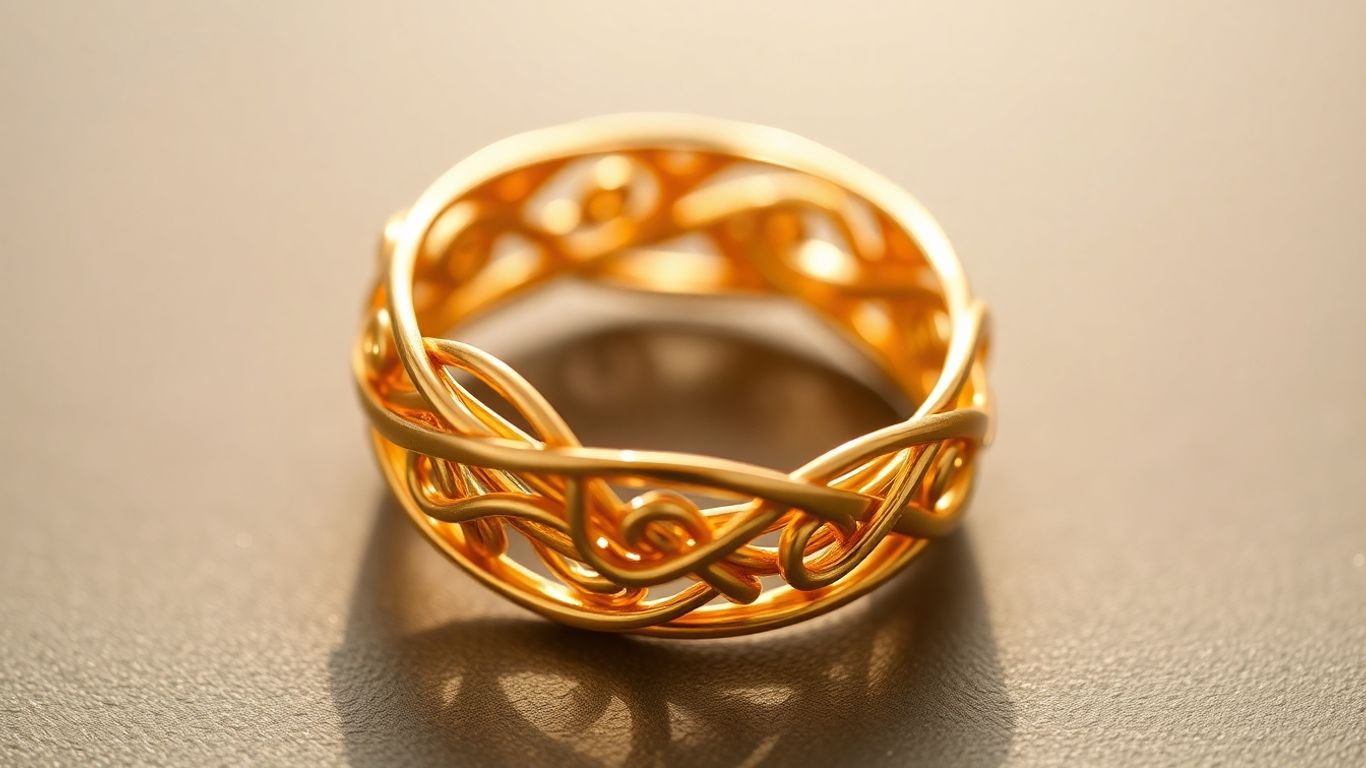
When you buy a piece of jewelry, especially one that's meant to last or be passed down, you want to be sure of what you're buying. It's a bit like choosing a good car: you don't want any unpleasant surprises. So you need to know how to decipher what's behind the price and appearance.
Gold Purity: Understanding Carats and Thousandths
Gold is rarely found 100% pure in jewelry. To make it more durable and give it different colors (like white or rose gold), it is mixed with other metals. This is called an alloy. The amount of pure gold in this alloy determines its purity. In France, the carat and thousandths system is mainly used.
- The Carat: It's a measurement that divides gold into 24 parts. 24-karat gold is pure gold (or almost). 18-karat gold is 18 parts gold out of 24, or 75% pure gold. 14-karat gold is 14 parts gold out of 24, or approximately 58.3% pure gold.
- Thousandths: This is a more precise measurement. We speak of 1000 thousandths for pure gold. So, 18 carat gold corresponds to 750 thousandths (750/1000), and 14 carat gold to 585 thousandths (585/1000).
Knowing that your jewelry is made of 18-carat gold (750/1000) gives you a good indication of its value and quality.
Certificates of authenticity and their role
A certificate of authenticity is like your jewelry's identity card. It confirms that the metal is indeed gold (or another precious metal) and that it has the stated purity. For larger pieces of jewelry, or those sold as an investment (such as ingots), this certificate is often accompanied by a unique number that allows the product to be traced. It may also include the manufacturer's name, the production date, and sometimes even details about the stones set in it. This is an additional guarantee for you, the consumer.
The importance of numbering and seals
For jewelry or precious metals intended for investment, such as ingots, numbering and seals are key elements. Each ingot, for example, has a number engraved on it, which corresponds to the one indicated on its certificate. This is a security measure to prevent counterfeiting and to ensure that the product has not been tampered with. Seals, often in the form of blister packs or tamper-evident packaging, protect the metal and guarantee that it has not been tampered with since leaving the foundry. It's a bit like the wax seal on an old letter; it tells you that everything is in order.
Transparency in jewelry is a bit like shining a light into a dark corner. Numbers, certificates, labels—they all help you understand where your jewelry comes from and what it really contains. This allows you to make more informed choices and feel confident in what you're wearing or giving as a gift.
International standards for investment gold
The London Bullion Market Association (LBMA)
When it comes to investment gold, one name keeps coming up: the LBMA. It's the London-based regulator that sets the rules for the precious metals market. Think of it as the guardian of the quality and purity of gold circulating globally. If you're buying investment gold, chances are it's bound, in some way, to the standards set by the LBMA.
The "Good Delivery" criteria
For a gold bar to be considered investment gold and traded on professional markets, it must meet very specific criteria, known as "Good Delivery." It's a bit like a higher quality label for gold. Here's what it entails:
- Purity: Gold must have a minimum purity of 99,5%. This is referred to as 995 thousandths. For the most common investment bars, such as those found at dealers, this purity is often even higher, reaching 99,99% (or 999,9‰).
- Weight: Standard "Good Delivery" bars weigh approximately 400 ounces, or 12,5 kg. However, the investment market also offers smaller sizes, such as 1g, 5g, 10g, 50g, 100g, 250g, 500g, and 1kg ingots, which must also meet purity standards and be accompanied by certificates.
- Identification : Each ingot must bear a unique serial number, the refiner's name, the title (purity), and the weight. This is essential for traceability.
- Certificate and Seal: Investment bars are usually delivered in a sealed blister pack, accompanied by a certificate of authenticity. This certificate details all the key information about the bar: its number, purity, weight, the name of the foundry, and the date of manufacture. It's your guarantee.
The absence of these elements, or a certificate that does not meet the standards, should alert you to the origin and quality of the gold being offered to you.
LBMA Accredited Refiners
To obtain the precious "Good Delivery" seal of approval, refiners must undergo a fairly stringent accreditation process with the LBMA. They are assessed on their ability to consistently produce high-purity gold, as well as on their integrity and transparency. LBMA-accredited refiners are therefore recognized worldwide for their reliability. When purchasing a gold bar or coin, verifying that the refiner's name is on the LBMA accredited list is an excellent way to ensure the quality and value of your investment. Unfortunately, it should be noted that there are no longer any French foundries listed with the LBMA, which means that bars of French origin are generally not recognized on the international investment gold market.
French know-how and labels of origin
When it comes to jewelry, French craftsmanship has a great reputation, and for good reason. There are labels that exist to guarantee that what you're buying was actually made in France, and according to traditional methods. It's a way to ensure the quality and authenticity of what you're wearing.
The "Joaillerie de France" label
This label is a kind of guarantee that your jewelry was made in France, in accordance with the rules of the art. It means that the creation, transformation, and finishing stages took place on French territory. It's a guarantee of quality and traceability for the consumer.
The "Guaranteed French Origin" designation
This is a bit more advanced than "Joaillerie de France." The "Origine France Garantie" label ensures that 100% of the manufacturing process, from design to finishing, is French. This truly covers the entire production chain and gives you additional assurance about the origin of your jewelry.
French craft titles
In France, we also have titles like "Artisan," "Artisan d'art," or "Maitre artisan." These designations aren't just words; they're issued by the state and certify that the person who created your jewelry is qualified and recognized for their craft. It's a guarantee of skill and traditional know-how. It shows that behind the jewelry, there's a person, a craftsman, who has mastered their art.
It's important to note that these labels and titles aren't just for show. They're the result of a commitment to quality, tradition, and the local economy. Choosing jewelry with these guarantees also means supporting a precious artisanal heritage.
Choose brands committed to ethics
With the increasing number of discussions about sustainability, it's becoming essential to know how to identify brands that make ethics a real priority. This isn't always easy, as the terms "ethical" or "sustainable" aren't regulated in the jewelry world, leaving the door open to greenwashing. So, how can you navigate the landscape and choose truly committed designers?
The criteria for a sustainable and transparent brand
A brand that truly cares about ethics goes beyond mere statements. It questions every aspect of its business and actively seeks to have a positive impact. For you, this means complete transparency about the origin of raw materials and manufacturing conditions. Here are some points to look for:
- Traceability of materials: The brand clearly states where its gold, stones, and other components come from. Ideally, it favors recycled gold or gold from responsible mines.
- Working conditions : It ensures that everyone involved in the production chain, from extraction to finishing, benefits from fair and safe working conditions.
- Environmental impact : The brand seeks to minimize its ecological footprint, for example by using recycled packaging, reducing its energy consumption or limiting the use of chemicals.
- certifications: It relies on recognized labels which attest to its commitments (such as Fairtrade, Fairmined, RJC, etc.).
It's important to understand that 100% ethical, mass-produced jewelry is a myth. The complexity of the supply chain, from mine to boutique, makes absolute transparency very difficult to achieve. What matters is the brand's honesty and proactive approach to improving its practices.
Examples of ethical jewelry houses
Many designers are making ethics and transparency their priority. Here are some examples of brands making concrete commitments:
- JEM (Jewellery Ethically Minded): This brand uses Fairmined-certified gold from mines in Colombia, Peru, and Mongolia. Its production takes place in the Vosges mountains, ensuring complete traceability.
- Blancca: It offers jewelry made from Fairmined-certified 18-carat ethical gold and uses 100% recycled silver. The creations are designed in Paris and made in France.
- Robin Paris: Specializing in wedding jewelry, this house uses Fairmined certified ethical gold and traced stones, with 100% Made in France artisanal manufacturing.
- April Paris: This brand creates socially and ecologically responsible gold wedding jewelry, forged in France.
The importance of recycled and traced gold
Using recycled gold is an excellent way to reduce the environmental and social impact of jewelry. Recycled gold avoids the problems associated with mining, which is often associated with precarious working conditions and ecological damage. Furthermore, choosing traceable gold ensures that every step of its processing is known and controlled, giving you an additional guarantee of the origin and ethics of your jewelry.
Choose brands that care about how they treat people and the planet, it's important. When a company acts fairly and responsibly, it shows that it cares about doing good. It's a good way to show that you support positive values. To learn more about how to make informed choices, visit our website.
In conclusion: your choice matters
So, now you have a better idea of the certifications and labels that exist for ethical gold. It's not always easy to navigate, we agree. But the most important thing is to know that your choices can make a difference. By informing yourself and favoring brands that play the transparency card, you help make the jewelry industry a little fairer and more respectful. So, the next time you're looking for a new piece, keep these tips in mind. Your jewelry will be all the more beautiful if it carries a sincere story.
Frequently Asked Questions
What is ethical gold and why is it important?
Ethical gold is gold mined with care for people and the planet. This is important because normal gold mining can cause problems, such as polluting water or underpaying workers. Choosing ethical gold means supporting a fairer, cleaner way of doing things.
How to recognize ethical gold jewelry?
To be sure that a piece of jewelry is ethical, you should look for special labels, such as Fairtrade or Fairmined. These labels indicate that the gold comes from mines that respect workers and the environment. Sometimes, brands also explain where their gold comes from and how it is processed; this is a sign of transparency.
What is the Fairtrade and Fairmined label?
Fairtrade and Fairmined are labels that guarantee that gold comes from small mines where working conditions are better and wages are fairer. They also ensure that extraction is done with respect for nature, without the use of overly hazardous products.
What is RJC (Responsible Jewellery Council) certification?
The RJC is an organization that monitors whether jewelry companies operate responsibly. They examine whether companies respect human rights and the environment, and whether they are honest throughout their entire production chain, from mining to sale.
Why are we talking about recycled gold?
Recycled gold is gold that has already been used, for example in old jewelry, and is reworked. Using recycled gold is a good thing because it avoids having to extract new quantities of gold, which is often less good for the planet. It's a way to make jewelry more sustainable.
What is the Kimberley Process?
The Kimberley Process primarily concerns diamonds. Its goal is to prevent diamond sales from being used to finance wars or violent groups. Diamonds certified by this process come from reliable sources and are not linked to conflicts.