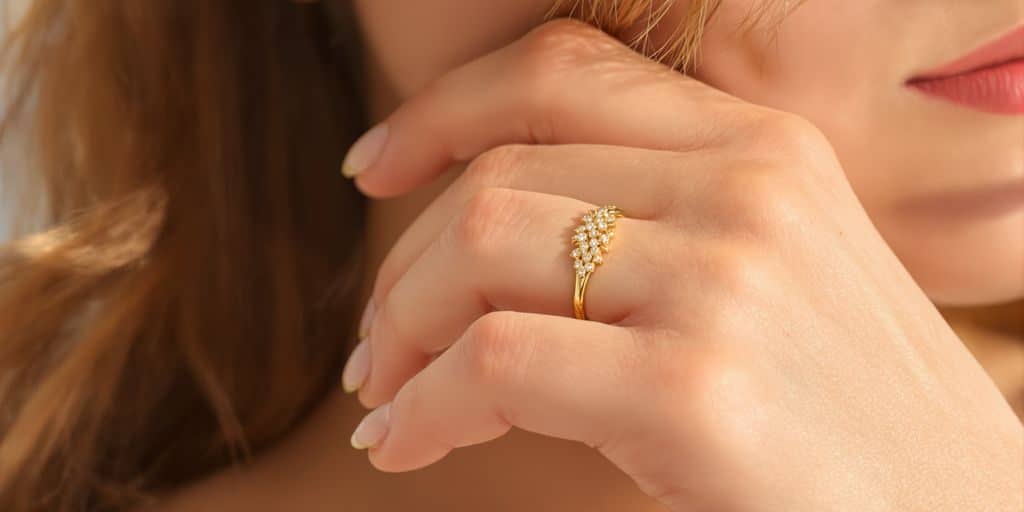
Are you wondering if your 14-karat gold jewelry is really made to be worn every day? It's an excellent question, because we want our beautiful treasures to accompany us without getting damaged. Between durability, shine, and maintenance, there's plenty to ask. Let's take a look together to see if this alloy is the right companion for your daily life.
Key points to remember
- 14 karat gold is 58,5% pure gold, with the remainder being alloys that make it stronger than 18 karat gold. It is this mixture that makes it ideal for everyday use.
- Thanks to these alloys, 14-karat gold is more resistant to scratches and minor everyday impacts. Your jewelry will therefore be less likely to be damaged.
- Its maintenance is quite simple: a little regular cleaning with lukewarm water and mild soap is generally enough to restore its shine.
- 14 karat gold is truly versatile. It lends itself to everything from understated to bold, and it's also more affordable than purer gold.
- Although less expensive than 18-karat gold, 14-karat gold still retains excellent value. It's a good balance between beauty, durability, and investment.
The composition of 14-carat gold and its suitability for everyday use
So, we're wondering if 14-karat gold is really the right choice for everyday wear, right? This is a super common question when looking at jewelry. To put it simply, 14-karat gold is a mixture. It contains 58,3% pure gold, and the rest, or 41,7%, is other metals. These added metals, like copper, silver, or zinc, aren't there for show; they serve to make the gold stronger. It's kind of the perfect compromise between having gold that shines and a piece of jewelry that won't warp or scratch at first glance.
Understanding the gold content of different karats
When we talk about karats for gold, it's just a way of measuring its purity. The higher the number, the more pure gold there is. For example, 24 karats is almost pure gold, 99,9%. It's super beautiful, it shines brightly, but it's also very soft. So, for jewelry we wear every day, it's not ideal, it gets damaged quickly. 18 karats is 75% pure gold. It's a little more resistant than 24 karats, and it's often used for luxury jewelry. And then we get to 14 karats, with its 58,3% pure gold. This is where we start to see a real gain in resistance, which is pretty good for everyday use.
| Caratage | Percentage of pure gold |
|---|---|
| 24K | 99,9% |
| 18K | 75% |
| 14K | 58,3% |
| 9K | 37,5% |
The balance between durability and purity in 14 karat gold
What's interesting about 14-karat gold is precisely this balance. You have enough pure gold to give the jewelry that beautiful warm yellow color and shine that we love so much, but you also have enough other metals to make it more robust. Think of it like this: if you have a 24-karat gold ring, it could bend if you squeeze the steering wheel too hard in your car. A 14-karat gold ring, on the other hand, will be much more resistant to the small bumps and scratches of everyday life. This is what makes it such a popular choice for jewelry that you don't take off, like wedding bands or earrings that you wear all the time.
The color and shine of 14-karat gold for everyday use
The color of 14-karat gold is really nice. It's a little less intense than 18-karat gold, but it's still very yellow and bright. It's a shade that looks good on everyone, no matter your skin tone. And because it's more durable, it keeps its shine longer without having to constantly polish it. It's a bit like jewelry.
The resistance of 14-carat gold to daily wear and tear
When you think about wearing your jewelry every day, the question of its durability quickly arises. 14-karat gold, with its composition of 58,3% pure gold and 41,7% other metals such as copper, silver, or zinc, proves to be an excellent compromise. These added metals are not there for nothing; they make the gold harder and therefore more resistant to the hazards of everyday life.
Durability Comparison Between 14 and 18 Carat Gold
If you're undecided between 14-karat and 18-karat gold for everyday wear, know that 14-karat gold has a distinct advantage in terms of durability. 18-karat gold, containing 75% pure gold, is more malleable and therefore more likely to scratch or deform over time and with impacts. 14-karat gold, on the other hand, is more robust. It's a bit like comparing a piece of butter (18-karat gold) to a piece of hard cheese (14-karat gold): one is more easily damaged than the other.
| Carat | Pure Gold Content | Alloys | Scratch resistance |
|---|---|---|---|
| 18 carats | 75% | 25% | Average |
| 14 carats | 58,3% | 41,7% | Bonne |
The impact of alloys on scratch and impact resistance
The metals added to pure gold to create 14k gold play a key role in its durability. Copper, for example, adds hardness, while silver can soften the color while contributing to strength. It's this expertly blended alloy that allows your 14k gold jewelry to better withstand life's little mishaps: an unfortunate nudge, a drop on the floor, or even rubbing against other items in your bag. They're less prone to warping and unsightly marks than their purer counterparts.
The Benefits of 14k Gold for Frequently Worn Jewelry
Wearing 14-karat gold jewelry every day means choosing practicality without sacrificing elegance. You don't need to remove it to wash dishes or for light sports. It retains its shine longer and requires less specific maintenance than 18-karat or 24-karat gold. It's a wise choice if you like to have your jewelry with you at all times, without having to constantly worry about damaging it. It's a bit like having a reliable car for everyday use: it gets the job done without causing you any hassle.
Caring for 14k gold jewelry for everyday use
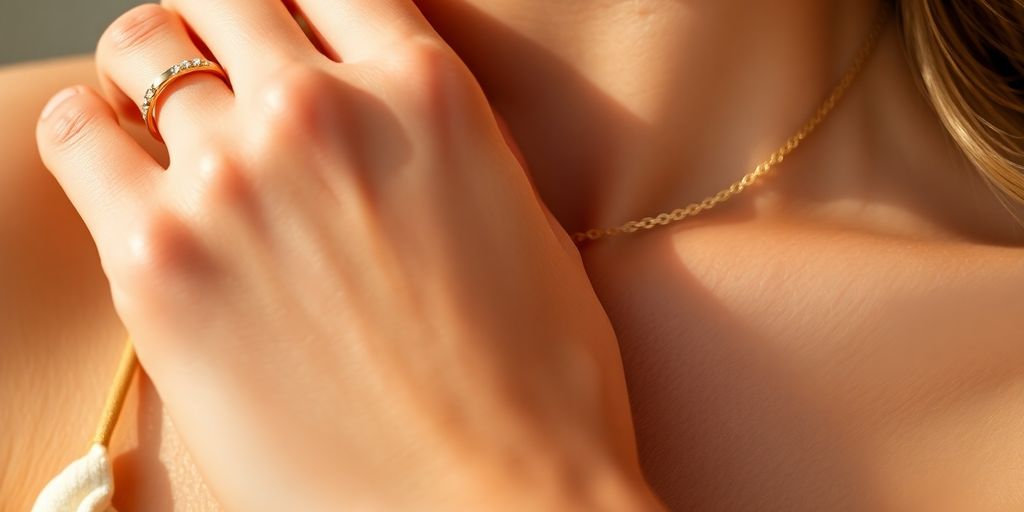
Caring for your 14k gold jewelry is fairly simple, especially if you wear it every day. The idea is to maintain its shine without too much effort.
Tips for Regular Cleaning of 14k Gold Jewelry
To keep your 14k gold jewelry looking its best, a little cleaning from time to time is all it takes. You don't need complicated products.
- Warm water and mild soap: This is the basics. Mix a little mild soap (such as Marseille soap or a dishwashing liquid without harsh agents) into warm water.
- Soaking bath: Soak your jewelry for a few minutes. This helps loosen dirt and cosmetic residue.
- Gentle brushing: Use a soft-bristled toothbrush, or better yet, a special jewelry brush. Brush gently to reach into the nooks and crannies, especially if there are embedded stones.
- Rinsing: Rinse thoroughly with clean water to remove any soap residue.
- Drying: Dry your jewelry with a soft, lint-free cloth. Avoid paper towels, which can scratch.
Precautions to take to preserve the longevity of jewelry
14 karat gold is quite durable, but there are still a few things to avoid to ensure it lasts a long time.
- Avoid chemicals: Perfumes, hairsprays, lotions, and even some household products can tarnish gold or damage any stones. Put on your jewelry last, after you've prepared yourself.
- Beware of shocks: Although 14-karat gold is harder than pure gold, it can still be scratched or deformed. Remove your rings when exercising, gardening, or doing anything that could expose them to impact.
- Don't wear them everywhere: Avoid wearing your 14-carat gold jewelry in the swimming pool (chlorine) or in the sea (salt), as this can also damage it in the long term.
It's important to remember that while 14k gold is built to last, it's not indestructible. A little daily attention goes a long way in keeping your pieces looking beautiful for years to come.
When should you avoid wearing 14-karat gold jewelry?
There are times when it's best to leave your 14k gold jewelry in its case.
- Intense physical activities: As mentioned, sports, DIY, or any manual work can scratch or deform your jewelry.
- Contact with aggressive products: Cleaning the house, swimming in a chlorinated pool, or even certain recreational activities can be harmful.
- Situations at risk of loss: If you are going to crowded places or are at risk of losing your jewelry, it is safer to leave it at home.
By following these simple tips, you can ensure that your 14k gold jewelry will retain its shine and beauty for years to come, even with everyday wear.
The Versatility of 14k Gold in Jewelry Design
14-karat gold is a bit like the Swiss Army knife of precious metals in jewelry. Its composition, which combines 58,3% pure gold with 41,7% other metals such as copper, silver, and zinc, gives it truly interesting properties for jewelry creation.
14k gold as a preferred choice for various jewelry styles
Thanks to this alloy, 14-karat gold is more resistant than 18-karat gold, for example. This means it scratches less easily and is more resistant to everyday bumps. This is super practical when you want to wear your jewelry every day without worrying about damaging it. Whether you like fine and delicate jewelry or more imposing pieces, 14-karat gold adapts. It's perfect for rings, necklaces, bracelets, and even earrings that you never take off. Its color, whether yellow, pink, or white, remains beautiful and vibrant, without tarnishing too quickly.
The ability of 14 karat gold to be worked into intricate designs
The great thing about 14-karat gold is that it's malleable enough to allow artisan jewelers to create some truly incredible pieces. They can sculpt fine details, set gemstones with precision, or create intricate openwork designs. This ease of work, combined with its strength, makes it a material of choice for creations that stand out from the crowd, while still remaining wearable for everyday use. So you can have jewelry with character, with elaborate designs, without sacrificing durability.
14-carat gold: a balance between aesthetics and practicality
Ultimately, 14-karat gold is truly the right compromise. You get the beauty and value of gold, with a touch of color and shine that you love, but you also benefit from increased durability that makes it perfect for everyday use. It's a bit like choosing a car: you want it to be beautiful, but also reliable and practical for going anywhere. 14-karat gold is exactly that for your jewelry. It allows you to indulge yourself without constraints, wearing pieces that truly reflect your personality, day after day.
The Value and Affordability of 14-Carat Gold
When it comes to jewelry, 14-karat gold often stands out as an excellent compromise. It offers what you might call the best of both worlds: a generous amount of pure gold, but also a robustness that makes it practical for everyday use. It's a bit like choosing a car that's both stylish and reliable for all your travels.
Why is 14k gold an affordable choice?
One of the main reasons you might consider 14-karat gold is its price. Compared to 18-karat or 24-karat gold, it's more affordable. Why? Simply because it contains less pure gold. A piece of 14-karat gold jewelry is composed of 58,3% pure gold, with the remainder being an alloy of other metals like copper, zinc, or nickel. This alloy, in addition to making it more durable, lowers its overall cost. It's a way to have a piece of gold jewelry that has value, without emptying your wallet.
The resale value of 14 karat gold jewelry
It's important to know that even though 14-karat gold is cheaper to buy, it still retains intrinsic value. When you decide to resell a piece of 14-karat gold jewelry, its value will be primarily determined by the weight and current gold price. The alloy in the jewelry is generally not considered when calculating resale value, unless the jewelry is particularly old or has historical value. So, yes, you can expect to recoup some of your investment, although it will be less than with 18-karat gold jewelry.
14-karat gold as a wise investment for everyday use
If you're looking for jewelry you can wear every day without worrying too much about minor accidents, 14-karat gold is a smart choice. Its composition makes it more resistant to scratches and dents than purer golds. Think of it like everyday clothing: it should be comfortable, durable, and look good without being too fragile. 14-karat gold fulfills this role well. It allows you to enjoy the beauty and prestige of gold every day, while being aware of its accessibility and lasting value.
14k gold hollow jewelry: an alternative to consider
What is hollow gold jewelry and how is it made?
Hollow gold jewelry is like having the look of solid gold without the weight or price tag. Basically, you take a thin sheet of gold, shape it to form the outside of a piece of jewelry, such as a necklace, bracelet, or earrings, and leave the inside blank. It's a technique that allows you to create pieces that look much larger and more luxurious than they actually are, while being much more affordable. It's a manufacturing trick that makes gold more accessible to everyone.
The Advantages and Disadvantages of Hollow Gold Jewelry for Everyday Wear
The main advantage is clearly the price. For the same volume, a hollow piece of jewelry will cost much less than a solid piece, because it uses much less precious metal. It's also lighter to wear, which can be pleasant, especially for large pieces like hoop earrings or imposing pendants. This means you can indulge in more daring designs without breaking the bank.
On the other hand, let's be honest, durability isn't their strong point. The walls are thin, and that can be a problem in everyday life. Imagine you bump something a little hard, or you wear your jewelry during a slightly physical activity. There's a risk that the structure will warp, dent, or even break. It's a bit like an eggshell: it looks solid, but you have to be careful. Intense activities, sports, even showering or sleeping with the jewelry can really damage it. And once damaged, it's often difficult, if not impossible, to repair properly.
Here is a small table to summarize:
| Benefits of Hollow Jewelry |
|---|
| More affordable price |
| Lighter to carry |
| Allows for larger designs |
| Disadvantages of Hollow Jewelry |
|---|
| Less durable |
| Sensitive to shocks and deformations |
| Difficult or impossible repairs |
| Generally shorter lifespan |
Choose durable 14k gold hollow jewelry for regular wear
If you fall for hollow gold and want it to hold up to everyday use, there are a few tips. First, choose 14-karat gold. It's a little more durable than 18-karat gold because it contains more other metals in its alloy, making it a little harder. Next, pay close attention to the wall thickness. Some manufacturers offer hollow pieces with slightly thicker walls, which improves their strength. Chains with slightly sturdier links, such as Venetian or Cuban links, are often stronger than very thin, fragile chains. And of course, be gentle with them! Remove them for sports, cleaning, and showering, and store them carefully. It's a bit like taking care of a classic car: it requires a little more attention, but it can last a long time if you take good care of it.
The 14k gold hollow jewelry are a great option if you're looking for something beautiful without breaking the bank. They're lighter, so often less expensive than solid jewelry, but just as pretty! It's a smart way to wear gold without spending too much. If you want to learn more about these pieces or discover our collection, visit our website now!
So, is 14-carat gold for everyday use?
Ultimately, to determine whether 14-karat gold is suitable for everyday use, you need to consider your own lifestyle. If you're the type of person who's always on the move, playing sports, or not paying attention to your jewelry, perhaps it's best to err on the side of caution. But if you take care of your belongings and remove them for more intense activities, then yes, 14-karat gold can definitely be your daily companion. It's a good compromise between the beauty of gold and a certain durability, all without breaking the bank. Think about it, and choose what best suits your daily life!
Frequently Asked Questions
What is 14k gold and why is it good for everyday use?
14 karat gold contains 58,5% pure gold, with the remainder being a mixture of other metals such as copper or silver. This mixture makes it stronger and more resistant to dents and scratches than purer gold (such as 18 karat). This is why it is often recommended for jewelry you wear every day.
Can I wear my 14k gold jewelry every day?
Yes, 14k gold is generally considered a good choice for everyday wear. It's durable enough to withstand everyday activities without damaging too easily, while still retaining a beautiful golden color. Just remember to remove it for more intense activities or when using chemicals.
How should I clean my 14k gold jewelry for everyday use?
To clean your 14k gold jewelry, you can use warm water with a little mild soap. Brush it gently with a soft toothbrush, then rinse well and dry it with a soft cloth. Avoid harsh chemicals or abrasive cleaners that could damage the alloy.
What is the difference in durability between 14k and 18k gold?
14-karat gold is more resistant to scratches and dents than 18-karat gold, which contains more pure gold and is therefore more malleable. If you're looking for durability for consistent wear, 14-karat gold is often a better choice. 18-karat gold is more precious and lustrous, but it's more easily damaged.
What is the color of 14 karat gold and how does it compare to other golds?
The color of 14 karat gold is slightly less yellow than 18 karat gold because it contains less pure gold. However, it retains a beautiful shine and a much-loved warm hue. The exact color can also vary slightly depending on the other metals added to the alloy (such as copper in rose gold or palladium in white gold).
Why is 14k gold more affordable and is it worth investing in?
14-karat gold is more affordable than 18-karat or 24-karat gold because it contains less pure gold. This makes it an excellent choice if you want quality gold jewelry without spending a fortune. Its resale value is also good because it retains the intrinsic value of the gold it contains.