
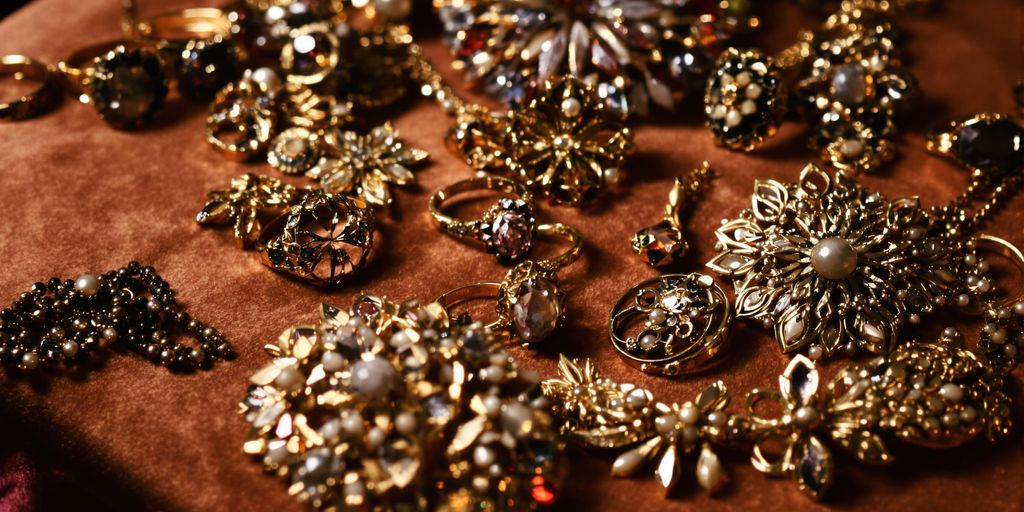
Antique jewelry is often steeped in history and emotion. But beyond its sentimental value, it can also have significant market value. This article explores both aspects, examining what makes antique jewelry valuable both personally and financially.
Main lessons
- Antique jewelry often carries family stories and meaningful memories.
- The market value of a piece of jewelry depends on its condition, rarity, and provenance.
- Market trends influence the value of antique jewelry, with certain styles becoming highly sought-after.
- A piece of jewelry can have a sentimental value much higher than its market value, making the decision to sell difficult.
- Selling antique jewelry requires a good knowledge of market practices and the mistakes to avoid.
Antique jewelry and its history
The importance of family heritage
Antique jewelry is often more than just an ornament. It embodies a family heirloom, passed down from generation to generation. Each piece of jewelry tells a story, that of those who wore it before us. It is a tangible link to the past, a fragment of family history that can be touched and carried.
- They symbolize love and affection.
- They represent important moments in family life.
- They serve as a constant reminder of our roots.
Keeping a family heirloom is preserving a piece of your personal history. It's a way to pay tribute to your ancestors and pass on their values to future generations.
Jewelry styles through the ages
The history of jewelry is rich and varied, with each era developing its own styles and techniques. From the massive jewelry of ancient Egypt to the delicate creations of the Victorian era, to the elegance of Art Deco, each period has left its mark. The floral and mythological motifs of the Renaissance contrasted with the opulence of Victorian jewelry. Understanding these styles helps you appreciate the historical and artistic value of an antique piece of jewelry. gold coins commemoratives are a good example.
Ancient manufacturing techniques
The manufacturing techniques used to create antique jewelry are often very different from those used today. Craftsmen of the past mastered complex skills, passed down from generation to generation. The handwork, chiseling, engraving, and stone setting were carried out with remarkable precision and patience. These artisanal techniques give antique jewelry a unique value and are a testament to the talent of craftsmen of the past.
| Technique | Description
Market value assessment
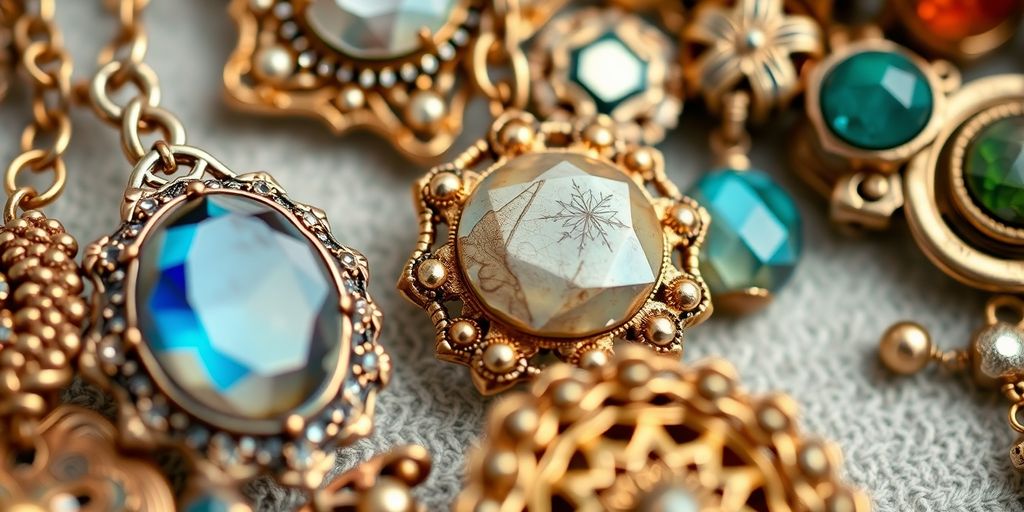
Jewelry Evaluation Criteria
When we talk about the market value of an antique piece of jewelry, we enter a realm where history meets economics. It's not just a question of whether it's pretty or not. Several factors come into play, and it's a bit like investigating to discover the true price.
- The materials: Gold, silver, platinum... Purity and weight are crucial. An 18-karat gold piece will obviously be more valuable than a gold-plated piece. That's the basics, after all.
- Precious stones: Diamonds, rubies, emeralds, sapphires... Cut, color, clarity, and carat weight are all crucial factors. A flawless diamond is the jackpot.
- Age and style: An Art Deco piece of jewelry won't have the same value as a piece from the 70s. Fashions change, and that influences prices.
You also need to consider rarity. A unique piece of jewelry, handmade by a renowned craftsman, will be worth more than a mass-produced model. It's simply the law of supply and demand.
The impact of the state of conservation
Condition is a bit like the condition of a vintage car. If it's pristine, it's worth a fortune. If it's rusty and full of dents, it's a different story. It's the same with jewelry. A piece of jewelry in perfect condition, without scratches or defects, will have a much higher value.
Here are some points to consider:
- General wear and tear: Scratches, scuffs, discoloration… All of these things decrease the value.
- Repairs: A poorly executed repair can depreciate the value of the jewelry. Professional restoration is preferable.
- Missing parts: A missing stone, a broken clasp… That’s so much less value.
Antique Jewelry Market Trends
The antique jewelry market is a bit like the stock market. It goes up, it goes down, it fluctuates according to fashions and trends. Right now, vintage jewelry is all the rage. People are looking for unique pieces with a story. It's more than just an accessory, it's a statement. If you want assess the quality When it comes to your jewelry, you need to keep up with current trends.
Here are some examples of trends:
- Art Deco jewelry: Highly sought after for their geometric lines and elegance.
- Signed jewelry: A Cartier or Van Cleef & Arpels signature is a guarantee of quality and value.
- Jewelry with colored stones: Emeralds, sapphires and rubies are still popular.
Basically, to assess the market value of an antique piece of jewelry, you need to do your homework. Research, compare, and don't hesitate to call on an expert. It's an investment, and it can pay off big.
Sentimental value of jewelry
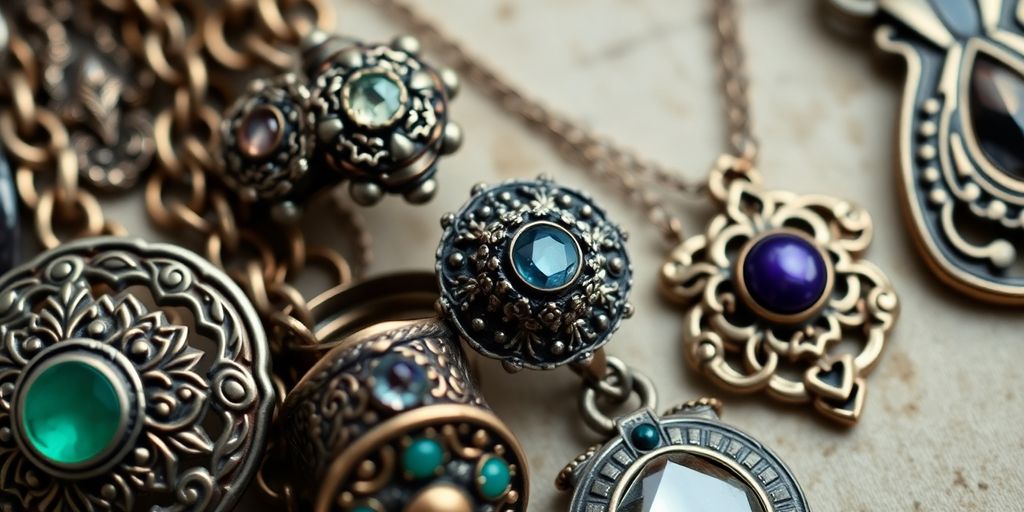
Memories and emotions attached
Antique jewelry, often passed down from generation to generation, is much more than just an ornament. It is a bearer of memories, a time capsule that connects us to our past. Each piece of jewelry tells a story, evokes a person, an event, an emotion. It's amazing how a simple ring can remind you of the day your grandmother gave it to you, or a necklace, your aunt's wedding.
The difficulty of parting with an inheritance
Parting with a family heirloom is often like parting with a piece of yourself. We hesitate, we procrastinate, we wonder if we really have the right to do it. It's a bit like betraying the memory of those who passed it on to us. I have a friend, Sophie, who inherited a brooch from her mother. She never wears it, but she can't part with it. She says it's the only tangible link she has left with her mother. That's understandable, right? It's a bit like selling a part of your history. You have to think carefully before making a decision. Sometimes it's better to keep the piece of jewelry, even if it's not worth much on the market, than to regret selling it later. You have to take the emotional aspects into account before embarking on the sale of inherited jewelry. sentimental value far exceeds market value.
The Importance of Family Stories
Antique jewelry often comes with family stories. These stories, passed down from generation to generation, give these objects inestimable value. It's as if you're carrying a piece of your family's history with you.
These stories are important; they connect us to our ancestors, to our roots. They remind us where we come from and who we are. It's a bit like carrying a piece of our family's soul with us.
Here are some examples of stories that can be attached to a piece of jewelry:
- Your Grandparents' Love Story
- The journey your mother took with this necklace
- The day your father won that jewel at poker
These stories add an extra dimension to the jewelry, an emotional dimension that makes it unique and precious. That's why it's important to preserve them and pass them on to future generations. It's a bit like passing on a treasure, an intangible treasure of inestimable value.
Factors influencing the value of jewelry
Rarity and antiquity
Rarity is a bit like the Holy Grail for collectors. The rarer a piece of jewelry, the higher its price. Think limited editions, unique pieces, or those that have survived through the centuries. Age also plays a major role. A piece of jewelry from a bygone era, such as the Art Deco era, can be worth a small fortune, especially if it's well preserved. It's the history that adds value, so to speak.
Authenticity and provenance
Authenticity is the key. A fake, even a well-made one, will never be worth the original. Provenance is the story of the jewelry, its journey. Did it belong to a famous person? Was it discovered during an archaeological dig? A prestigious provenance can make the value of a jewel explode. Verifying authenticity often requires the help of experts who can spot counterfeits and trace a piece's origin. It's a bit like a police investigation, but for jewelry. It's important to verify authenticity jewelry before selling it.
The impact of brands and designers
Certain brands, certain designers, are true legends. A piece of jewelry by Cartier, Tiffany, or Van Cleef & Arpels, for example, will always be worth more than a similar but anonymous piece. It's the brand's prestige, its history, and its expertise that make the difference. Collectors are willing to pay dearly to own a piece of this dream.
You also need to consider the materials used. Gold, platinum, diamonds, precious stones… All of these elements influence the value of a piece of jewelry. A large, exceptionally high-quality diamond can increase the value of a piece tenfold, while a small, poor-quality diamond will have little impact. It's a bit like real estate: location, location, location… Here, it's quality, quality, quality.
In summary, several factors come into play to determine the value of a piece of jewelry:
- The quality of materials (gold, platinum, precious stones).
- The rarity and antiquity of the piece.
- Authenticity and provenance (history of the jewel).
- The signature of a renowned brand or designer.
Sale of antique jewelry
Best practices for selling
So, you've decided to sell your antique jewelry? It's a big step, and there are a few tips you need to know to make sure it goes smoothly. First, don't rush into anything. Take the time to properly assess what you have. Do some research on similar jewelry to get an idea of their potential value.
Next, prepare your jewelry. Gently clean it to keep it presentable. If necessary, have minor repairs made by a professional. A well-maintained piece of jewelry will have a better chance of attracting a buyer. Gather all the documents you have: purchase invoices, certificates of authenticity, appraisals, etc. All of this can reassure the buyer and justify a higher price.
Finally, be realistic about the price. Sentimental value is one thing, but the market has its own rules. Don't hesitate to negotiate, but be prepared to accept a reasonable offer.
Auction platforms
If you think your jewelry is particularly valuable, auctions may be a good option. Auction houses are experienced in handling this type of property and can attract interested buyers. They have experts who can appraise your jewelry and arrange the sale.
However, it's important to know that auction houses charge a commission on the sale price. It's therefore important to understand the fees before committing. Furthermore, the process can take a little longer than a direct sale.
Here are some advantages of auctions:
- Potential to achieve a higher price if multiple buyers are interested.
- Professional expertise for the evaluation and presentation of jewelry.
- Possibility of setting a reserve price to avoid selling at a loss.
Mistakes to avoid when selling
There are a few common mistakes to avoid when selling antique jewelry. The first is not researching the value of your jewelry. You risk selling it for much less than its true value.
Next, don't neglect presentation. A dirty or damaged piece of jewelry will be less likely to find a buyer. And above all, never lie about the authenticity or condition of your jewelryThis can cause you legal problems and damage your reputation. Be transparent and honest with buyers.
Finally, be wary of offers that sound too good to be true. If someone offers you an exorbitant price without even examining your jewelry, there's probably something fishy going on. Take the time to check the buyer's credibility before finalizing the sale.
Comparison between sentimental and market value
When sentimental value prevails
It's amazing how a simple piece of jewelry can become a treasure trove of memories. We often talk about the monetary value of things, but when it comes to antique jewelry, sentimental value often takes precedence. A necklace inherited from your grandmother, for example, may not be worth a fortune on the market, but it can evoke priceless childhood memories. It's the kind of thing that's priceless, even if an expert tells you otherwise.
Assess market value
Okay, let's face it, market value matters too. If you're considering selling an antique piece of jewelry, it's important to know how much it's actually worth. Several factors come into play: the precious metal used, the gemstones, the age, the rarity, and the overall condition. jewelry appraisal An expert appraisal is often necessary to get a clear idea. Market trends must also be taken into account. Sometimes, certain styles or eras are more sought-after than others, which can drive up prices.
Emotional Dilemmas in Selling
This is where it gets complicated. Selling antique jewelry is often more than just a financial transaction. It's an emotional decision. You're faced with a dilemma: keep an item full of memories or sell it for a profit. Sometimes you need the money, and the decision is easier. But other times, it comes from the heart, and you'd rather keep the piece, even if it serves no purpose other than to remind you of good times. It's a personal choice, and there's no right or wrong answer.
It's important to remember that sentimental value is subjective and personal, while market value is objective and determined by the market. Finding a balance between the two is essential to making an informed decision.
The impact of trends on value
Fashion trends have a significant impact on the value of antique jewelry. What was once considered outdated can suddenly become popular again, boosting the value of certain pieces. It's a bit like music: what's "has been" today can come back into fashion tomorrow.
Fashions and their influence on prices
Fashions are fleeting, but their influence on the antique jewelry market is very real. A piece of jewelry that matches current trends will have a better chance of selling at a high price. Buyers are often looking for unique pieces that reflect their personal style, but are also in line with current trends. It's important to note that the gold jewelry auction market is constantly evolving.
Vintage jewelry in vogue
Vintage jewelry has enjoyed a resurgence in popularity in recent years. What was once considered "old" is now perceived as "cool" and "unique." Jewelry from the 1920s, for example, with its Art Deco motifs, is highly sought after by collectors and fashion enthusiasts. Vintage jewelry can have an interesting history.
The evolution of collectors' tastes
Collectors' tastes evolve over time. What was once considered precious may decline in value, while other pieces, once overlooked, may become highly sought-after. It's important to keep track of collectors' changing tastes to understand how the value of antique jewelry is affected. gold ingots have both cultural and historical value.
It's important to note that the value of antique jewelry depends not only on its beauty or rarity, but also on its ability to attract the interest of buyers and collectors. Fashion trends play a crucial role in this equation, and it's essential to take them into account when assessing the value of antique jewelry.
Here are some factors that influence trends:
- Celebrities and fashion influencers
- Exhibitions and museums
- Social networks
Market trends can really change the value of assets, especially when it comes to gold and silver. If you want to learn more about how these trends influence prices, visit our website for useful tips and information. Don't miss the opportunity to invest wisely!
Conclusion
Ultimately, the value of antique jewelry lies somewhere between sentiment and market. On the one hand, it can evoke precious memories, family stories, and intense emotions. On the other, its market value depends on many factors, such as condition, age, and current demand. If you're considering selling an heirloom piece, carefully consider what it means to you. Sometimes, sentimental value can outweigh market value. Whether you choose to keep it or sell it, make sure your decision is in line with your feelings and needs.
Frequently Asked Questions
Do antique jewelry have value?
Yes, antique jewelry can have significant value, both financially and sentimentally.
How to assess the value of an inherited piece of jewelry?
It is advisable to consult an expert to verify the authenticity and value of the jewelry.
What documents are needed to sell inherited jewelry?
It is useful to have certificates of authenticity and old photos to prove the history of the jewel.
Why can antique jewelry have sentimental value?
They can bring back memories of loved ones or important moments in life.
Are jewelry from a famous brand worth more?
Yes, jewelry from well-known designers often has a higher value due to their reputation and quality.
How do I know if my gold jewelry is valuable?
Check its weight, condition and have it assessed by a professional.
