
Do you own gold, perhaps in the form of bars, investment coins, or even antique jewelry? It's an excellent way to secure your assets. But have you thought about protecting it against unforeseen events like theft or damage? Standard home insurance often has limitations when it comes to this type of property. So, you might be wondering: Is gold covered by home insurance? Don't worry, we'll look into it together to ensure your precious metals are well protected.
Key Takeaways
- Your usual home insurance policy may cover gold, but often with low limits and strict conditions. You should check your policy carefully.
- For more comprehensive protection, there are insurance policies specializing in precious metals. These policies offer guarantees more suited to the value of your assets.
- Some secure storage providers include insurance as part of their services. This is a convenient option if you don't want to manage storage and insurance yourself.
- Insurers often require specific security measures to cover gold at home, such as a certified safe. Learn more about these requirements.
- Not insuring your gold exposes you to a total financial loss in the event of a loss. Compare options to find coverage that matches the value of your assets.
Does home insurance cover gold theft?
Do you own gold, whether in the form of jewelry, investment coins, or even small ingots? It's an excellent way to protect your assets. But have you ever considered what would happen in the event of theft, fire, or other damage? The question of whether your current home insurance covers these types of valuables is perfectly legitimate. Unfortunately, the answer is often more complicated than it seems.
The limitations of traditional home insurance for gold
Your standard home insurance policy is designed to cover everyday belongings. It has well-defined limits, especially when it comes to high-value items like precious metals. Typical policies generally have fairly low reimbursement limits for jewelry, silver, or gold. If the value of your possessions exceeds these limits, you could end up with compensation far less than their actual value.
- Low reimbursement ceilings: Most contracts set limits on valuables, often a few thousand euros, which is rarely enough to cover a gold collection. For example, a single 250g gold bar can easily exceed these limits.
- Specific exclusions: Some contracts may explicitly exclude coverage for physical gold or collectible coins, even if they cover jewelry.
- Storage conditions : Insurers may impose strict conditions on how you store your valuables. For example, a certified safe deposit box may be required, and if this requirement is not met, coverage may be cancelled.
Therefore, it is unlikely that your current home insurance will offer full protection for the entire value of your gold.
Not insuring your gold is an unnecessary risk. Imagine losing your precious possessions to theft or an accident. It's a stressful situation that can be avoided. Protecting your investment is essential for your peace of mind.
Why specific insurance for precious metals is necessary
Given the limitations of traditional insurance, it becomes clear that tailored protection is necessary for your precious metals. Specialized insurance is designed to meet the specific needs of owners of gold, high-value jewelry, collectible coins, and so on. These policies take into account the nature of these assets and offer more robust coverage.
Risks covered by gold-specific insurance
Specialized gold insurance goes far beyond simple theft coverage. It can include:
- Theft and burglary: Protection against burglary, but also sometimes against pickpocketing or theft by deception.
- Material damage: Coverage in case of fire, water damage, natural disaster affecting your gold property.
- Accidental loss: Some policies may even cover the accidental loss of your valuables, which is rarely the case with standard home insurance.
- Transport: Protection can be extended to goods during transport, for example, when traveling to a business or during a move. Remember to check the terms and conditions of transport of your goods.
Understanding Precious Metal Insurance
The guarantees offered by specialized insurance companies
Your standard home insurance, however convenient it may be for your everyday belongings, quickly reaches its limits when it comes to gold or other precious metals. These policies are generally designed to cover ordinary possessions and impose fairly low reimbursement limits for valuables. If the value of your gold exceeds these limits, you could be in for an unpleasant surprise if something goes wrong. This is where specialized insurance comes in. It's designed specifically for precious metals and valuables. It often covers broader risks than your basic insurance. This includes, of course, theft, but also accidental loss or damage during handling. It's a more tailored protection for the nature of your possessions.
Storage conditions required by insurers
For specialized insurance to be valid, insurers have specific requirements regarding how you store your precious metals. Failure to comply with these conditions can void your coverage. For example, many require that gold be kept in a certified vault. Others may specify a precise storage location within your home. It is therefore absolutely essential to read your contract carefully to understand these rules. Failure to comply with these clauses may result in a denial of compensation.
It is crucial to understand that insurance is a contract of trust. You declare your belongings and their value, and the insurer agrees to cover you under certain conditions. Adhering to these conditions, particularly those related to storage, is therefore key to a smooth compensation process in the event of a claim.
Check the reimbursement limits
This is an absolutely crucial point. As we've seen, your standard home insurance has limits. But even specialized insurance policies have caps. It's essential to verify that the maximum reimbursement amount corresponds to the total value of your precious metals. If you have €50,000 worth of gold at home and your insurance only reimburses €20,000 in the event of a claim, you have a serious problem. Therefore, you must ensure that the coverage is commensurate with the value of your investment. Consider requesting a personalized quote to get a clear idea of the costs and coverage. Here's an example to illustrate:
| Type of insurance | Maximum limit for gold | Average franchise |
|---|---|---|
| Home insurance (extension) | €5 – €000 | 150 € - 300 € |
| Specialized insurance | €30 – €000+ | 200 € - 500 € |
It's also important to consider the insurer's reputation. Is it a reputable company with experience managing this type of asset? A quick look at customer reviews can shed some light on the matter. Remember that investing in precious metals like gold requires careful attention, including their... security.
Choosing the right insurance for your precious metals
So, you've decided to take the plunge and invest in gold or other precious metals. It's an excellent way to diversify your assets, but don't forget about protection. Once you have your bars or coins, the question of insurance arises. How can you be sure your investment is safe? There are several options, and you should carefully examine them to find the one that best suits your needs.
Compare offers and guarantees
Your standard home insurance policy, however comprehensive, has its limits. It's designed to cover everyday belongings, not necessarily a collection of gold coins or fine jewelry. Standard policies impose fairly low reimbursement limits for these types of items. If the value of your gold exceeds these limits, you could be in for an unpleasant surprise in the event of a claim. This is where specialized insurance comes in. These policies are designed for precious metals and valuables. They generally cover a broader range of risks than your basic home insurance. This includes, of course, theft, even without forced entry, but also accidental loss, damage during handling, and sometimes even market fluctuations for professionals. It's a more tailored protection, adapted to the nature of your possessions.
Understanding Warranty Exclusions
Every insurance policy has its fine print and exclusions. This is where unpleasant surprises often lurk. Read this section carefully. For example, the insurance might not cover theft if your precious metals weren't stored in a certified vault. Or, it might refuse to compensate you if you can't prove the origin and value of your valuables. Gold certification, for example by the LBMA, is often a plus for the insurer.
Here are some common exclusions to watch out for:
- Storage conditions not respected: If you do not follow the imposed storage rules (safe, specific location).
- Lack of proof of purchase or appraisal: It is difficult to prove the value of what you own without supporting documentation.
- Intentional damage: Insurance does not cover damage that you cause yourself intentionally.
- Wars, acts of terrorism: These major events are generally excluded from traditional police policies.
It is essential that the insured amount corresponds to the actual value of your gold. Don't hesitate to request a personalized quote to get a clear idea of the costs and coverage.
Check the reimbursement limits
This is an absolutely crucial point. As we've seen, your standard home insurance has limits. But even specialized insurance policies have caps. You absolutely must verify that the maximum reimbursement amount corresponds to the total value of your precious metals. If you have €50,000 worth of gold at home and your insurance only reimburses you €20,000 in the event of a claim, you have a serious problem.
Here is an example to illustrate:
| Type of insurance | Maximum limit for gold | Average franchise |
|---|---|---|
| Home insurance (extension) | €5 – €000 | 150 € - 300 € |
| Specialized insurance | €30 – €000+ | 200 € - 500 € |
It's also important to consider the insurer's reputation. Is it a reputable company with experience handling this type of property? A quick look at customer reviews can give you some insight.
The importance of your gold's value for insurance purposes
Before even considering insuring your gold, it's absolutely essential to know its true value. This is the foundation of any insurance policy, because without an accurate valuation, you risk either overpaying for coverage you don't need or, even worse, being underinsured in the event of a problem.
How to estimate the amount to insure
To properly insure your gold, you must first know its value. This isn't just a matter of weight, but also of purity and, sometimes, rarity if you own antique coins or specific jewelry. Consider all the elements that make up your gold holdings:
- Bullion bars and investment coins: Their value is directly linked to the price of gold, their weight, and their purity (often 999,9‰). Certificates of authenticity (like those from the LBMA) are a plus.
- Gold jewelry: Their value takes into account the weight of the gold, its purity, but also the presence of precious stones, the brand, the age, and the goldsmith's work. An appraisal may be necessary.
- Gold art objects: Their value can be very subjective and depends on the artist, the period, the rarity and the state of preservation.
It is essential that the insured amount corresponds to the actual value of your gold. Don't hesitate to request a personalized quote to get a clear idea of the costs and coverage.
Using an expert for the evaluation
For large sums of money or particularly rare pieces, consulting a professional is often the best solution. A precious metals expert or a gemologist (for jewelry) can provide you with a fair and recognized appraisal. They understand the intricacies of the market, the value of different purities, and can identify collectible pieces that have added value beyond their mere gold weight.
An expert appraisal provides a solid foundation for your insurance policy. This avoids unpleasant surprises when filing a claim, where an insurer might dispute an overly optimistic estimate or, conversely, an undervaluation that could prove costly.
Updating the insured value
The price of gold is not fixed; it fluctuates constantly. What was worth €50,000 last year may be worth more or less today. That's why it's essential to review the insured value of your gold regularly, at least once a year. If you've purchased new gold items, remember to add them to your insurance policy without delay.
- Check the price of gold on specialized websites.
- Update your inventory with any new purchases or sales.
- Contact your insurer to adjust your premium and coverage if necessary.
Failing to declare all your valuables is like playing with fire. Your insurance, whether home or specialized, is based on trust and transparency. When you take out a policy, you must provide a precise declaration of your possessions and their value. If you purchase new items or jewelry, it's often necessary to update this declaration, especially if their added value exceeds a certain threshold defined by your policy. Skipping this step risks having your compensation reduced proportionally to what wasn't declared, or even being refused coverage altogether.
The different options for insuring your gold at home
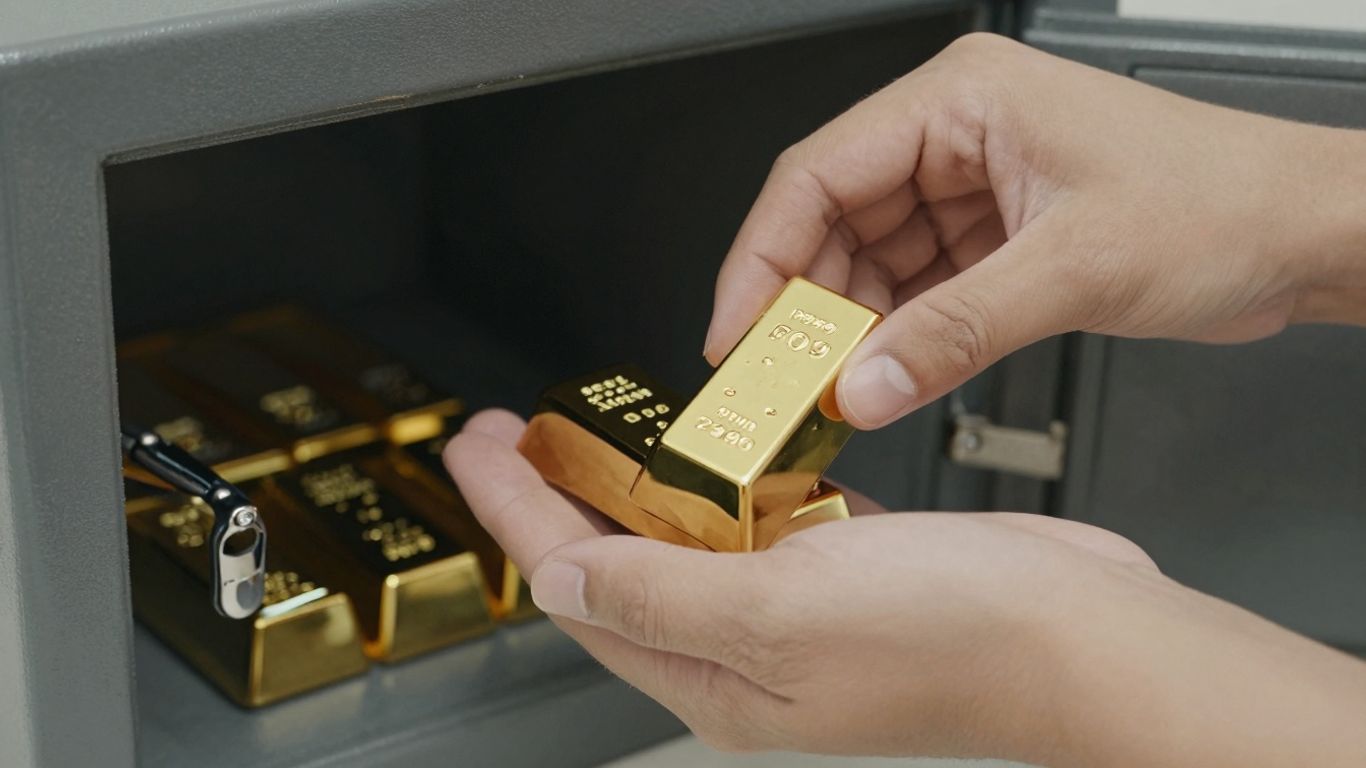
So, you've decided to keep your gold at home, which is a good thing, but you need to think about protecting it. Your usual home insurance isn't going to work miracles to cover the full value of your bars or coins. It's a bit like trying to protect a treasure with just a simple fence. You need to think bigger.
Extending your home insurance guarantee
The first step is often to look at your current home insurance policy. Many insurers offer extensions to cover valuables. This is generally the simplest solution to implement, as it's added to your existing coverage. However, be aware that there are limits. The maximum coverage amounts are often quite low, and there are conditions to meet. For example, you may be required to have a certified safe for the coverage to be valid. You really need to read your policy carefully to understand what is covered and how.
Here's a preview of what you might find:
- Basic cover: Often limited to a few thousand euros for jewelry and precious metals.
- Variable ceilings: Some extensions allow you to go up to €20,000, or even €50,000 in some cases, but the cost increases.
- Safety requirements: A certified safe is frequently required, especially for large sums of money.
Specialized insurance for valuables
If your gold represents a substantial sum, a simple extension may not be enough. In this case, there are insurance policies specifically designed for valuables, including precious metals. These contracts are more comprehensive and tailored to the specific needs of collectors or investors. They generally offer better coverage and higher limits. This is an option to seriously consider if you have a significant collection or substantial investments in gold.
Secure storage solutions with integrated insurance
Another interesting approach is to entrust the storage of your gold to specialized companies. These companies offer storage services in ultra-secure facilities, and insurance is often already included in the price. It's an all-in-one solution that eliminates the need to worry about physical security and insurance coverage. Your gold is kept in optimal conditions, giving you complete peace of mind. This is an option worth considering if you prefer to delegate the management of your valuables.
Keep in mind that most standard home insurance policies have very low limits for valuables kept at home. These limits, often between €3,000 and €10,000, are quickly exceeded by the value of a single gold bar, leaving your coverage largely inadequate in the event of a problem.
The consequences of not insuring your gold
So, you invested in gold, thinking you'd found the safest investment. It's true, gold is a safe haven, but even the most solid assets can be affected by life's uncertainties. If you don't take the time to protect your valuables, you expose yourself to very real risks.
The risk of total financial loss
Imagine this: you come home to find your gold bars or coins are gone. A burglary, a fire, water damage… unforeseen events happen. Without the right insurance, this loss is permanent. You'll have no recourse to recover the value of your investment. It's like having a treasure and leaving it completely unattended. Statistics show that thefts of valuables are unfortunately common, and gold is a particularly frequent target. It's not just theft that's a problem. A household accident can damage your gold beyond repair. Without coverage, these events can turn into a real financial disaster, wiping out years of savings in the blink of an eye. Your standard home insurance, with its often low coverage limits for valuables (sometimes just a few thousand euros), will be far from sufficient to cover the total loss of your gold holdings.
The importance of peace of mind
Your gold represents a part of your wealth, an asset that provides you with a certain level of security. Leaving it without adequate protection is a bit like building a solid house but refusing to put a lock on the door. You're depriving yourself of an essential layer of security. Insurance, even a modest one, can make all the difference between a manageable loss and a financial disaster. It's an investment in your peace of mind. Prevention is better than cure, especially when it comes to protecting what you've built. Not insuring your gold means accepting the risk of facing stressful and potentially devastating situations without a safety net. Thinking about the transfer of your wealth, for example through the division of ownership rights, is one thing, but ensuring that this wealth is protected on a daily basis is quite another.
Protecting your assets against unforeseen events
Failing to insure your gold means risking everything. If a disaster strikes, you won't receive any compensation, and the entire value of your investment will vanish. Think about it: if you've invested several thousand euros in gold, a total loss represents a gaping hole in your assets. The cost of appropriate insurance is generally far less than the potential losses. Ignoring this step means risking years of savings disappearing due to an unfortunate event. It's a risky gamble on your financial future.
Here's what you actually risk:
- Total financial loss: You lose the value of your investment without any compensation.
- Stress and anxiety: Facing a loss without insurance is a major source of distress.
- Impact on your future projects: A financial loss can jeopardize your long-term goals, such as retirement or passing on your wealth.
It is therefore essential to fully understand the limitations of your current home insurance and to consider more suitable solutions for your precious metals. Don't hesitate to seek advice for secure your property and sleep soundly.
Not insuring your gold is a huge risk. Imagine losing your precious possessions without any protection. It's like leaving your door open! To avoid unpleasant surprises and sleep soundly, it's essential to protect what's valuable. Discover how to secure your gold investments today on our website.
So, what do we do with our gold?
So, you now know that your standard home insurance probably won't be enough to cover the full value of your gold bars or coins. You often need to take out extensions or specialized insurance policies to be truly secure. Be sure to check the coverage limits, the storage requirements stipulated by the insurer, and above all, carefully read what is excluded from the contract. Not insuring your gold is like leaving yourself open to unpleasant surprises. Take the time to compare offers to find the one that best suits your situation and the value of your assets. After all, your gold is your security, so it's best to protect it properly!
Frequently Asked Questions
Why isn't my regular home insurance enough for my gold?
Your standard home insurance often has limits on high-value items like gold or precious jewelry. The amounts reimbursed in case of theft or loss are usually low, well below the true value of your belongings. Therefore, you need specialized insurance that truly covers the full value of your possessions.
What risks are covered by specific insurance for gold and jewelry?
These specialized insurance policies protect you against several risks: theft, of course, but also accidental loss, physical damage (like when a gold bar falls!), and sometimes even risks related to transporting or displaying your valuables. It's more comprehensive coverage than basic insurance.
Do I have to declare every gold coin or bar I buy?
Yes, it's super important! For your insurance to work properly and reimburse you correctly, you need to be able to prove what you own. Keep all your purchase receipts, certificates of authenticity, and even photos of your belongings. This helps the insurer know exactly what they're insuring and at what value.
How do I choose the right insurance for my valuables?
To choose the right insurance, you must first estimate the total value of your gold. Then, compare the offers from different companies: look at exactly what is covered, the premium price, and the conditions (such as storage requirements). Don't hesitate to request quotes from several specialized insurers to find the best option.
Does insurance cover gold stored in a home safe?
Often, yes, but there are rules to follow! The insurer may require that your safe be certified or meet specific security standards to ensure your gold is properly protected. It's essential to check the terms of your policy to avoid any unpleasant surprises.
What happens if my gold is stolen and I don't have adequate insurance?
If your gold is stolen and you don't have specific insurance for valuables, you risk losing all your money. It's as if you had given your possessions to someone without receiving anything in return. That's why it's absolutely essential to have good coverage to protect your assets and avoid total financial loss.