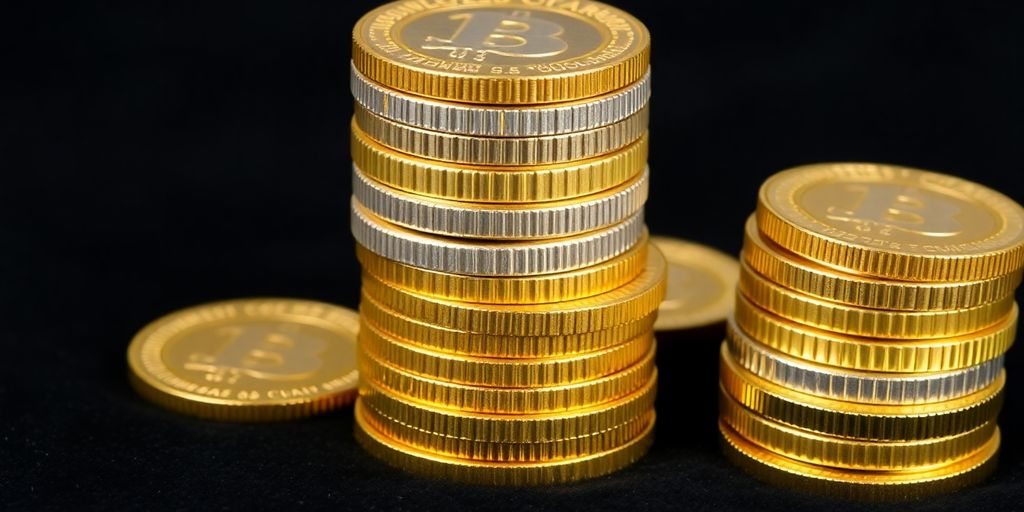
Investing in precious metals, such as gold and silver, is gaining increasing interest, especially during times of economic uncertainty. These assets are often viewed as safe havens, offering protection against inflation and financial crises. In this article, we will explore why investing in gold and silver can be a wise strategy to diversify your portfolio and secure your financial future.
Key Takeaways
- Gold and silver are safe havens in times of crisis.
- Investing in these metals protects against inflation.
- The accessibility of silver makes it attractive to all budgets.
- Investments in gold can be made in different forms, such as bullion or ETFs.
- Global events strongly influence the precious metals market.
Understanding Precious Metals
What are precious metals?
So, what exactly are precious metals? We're talking about gold, silver, but also platinum and palladium. What makes them... precious, it is their rarity and their unique properties. They do not rust easily, are malleable and conductive. This is why they are used in industry, jewelry, and of course, as investment.
History of Gold and Silver
Gold and silver are nothing new! Since ancient times, they have served as currency, symbols of power, and objects of worship. The Egyptians worshipped gold, the Romans used silver for their coins... In short, a long shared history. Their value has stood the test of time, and it's not about to stop.
Why Are They Valuable?
There are several reasons for this. First, there's scarcity: there aren't tons of them on Earth. Then there's demand: everyone wants them, whether to make jewelry, electronic components, or to protect against inflation. And then there's psychology: people trust gold and silver; they see them as safe values. It's a bit like having an insurance against hard knocks.
Precious metals are often considered safe-haven assets. In times of economic uncertainty, investors turn to them, driving up their prices. It's a bit like a financial survival reflex.
The Benefits of Investing in Gold
Safe Haven in Times of Crisis
Gold is often seen as a safe investment, especially in times of economic crisis or geopolitical uncertainty. When stock markets tumble and currencies falter, gold tends to retain, or even increase, its value. It's a bit like having a stable investment in a world that's going to hell. Not bad, right?
Gold is not dependent on the decisions of a central bank or the economic health of a particular country. It is a tangible, physical asset, which gives it a certain independence.
Protection Against Inflation
Inflation is the enemy of your purchasing power. Your euros lose value over time. Gold, on the other hand, has historically proven its ability to maintain its value in the face of inflation. Basically, when prices rise, gold follows suit. It's a way to protect your savings against monetary erosion.
Here are some points to consider:
- Physical gold is a bulwark against currency devaluation.
- It offers portfolio diversification.
- It can serve as a guarantee in times of financial instability.
Historical Price Growth
If we look at the evolution of the gold price Over the long term, there has been an upward trend. Of course, there are fluctuations, ups and downs, but overall, gold has increased in value over the decades. It's not a guarantee of future earnings, but it's an interesting indicator.
| Period | Average Annual Growth | Notes Here is a list of points to consider before investing:
- Define your financial goals.
- Assess your risk tolerance.
- Do your research on different investment options.
- Consult a financial advisor if necessary.
The Benefits of Investing in Silver
Accessibility for All Budgets
One of the main advantages of silver is its price. Compared to gold, it is much more affordable. This means you can start investing with a smaller budget. This is a great starting point for those new to precious metals. You can buy small amounts regularly without breaking the bank. It's a bit like saving money, but in precious metal form!
- More accessible than gold.
- Ideal for small budgets.
- Possibility of regular purchases.
Industrial Use
Silver is not just a precious metal for investors. It has a industrial use Very important. It's found in electronics, medicine, solar panels... In short, it's everywhere! This industrial demand supports its price, even when the market is a little soft. It's a bit like having a plan B, in case investor demand ever drops.
Silver is an essential metal in many industries, giving it a consistent and diverse demand. This industrial demand helps stabilize its price and offers long-term growth potential.
Growth Potential
Silver has interesting growth potential. Its price is more volatile than gold's, which means it can go up faster, but also down faster. But if you're willing to take a little more risk, it can be worth it. Plus, with increasing industrial use, demand could well drive prices higher in the future. It's a bit like betting on a mining action promising, but in precious metal version.
Here are some factors that can influence the price of silver:
- Growing industrial demand.
- Higher volatility than gold.
- Potential for significant earnings.
How to Invest in Gold
Purchase of Bullion and Coins
So, buying bullion and coins is a bit of a loan when you think about investing in gold. It's tangible, you see what you have, you can touch it. A bar is kind of the ultimate symbol of wealth, right? But be careful, it requires a certain starting budget. Coins are more accessible, and some can even increase in value over time if they are rare.
- Ingots: The choice of purity and certified mass.
- Gold coins: They can acquire numismatic value depending on their rarity and history.
- Gold jewelry: An investment that combines aesthetics and value.
Keep in mind that storing physical gold requires security. Don't leave it lying around! A bank vault is an option, but it comes at a cost. A vault at home is possible, but it needs to be really secure.
Investing Through ETFs
If you'd rather avoid carrying around bullion, ETFs (Exchange Traded Funds) are a great option. Basically, they're funds that track the Gold prices. You buy shares in this fund, and hey presto, you're exposed to the gold market without having to store the precious metal. It's simpler, more liquid (you can resell your shares easily), but you don't own the gold directly. This is calledGold ETF.
Purchasing Strategies
Okay, now, how do we actually go about it? There's no secret, you have to find out! Monitoring the price of gold and understanding the factors that influence it (the global economy, interest rates, etc.) is important.
Here are some strategies:
- Progressive purchase: Invest small amounts regularly rather than a large amount at once. This helps smooth out the purchase price and reduce the impact of volatility.
- Buying on the downturn: Try to buy when the price of gold is low, anticipating a rise.
- Diversification: Don't put all your eggs in one basket! Gold is good, but you also need to invest in other assets.
Remember, investing involves risks. The price of gold can go up, but it can also go down. Don't invest money you might need quickly. And if you're unsure, ask a professional for advice! They can help you define a strategy suited to your situation. Consider gold as a safe haven.
How to Invest in Money
Silver, often considered gold's little brother, also offers interesting investment opportunities. It's a more accessible precious metal, but with its own set of advantages and strategies. Let's see how you can get started with silver investing.
Physical Purchase of Silver
Buying physical silver is a bit like getting hands-on with your investment. You can buy coins, bars, or even silver bars. The main advantage is that you actually own something tangible. This is reassuring, especially in times of economic uncertainty. However, you need to think about storage and security, because money takes up space and can attract attention.
- Silver coins (common coins or collector coins)
- Silver bars (various sizes and weights)
- Silver bars (larger, often used for large investments)
Investing in Mining Stocks
Another way to invest in silver is to buy shares in mining companies that extract this metal. It's a bit like betting on the potential of these companies. If they find new deposits or improve their production, the value of their shares can increase. But be careful: Mining stock prices can be quite volatile, as it depends on several factors, such as the price of silver, production costs, and company management. It is important to research the company thoroughly before investing.
Use of ETFs
ETFs (Exchange Traded Funds) are baskets of assets that track a specific index or sector. There are specialized silver ETFs that allow you to invest in this metal without having to physically purchase it. This is a convenient and liquid option, as you can easily buy and sell ETF shares on the stock exchange. It also allows you to diversify your investment, as the ETF can hold several silver-related assets. For example, you can look at: iShares Silver Trust.
Investing in silver is a bit like playing both sides of the coin: you can profit from its value as a precious metal while also capitalizing on its growing industrial use. It can be a valuable investment to diversify your portfolio and protect against inflation, but you should understand the risks and specifics of each option before taking the plunge.
Risks Associated With Investment
Okay, we've seen the upside of investing in gold and silver, but let's face it, there are risks too. It's important to understand them so you don't get any nasty surprises. Let's break it down together.
Price Volatility
Gold and silver prices can yo-yo! One day it goes up, the next day it goes down. It's not like a savings account where you're guaranteed to earn a few cents every year. This volatility can be influenced by many things: the global economy, interest rates, geopolitical events, etc. You have to be prepared to see the value of your investment fluctuate, sometimes significantly. That's the game, my poor Lucette!
Liquidity Risks
So, liquidity is how easily you can turn your investment into cash. If you need to sell your gold or silver quickly, you could find yourself stuck if there are no buyers or if prices are low. It is less liquid than a stock on the stock exchange., for example. You shouldn't invest all your money in precious metals if you think you'll need that money quickly. Think about leverage and its consequences.
Storage Security
If you buy physical gold or silver (bars, coins, etc.), you need to think about storing it safely. You don't want to get robbed! You have several options: a safe at home, a bank vault, or even companies specializing in precious metal storage. Each option has its pros and cons (cost, accessibility, security, etc.). It's important to weigh the pros and cons carefully.
Personally, I prefer the safe to the bank, it's safer than under my mattress, and it saves me from stressing out every time I hear a strange noise at night.
Overall, investing in gold and silver isn't without risk. You need to be aware of price volatility, liquidity risks, and storage security. But if you're well-informed and invest thoughtfully, it can be a good way to diversify your portfolio and protect yourself against inflation.
Best Practices for Investing
Portfolio Diversification
So, we've decided to get into gold and silver? Great! But be careful, you never put all your eggs in one basket. Diversification is key. Think of your portfolio like a garden: you wouldn't just plant tomatoes, would you? You need a bit of everything!
- Stocks
- Obligations
- Real Estate
- And of course, a small part in precious metals.
The idea is to reduce risk. If one sector falters, the others can compensate. It's like having several strings to your bow.
Market Assessment
Before diving in headfirst, you need to check the market forecast. It's a bit like predicting the weather before going on a hike. You don't go out without looking at the sky, do you? It's the same with precious metals. You need to keep up with what's happening. Are interest rates rising? Inflation spiraling? Geopolitical tensions increasing? All of these things can influence prices. And to do that, you need to follow economic news, read analyses—in short, do your homework. A good market assessment is essential to make informed decisions.
Monitoring Economic Trends
Tracking economic trends is a bit like looking at a road map when traveling. It helps us anticipate twists and turns and obstacles. Precious metals are often considered safe havens, especially in times of uncertainty. But beware, it's not an exact science.
- Monitor inflation: If prices rise, gold tends to rise too.
- Watch interest rates: Low rates can make gold more attractive.
- Analyzing geopolitical events: Crises can drive up prices.
Basically, you have to be curious and attentive to what is happening in the world. The economy is a complex ecosystem, and every decision has repercussions.
Tax Implications
Capital Gains Tax
So, let's talk taxes, a topic we all love, right? When you invest in gold or silver, you need to understand how things work with the tax authorities. Basically, if you resell your precious metals at a profit, that profit is taxable. This is called capital gains tax. The cool thing is, there are specific rules for gold and silver, and they can vary.
- The tax rate may change from year to year, so stay informed.
- There are sometimes tax breaks depending on how long you hold your metals.
- Certain forms of investment, such as investment coins, may have a special tax regime.
Keep all your purchase receipts, as they will be essential for correctly calculating your capital gain when you resell. Without these documents, you risk paying more tax than necessary. It's silly, but it happens often.
Regulations in France
In France, the taxation of precious metals is fairly regulated. There are two main options when you resell your gold or silver: the flat-rate tax on precious metals (TMP) or the capital gains tax (TPV). The TMP is simple: it's a fixed percentage of the sale price, regardless of your purchase price. The TPV takes into account the difference between the purchase price and the sale price, and can be more advantageous if you've held your metals for a long time.
Tax Impact on Investments
Tax implications can really influence the profitability of your investments. For example, if you buy gold and its value increases, but a large portion of your profit goes to taxes, it's less attractive. That's why you need to calculate your cost carefully and, if necessary, seek expert advice.
Here are some points to consider:
- Tax optimization is legal and can save you a lot of money.
- Declaring your precious metals is mandatory, don't forget.
- Tax rules may change, so stay tuned for updates.
The Impact of World Events
Geopolitical Conflicts
Geopolitical conflicts, such as wars or international tensions, have a direct impact on precious metals. In times of uncertainty, investors often turn to gold and silver as safe havensEscalating tensions can drive up prices because demand increases. For example, conflicts in the Middle East have historically led to higher gold prices. It's almost as if everyone is saying, "Better to have some gold under the mattress just in case!"
Economic Crises
Another major factor is economic crises, whether local or global. When stock markets are falling and the economy is unstable, gold and silver can serve as a hedge against losses. Investors seek to protect their capital, and precious metals offer a certain security. We saw this during the 2008 crisis, when the price of gold exploded. It's a bit like the principle of gold bullion value which reassures in times of panic.
Global Inflation
Inflation is the enemy of savings. When prices rise, the value of money decreases. Precious metals, especially gold, are often considered a hedge against inflation. They maintain their value, or even increase in value, when fiat money loses its purchasing power. That's why many people believe it's better to have a little gold than to watch their money melt like snow in the sun.
Basically, world events create uncertainty, and uncertainty drives people toward precious metals. It's a cycle that's been repeating itself for centuries. It's not an exact science, but it's a pattern we see regularly.
Here are some concrete examples:
- A trade war between two major powers could push up the price of gold.
- A banking crisis may prompt investors to buy silver.
- High inflation may make precious metals more attractive than government bonds.
Alternatives to Gold and Silver
Investing in Platinum
Platinum is a bit like the lesser-known cousin of gold and silver. Less popular, but just as interesting, especially when you consider its industrial applications. Platinum is super resistant to corrosion and heat, which makes it indispensable in many sectors, notably automotive (catalytic converters) and electronics.
- Its price can be influenced by factors different from those of gold and silver, which can offer interesting diversification.
- Platinum supply is more geographically concentrated (South Africa, Russia), which can lead to greater price volatility.
- Investing in platinum can be done through bars, coins, or ETFs (Exchange Traded Funds).
Platinum is often considered a riskier investment than gold, but with the potential for higher returns if you focus on the growth of certain industrial sectors.
Palladium as an Option
Palladium, like platinum, is a platinum group metal. It is mainly used in the automotive industry to reduce polluting emissions from gasoline engines. It's a rare metal, and its demand is closely tied to global automotive production. If you believe in the auto sector's recovery, palladium might be an option worth considering.
- Demand for palladium is highly dependent on environmental standards and government policies.
- Supply is limited, which can lead to price spikes during high demand.
- Investing in palladium can be done through bullion, ETFs, or shares of mining companies.
Cryptocurrencies and Precious Metals
Now we're entering a slightly more speculative realm. Cryptocurrencies, like Bitcoin, are often presented as digital gold. The idea is that they could serve as a safe haven in a crisis, much like gold. But beware, The volatility of cryptocurrencies is much higher than that of precious metals. This is an investment to be considered with caution, and only if you are willing to take risks. It is important to understand the ins and outs before taking the plunge. accumulate financial assets by investing in cryptocurrencies, but you must be aware of the risks.
- Cryptocurrencies are not correlated to traditional markets, which can offer diversification.
- They are subject to high volatility and regulatory risks.
- Investing in cryptocurrencies requires good market knowledge and active portfolio management.
Basically, if you're looking for alternatives to gold and silver, platinum and palladium may be interesting if you believe in the growth of certain industrial sectors. Cryptocurrencies are a different story, riskier but potentially more lucrative. It's up to you to decide what best suits your investor profile and risk tolerance. Remember to do your research before making any decisions!
Investor Testimonials
Success Stories
It's always nice to hear happy endings, right? We all need a little inspiration, especially when it comes to finances. So, let's talk about these investors who got it right with gold and silver.
- There's Sophie, for example, who started small, with a few silver coins. Over the years, she diversified and now she has a lovely little nest egg for his retirement.
- And then there's Marc, who invested in gold just before an economic crisis. He saw his investment skyrocket, which allowed him to carry out a project that was close to his heart.
- Not forgetting Léa, who used ETFs to invest in gold and silver, a simpler and more accessible approach.
These stories are concrete examples that it can work. Of course, there's no guarantee, but it makes you want to give it a try, right?
Mistakes to Avoid
Okay, let's face it, not everyone wins every time. There are mistakes to avoid when investing in gold and silver. Like anything else, you have to learn from your mistakes (and those of others!).
- Don't diversify: Putting all your eggs in one basket is risky. It's better to spread your investments.
- Panic in the event of a decline: Markets fluctuate, it's normal. You shouldn't sell at the first opportunity.
- Neglecting storage security: Whether it's a safe deposit box at the bank or a secure location at home, you need to protect your precious metals.
Avoiding these mistakes is already a big step toward successful investing. You need to stay informed, be patient, and not let your emotions get the better of you.
Expert Advice
Finally, some advice from those who know the subject well. You don't become an expert overnight, so it's best to listen to those who have experience.
- Stay informed: Following economic news and market trends is essential.
- Be patient: Investing in precious metals is often a long-term affair.
- Seek advice: Do not hesitate to consult a financial advisor for a personalized strategy.
| Advice | Description the content is great, but it's too long. Please make it shorter. I need it to be less than 400 words. Also, please make sure that the tone of voice is informal. The language should be French. Make sure you include ALL the h3s or NONE if there are none. Here is the JSON requested: { // Required.
The Future of Precious Metals
Market Trends
So, where do we go from here with gold and silver? That's the million-dollar question, right? The precious metals market is a bit like the weather: it's always changing. Right now, we're seeing sustained demand, especially with all the economic uncertainty. Central banks continue to hoard gold, which is supporting prices. And then there's silver, which is benefiting from its growing industrial use, particularly in green technologies. In short, the market is dynamic, but we must remain vigilant and follow the news closely.
Emerging Technologies
New technologies are changing the game, even for precious metals. There's talk of new, more efficient and less polluting mining methods, which could increase supply in the long term. But the most exciting thing is the use of gold and silver in cutting-edge fields like nanotechnology and electronics. These applications could create a new wave of demand, especially if we are talking about investment in precious metals to diversify its portfolio.
Forecasts for the coming years
Trying to predict the future is always a bit risky, but we can still make some assumptions. Here are some points to consider:
- Inflation: If it remains high, gold and silver could continue to serve as a hedge.
- Interest rates: A rise could weigh on prices, but a fall could support them.
- Geopolitics: International tensions always have an impact on safe havens.
Broadly speaking, the future of precious metals will depend on a mix of economic, technological, and geopolitical factors. It's important to keep an eye on these developments and adapt your strategy accordingly. And above all, don't put all your eggs in one basket!
In conclusion, investing in gold and silver is a bit like playing chess: you have to anticipate, analyze, and be ready to react. But with the right information and a little patience, it can be a profitable strategy.
The future of precious metals looks bright. With the increasing demand for gold and silver, these resources continue to attract investor attention. If you'd like to learn more about investing in these metals, visit our website to discover our offers and advice. Don't miss this opportunity to secure your financial future!
In Summary
So there you have it, investing in gold and silver isn't just a fad, it's a real strategy. These precious metals have proven their value over time, especially when times get tough. Whether it's to protect yourself from inflation or simply to diversify your portfolio, gold and silver are solid choices. And the best part? You can start with a variety of budgets, even with a small amount. So, if you're still hesitant, why not visit a dealer and see for yourself? Who knows, it could be the start of a great investment adventure!