Do you have gold jewelry lying around in a drawer and wonder how much it's really worth? That's an excellent question, especially if you're thinking of selling it or simply out of curiosity. Knowing how to calculate the price of your gold jewelry isn't so complicated when you know where to look. We'll break it down together, step by step, so you have all the information you need.
Key Takeaways
- Understanding the value of your gold involves knowing its purity (carats) and exact weight. Keep in mind that gemstones also add to the value, but are often appraised separately.
- The price of gold on financial markets, known as 'fixing', is the main factor determining its value. This price changes constantly and depends on global supply and demand.
- To calculate the selling price, one must consider the cost of materials (the gold itself) and the cost of transformation (the work to make the jewelry), while keeping in mind that the buyback price will generally be lower than the selling price.
Understanding the Intrinsic Value of Your Gold Jewelry
When you want to sell or just assess the value of a gold jewel, it is not enough to know its appearance or its history. You must first understand what constitutes the "true" value of your jewelry: its exact composition, its weight, and what accompanies it. Here's how to approach the estimation.
Identify the purity and weight of the gold
First and foremost, you need to determine the gold's purity (in carats) and its weight. These are the basis for any valuation calculation.
- Look for the engraved hallmarks: these are small official symbols indicating the gold content (carats).
- Use a precise scale to obtain the weight, ideally without the stones or other ornaments.
- Be careful with alloys: not all jewelry is made of pure gold (24 karat). The most common are:
| Punch | Description | Gold content |
|---|---|---|
| sea horse | 24-carat pure gold | 99,9% |
| Eagle head | 18/22 carat gold | 75% or 91,7% |
| Scallop shell | 14k gold | 58,5% |
| Clover | 9k gold | 37,5% |
Even if it seems technical, take the time to carefully read the engravings or have them identified by a professional if you have any doubts. This step will prevent many mistakes and disappointments when it comes time to resell.
The impact of precious stones and added metals
The purity of gold is not everything! Often, stones or other metals complicate the valuation.
- Check the nature of the stones: diamond, sapphire, or colored glass? A diamond's brilliance and resistance don't lie, but only a specialist can truly determine its composition.
- Gold can be mixed with other metals: silver, copper, platinum. These additions influence the total weight and therefore the value of the piece of jewelry.
- Style, signature (a brand, a famous designer) and general condition (wear and tear, restoration) weigh heavily in the final evaluation.
To accurately appraise your gold jewelry:
- Clearly identify the type of gold (carat and hallmark).
- Separate the weight of the gold from the rest (stones, settings).
- Note each special characteristic (rare stone, signature, era).
In short, be meticulous in identifying the materials and don't hesitate to consult an expert. An antique or signed piece of jewelry can be worth far more than the price of the gold alone, and a thorough appraisal can prevent many unpleasant surprises.
Factors influencing the price of gold
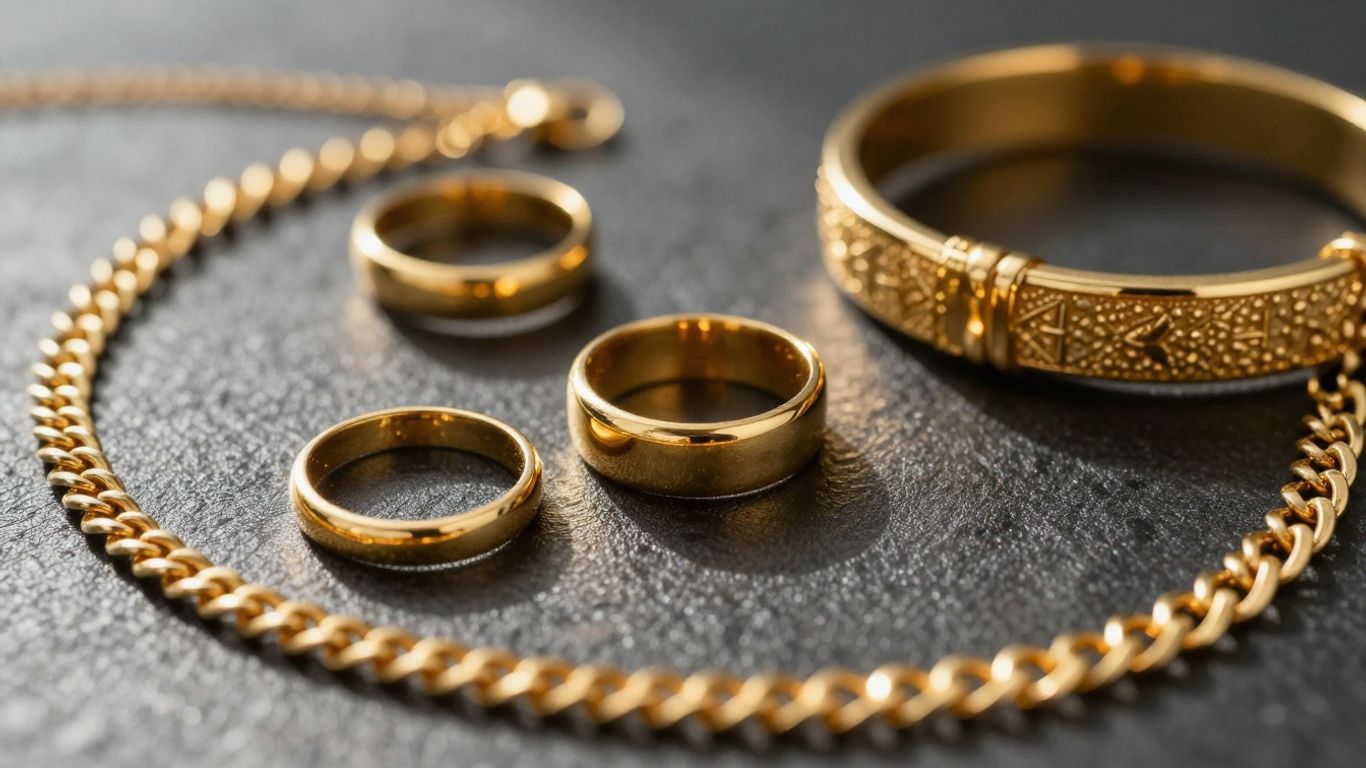
You'll see, there are several things involved. Some are obvious, others much less so.
Gold price: fixing and real-time quotations
Contrary to popular belief, le gold price is not fixed once and for allThere are two main ways to take this famous course:
- The fixing It's a reference price decided twice a day in London, based on the balance between supply and demand at a specific moment. It's a bit like an old-fashioned ceremony, but it's still the global standard!
- Real-time quoting The live price of gold can fluctuate every minute on major financial markets (London, New York, Zurich, Hong Kong, etc.), from Monday morning to Friday evening. Prices are expressed in US dollars per ounce (31,103 grams).
Here's what the rating methods look like:
| Method | Frequency | Where ? | Main utilization |
|---|---|---|---|
| fixing | 2x per day (10:30am, 15pm) | London | Reference transactions |
| Real time | 24 hours a day, Monday to Friday | Global stock exchanges (London, NY, etc.) | Instant buying/selling |
Even though it looks very technical, the fixing remains THE reference when you want to have a reliable idea of the price to sell or buy gold.
The influence of supply and demand on the market
The price of gold doesn't depend solely on a magic formula; it fluctuates primarily according to market conditions. In short:
- When many people (banks, investors, individuals) want to buy, the price increases. When everyone sells, it falls.
- The amount of gold available does not increase easily: a new mine is not discovered every day!
- Exceptional events (financial crises, wars, high inflation) amplify all of this: gold becomes a safe haven, so demand explodes.
What other elements are involved in the equation?
- Central banks sometimes accumulate or sell enormous stocks.
- Interest rates: when they rise, gold loses its appeal because it does not generate income like a bank investment.
- The strength of the dollar: a variation in the dollar relative to other currencies influences the value of gold worldwide.
Get into the habit of monitoring the context: if you see an announcement of a crisis or a massive drop in bank rates, be aware that the price of gold is likely to go haywire.
To conclude:
- The price is constantly changing, and you have to choose the right timing.
- Understanding the fixing system and monitoring supply and demand is fundamental. If you want to sell at the best time, you need to keep a close eye on this information.
Calculate the selling price of your jewelry
Now that you have an idea of the intrinsic value of your creations and the fluctuations in the gold market, it's time to move on to the crucial step: setting the selling price. This is often where creators get stuck. There's a tendency to undervalue their work or get lost in the calculations. But don't panic, we'll break it down together.
The basic formula: costs of materials and processing
To set a fair price, you first need to know your cost price. This is the sum of everything you spend to create a piece of jewelry, before even thinking about making a profit. Consider everything:
- Raw materials: The gold itself, of course, but also any stones (even though we saw them in the previous section, their cost needs to be factored in again here), clasps, rings, threads, etc. Don't forget the small supplies that quickly add up.
- The workforce: This is the time you spend creating the jewelry. You need to pay yourself! Set a realistic hourly rate. If you're a sole trader, don't underpay yourself. Aim for a salary that allows you to live comfortably. If you use service providers (like a gilder, engraver, or laser cutter), add those costs to your total.
- Overhead costs: Think about your workshop (rent, electricity, water), your tools, your website, your marketing, your packaging… If you cannot calculate precisely the share of each piece of jewelry, add a flat percentage (for example, 10% to 20% of the cost of materials and labor) to cover these costs.
The basic formula therefore looks like this:
Coût de revient = Coût des matériaux + Coût de la main-d'œuvre + Frais généraux
The estimated buyback price compared to the selling price
Once you have your cost price, you need to add your margin to obtain the final selling price (the retail price, or price including VAT if you are subject to VAT). This is where the concept of a markup coefficient comes in.
There's no single magic formula, as it depends on your positioning, your market, and your objectives. However, a common approach is to apply a coefficient to your cost price.
- For retailers (boutiques, concept stores): They generally apply a markup of 2 to 2,5 times the purchase price. If your piece of jewelry costs you €50 to produce, you might sell it for €100 or €125 (excluding VAT) to a retailer. This is called the wholesale price.
- For the retail price (direct to customers): You can either double your wholesale price or apply a higher markup to your initial cost price. For example, if your cost price is €50, and you sell to a reseller for €100 excluding VAT, your retail price could be around €200 including VAT (adding VAT if necessary).
It's important to research the prices charged by creators similar to yours to benchmark your pricing. Remember that the price should reflect the quality of your work, the originality of your creations, and the value of the gold used.
Don't be afraid to value your work. A price that's too low can sometimes be perceived as a lack of quality. You need to find the right balance between profitability and accessibility for your target clientele.
Wondering how much your jewelry is worth? Find out set the right price is essential for selling. We help you understand how to estimate the value of your items to get the best price. Discover our tips on our website!
In conclusion: your gold, your value
There you have it, you now have all the information you need to estimate the value of your gold jewelry. It's not so complicated once you understand the basics, is it? Remember that the price of gold fluctuates, a bit like the weather. So, if you're thinking of selling, keep an eye on the market. And if you still have doubts, or if you'd like an expert opinion, don't hesitate to ask for advice. After all, your gold has a history and a value that deserve to be fully understood.
Frequently Asked Questions
How do I know if my jewelry is real gold?
To check if your jewelry is gold, look for a hallmark, such as an eagle's head or a clover. You can also ask a jeweler to test it with a touchstone and special acids. This is the best way to be sure.
Why does the price of gold change all the time?
The price of gold fluctuates daily due to supply and demand in the global market. When many people want to buy gold, the price rises. Conversely, if there are more sellers, the price falls. Economic and political events can also influence the price.
How can I easily calculate the price of my gold jewelry?
To calculate the price of your jewelry, start by knowing its weight and purity (for example, 18 karats). Then, multiply the weight by the percentage of pure gold (75% for 18 karats) and by the current price per gram of gold. Keep in mind that the stones, other metals, and the condition of the jewelry can influence the final price. For more information, consult the resources of [website/organization name]. World Gold Council.