
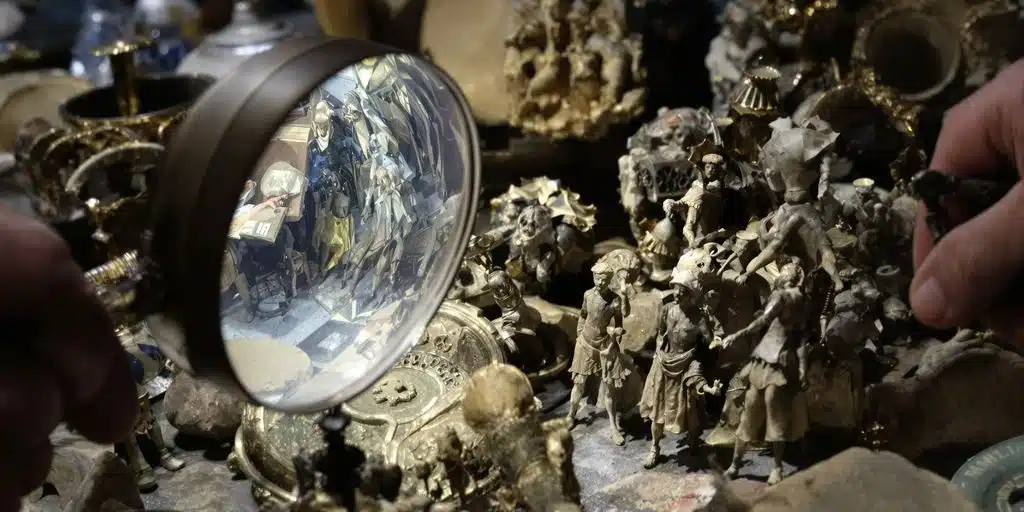
Wondering how to tell if a gold coin is authentic or a counterfeit? It's an excellent question, especially when you consider how well-made fakes can be. Fortunately, there are some ancient methods to help you see things more clearly. We'll look at how, with a little observation and a few tips, you can spot counterfeits or historical items.
Key Takeaways
- Numismatics, the study of coins, provides the basis for identifying a genuine coin by examining its unique characteristics and history.
- Carefully examine wear, patina, materials, weight, dimensions, color, and shine to spot anomalies that indicate a counterfeit.
- The sound of a genuine gold coin is distinctive; chemical tests can also confirm the metal composition.
- Maker's marks, hallmarks, and solid documentation of provenance are important clues, but beware of forgeries of these items as well.
- Use tools like magnifying glasses and microscopes, and don't hesitate to call in experts for further analysis, especially for high-value pieces.
The Foundations of Numismatics for Identification
To get started in numismatics, you need to understand the basics. It's a bit like learning to read a map before setting out on an adventure. Numismatics is the study of coins, and it gives us the keys to identifying whether a coin is authentic or a copy.
The importance of numismatics in the study of coins
Numismatics is much more than just collecting old coins. It's a science that helps us understand the history, economy, and even art of a given era. By studying coins, we can trace trade, identify leaders, and understand how societies functioned. For us, collectors, it's a way to touch the past. Every coin tells a story, and numismatics teaches us to listen to it.
The essential characteristics of a gold coin
When it comes to gold coins, there are several things to consider. Of course, there's the metal itself, but also its weight, diameter, and thickness. These measurements must correspond to what is expected for an authentic coin. We also look at the fineness, that is, the purity of the gold, often expressed in carats or thousandths. For example, a 20-franc coin Napoleon weighs 6,45 grams and is usually made of 900 thousandths gold (22 carats). These details are super important to spot the differences with a fake.
The intrinsic history of each piece
Beyond the technical aspects, every coin has a story. Who minted it? When? In what context? For example, the Napoleon 20 Francs Gold coin passed through several regimes, from the Empire to the Republic, and even re-mintings took place. Knowing this helps us understand why a coin may have variations or why some are rarer than others. It is this historical richness that gives the coins we are interested in their value, beyond their simple weight in gold.
Visual and tactile clues to detect counterfeits
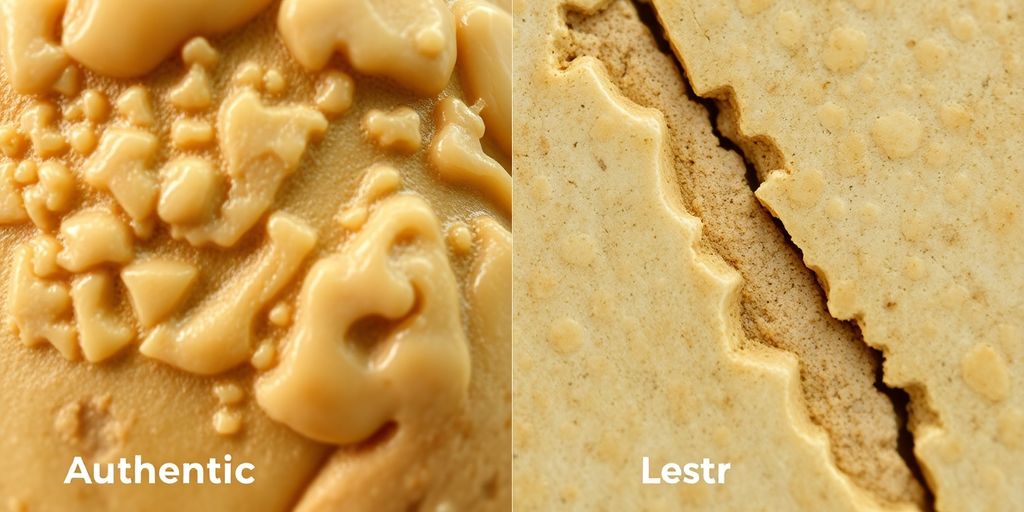
To spot counterfeits, you need to sharpen your sense of observation and touch. Counterfeiters are often skilled at imitation, but certain details betray their work. Therefore, you need to pay attention to anything out of the ordinary.
Analysis of wear and patina
An antique coin bears the marks of time. Natural wear, the kind that results from circulation and handling, is often uneven. It is concentrated on the reliefs and edges, where contact is most frequent. A patina, the surface layer that forms over time, should also appear authentic. If a coin appears too uniformly worn, as if it had been artificially polished, or if its patina is too vivid or too colorful, be wary. Counterfeiters sometimes try to create a false patina using chemicals, which often results in an artificial result, too uniform or with unusual hues. Pay close attention to areas of friction; they should show more pronounced wear than the hollows of engravings, for example.
Review of materials and manufacturing techniques
Each era has its own methods. Knowing the alloys used, and the minting or casting techniques of the era you're interested in is a major asset. For example, some ancient coins were hand-minted, which could leave slight imperfections or off-centers. Modern coins, on the other hand, are often produced with high-precision machines. If a coin claims to be ancient but has a finish that's too perfect, too smooth, or uses a metal that didn't exist at the time, that's a red flag. You should also look at the edge of the coin: is it smooth, ridged, or engraved? The techniques used for the edge can also vary depending on the period and mint.
Checking weights and dimensions
This is a fairly basic point, but often effective. Genuine coins have very precise weights and diameters, defined by their issuing decree. A counterfeit coin, even a well-made one, may have a slightly different weight, either because it is made of a less dense alloy or because the forger was unable to reproduce the dimensions exactly. Having a precision scale and a caliper can really help. Always compare the measurements of the coin you are examining with the known specifications for that type of coin. Even the slightest difference deserves special attention.
Observing color and brightness
The color of gold, or any other precious metal, can vary slightly depending on its purity and the other metals that make up the alloy. A 22-karat gold coin (900 thousandths) will have a slightly different hue than a 24-karat gold coin (999 thousandths). Counterfeiters can be mistaken about the exact shade. Similarly, the shine of a genuine coin, especially one that has circulated, is not the same as that of a new or counterfeit coin. An overly bright shine, or conversely, a dull and suspicious color, can indicate a problem. It is useful to compare the suspect coin with a genuine coin of the same type, if possible, to better appreciate these nuances.
Sound and material based authentication methods
To truly determine if a gold coin is genuine, you sometimes have to look beyond what meets the eye. Ancient numismatists already used their senses in quite sophisticated ways, and some of these methods are still surprisingly effective.
Listening to the distinctive sound of a gold coin
You may have heard the expression "ringing and clinking." Well, "ringing" is the idea that the human ear is an excellent judge. When you ring a real gold coin, it produces a very particular sound, a clear and crisp sound. With a little practice, you can recognize this sound. Counterfeiters, on the other hand, often have difficulty reproducing this sound, especially if they used less noble alloys or less precise manufacturing techniques. If a coin sounds "false," that's a first clue that should put you on the alert. In fact, at one time, mints would even remelt coins that didn't sound right, which shows how important this criterion was!
Chemical tests for metallic composition
Well, chemical tests are a bit more advanced and require specific equipment, but they're super reliable. The idea is to verify that the coin is actually made of what it's supposed to be. For example, gold isn't magnetic at all. If you hold a magnet close to it and the coin reacts, it means there's something else inside, probably a ferromagnetic metal. It's a simple test but very effective for spotting coins that are filled or made with unwanted materials. To go further, more complex analyses like spectrometry can determine the exact composition of the metal, indicating the percentage of gold, copper, silver, etc. These methods are quite accurate and shouldn't damage the coin.
The importance of density and weight
Gold is a fairly dense metal, which means that a gold coin will have a certain weight for a given size. Counterfeiters sometimes struggle with this. They may use less dense metals to lighten the weight, or conversely, try to compensate with heavier materials that aren't gold. Therefore, checking the coin's exact weight and comparing it to what it should be is an important step. If the weight doesn't match, even by a small amount, it can be a sign of counterfeiting. Similarly, specific gravity, which is the ratio of weight to volume, is a characteristic specific to each metal. Knowing the density of gold and comparing it to the coin's density can reveal anomalies.
The contribution of signatures and historical documentation
When examining an antique piece, you shouldn't overlook details that could betray a counterfeit. Signatures, maker's marks, and hallmarks are crucial elements, but beware: they are also often imitated. Therefore, it's important to study them closely and compare them with reliable references. If a signature seems too clear on an object that's supposed to have survived the centuries, that should raise a red flag.
A piece's history, what we call its provenance, is also a major clue to its authenticity. The papers that prove its origin and trace its journey over time lend weight to its credibility. But again, be wary of documents that seem too perfect, too complete, as if they were fabricated for the occasion. You must verify that the dates, names, and places mentioned in these documents correspond to historical reality. A little research can often reveal glaring inconsistencies.
- Examine the consistency of the information: The dates, names and places mentioned in the documentation must correspond to the supposed historical period of the piece.
- Compare the marks and hallmarks: Look for examples of authentic marks and hallmarks from the period and style of the coin you are examining.
- Be skeptical of documentation that is too perfect: A story that is too smooth or documents without any imperfections can be a sign of forgery.
A well-documented provenance builds trust, but suspect documentation can be a major red flag. It's always best to cross-reference information and trust your instincts.
Modern tools and expertise for refined detection
To go further in detecting counterfeits, you should know that modern tools and expertise have become essential allies. We can no longer rely solely on the naked eye or a few old wives' tales.
The use of magnifying glasses and microscopes
These instruments are a bit like having superpowers for your eyes. A good magnifying glass, say one with at least 10x magnification, allows you to see tiny details on a coin. You can examine engravings up close, spotting unmistakable signs of wear, or even imperfections in the minting that would betray a fake.
- Check the fine details: Genuine coins often have crisp, precise engravings.
- Examine the edges: Look for signs of filing or rough finishing.
- Identify bubbles or inclusions: In metal, this may indicate a poor quality alloy.
Counterfeit money detectors and their technologies
These electronic devices go beyond what you can see. They use different technologies, such as ultraviolet (UV) rays or magnetic sensors, to identify counterfeits, especially for modern currencies. It's a bit like having a portable laboratory.
It is important to understand that even the best detectors are not infallible. They are a decision-making tool, but they are not a substitute for in-depth knowledge of the subject.
The use of scientific analysis and professional expertise
When you want to be truly sure, scientific analysis is the way to go. This can range from chemical tests to verify the exact composition of the metal to more advanced methods like spectrometry. And of course, there are the experts. These people have spent years studying coins, and they have an encyclopedic knowledge and experience that allows them to spot fakes with formidable precision. Calling on them guarantees you peace of mind.
Famous Forgers and Their Imitation Techniques
Methods of casting and striking using engraved dies
The most skilled forgers don't just crudely copy. They master techniques that faithfully imitate the original manufacturing processes. Casting, though ancient, can still be used, but it is often supplanted by more sophisticated methods such as die casting. This technique allows for the mass production of coins with surprising precision, reproducing the fine details of genuine coins. Another approach is to engrave dies and then use them to strike metal blanks. This is a skilled craft that requires great dexterity and a thorough knowledge of the tools and metals used at the time of the original coin. The quality of the corner engraving is often the weak point that betrays the fake.
The transformation of authentic currencies
Another trick used by counterfeiters is to start with a genuine, but less valuable, coin and alter it. Imagine taking a common coin and subtly changing the date, an inscription, or even a small detail of the design to pass it off as a rare variety or a highly sought-after coin from a specific year. This is an insidious technique because it uses the correct original metal and construction. Detection then relies on extremely careful observation of the alterations, often using powerful magnification, to spot alterations or additions that do not correspond to the original minting process.
The study of the works of Becker, Cigoi and Christodoulos
History is littered with the names of forgers who left their mark on their era with their talent and audacity. Carl Wilhelm Becker, active in the early 19th century, is famous for creating copies of ancient coins so perfect that they fooled the greatest numismatists. His creations are still studied today to understand his methods. Later, Luigi Cigoi distinguished himself in Italy with imitations of Greek and Roman coins, some of which are now collected for their own artistic merit, despite their fraudulent origin. Constantine Christodoulos, in the 20th century, excelled in copying Byzantine coins, creating pieces so convincing that they fetched considerable prices. Studying their works teaches us much about the evolution of forgery techniques and the constant vigilance necessary in our passion.
These masters of imitation remind us that a thorough knowledge of history and manufacturing techniques is our best weapon against deception. They pushed the boundaries of the art of forgery, forcing us to continually refine our methods of identification.
In our section "Famous Forgers and Their Imitation Techniques," we explore how some artists have tried to fool the world with fake worksIt's fascinating to see how they copied styles and materials to pass their creations off as originals. Want to learn more about these incredible stories and discover how to recognize a true work of art? Visit our site to dive into this captivating world!
So how do we get out of this?
So, we've taken a quick look at the methods, from the oldest to the most modern, for spotting counterfeits. It's not always easy, is it? Between counterfeiters who are becoming more and more skilled and techniques that evolve, we must remain vigilant. But you know, the most important thing is not to be fooled by offers that are too good to be true. Take the time to look, to compare, and if you have any doubts, ask a pro for advice. Your instinct is also a good tool, so listen to it! With a little practice and curiosity, you will quickly become an ace at spotting fakes.
Frequently Asked Questions
How can I tell if a gold coin is genuine?
To tell if a coin is real, look at it carefully! See if it's well made, if the designs are clear, and if there are any strange flaws. Also, touch it to feel if it's smooth or if it has an odd texture. Sometimes, the sound it makes when you tap it gently can also help you tell if it's a real gold coin.
What is wear and patina on an antique gold coin?
Antique gold coins often look a little worn, as if they've been around a lot. They have a sort of 'patina,' a special color that comes with age. If a coin looks too new or is worn in odd ways, it may be a sign that it's not a genuine antique coin.
What are the signs that a part has been recently manufactured?
Counterfeiters sometimes use cheaper metals or modern techniques to make fake coins. They may try to copy the weight and size, but there are often small differences. You should also look at the color and shine: gold has a very specific color and shine that are difficult to perfectly imitate.
What are maker's marks and hallmarks for on a coin?
Some pieces have special markings, such as small stamps or engravings, left by those who made them. These marks are like a signature. You should compare them with examples of known brands to be sure. Sometimes counterfeiters also make fake signatures, so you have to be very careful.
What tools can I use to verify the authenticity of a coin?
There are tools that can help a lot! A small magnifying glass or microscope allows you to see the very fine details of the coin, such as designs or small imperfections. There are also devices that can test the metal or even the sound of the coin. Asking an expert for advice is also a very good idea, as they are used to seeing many coins.
What are some things to avoid when buying an antique piece?
Be wary of stories that seem too perfect or prices that are way too low. If a coin is being sold very, very cheaply, there's a good chance it's a fake. It's always best to buy coins from trusted people or stores that can prove the coin is authentic.
