Wondering how to effectively separate valuable minerals from raw rock? Gravimetric concentration and flotation are two key methods in this field. They allow you to sort materials based on their physical properties. In this article, we'll explore the principles of these techniques, learn about the equipment used, and understand their importance in various industries.
Key Points to Remember
- Gravity separation exploits differences in particle density and size to sort them, using the force of gravity.
- Shaking tables, hydrocyclones and concentrator spirals are common equipment for gravimetric separation.
- This method finds major applications in mining, water treatment and waste recovery.
- Flotation is a complementary technique that uses buoyancy to separate materials, often used for coal.
- A good knowledge of the mineralogy of the ore, including particle size and density, is necessary to optimize these processes.
Fundamentals of Gravimetric Concentration
Gravimetric concentration is a bit like sorting pebbles on the beach, but industrially scaled and much more efficient. The basic principle is quite simple: gravity is used to separate minerals based on their density. Basically, if one mineral is heavier than another, it will react differently in a water current or under vibration. It's this difference in weight that does all the work.
Density difference as a driver of separation
Density is really the driving force in all of this. Imagine you have a pile of sand with small pebbles and grains of gold. If you shake it all in water, the gold grains, being denser, will tend to sink faster and end up at the bottom, while the lighter sand will be carried away more easily. This is the same principle applied on a large scale in mines. We seek to exploit this property to recover valuable minerals. For example, in gold extraction, we know that it is a very dense metal, which makes it easier to separate from other, less dense rocks. It's a method that has been tried and tested for centuries and remains a key technique in mineral processing.
The influence of particle size and shape
But be careful, it's not just density that matters. The size and shape of your particles also play an important role. Very fine particles can behave differently, sometimes remaining suspended longer due to the viscosity of the fluid, even if they are dense. Similarly, irregularly shaped particles can arrange themselves differently and influence the separation. This is why the ore often needs to be crushed to free the minerals before processing them. Good control of the particle size, or particle size, is therefore essential for gravimetric separation to work at its best. The right balance must be found so that the density can be fully expressed.
The crucial role of gravity and fluid
Finally, let's not forget the two main players: gravity and fluid. Gravity is what pulls everything down, and it's what amplifies density differences. The fluid, whether water or air in some cases, acts as a medium. It helps move particles and create the conditions necessary for separation. The choice of fluid and how it's used (current, turbulence, etc.) are crucial. For example, in shaking tables, water plays a key role in helping to stratify particles according to their density, while vibrations do the work of separation. It's a subtle combination of these elements that results in quality concentrates.
Key technologies in gravimetric separation
To properly separate materials based on their density, several technological tools are at your disposal. Each has its own specificities and is adapted to different types of ores and particle sizes.
Shaking tables and their vibratory action
These tables are really interesting. They work through a complex vibratory motion that, combined with a flow of water, stratifies the particle mixture. The denser, heavier particles will end up at the bottom of the table, while the lighter ones will be evacuated to the side. It's a bit like shaking a sieve, but in a much more controlled and efficient way. They are often used to recover precious minerals like gold, as they perform well enough for particles of varying sizes. Precisely adjusting the vibrations and water flow is key to optimizing separation.
Hydrocyclones and centrifugal force
Hydrocyclones, on the other hand, operate on a completely different principle: centrifugal force. You send your pulp (a mixture of ore and water) into a pressurized cone. This rapid rotation creates a centrifugal force that pushes the heavier particles toward the outer wall, where they are then collected at the bottom. Lighter particles stay closer to the center and are discharged from the top. It's a fairly simple, robust method that can handle large volumes. They're particularly useful for separating medium to coarse-sized particles. Think of it like a washing machine that spins very fast, but for minerals!
Concentrator spirals for optimized separation
Concentrator spirals are another interesting option, especially when you're looking to maximize recovery. They look like large helical ramps. The mineralized mixture moves down the spiral, and through a combination of gravity, centrifugal force, and a controlled flow of water, the particles separate. The densest and heaviest particles tend to stay on the outer edges of the spiral, where they are collected. This is a technology that requires careful tuning, but can produce excellent results, especially for ores with fairly marked density differences. It's a rather elegant way of putting gravity and fluid dynamics to work together for you. help recover gold.
Industrial applications of gravimetry
Gravimetric separation is truly a pillar in many industries. Wondering where it's actually used? Well, it's quite varied.
Mining: From Gold to Tin
In the world of mining, this technique is extremely important for recovering precious metals. It is used to separate heavy minerals like gold, but also tin, for example. The idea is that the useful ore, being denser, will settle differently from the waste. It's a bit like sorting pebbles, but on an industrial scale! Shaking tables and hydrocyclones are often the stars of these operations, allowing the ores to be concentrated before the finer processing stages. It's a method that has proven itself, particularly in the extraction of primary gold deposits.
Water treatment and recovery of impurities
This isn't just happening in mines. In water treatment, for example, gravity separation helps remove heavy particles or sediment that could pollute the water. Settling tanks or hydrocyclones are used to push these impurities to the bottom, leaving the water cleaner. This is a key step in ensuring that the water we discharge or reuse meets standards.
Recovery of waste and heavy minerals
And then there's the issue of waste. Sometimes, even in what we consider waste, there are materials that have value. Gravimetric separation can help recover them. Think of recycling, where we can separate plastics of different densities, or even the recovery of heavy minerals from demolition materials. It's a way of giving a second life to resources that would otherwise be lost.
Flotation: a complementary method
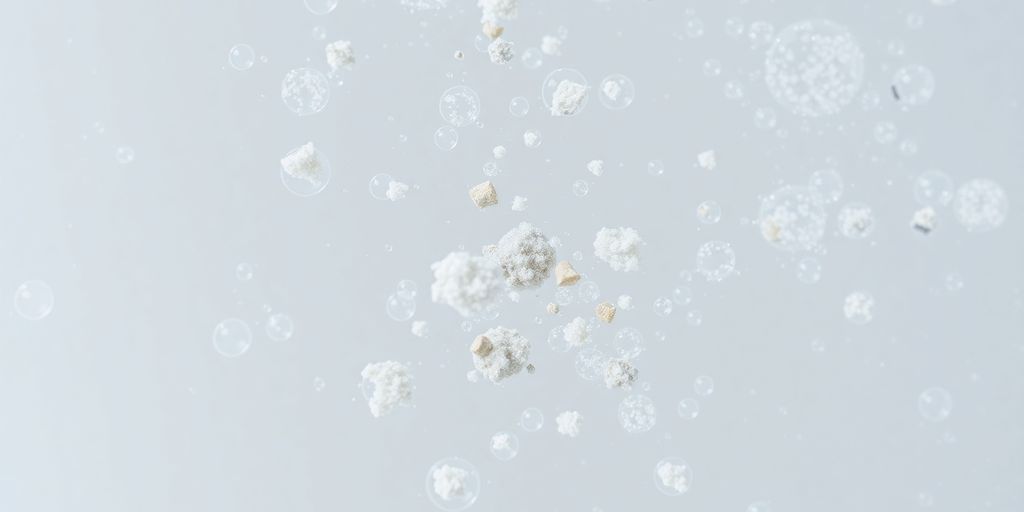
Flotation, although distinct from gravimetric concentration, is a method that often complements it in ore processing. It is based on a different principle: the difference in surface properties of particles, notably their hydrophobic or hydrophilic character. Basically, chemical reagents are used to make some particles (those we want to recover) attracted to air, while others (the waste) remain wetted by water. When air is injected into the pulp (a mixture of water and crushed ore), the hydrophobic particles cling to the air bubbles and rise to the surface to form a scum, which can then be skimmed off. It's a bit like putting oil and water in a glass; the more hydrophobic oil separates more easily. This technique is particularly effective for separating low-density minerals or when the density differences between the useful mineral and the gangue are minimal, making gravimetric separation less efficient. For example, in coal processing, flotation can effectively separate coal from denser mineral impurities. It offers great flexibility in the face of mineralogical variations in deposits, a definite advantage over gravimetric methods which are more sensitive to these variations.
Here are some key points that differentiate it and make it complementary:
- Separation principle : Gravimetry uses density, flotation uses the difference in hydrophobicity/hydrophilicity of surfaces.
- Typical application : Gravimetry is often used for heavy ores like gold or tin, while flotation excels in separating coal, metal sulfides or industrial minerals.
- Sensitivity to variations : Flotation is generally less sensitive to fine particle size variations than gravimetry, but can be affected by water chemistry or the presence of certain ions.
Compared to gravimetric processes, it is clear that these two methods are not in competition but rather in synergy. A gravimetric step can precede a flotation step to remove a significant portion of the gangue, thus lightening the work of flotation and improving the overall recovery of the valuable ore. It is a bit like using a coarse sieve first, then a finer sieve to achieve the desired result. Gold refining, for example, can involve several steps, where gravimetry can be used for an initial concentration before finer treatments such as flotation or chemical processes bbf7].
The importance of mineralogical knowledge
To properly separate minerals, you first need to know them well. This is where the importance of mineralogical knowledge comes into play. Without it, we're flying a bit blind, and the results aren't always what we'd hoped for.
Determination of the release mesh
Before thinking about separation, you need to know at what size the useful minerals are actually separated from each other. This is called the liberation mesh. If you don't know this size, you risk grinding too finely, which is energy-intensive and can even mix the minerals you want to separate. Or you don't grind enough, and then you keep useful minerals stuck to the unwanted ones. A good mineralogical analysis gives you this key information. It's a bit like knowing how deep to dig to find treasure without demolishing the entire house.
Analysis of the density of the constituents
Gravimetric separation, as you may recall, works primarily based on density differences. So, knowing the density of each mineral in your ore is super important. If you know that your ore contains galena (very dense) and quartz (not very dense), you can better choose your equipment and settings. Sometimes, even minerals that look similar can have slightly different densities, and it's this small difference that makes all the difference. You really have to look at this closely.
Understanding particle size distribution
Next, you need to look at the size of all the particles. How are they distributed? Are there a lot of fines? A lot of large ones? That changes everything for gravimetry. For example, shaking tables work well with a certain size range, while hydrocyclones can handle different sizes. If you don't know what the size distribution is, you can't optimize your process. It's like trying to sort fruits and vegetables without knowing whether you have more small peas or large squash. You need to have a clear idea of what you have in the bag.
Knowing what's in your ore is the first step to processing it efficiently. It saves time, energy, and money. A good mineralogical knowledge is the foundation of any good concentration process.
Historical development and innovations in gravimetry
Gravimetric separation, the method that exploits density differences to sort materials, is not new. Its history is as old as humanity's quest to isolate precious metals. Think of the early gold rushes, where rudimentary techniques, such as simply washing sand in a stream, were already a form of gravimetric concentration. These methods, while basic, laid the foundations for what we use today. The Industrial Revolution marked a turning point, with the introduction of more sophisticated machinery that made it possible to significantly increase the volumes processed. The invention of the steam engine, for example, made mining deeper and faster, thus spurring the development of separation equipment. The history of gravimetry is closely linked to the technological advances that made it possible to move from craftsmanship to industry.
From rudimentary techniques to sophisticated equipment
Initially, basins, ramps, and hand tools were primarily used to separate heavy minerals. Imagine gold prospectors with their pans, patiently separating the precious metal from the gravel. Then came shaking tables, which, thanks to their vibrating movements and the action of water, greatly improved efficiency. Later, hydrocyclones appeared, using centrifugal force for faster and more precise separation, particularly useful for fine particles. Spiral concentrators then offered a solution for processing larger volumes in a continuous and optimized manner. These developments demonstrate a clear trend: a constant search for efficiency and processing capacity.
Automation and smart sensors
Recent decades have seen the advent of automation and smart sensors in the field of gravimetry. Gone are the days when everything relied on the expert eye of the operator. Today, sophisticated systems monitor separation parameters, such as flow density or particle size, in real time. These sensors automatically adjust operating conditions to maintain maximum efficiency, even when the nature of the ore changes. It's a bit like having an ultra-precise assistant that optimizes every step of the process. The goal is to reduce human error and improve the consistency of the final product quality.
Advances towards more sustainable technologies
Innovation doesn't stop there. There's also an effort to make these processes more environmentally friendly. This involves reducing water and energy consumption, as well as minimizing waste. For example, research is focusing on dry separation systems to reduce water usage, or on optimizing circuits to recover more energy. Artificial intelligence is also beginning to be explored to predict performance and adjust parameters even more precisely, with the aim of more efficient and sustainable exploitation of mineral resources. This is a promising avenue for the future of mineral processing, in line with current environmental concerns. Gold extraction, for example, has seen its methods radically transformed thanks to these innovations, moving from artisanal techniques to highly technological industrial processes. mining.
The evolution of gravimetry shows a constant adaptation to the needs of industry and environmental constraints, moving from simple methods to complex and automated systems.
The history of gravimetry is fascinating, full of discoveries that have changed the way we understand the world. From early methods to modern tools, each step has brought its share of improvements. Want to learn more about these advances? Visit our site to explore this exciting field!
To conclude: gravimetry and flotation, valuable allies
So, now you have a better idea of what gravity concentration and flotation are. These are really useful techniques, especially when you want to separate things based on their weight or how they float. You can find them in lots of places, like mines, but also for treating water or recycling materials. It's quite fascinating to see how we can sort such different elements just by playing with gravity or chemicals. Basically, if you work in these fields, understanding these methods is really the basis for doing good work. It helps you be more efficient and waste less energy, which is always a good thing, right?
Frequently Asked Questions
What is gravimetric concentration, roughly?
Gravimetric concentration is like sorting pebbles of different sizes and weights. Gravity is used to separate heavier and lighter pieces. It's a bit like putting pasta in water: the larger ones sink to the bottom faster.
How does it work to find gold?
Imagine you want to recover gold from sand. Gold is much heavier than sand. Gravity separation uses this difference in weight to make the gold fall faster and be recovered, while the lighter sand is washed away.
What are the tools that make this separation?
We use special machines! For example, 'shaker tables' vibrate to help separate things. 'Hydrocyclones' spin very fast so heavy things go to the sides and light things in the middle. And 'spiral concentrators' act like a sorting chute.
And flotation, is it the same?
Flotation is different. Instead of just using weight, we use air bubbles. We add chemicals that make certain things, like coal, stick to the bubbles and float to the surface. This is useful when the weight difference isn't great enough.
Why is it important to know the rocks you are working with?
It's super important to know what your ore is made of! If you know the grain size and weight, you can choose the best machine to separate them. It's like knowing whether you have small peas or large potatoes to choose the right sieve.
How has it evolved since the beginning?
At first, we used very simple methods, like washing stones in a river. Now, we have super-sophisticated machines that are controlled by computers and sensors. We're also trying to develop processes that pollute nature less.