Do you have a piece of gold jewelry and are wondering if it's really pure gold, or if it's an imitation? This is a common question. Fortunately, there are several simple methods you can do at home to check the purity of your gold jewelry. You don't need to be an expert. We'll walk you through the process, step by step, so you can be sure of what you're holding. It's easier than you think, we promise!
Key Takeaways
- Checking the hallmarks on the jewelry is the first step in getting an idea of its purity. It's a good start.
- Simple tests, such as water or foundation, can provide clues about the authenticity of gold. It's quick and easy to do.
- Testing with products like vinegar or bleach can help, but caution is advised.
- Wearing the jewelry daily can reveal signs of false purity, such as discoloration. This is a long-term test.
- For a definitive answer, it's best to consult a professional. They have the tools and knowledge to confirm the purity of your gold jewelry.
Examine visual and physical characteristics
Before you begin further testing, it's a good idea to begin with a thorough visual and physical inspection of your gold jewelry. These initial observations can often provide valuable clues about its authenticity. It's a bit like making an initial diagnosis before going to the doctor; it can save you unnecessary tests!
Search for official hallmarks
The hallmark is a small mark engraved on the jewel, indicating its gold content. It's a bit like the jewelry's identity card. In France, hallmarks are regulated and guarantee a certain level of purity. For example, a hallmark representing an eagle's head indicates 18-carat gold (750/1000). If you see a hallmark, it's already a good sign, but be careful, counterfeits exist. Therefore, it's important to check that the hallmark is clean and meets current standards. You can find tables listing official hallmarks online or in specialized books. It's a bit of research, but it's worth it!
Observe the reaction to water
Pure gold does not oxidize or react with water. If you immerse your jewelry in water and it changes color or shows signs of rust, there's a good chance it's not pure gold, or it's plated. Be careful, this method isn't foolproof, as some alloys can also be water-resistant. This is more of a clue than definitive proof. It's like observing the weather; it gives you an idea, but it doesn't tell the whole story.
Test the metal's softness by biting
Okay, I know, it may sound weird, but it's an old method used by gold prospectors! Pure gold is a relatively soft metal. If you gently bite down on your jewelry (without breaking it, eh!), and it leaves a slight indentation, that's an encouraging sign. Obviously, don't expect to make a deep bite, and don't do it too hard! If the metal is very hard and doesn't mark at all, it's probably another metal. It's a bit like testing a fruit, you feel its texture to know if it's ripe. But be careful, don't break a tooth! For a more accurate assessment, auction houses use more sophisticated methods.
Perform chemical tests at home
Okay, let's get down to business. If the visual tests haven't convinced you, you can try some chemical experiments at home. Don't panic, we're not going to blow up the kitchen! These tests are pretty simple, but you still have to be careful and not just mix anything. The idea is to see how the object reacts to certain common substances. If it's pure gold, there shouldn't be any noticeable reaction. If not, it could indicate that there are other metals in the mixture.
Use the white vinegar test
White vinegar is a bit like the Swiss Army knife of home gold testing. It's simple, inexpensive, and we all have some in our cupboards. The idea is to see if the vinegar causes a reaction on the metal. Pour a few drops of white vinegar onto your jewelry. If the gold changes color, if it becomes darker, there's a good chance it's not pure gold. You can also completely submerge the jewelry in a glass of vinegar and observe the same thing. It's not foolproof, but it gives you an initial indication.
Apply bleach
Bleach is a little more aggressive than vinegar, so be careful. The principle is the same: observe the reaction. Let your jewelry soak in bleach for at least 24 hours. If, after this time, there is no trace of oxidation, it's a pretty good sign. It doesn't mean 100% that it's pure gold, but it eliminates a lot of fakes. It's a fairly reliable test, but you have to be patient. If you're looking to get a free estimate of your jewelry, there are faster methods.
Using liquid foundation
This one's a little weird, but apparently it works. Spread a small amount of liquid foundation on your hand and let it dry. Then, rub your gold jewelry over the dried foundation. If a dark streak appears, that's a good sign. Real gold tends to leave a mark on foundation. It's not an exact science, but it's a great old-fashioned trick that can help.
Be careful with these chemical tests, though. They're not always 100% reliable, and they can even damage your jewelry if you're not careful. If you have any doubts, it's best to call a professional. They'll have the tools and expertise necessary to safely determine the purity of your gold.
Perform advanced physical tests
Beyond visual observations and simple chemical tests, there are more advanced physical methods for assessing the purity of your gold jewelry. These tests require a little more equipment and precision, but they can provide valuable insights.
Calculate the density of the jewel
Density is a physical property characteristic of each material. Pure gold has a very high density (about 19.3 g/cm³)By calculating the density of your jewelry, you can get an idea of its composition. Here's how to do it:
- Weigh the jewel with a precision scale (in grams).
- Measure the volume of the jewelry. The simplest method is to use a graduated container filled with water. Completely immerse the jewelry and measure the difference in volume (in cm³ or mL).
- Calculate density by dividing the mass (in grams) by the volume (in cm³).
Compare the density obtained with that of pure gold. If the density is significantly lower, this may indicate the presence of other metals.
Test with a magnet
Pure gold is not magnetic. If your jewelry is attracted to a magnet, it most likely contains other metals, such as iron or nickel. Be careful, some non-precious metals used in gold alloys are not magnetic either, so this test is not infallible. It can serve as an initial indication, but it is not sufficient on its own to conclude on the purity of the jewelry. It is important to note that this test is more effective at detecting crude counterfeits than subtle alloys. If you have any doubts, it is best to call a professional for a more precise analysis. You can also consult the Gold prices to get an idea of its value.
Rub on unglazed ceramic
This test, sometimes called the "touchstone test," involves rubbing the jewelry on an unglazed ceramic surface (such as the bottom of a plate or a rough tile). Pure gold will leave a golden trace, while a fake or gold-plated piece will leave a black or gray trace. The color of the trace is an indicator of the metal's quality. The more gold the trace, the more likely the jewelry is pure gold. This test is fairly simple to perform, but it can leave a slight mark on the jewelry, so it's best to do it on an inconspicuous area.
It's important to remember that these advanced physical tests aren't always 100% conclusive. They can provide some insight, but they're no substitute for professional analysis. If you have any lingering doubts about the purity of your jewelry, it's always best to consult an expert.
Putting jewelry to the test of everyday life
Wear the jewel permanently
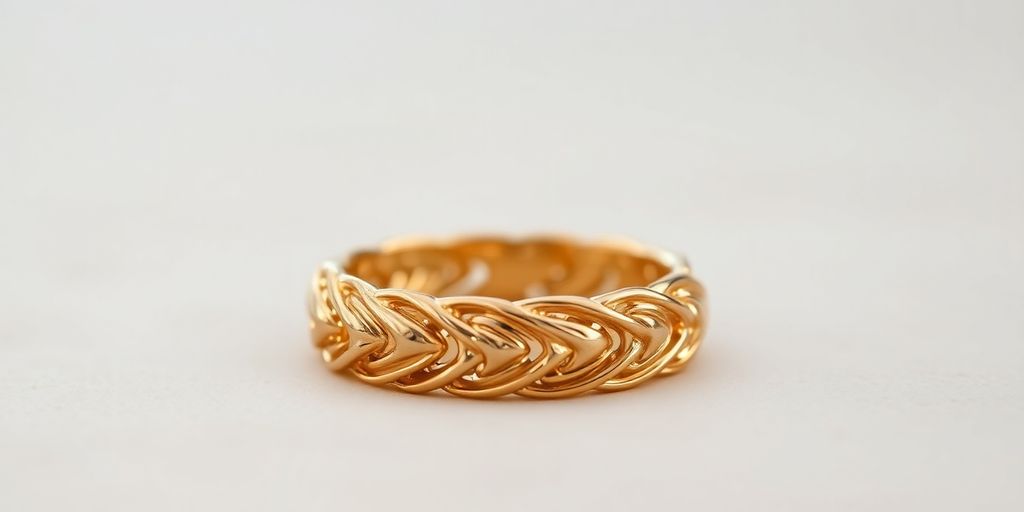
It's a simple method, but it requires time and patience. The idea is to submit your jewelry to all possible conditions : shower, sport, sleep, etc. The goal is to observe how the metal reacts to contact with water, sweat, cosmetic products and friction.
- Wear the jewelry day and night for several days, even weeks.
- Do not remove it when showering or exercising.
- Pay attention to your skin's reactions (irritation, discoloration).
If your skin reacts badly, or if the jewelry changes color, there's a good chance it's not pure gold. Real gold is an inert metal that doesn't cause allergies and doesn't oxidize easily.
Observe for signs of wear and discoloration
Gold is a relatively soft metal, especially when pure. However, it shouldn't discolor or wear off quickly. Pay attention to the following:
- Appearance of excessive scratches, even with normal use.
- Discoloration of the metal, especially in areas of friction (clasps, rings).
- Presence of green or black traces on your skin, indicating a reaction with other metals.
If you notice significant signs of wear, it is likely that your jewelry is gold-plated or contains a small amount of gold. For a more accurate assessment, you can consult a professional or have a acid test specific.
Use specific test kits
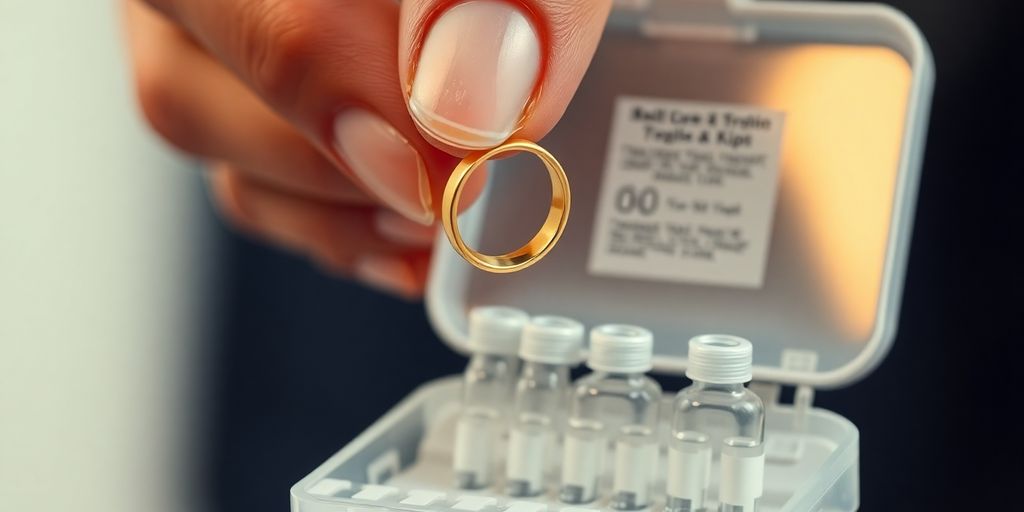
There are a variety of testing kits available on the market designed to assess gold purity. These kits can be particularly useful if you want a more accurate assessment than at-home methods, but without necessarily consulting an expert. However, it's important to note that The accuracy of these kits may vary, and it is crucial to follow the instructions provided carefully.
Perform a test using an acid kit
Acid test kits are among the most common. They typically contain a series of acids of varying concentrations, along with a black touchstone. The principle is simple: you lightly rub the jewelry against the stone, then apply a drop of acid. The acid's reaction tells you the approximate karat of the gold. If the acid dissolves the trace left by the jewelry, it means the gold is one karat lower than the acid used. This is a fairly reliable method, but it requires careful handling of the acids.
Buy liquid iodine
Liquid iodine, readily available at pharmacies, can be used as a developer. To use it correctly, lightly scratch one edge of the jewelry and place a drop of iodine on it. If the jewelry is real gold, there should be no reaction. On the other hand, on gold-plated or low-grade gold, liquid iodine will tend to discolor or evaporate. This is a simple method, but less accurate than acid tests.
Discover the polishing cloth
A polishing cloth, specially designed for gold, can also give you some information. These cloths are impregnated with products that react with gold. By rubbing your jewelry, the cloth can reveal traces that indicate whether the metal is gold or if it is plated. This is a gentle method, ideal for an initial check, but it cannot determine the exact carat. For gold coins, it is better to use more precise methods.
It's important to remember that these kits, while useful, are not foolproof. Results should be interpreted with caution, and if you have any lingering doubts, it's always best to consult a professional.
Seek expert advice
Sometimes, despite all the tests you can perform at home, doubts persist. This is normal! Assessing the purity of gold can be tricky, especially if you are not used to handling precious metals. In these cases, nothing beats the eye and experience of a professional. They have specific tools and know-how that allow them to quickly and accurately identify the composition of your jewelry.
Call a professional
If you have any doubts, don't hesitate to consult a jeweler or gemologist. These professionals are experienced in examining gold jewelry and can quickly determine its purity. They often use special magnifying glasses, precision scales, and more extensive chemical tests than those you can perform at home. They can also provide you with an estimate of your jewelry's value, which can be useful if you're considering selling it or having it insured.
Benefit from free professional expertise
Some jewelry stores offer free appraisals. This is a good option if you want an initial opinion without spending any money. However, keep in mind that a free appraisal may be less thorough than a paid appraisal. If you have a valuable piece of jewelry or have significant concerns, it's best to pay for a full appraisal. This can prevent unpleasant surprises and ensure you get an accurate assessment of your property. If you inherit an item, it's important to get a gold valuation for legal reasons.
Before making an important decision, it's always a good idea to seek expert advice. This helps you better understand things and make the right choice. For reliable advice, feel free to visit our website. You'll find useful information and can even to book an appointment with our specialists.
In short: how can you be sure of the purity of your gold?
Okay, we've seen quite a few tips for checking if your jewelry is indeed gold. Between home tests, like the magnet or vinegar trick, and more serious methods, there's plenty to do. But let's be clear, if you really want to be 100% sure, the best thing to do is to go to a professional. A jeweler or an expert has the equipment and knowledge to tell you exactly what's going on. It's a bit like with a car; you can try to fix it yourself, but for something important, go to the mechanic. It's safer and avoids unpleasant surprises. So, don't hesitate to ask an expert for advice, especially if it's a piece of jewelry that's valuable to you.
Frequently Asked Questions
How do I know if my jewelry is really gold?
To determine if a piece of jewelry is gold, you can first look for small engraved symbols, such as “18K” or “750,” that indicate its purity. Pure gold does not stick to magnets. You can also rub the jewelry on an unglazed ceramic surface: if it leaves a golden trace, it's a good sign. Finally, gold does not rust or change color over time, even if it is worn frequently.
Can you test gold at home with everyday products?
Yes, there are simple methods you can do at home. For example, gold doesn't react to white vinegar or bleach. If your jewelry changes color or becomes damaged after coming into contact with these products, it's probably not pure gold. You can also drop it into a glass of water: gold is heavy and should sink quickly.
Is the bite test reliable for gold?
Gold is a fairly soft metal. A simple test, but one to be performed gently, is to lightly bite the jewelry. If small marks appear, it's a sign that it's gold. Be careful, gold-plated or lead jewelry can also mark, so this isn't 100% proof. You have to be very gentle to avoid damaging the jewelry.
How do acid test kits for gold work?
Acid test kits are very effective. They contain different acid solutions. You rub a small amount of the jewelry on a special stone, then add a drop of acid. If the trace disappears or changes color, it indicates that the jewelry is not pure gold or that it has a lower purity than the acid used. If nothing happens, it is gold of the purity indicated by the acid. You must be very careful with these acids.
What do terms like 18K or 24K mean on gold jewelry?
Gold purity is often indicated in karats. 24-karat (24K) gold is 100% pure gold. 18-karat (18K) gold contains 75% pure gold and 25% other metals. 14-karat (14K) gold contains approximately 58.3% pure gold, and 10-karat (10K) gold contains approximately 41.7% pure gold. The higher the karat number, the more pure gold the jewelry contains.
When should you call an expert to check a gold jewel?
If you have any doubts about the authenticity of a piece of gold jewelry, it's best to seek expert advice. A jeweler, jeweler, or precious metals expert has the tools and knowledge to accurately analyze your jewelry. They often offer a free initial appraisal. This is the surest way to be certain of the value and purity of your gold.