Wondering how to recognize 9-karat gold? It's an excellent question, especially considering the wide variety of jewelry and objects made from precious metals. 9-karat gold, also known as 375/1000 gold, is an interesting alloy, but it's good to know how to distinguish it from other purities. Whether you're about to buy a piece of jewelry, sell an item, or are simply curious, understanding how to identify this alloy will be helpful. In this article, we'll look at how to tell the difference.
Key Takeaways
- Nine-karat gold is an alloy composed of 37,5% pure gold and 62,5% other metals. It is less expensive but also less durable than higher-grade gold.
- To identify it, look for the clover-shaped hallmark. This is the distinctive mark of 9-carat gold on jewelry.
- Simple tests such as the magnet test or an expert opinion can confirm the authenticity of 9-carat gold if you have any doubt.
Identifying the purity of 9-carat gold
Understanding the composition of 9 carat gold
So, you're wondering how to recognize 9-karat gold? That's an excellent question, because not all gold jewelry is created equal, and purity is a key factor. 9-karat gold, also called 375/1000 gold, isn't pure gold. In fact, it's composed of approximately 37,5% pure gold. The remaining 62,5% is an alloy of other metals. These often include copper, silver, zinc, or palladium. These metals are added to make the gold stronger and easier for jewelers to work with. Without them, pure gold (24 karats) would be far too soft to create lasting jewelry.
This mixture explains why 9-karat gold is less expensive than 18-karat gold, for example. Less pure gold means less intrinsic value. Furthermore, this composition can make 9-karat gold slightly more susceptible to oxidation, especially when it comes into contact with skin or chemicals. It may therefore tend to tarnish more quickly than alloys with a higher gold content.
Here is a small table to help you see things more clearly:
| Gold type | Percentage of pure gold | Alloy percentage |
|---|---|---|
| 9 carat gold (375/1000) | 37,5% | 62,5% |
| 18 carat gold (750/1000) | 75% | 25% |
It's important to know that the color of 9-karat gold can vary depending on the metals added to the alloy. You can find paler yellows, or even pinkish or whitish hues, depending on the proportion of copper or silver used.
The distinctive hallmarks of 9-carat gold
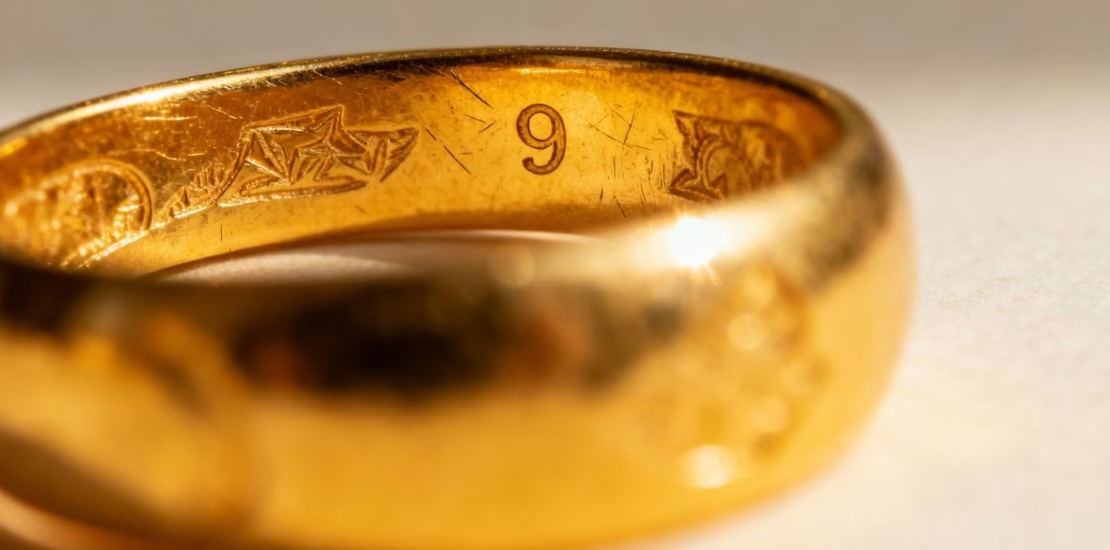
To help you identify 9-karat gold, there's a fairly reliable visual clue: the hallmark. This is a small mark engraved on the piece of jewelry, often inside a ring or on the clasp of a necklace. For 9-karat gold, the most common hallmark is a shape of CloverThis is a distinctive mark that allows it to be differentiated from other types of gold, such as 18-carat gold which generally bears a hallmark in the shape of an eagle's head.
Sometimes you might also find a numerical inscription. For 9-karat gold, this corresponds to 375/1000, indicating the proportion of pure gold in the alloy. This is another way to check, although the cloverleaf mark is often easier to spot.
It's important to know that a hallmark isn't always required on small or very old jewelry. In these cases, you might need to rely on other methods to confirm the gold's purity. But in most cases, the hallmark is there to guide you.
Here are the key points to remember regarding punches:
- The clover : This is the most common symbol for 9-carat gold.
- Inscription 375 : It indicates the purity of the gold (37,5% fine gold).
- Verification : Look for these markings in discreet areas of the jewelry.
- No punch mark On some antique or small pieces of jewelry, it may be absent. In this case, further testing is required.
Verify the authenticity of 9-carat gold
So, you have a piece of jewelry that might be 9-karat gold, but you're not entirely sure? Don't panic, there are ways to check without needing to be a jewelry expert. It's a bit like being a detective, but for your jewelry!
Simple tests for 9-carat gold
Before attempting any complicated procedures, take a good look at your jewelry. Sometimes, the clues are right there in front of you.
- Examine the signs of wear: Genuine gold, even in alloys like 9-karat, tends to hold its shape well. If you see areas where the color has changed, as if the metal has discolored or tarnished, it could be a sign that it's not pure gold. Keep in mind that 9-karat gold is softer, so it can scratch, but it shouldn't change color noticeably.
- The magnet test: Gold isn't magnetic. Take a fairly strong magnet (not the one from your fridge, but a craft magnet) and hold it near your piece of jewelry. If it's attracted to the magnet, it probably contains another metal, or it's just a plating. But be aware, this test isn't foolproof, as other precious metals aren't magnetic either.
- Check the punches: We discussed this in the previous section, but it's really the first thing to look for. For 9-karat gold, look for the small clover. If you don't see anything, or another symbol, be wary.
It's important to know that 9-karat gold is 37,5% pure gold, with the remainder being other metals such as copper, silver, or zinc. These alloys make it harder, but also more susceptible to oxidation, especially when in contact with skin or chemicals. This is why it can sometimes lose some of its luster over time, even if it's genuine.
The importance of expert advice
If, after these simple tests, you still have doubts, or if the piece of jewelry holds special value for you, it's best to seek the advice of a professional. A jeweler has the tools and expertise to tell you exactly what you have in your hands.
They can perform more advanced tests, such as the acid test, which is quite reliable. A tiny scratch is made on an inconspicuous area of the metal, and a drop of a specific acid is applied. If the color doesn't change, that's a good sign. If it does react, it's probably an alloy or a plating. This test requires precision and specialized equipment, so it's best left to someone who knows what they're doing.
In short, simple home tests can give you a good idea, but to be absolutely certain, especially for a major purchase or an inheritance, an expert remains the best option. It's a small expense that can save you a lot of disappointment!
Are you wondering if your 9-karat gold is genuine? That's an excellent question! There are simple ways to find out for sure. Don't let doubt linger. Come and discover how on our website. easily check the quality of your goldWe guide you step by step so that you are sure of what you own.
to summarize
There you have it, you now have some tips to distinguish 9-karat gold from other alloys. Remember that the hallmark is your best ally, but simple tests like the magnet test can also help. If you're still unsure, the easiest thing to do is ask a professional. After all, it's better to be certain before making a purchase, especially when it comes to precious metals. I hope these few tips will be useful for your next shopping trip!
Frequently Asked Questions
How do you know if a piece of jewelry is really 9 karat gold?
To be sure your piece of jewelry is actually 9-karat gold, you need to look closely at the hallmarks. These are called hallmarks. For 9-karat gold, look for a small clover symbol. If you don't see anything, or if the symbol is different, it could be another type of gold or even an imitation. Don't hesitate to ask a jeweler for a magnifying glass to get a better look at these small hallmarks!
Is 9-carat gold less resistant than 18-carat gold?
Yes, generally speaking, 9-karat gold is a bit less resistant and less durable than 18-karat gold. This is because 9-karat gold contains less pure gold (only 37,5%) and more other metals. These other metals can make it a bit more susceptible to scratches or discoloration over time, especially if it's frequently in contact with your skin or other products.
Can simple tests be trusted to verify 9-carat gold?
Simple tests like the magnet test (gold isn't magnetic) or observing signs of wear (real gold doesn't tarnish easily) can give you a first idea. However, these tests aren't always 100% reliable. To be absolutely certain, especially if it's a significant purchase, it's best to consult an expert, such as a jeweler. They have the tools and expertise to tell you exactly what your piece of jewelry is made of.