Do you have a Gold Sovereign bearing the image of George V and are wondering how to estimate its value for possible resale? This is an excellent approach! Knowing how to correctly evaluate your coin is the key to getting the best price. This guide will help you understand the different aspects to consider when properly evaluating your George V Gold Sovereign.
Key points for evaluating your George V Gold Sovereign
- Understanding Numismatic Criteria: Condition, weight, diameter, gold purity, and obverse and reverse design are fundamental elements in evaluating your George V Gold Sovereign.
- Analyze the mintage history: The year of mintage and the number of copies produced can influence the rarity and therefore the value of your coin.
- Determining the numismatic premium: The value of a George V Gold Sovereign is not limited to its weight in gold; the numismatic premium, linked to its rarity and demand, plays an important role.
- Evaluate Liquidity and Sales Channels: Knowing where and how to sell your coin is essential to getting the best price and ensuring a smooth transaction.
- Learn about taxes: Understanding the tax implications of reselling valuables will help you maximize your profits.
Identify the state of conservation of your Sovereign George V
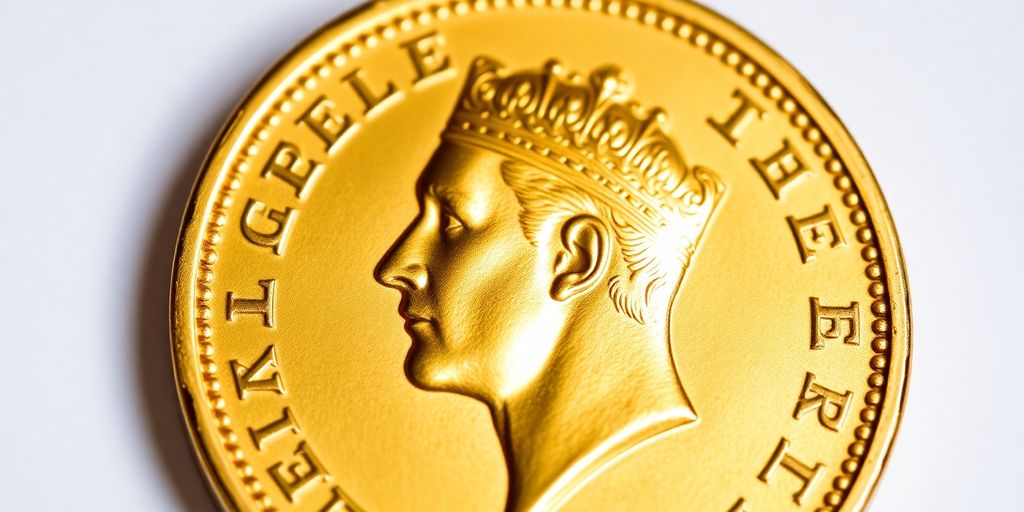
To properly assess your George V Gold Sovereign for resale, it's essential to understand how its condition affects its value. It's not just a matter of whether the coin is scratched or not; there's a whole world behind numismatic appraisal.
Understanding Numismatic Evaluation Criteria
Evaluating a coin's condition is a bit like grading an exam. You look at several factors to determine its quality. In numismatics, we use scales to grade coins. In France, we often have a scale that ranges from "Assez Beau" (AB) to "Fleur de Coin" (FDC), which is the best of the best. Professionals also use more detailed systems, such as the Sheldon scale, which ranges from 1 to 70. The higher the grade, the more the coin is considered to be in perfect condition. You have to look carefully at the details: the presence of shocks, the wear of the reliefs, the quality of the strike, and even the color of the patina if it has one.
The different quality categories for gold coins
Coins can be grouped into a few broad quality categories. First, there are the coins that have circulated a lot, which are worn, sometimes even with defects. Then there are the "Very Fine" (VF) or "Very Very Fine" (VF) coins, which still have a good appearance but show signs of wear. The "Superb" (SUP) and "Splendid" (SPL) coins are those that have circulated very little, with details still very clear. Finally, the Holy Grail is the "Fleur de Coin" (FDC) coin, which has absolutely no defects, as if it had just come off the press. For a George V Sovereign, a coin in SPL or FDC condition will have a much higher numismatic value than a simply FV coin.
The Importance of Condition for Resale Value
It's important to understand that the condition can make a huge difference in resale price. A coin in FDC condition can be worth several times the price of an identical coin in VF condition. This is because collectors strive for perfection. For a George V Sovereign, which is an investment coin as well as a collectible, a good condition is a major asset. If your coin is in perfect condition, it will attract buyers willing to pay more. If it is a little damaged, its value will be based mainly on its weight in gold, with a very low or even zero numismatic premium.
Analyze the physical characteristics of Sovereign George V
To properly assess your George V Gold Sovereign, you must first take a closer look at its physical characteristics. It's a bit like examining a car before buying it: you check the engine, the bodywork, and all that. For the coin, it's the same, but with very specific criteria.
Check the weight and diameter of the part
The standard weight of a George V Gold Sovereign is 7,99 grams, and its diameter is 22 millimeters. These dimensions are fixed and are part of the Royal Mint's official specifications. If your coin deviates significantly from these measurements, it could indicate excessive wear, tampering, or even that it is not a genuine George V Sovereign. It is therefore important to check them with a precision scale and caliper.
Examine the purity of gold (title)
The George V Gold Sovereign is struck in a 22-carat gold alloy, which corresponds to a purity of 916,67‰ (one thousand). This means that out of 1000 parts of metal, 916,67 are pure gold, the remainder being generally copper to ensure the coin's durability. A lower purity could diminish the coin's intrinsic value, although the resale market often focuses on the weight of gold contained.
Observe the design of the obverse and reverse
The obverse of the Sovereign George V features the king facing left, with the Latin inscription "GEORGIVS V DG BRITT: OMN: REX FD IND: IMP:". The reverse is famous for its depiction of Saint George slaying the dragon, an engraving by Benedetto Pistrucci. The details must be carefully examined: the sharpness of the king's features, the fine engraving of the dragon and Saint George, and the absence of deep scratches or wear that would make the motifs difficult to distinguish. A well-preserved coin, with a clear and precise design, will always be more valuable.
The condition of the engraved details is a key indicator of the coin's mintage and preservation. A coin that has circulated extensively will show signs of wear, especially on high points such as the king's hair or the tip of Saint George's spear.
Consider the history and rarity of the strike
Beyond its weight and purity, the story behind your George V Gold Sovereign plays a significant role in its value. Each coin is a small piece of history, minted during a specific reign, and this is important to collectors and investors.
Identify the year of minting and its significance
The year of mintage of a George V Sovereign isn't just a date; it can indicate the coin's rarity. Some years saw more limited production, making them more sought-after. For example, coins minted during the early years of George V's reign, or those from specific mints, may have a higher value.
Search for rare or sought-after vintages
It's helpful to research vintages that are particularly prized by numismatists. This information can often be found in specialized catalogs or from professionals. A coin from a rare year, even if in average condition, may have a higher numismatic value than a more common coin in perfect condition.
Understanding the impact of production on value
The total number of coins minted in a given year directly influences their rarity. Mass production generally means greater availability and therefore a lower numismatic premium. Conversely, a limited mintage for a specific year can significantly increase the coin's value, regardless of its overall condition. It's a bit like classic cars: a model produced in small batches will often command a higher price.
Evaluate the numismatic premium and the potential for added value
Beyond its intrinsic value based on the weight of gold it contains, your George V Sovereign has numismatic value. It is this added value, often called 'premium', that can make a significant difference when reselling. Understanding how it is formed and what influences it is therefore essential to maximize your profits.
Understanding the difference between intrinsic value and numismatic value
Intrinsic value is simply the gold price contained in the coin. It is calculated by multiplying the weight of fine gold by the current price of gold. This is the base, the floor, if you will. Numismatic value goes beyond this. It takes into account elements such as the rarity of the coin (some vintages are harder to find), its condition (a coin in perfect condition is worth more), its history, and even collector demand at a given time. It's a bit like comparing a standard used car to a classic car in perfect condition: the latter is worth much more than the sum of its parts.
Identify factors influencing the premium
Several elements will influence this numismatic bonus for your Sovereign George V:
- The state of conservation: As we have seen, a 'Fleur de coin' (FDC) coin will be much more sought after than a worn coin. Scratches, dents, or a pronounced patina can significantly reduce this premium.
- The vintage and the series: Some mintage years are rarer than others. For example, sovereigns minted during World War I or years of more limited production may command a higher premium.
- Origin and certification: If your coin has been certified by a recognized organization (like PCGS or NGC) and is in exceptional condition, this may warrant a higher premium.
- Market demand: As with any collectible, the law of supply and demand applies. If collectors actively seek out George V Sovereigns at any given time, the premium will increase.
Anticipate the potential for resale value
To anticipate the potential appreciation, you need to look at the market. George V Sovereigns generally command a stable premium, often around 2% to 5% above the gold value, but this can vary. If you have a coin in exceptional condition or a particularly rare vintage, this potential can be much higher. It is useful to check current prices for George V Sovereigns on specialist sites to get an idea of the premiums charged. Remember that the market evolves, and what is true today may not be true tomorrow. Keeping an eye on trends can help you choose the right time to sell and thus take full advantage of this numismatic premium.
Consider liquidity and ease of resale
When you decide to sell your George V Gold Sovereign, it's important to consider how easily you can convert it into cash. This is called liquidity. Fortunately, the George V Sovereign is a fairly popular coin, which helps a lot.
Analyzing the demand of Sovereign George V on the market
The George V Sovereign, like many historical gold coins, has a fairly stable demand. Investors and collectors seek it out for its history, its weight in gold, and sometimes for its rarity if it's a particular vintage. Its global popularity means you generally won't have too much trouble finding a buyer. It's a bit like selling a popular car: there's always someone looking for that model.
Identify reliable sales channels
There are several options for selling your George V Sovereign. Shops specializing in precious metals are often a good starting point. They are knowledgeable about these coins and can make you a quick offer. Online platforms are also an option, but you must be careful and choose reputable sites to avoid scams. Auction houses can be interesting if your coin has particular numismatic value, but it can take longer. It's important to compare offers to make sure you don't get ripped off.
Optimize resale conditions
To get the best price, you need to consider a few details. First, make sure the coin is in the best possible condition, without cleaning it yourself, as this could devalue it. Next, find out the current gold price, as this directly influences the price of your coin. If you have original documents or a certificate of authenticity, keep them safe; they can reassure the buyer and justify a better price. Finally, don't rush into things; taking the time to compare offers will allow you to sell under the best conditions.
Find out about the taxation applicable to resale
When you decide to sell your George V Gold Sovereign, it's important to keep the tax aspect in mind. In France, the sale of precious metals is subject to specific regulations that can impact the final amount you receive. There are two main tax regimes for capital gains on precious metals: the Precious Metals Tax (TMP) and the Real Capital Gains Tax (Gros-Capital Régime). Understanding these options will help you choose the one that's most advantageous for your situation.
Understanding the tax implications in France
In France, the sale of gold coins such as the Sovereign George V may be taxed. The Precious Metals Tax (TMP) regime is a flat rate of 11,5% (including CRDS and CASA) applied to the total amount of the transaction. This is a simple option, but may be less attractive if your coin has appreciated significantly. The other option is the Real Capital Gains regime, which only taxes the gain realized upon sale. This regime applies a rate of 36,2% (19% income tax + 17,2% social security contributions) after an allowance that decreases each year of ownership. After 22 years of ownership, the capital gain is completely exempt from income tax.
Anticipate the taxation of capital gains
To anticipate taxation, you must first determine whether you will opt for the TMP or the Real Capital Gains regime. If you have held your George V Sovereign for a long time, and its value has significantly increased, the Real Capital Gains regime will probably be more advantageous, especially if you have owned it for more than 22 years. If the coin was recently acquired or if its value has changed very little, the TMP regime could be simpler and just as profitable. It is therefore essential to keep your proof of purchase to be able to accurately calculate your capital gain.
Identify tax optimization schemes
Tax optimization involves using legal mechanisms to reduce the amount of tax due. In the case of selling gold coins, this primarily involves choosing the right tax regime. If you own several gold coins, it may be wise to sell them separately to better manage your capital gains declaration. In addition, certain schemes such as the Equity Savings Plan (PEA) or life insurance may, under certain conditions, offer a more flexible tax treatment for capital gains, although this rarely applies to physical gold coins directly. It is always advisable to consult a professional to ensure you make the best choices based on your personal situation.
When selling gold, it is important to understand the tax rulesIt may sound complicated, but it's simpler than you think. We'll help you navigate the process so you can sell with confidence. To learn more about taxes when selling, visit our website.
To conclude: your Sovereign, George V
So, now you know how to take a closer look at your George V Gold Sovereign. It's an interesting coin, both for its history and its value. Paying attention to its condition will help you better judge its potential when reselling. Remember that while the weight of the gold is the main factor, good condition can make a real difference. Think about this the next time you look at your coin!
Frequently Asked Questions about the George V Gold Sovereign
How do I know if my part is in good condition?
To properly assess your George V Gold Sovereign, check that it is smooth, that details such as the king's portrait are clear, and that there are no scratches or dents. A coin in perfect condition is worth more.
What are the important measures for a Sovereign George V?
Weight and diameter are important. A George V Sovereign should weigh approximately 7,99 grams and measure 22 millimeters. If these measurements do not match, the coin could be fake or damaged.
Does the year of minting change the value of my coin?
Yes, some mintage years are rarer than others. For example, coins minted during wartime periods or with limited mintages are often more sought after by collectors and can be worth more.
How is the value of a Sovereign George V calculated?
The value of a George V Sovereign depends on two things: its value as gold (its weight and the current price of gold) and its value as a collectible (its rarity and condition). Sometimes, the collectible value can be higher than the simple value of the gold.
Is it easy to sell a Sovereign George V?
It's quite simple. George V Sovereigns are very well-known, and many people buy them. You can easily sell them in shops specializing in precious metals, to numismatists (coin experts), or even online on reliable platforms.
What are the taxes when I sell my part?
In France, the sale of gold coins like the George V Sovereign is subject to a capital gains tax. If you sell your coin for more than you bought it for, you'll have to declare this gain. It's advisable to consult a professional for the exact rules.