
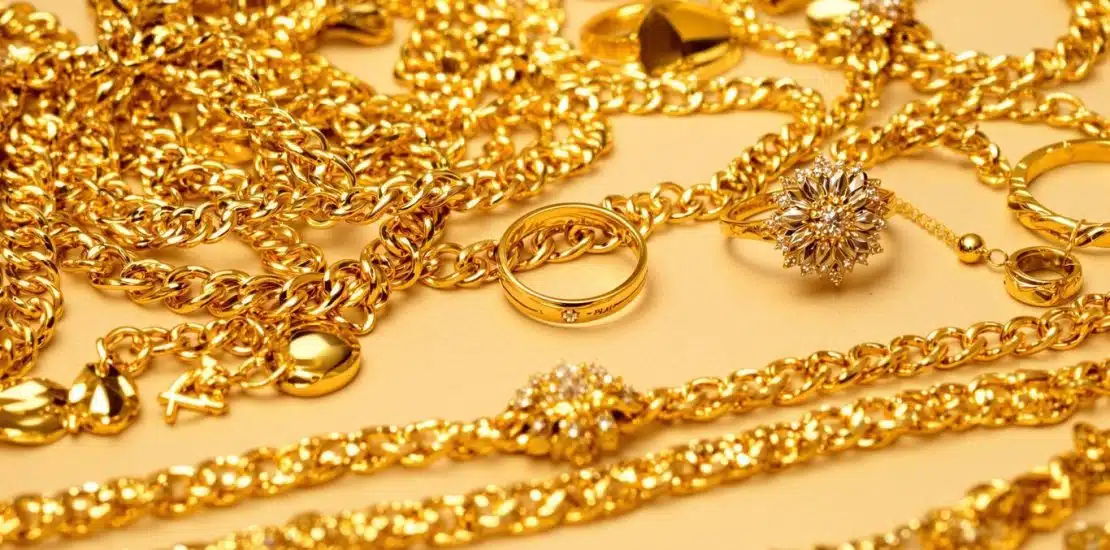
Wondering how to diversify your portfolio with gold jewelry? That's a great question! Gold, in all its forms, is often seen as a safe bet, especially when times are a bit uncertain. But beyond bars and coins, did you know that your gold jewelry can also play a role in your wealth strategy? It's a slightly different approach, sure, but it can add a personal touch to your investments. Let's take a look at how to incorporate this idea, even if the main goal remains financial security.
Key Takeaways
- Gold is a safe haven that can help stabilize your portfolio during economic uncertainties.
- Diversifying with gold, whether in the form of bars, coins or even jewelry, allows you to spread your risks.
- Gold jewelry, although decorative, can also represent a part of your heritage and retain intrinsic value.
- Investing in physical gold often benefits from attractive tax advantages, such as the absence of VAT on purchase.
- To optimize your investment, it is advisable to choose your seller carefully, secure storage and diversify your purchases over time.
Why integrate gold into your wealth strategy?
You may be wondering why you should add gold to your investments. It's an excellent question, and the answer lies in the very nature of this precious metal. Gold has stood the test of time, serving as currency, a symbol of wealth, and, most importantly, a safe haven. When financial markets are in turmoil or inflation erodes your purchasing power, gold often tends to maintain its value, or even appreciate. It's a bit like having an umbrella when the sky turns dark.
Gold as a safe haven in the face of uncertainty
History shows us that in times of economic uncertainty or geopolitical tensions, gold attracts investors. It is not tied to a company's performance or a government's policy. Its value is more intrinsic, more universal. When traditional currencies weaken, gold remains a tangible asset you can rely on. It is this reliability that makes it a wise choice for securing part of your wealth.
Diversification through gold for a balanced portfolio
Diversification means not putting all your eggs in one basket. If you already have stocks, bonds, or real estate, gold can provide balance. It doesn't always react the same way as other assets. Sometimes, when the stock market goes down, gold goes up, and vice versa. This can help smooth out the ups and downs of your overall portfolio. A small portion of gold—say, 5% to 10%—can make a real difference to the long-term stability of your investments.
The Historical Advantages of Gold as a Store of Value
For millennia, gold has been used to preserve wealth. Think of the treasures of the pharaohs or the reserves of central banks today. This longevity is a testament to its ability to endure through the ages without losing its fundamental value. Unlike currency, which can be devalued, gold has always retained some form of purchasing power. It's a proven asset, and that's crucial when considering the future security of your money.
The different forms of investment in gold
When we talk about investing in gold, we often think of bullion, but there are several ways to own this precious metal. Each has its pros and cons, so you need to consider what's best for you.
Ingots and ingots: purity and accessibility
Ingots and bars are physical gold in its rawest form, so to speak. They are generally made with very high purity, often 999,9 thousandths. This is what gives them their direct value. You can find them in all sizes, from small 1-gram ingots to large ingots weighing several kilos. This is convenient because you can buy only what your budget allows, and if you need to sell some of your gold, it's easier with smaller sizes.
- Guaranteed purity : They are often certified by recognized organizations such as the LBMA, which ensures consistent quality.
- Flexibility : The small formats (1g, 5g, 10g, 50g) allow you to invest gradually and manage your assets more easily.
- No VAT on purchase : This is a significant advantage in France for investment gold.
The choice of ingot or bullion will depend on your budget and how you plan to manage your investment over the long term.
Gold Coins: History and Liquidity
Gold coins are a little different. They're legal tender coins, minted a long time ago, often with a story behind them. Think Napoleons, Sovereigns, or Maple Leafs. They also have high purity, but what makes them special is their historical value and sometimes even their numismatic value, in addition to their weight in gold. This can make them a little more expensive to buy, but they're often very easy to resell because they're well-known and in demand.
- Historical value : Some coins have a value that exceeds that of the gold they contain.
- Liquidity : Popular investment coins are generally easy to trade in the market.
- Diversity : There is a wide variety of pieces, coming from different countries and eras, which allows you to choose according to your tastes.
Gold jewelry: a decorative and heritage asset
And then there's gold jewelry. This might be the first thing that comes to mind when you think of gold. Sure, it's there to look beautiful and adorn you, but it's also a form of investment. The important thing to know is that the value of a piece of jewelry is its weight in gold, but also the craftsmanship, the brand, and sometimes even the stones set in it. When you buy a piece of jewelry, you're often paying more than just the gold price per gram. For pure investment, it's not always the most profitable, but it has the merit of being something you can wear and enjoy every day.
- Dual utility : They are both a fashion accessory and a tangible asset.
- Intrinsic value : Their value is based on the weight and purity of the gold used.
- Potential for added value : Some rare or designer jewelry may increase in value over time.
You just have to be aware that reselling a piece of jewelry can be more complicated than reselling a bar or an investment coin, because the resale price will often be based on the Gold prices, less the way and any stones.
How to choose the right gold format for diversification?
So, you're wondering how to integrate gold into your wealth strategy, and more importantly, in what form? This is an excellent question, because the gold market offers several options, each with its own specificities. It's not just about buying gold, but choosing the format that best suits your goals and how you manage your money.
The 20g gold bar: a strategic balance
If you're looking for a good compromise between affordability and security, the 20-gram bar might just be your ally. It's a format that allows you to invest without having to shell out a huge sum all at once, which is quite practical when you're starting out or want to spread out your purchases. It's easy to store, and above all, it's internationally recognized. When you want to resell it, you shouldn't have too much trouble finding a buyer, as its size makes it quite liquid on the market.
- Accessibility: Its price is more affordable than large ingots, making it easier to enter the world of gold investment.
- Liquidity: It resells fairly easily, which is a plus if you need to get your money back quickly.
- Purity: Generally, these ingots are of high purity, often 999,9‰, which is a guarantee of quality.
Think of it as a small, solid brick to build your wealth, easy to handle and integrate into your overall strategy.
The 20 Franc Marianne Coq coin: a French symbol
Let's now move on to gold coins, and more specifically to the famous 20 Francs Marianne Coq. This coin has a real story behind it, a symbol of France, in a way. It is very popular in France, which means it is easy to buy and resell. In addition, it benefits from favorable taxation, which is never insignificant when talking about investment. Its value for money is often cited as one of its strong points, and it can even have a small numismatic value in addition to its intrinsic gold value.
- Liquidity: It is one of the most traded coins in France, so its resale is generally simple.
- Symbolism: It represents a part of French history, which may have sentimental value for some.
- Taxation: It is exempt from VAT on purchase and benefits from an attractive tax regime on resale.
The 50g gold bar: flexibility and profitability
If you're looking for a little more volume without breaking the bank, the 50-gram bar is an attractive option. It offers a better price per gram than very small bars, while remaining manageable enough for storage and resale. It's a good way to gradually increase your exposure to gold. Its intermediate size makes it flexible enough to adjust your portfolio over time. It's also internationally recognized, ensuring its value on the global market.
- Price per gram: Often more advantageous than 1g or 5g ingots.
- Flexibility: Easier to store and resell than large ingots (like 1kg).
- Acknowledgement : LBMA certified, it is accepted worldwide.
In short, the choice will depend on your budget, your short- or long-term goals, and your preference between the simplicity of an ingot and the historical character of a coin.
The tax advantages of investing in gold
When we talk about investing in gold, there's one aspect that comes up often and is quite interesting: taxation. In France, the way we tax transactions on physical gold is quite unique and can really work in your favor. It's not the kind of thing that will make you rich overnight, but it helps make gold a more attractive investment.
No VAT on the purchase of precious metals
The first advantage is that when you buy gold, you don't have to pay VAT on investment gold. Whether you buy a bar, a coin, or a Napoleon Or even gold jewelry if you meet certain conditions, this exemption is a real plus. It means that the price you see is the price you pay, without that extra tax that can quickly increase the bill for other goods.
Favorable taxation on capital gains
When you decide to sell your gold, the way the gains are taxed is also quite flexible. You actually have a choice between two regimes. The first is a flat tax of 11,5% on the total sale amount. The second is a tax on the actual capital gain, i.e., the difference between the purchase price and the sale price, with a rate of 36,2%, which includes social security contributions. Generally, for investors, the flat tax regime is often the most attractive, especially if you have held your gold for a while. There is also a complete exemption from capital gains tax if you have held your gold for more than 22 years, which is not bad for a long-term strategy.
Stability of gold tax regulations
What's reassuring about gold is that tax regulations surrounding this precious metal have remained fairly stable over the years. We haven't seen any radical changes that would disrupt investor strategies. This is a guarantee of security for your assets. Here's a quick overview of the rates we're talking about:
| Tax Type | Rate (%) |
|---|---|
| Tax on precious metals | 11,5 |
| Real capital gains tax | 36,2 |
Overall, gold offers a tax system that is far from punitive, especially when compared to other forms of investment. This is a significant advantage to consider when considering portfolio diversification.
Tips to optimize your gold investment
Investing in gold is great, but doing it wisely is even better. To make your gold truly work for you and secure your wealth, there are a few tips you should know. You won't become an expert overnight, but by following a few simple principles, you can really make a difference.
Choose a reliable seller and compare prices
This may be the most obvious tip, but it's essential. The gold market can sometimes seem a little opaque, and it's easy to get lost. Always make sure you go through reputable and reputable sellers. Look for reviews, ask around. Once you've found a few trusted sellers, don't stop there. Compare prices! Even for identical ingots or coins, prices can vary from one dealer to another. A little comparison shopping can save you a few precious percentages on your purchase, which can add up to a significant amount in the long run.
Store your gold safely
You've bought your gold, congratulations! Now it's time to protect it. The security of your physical investment is paramount. Several options are available to you:
- At home: If you choose this option, be smart. Don't hide it in a drawer or under a mattress. Consider a well-hidden safe, or even one sealed to the wall. Good home insurance can also cover part of the value, but check the limits carefully.
- In bank safe: This is a classic and generally safe solution. The downside is the annual cost of renting the safe, which can eat into your profitability, especially if you have small quantities.
- From specialist companies: There are companies that offer secure storage services, often in highly secure warehouses, sometimes in Switzerland or Luxembourg. This is an attractive option for those who want maximum security without having to manage storage themselves.
Diversify formats and spread out your purchases
Don't put all your golden eggs in one basket, even if it's gold! Diversification also means varying the forms of your investment. You can mix ingots of different sizes (20g, 50g, 100g, etc.), recognized gold coins (like the Napoleon or the Krugerrand), or even gold jewelry if you choose them well (but be careful of the premium paid).
Additionally, to smooth out the effects of market fluctuations, consider the "Dollar Cost Averaging" (DCA) strategy, or programmed buying. Instead of buying a large quantity at once, you buy smaller quantities at regular intervals. This allows you to buy more when the price is low and less when it is high, thus smoothing out your average purchase price. It's a more relaxed approach and often more profitable in the long run.
Gold is a tangible asset, a sure value that has stood the test of time. By adopting a thoughtful purchasing strategy, comparing prices, and ensuring proper storage, you maximize your chances of seeing your wealth grow with peace of mind.
Gold, a tangible asset to secure your future
Gold is a bit like the rock you can rely on when the sea is rough. It has this incredible ability to last through the ages without losing its value, which isn't the case with much these days, let's be honest. Think about it: for millennia, civilizations have relied on gold to store their wealth. There's a reason it's still a benchmark today.
The preservation of the value of gold over time
History shows us that gold has always managed to maintain its purchasing power. Even when currencies collapse or inflation soars, gold has this ability to remain solid. It's a bit like an heirloom that can be passed down from generation to generation, without too much worry. It's not tied to a company's performance or government policy, which makes it quite unique.
Gold as a hedge against inflation
When prices rise and your money loses value, gold tends to do the opposite. This is its natural role as a shield. If you see the cost of living rising, having some of your savings in gold can really help preserve your purchasing power. It's a simple but effective strategy to keep your wealth from eroding.
The transmission of a solid heritage
Beyond simple protection, gold is also a way to pass on something tangible to your loved ones. Unlike more intangible assets, physical gold is something you can touch, see, and retain its intrinsic value. It's a way to leave a stable legacy, one that won't necessarily be affected by future economic ups and downs. It's a bit like leaving a safe haven for your loved ones.
Gold is like a treasure that never loses its value. It is a sure way to protect your money for the future, a bit like saving for a rainy day. Think of it as a safe bet that can help you get through tough times. Want to learn more about how gold can help you? Come explore our website for more information!
To conclude: gold, an ally for your heritage
So, now you know how gold can really help balance your investments. It's not just about bling, it's a real strategy for protecting your money over the long term. Whether you choose bars, coins, or even jewelry, gold remains a safe bet. Think of it as insurance for your assets, especially when times get a bit turbulent. Don't hesitate to learn more, because understanding how incorporating gold can make a real difference to your financial future.
Frequently Asked Questions
Why is it a good idea to add gold to my savings?
Gold is like a shield for your money. When the economy is doing badly or prices rise too high (this is inflation), gold tends to maintain its value, or even increase. That's why it's called a safe haven. It helps you avoid losing money when other investments are falling.
Do I have to pay taxes when I buy gold?
Good news! When you buy gold in France, you don't have to pay VAT. This is a major advantage that makes gold more accessible and your investment more profitable from the start.
How can I buy gold?
You have several options for buying gold. You can buy bars or small wafers called ingots, which are physical gold. You can also buy antique or modern gold coins, which sometimes have value beyond their weight in gold. There are even ways to invest in gold without physically owning it, such as ETFs, which are like investment funds.
Where should I keep my gold to keep it safe?
To keep your gold safe, you have several options. You can put it in a safe at home, but it must be well hidden and possibly even insured. Another option is to entrust it to a bank in a safety deposit box, or to companies specializing in the safekeeping of precious metals. It costs a little, but it's safer.
Does gold help protect me against rising prices?
Yes, absolutely! When the prices of everything increase (inflation), your money loses its value. Gold, on the other hand, tends to keep its value and even increase when there is a lot of inflation. It's a bit like your money retaining its purchasing power thanks to gold.
How much gold should I have in my money?
There's no perfect rule, but many experts recommend putting between 5% and 10% of your total assets (your assets) into gold. This allows you to diversify—that is, not put all your eggs in one basket—and better protect your money without overly limiting the potential gains from your other investments.
