Gold has been an asset that has intrigued and fascinated people for centuries. Whether you're investing, selling, or simply understanding its value, knowing how to calculate the price of gold is essential. This article guides you through the different methods and factors that influence the price of this precious metal.
Key points
- Le gold price is influenced by supply and demand.
- Interest rates and the economy play a significant role in gold price fluctuations.
- To calculate the price of gold, it is crucial to know its purity in carats.
- Gold quotations are made primarily in London and New York, with real-time prices.
- Using an online gold price calculator can make your transactions easier and help you negotiate.
Understanding the Factors Influencing the Price of Gold
The price of gold is a bit like the weather: everyone talks about it, but few really understand how it works. In reality, it's a complex mix of several interacting elements. We'll break it all down together, we promise, without complicated jargon.
The impact of supply and demand
This is the basis of every market, and gold is no exception. If everyone wants to buy gold, the price goes up. If no one wants it, it goes down. It's as simple as that. But what causes this demand to vary? Well, it could be the fear of an economic crisis, the desire to invest in something safe, or even the demand for jewelry in certain countries. Supply, on the other hand, depends on the amount of gold extracted from mines and sales by central banks. It's a delicate balance.
Interest rate fluctuations
Interest rates are a bit like the price of money. When they're high, people prefer to invest in investments that pay interest, like bonds. As a result, they shy away from gold, which doesn't pay anything directly. As a result, the price of gold falls. And conversely, when rates are low, gold becomes more attractive. It's a bit counterintuitive, but that's how it works. It's a bit like a seesaw between gold and other investments. You have to watch the gold prices to understand well.
Economic crises and their influence
Gold is often considered a safe haven. Basically, when things go wrong, people flock to gold because they think it's a safe investment. It's like a storm shelter for your money. Economic crises, wars, natural disasters—all of these things can cause the price of gold to rise. That's why it's often said that gold is a good hedge against uncertainty.
Gold has always been seen as a safe bet, especially in times of economic uncertainty. It's a bit like a reflex: when financial markets are turbulent, investors turn to gold to protect their capital. It's an age-old strategy, but one that has always proven itself.
In summary, the price of gold is influenced by:
- Global supply and demand.
- Interest rates set by central banks.
- Geopolitical events and economic crises.
- The strength of the US dollar (gold is often quoted in dollars).
Methods for calculating the price of gold per gram
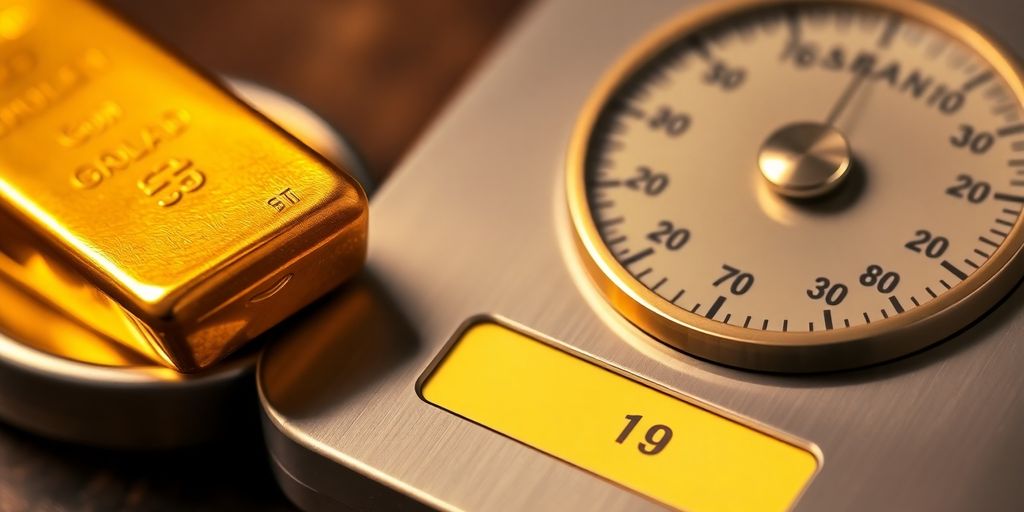
Okay, so you want to know how to calculate the price of gold per gram? It's not that complicated, but there are a few steps to follow. Basically, you start with the price of pure gold, then adjust for the purity of the gold you have, and finally factor in the costs associated with processing. It's a bit like a cooking recipe, but with numbers instead of ingredients.
Calculation of the theoretical price
The starting point is the price of pure gold. This price is quoted on financial markets, usually in dollars per ounce. One ounce is approximately 31,1 grams. So, the first thing to do is convert the price per ounce to euros, then divide by 31,1 to get the theoretical price of one gram of pure gold. This price is a base, but rarely the final price.
For example, if an ounce of gold is quoted at $2000 and the euro/dollar exchange rate is 1,1, then the price of one gram of pure gold would be:
(2000 / 1,1) / 31,1 = approximately 58,4 euros per gram.
Adjustment for impurities
Unless you have 24-karat gold (which is rare, especially in jewelry), your gold is not 100% pure. It is mixed with other metals, such as silver or copper, to make it more durable. The purity of gold is expressed in karats. 24-karat gold is pure gold, 18-karat gold contains 75% gold, 14-karat gold contains 58,3% gold, and so on. To calculate the price of your gold, you must therefore adjust the theoretical price according to its purity. To understand the factors influencing the price of gold here.
Here is an example :
- 24 carat gold: 100% gold
- 18 carat gold: 75% gold
- 14 carat gold: 58,3% gold
- 9 carat gold: 37,5% gold
If you have 18-karat gold, you multiply the theoretical price by 0,75. If you have 14-karat gold, you multiply by 0,583, and so on.
Deduction of processing costs
Finally, you need to consider the costs associated with gold processing. If you're selling jewelry, for example, the professional who buys it will have to melt and refine it to recover the pure gold. These operations have a cost, which will be deducted from the purchase price. These costs can vary depending on the professional, the quantity of gold to be processed, and the complexity of the operations. Generally, it costs a few euros per gram.
It's important to find out about these costs before selling your gold to avoid unpleasant surprises. Don't hesitate to request a detailed quote from several professionals to compare prices.
In summary, the calculation of the price of gold per gram is:
- Price of an ounce of gold in dollars.
- Conversion to euros.
- Division by 31,1 (to obtain the theoretical price per gram).
- Adjustment based on purity (carats).
- Deduction of processing costs.
Evaluate the purity of gold
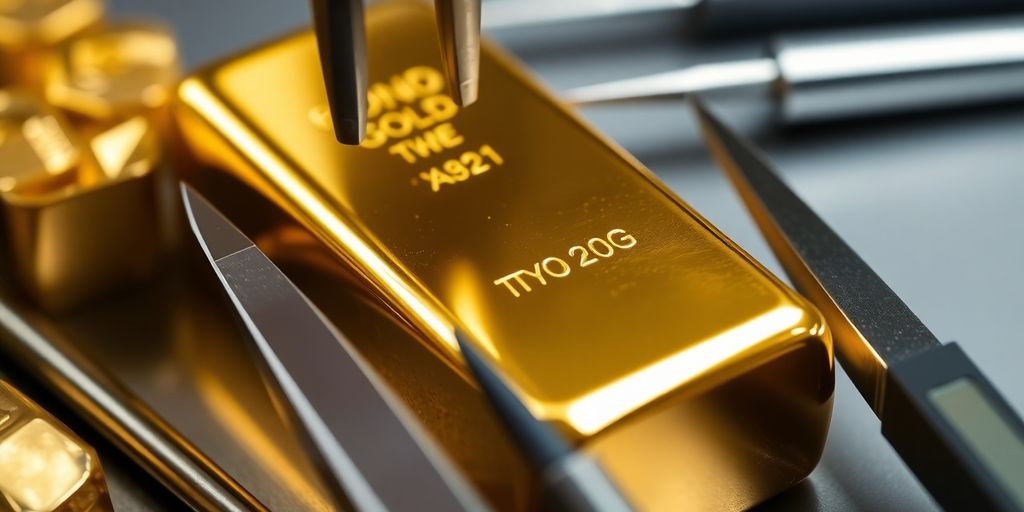
When it comes to gold, purity is incredibly important. It largely determines the value of what you're holding in your hands. Let's face it, it's a bit technical, but once you understand the basics, it becomes easier.
Different types of carats
The carat is the unit of measurement for the purity of gold. The higher the number of carats, the purer the gold. 24 karat gold is considered pure gold, but it is often too soft to be used in jewelry. This is why it is alloyed with other metals to make it stronger. Here is a small table to help you find your way around:
| Carats | Percentage of gold | Typical use |
|---|---|---|
| 24 carats | 99,9% | Bullion bars, investment coins |
| 22 carats | 91,6% | Traditional jewelry (India) |
| 18 carats | 75% | High quality jewelry |
| 14 carats | 58,3% | Common jewelry |
| 9 carats | 37,5% | Entry-level jewelry |
How to determine purity
There are several ways to determine the purity of gold. The simplest is to look at the hallmark. It's a small mark engraved on the object that indicates the number of carats. If you can't find a hallmark, or if you have any doubts, you can have your gold tested by a professional. They use techniques like the acid test or spectrometry to determine the exact composition of the metal. Moreover, if you want estimate the value of your gold, it is best to call an expert.
The importance of purity in calculation
The purity of gold has a direct impact on its price. A 24-karat gold item will be worth much more than a 9-karat gold item, even if they weigh the same. This makes sense, since the former contains more pure gold. When calculating the price of gold, it is therefore essential to consider the number of karats.
To calculate the true value of your gold, you need to know its weight and purity. Then, you can use the current gold price to get an estimate. Keep in mind that this is only an estimate, and the final price may vary depending on processing costs and professional margins.
Gold market quotations
The gold market is a bit like a play involving actors from all over the world. We're talking about stock exchanges, banks, investors... and every day, they all set the price of gold together. It's a complex system, but once you understand the basics, it becomes clearer. Gold prices are a key economic indicator.
The exchanges that set the price
Several major global exchanges are involved in setting the price of gold. London, New York, Zurich, Hong Kong… each has its role to play. It's a bit like having several marketplaces where gold is constantly being bought and sold. Prices vary slightly from one exchange to another, but they are all linked by a global network. It's a bit like tracking a stock price, but on a global scale. It's important to follow these exchanges to understand the market trends.
The role of the London fixing
The London Fixing is a bit like the conductor of this entire system. Twice a day, the London Bullion Market Association (LBMA) holds a sort of electronic auction to determine a reference price for gold. This price then serves as the basis for all transactions around the world. This is a key moment of the day for investors, as it provides a clear indication of the value of gold. pricing mechanisms are essential to understand.
Real-time quotes
In addition to the fixing, there are real-time quotes that are constantly updated. These quotes allow you to track minute-by-minute fluctuations in the price of gold. This is a valuable tool for traders who want to take advantage of the slightest market fluctuations. These quotes can be found on many specialized websites. It's a bit like watching a live football match; you can see the action unfold before your eyes.
Tracking prices in real time is a bit like having a thermometer that measures the market's temperature. It allows you to make informed decisions and avoid being surprised by sudden movements. It's an essential tool for anyone interested in gold, whether for investing or simply to understand the world around us.
The premium on gold coins and bars
The premium on gold coins and bars is a bit like the price of a work of art: it often goes beyond the value of the metal itself. It's the extra charge you pay on top of the spot gold price. It can seem like a complex topic, but once you understand the basics, it's much simpler.
Definition of the bonus
The premium is the difference between the price of a coin or bar and its value in pure gold at the current market price. It represents in some way the added value of the object. This added value can come from several factors, such as rarity, condition, or the historical or aesthetic appeal of the coin or bar. It's a bit like buying a used car: two identical models can have different prices depending on their condition and history.
Factors influencing the premium
Several elements can cause the premium to vary:
- Scarcity : A coin minted in small quantities or a bar from a limited series will have a higher premium. This is the law of supply and demand.
- The state of conservation: A coin in perfect condition, without scratches or wear, will sell for more than a damaged one. Makes sense, right?
- Requirement : Some pieces, like the Napoleon 20 Frs (Louis d'Or), are very popular and sought after, which drives up their premium. It's a bit like limited-edition sneakers: everyone wants them, so the price goes up.
- The manufacturing cost: Parts require a manufacturing process, which adds a cost that is reflected in the premium.
- Economic conditions: In times of uncertainty, demand for physical gold increases, which can drive up premiums.
Comparison between coins and ingots
In general, gold coins tend to command higher premiums than bullion. Why? Because they're often smaller, easier to store and trade, and can have numismatic value (for collectors). Bullion, on the other hand, is closer to the spot price of gold, but requires a larger investment. It's a bit like choosing between buying an apartment or land: the apartment is easier to manage, but the land can potentially yield more in the long run.
It's important to research premiums before buying or selling gold. Comparing prices from different sellers and staying informed about market trends can help you get the best deals. Don't hesitate to check gold prices to keep up with market fluctuations.
Selling Gold: Steps and Tips
How to prepare your sale
Before you start selling your gold, good preparation is essential. Start by gathering all relevant documents, such as certificates of authenticity if you have any, or purchase invoices. Then, make a precise inventory of what you own: jewelry, coins, ingots, etc.
Here are some steps to follow:
- Evaluate the purity of your gold : Determine the carat weight of your jewelry or pieces. This will directly influence the price. If you don't know how to do this, a professional can help you.
- Clean your objects gently A simple cleaning can improve the appearance of your belongings, but avoid harsh chemicals that could damage them. A soft cloth is often sufficient.
- Find out the current price of gold : Follow real-time quotes to get an idea of the price you can expect to sell for. Specialized websites and business newspapers are good sources of information.
Preparing for your sale means ensuring you get the best possible price and avoiding unpleasant surprises. Take the time to inform yourself and gather all the necessary information.
Choosing the right time to sell
The gold market is influenced by many factors, and identifying the ideal time to sell can be tricky. However, certain trends can help you make an informed decision. Generally, gold tends to rise during times of economic uncertainty or geopolitical crisis. Monitor the market fluctuations is therefore important.
Here are some indicators to watch for:
- Interest rates : A fall in interest rates can make gold more attractive, and therefore raise its price.
- Inflation : In times of inflation, gold is often seen as a safe haven, which can increase demand and prices.
- Geopolitical events : Conflicts, political crises and natural disasters can impact the gold market.
Avoiding scams when selling
Unfortunately, the gold market also attracts malicious individuals, so it's crucial to take certain precautions to avoid scams.
Here are a few tips :
- Choose a reputable buyer : Choose recognized professionals with a good reputation and positive reviews. Don't hesitate to consult several experts before making a decision.
- Beware of offers that are too good to be true : If a buyer offers you a price significantly higher than the market average, be cautious. It could be a scam.
- Do not rush Take the time to compare offers and understand the terms and conditions of sale. Don't be swayed by pressure or aggressive sales pitches.
- Demand a written contract : Make sure all terms of the sale are clearly defined in a written contract, including the price, any fees, and payment terms. Selling a gold bar to an individual requires several important considerations.
- Be careful when paying : Prefer secure payments, such as bank transfers or cashier's checks. Avoid cash payments, which are more difficult to trace in the event of a problem.
By following these tips, you will maximize your chances of selling your gold safely and getting the best possible price.
Common Mistakes in Calculating the Price of Gold
Let's dive into calculating the price of gold. It's exciting, but watch out for the pitfalls! Believe me, I've seen quite a few people make a big mistake. Here are some classic mistakes to absolutely avoid if you want to get a correct estimate. It's not rocket science, but it does require a bit of discipline.
Underestimating transformation costs
When we talk about the price of gold, we often think of the spot price, the raw price of the metal. But if you have jewelry or objects made of gold, you must consider the processing costs. These costs can include smelting, refining, and other processes required to extract pure gold. These fees can significantly reduce the net value of your gold. I've seen people disappointed because they didn't anticipate these expenses.
Ignore market fluctuations
The gold market is a bit of a roller coaster. It goes up, it goes down, and it can change very quickly. Basing your price on a price from a few days, or even hours ago, can be misleading. Gold prices are often quoted in US dollars per ounce (31,1 grams), so it's crucial to check the gold prices in real time before making a decision. Here are some points to watch out for:
- Important economic announcements
- Geopolitical events
- Central bank decisions
Disregarding purity
Pure gold is 24 karats. But most jewelry is made of alloys, with other metals. An 18 karat piece, for example, contains only 75% pure gold. Ignoring this purity completely distorts the calculation. Make sure you know the karat count of your gold before making an estimate. If you're unsure how to do this, ask a professional. They can accurately assess the purity of your items.
A common misconception is that all that glitters is pure gold. Think again! Many items are gold-plated, and their value is much lower. Always have your belongings inspected by an expert to avoid unpleasant surprises.
Use a gold price calculator
Advantages of an online calculator
Online gold price calculators have become truly useful tools for anyone interested in buying or selling gold. They offer a quick and easy estimate of the current gold price, based on real-time market quotes. No more complicated calculations by hand! These tools take into account the weight of the gold (usually in grams or ounces) and its purity (expressed in carats) to provide an accurate estimate. This is super useful for getting a clear idea of the value of your gold before making a decision.
How to use a calculator
Using a gold price calculator is quite simple. Most online calculators require the following information:
- The weight of gold: Enter the exact weight of gold you wish to evaluate. Make sure you select the appropriate unit of measurement (grams, ounces, etc.).
- The purity of gold: Select the number of karats that corresponds to the purity of your gold (e.g., 14 karat, 18 karat, 24 karat). If you are unsure, it is best to have your gold professionally appraised.
- Currency : Choose the currency in which you want to see the result (euros, dollars, etc.).
Once you enter this information, the calculator will display an estimate of the price of gold. It's fast and efficient!
Interpret the results obtained
It is important to understand that the result provided by a gold price calculator is only an estimate. Actual price may vary depending on several factors, such as transaction fees, premium on coins or bars, and market conditions at the time of the transaction.
Consider the result as a benchmark. It's always recommended to consult multiple sources and seek expert advice before making a purchase or sale decision. Remember that the gold market is dynamic and prices can fluctuate rapidly.
If you're interested in knowing the value of your gold, a gold price calculator is a very useful tool. It allows you to determine how much your gold is worth based on its weight and the current market price. Don't wait any longer to take the first step toward better understanding your investment. Visit our website to use our calculator and discover the best deals on gold!
Conclusion
In short, calculating the price of gold isn't that complicated, but it does require a little attention. You need to keep an eye on the prices, which change frequently, and understand how weight and purity affect value. Whether you're buying or selling, knowing these things will help you make better deals. Remember that gold remains a safe haven, especially during times of economic uncertainty. So, if you have some gold at home, now might be a good time to take a look and see what it's worth.
Frequently Asked Questions
How is the price of gold determined?
The price of gold is determined by supply and demand in the markets. It fluctuates based on quotations on stock exchanges such as London and New York.
What is the purity of gold?
Gold purity indicates the amount of pure gold in a piece of jewelry or gold bar, often measured in karats. Pure gold is 24 karats.
How to calculate the price of gold per gram?
To calculate the price of gold per gram, simply divide the price of the ingot by 1000, since 1 kg is equal to 1000 grams.
Why is there a premium on some gold coins?
The premium is the difference between the price of pure gold and the price of a coin, influenced by demand, rarity, and the coin's history.
What are the factors that influence the price of gold?
The main factors include supply and demand, interest rates, and economic crises that increase the demand for gold.
How to avoid scams when selling gold?
To avoid scams, it is advisable to research the market price and sell to reputable dealers.