A common question is: Can you buy silver in a bank? It's a good question, because the term "silver" can mean several things. Are we talking about bills and coins for our daily expenses, or rather precious metals like gold and silver for an investment? In this article, we'll take a closer look to sort the facts from the fiction and see what banks really offer.
Points to remember
- Banks provide cash and traditional banking services, but buying precious metals is another story.
- Purchasing precious metals such as gold or silver from a bank is possible, but care must be taken with regard to quality criteria and traceability.
- The price of precious metals is set by global markets such as London, which influences purchase prices.
- Buying precious metals from a bank offers security and convenience, but prices can be higher than from specialists.
- For resale or storage, banks offer solutions, but there are also alternatives to consider.
Understanding physical money in the bank
Cash and banking services
When we talk about money in banks, we often think of cash, the kind we use every day. But it's important to understand how banks manage this money and what services they offer. Banks are financial intermediaries that allow you to deposit, withdraw, and transfer money. They offer a range of services, from current accounts to loans to credit cards. The cash you deposit in a bank is not physically stored in a safe in your name. It is used to finance other bank activities, such as lending to other customers. In return, the bank guarantees you access to your money at any time, within the terms of your contract.
Accessing your money via ATMs
Automated teller machines (ATMs) are a convenient way to access cash. They allow you to withdraw money 24/24, even outside of bank hours. However, it's important to note that ATMs have daily and weekly withdrawal limits. These limits are set by your bank and may vary depending on your account type. Additionally, some banks charge fees for withdrawals from other banks' ATMs, so it's important to check the applicable fees before using an ATM that isn't owned by your bank. Some ATMs also allow deposits, which can be convenient if you need to deposit money outside of bank hours. banking services are essential for managing your money on a daily basis.
The different types of bank accounts
There are several types of bank accounts, each with its own features and benefits. Here are some examples:
- Current account : This is the most common account, used for daily transactions (payments, withdrawals, etc.).
- Savings account: This account is intended for savings and generally offers a higher interest rate than the checking account.
- Term account: This account locks your money for a set period of time, in exchange for a higher interest rate.
It's important to choose the type of account that best suits your needs and financial goals. Take the time to compare offers from different banks before making a decision. Don't hesitate to seek advice from a banking advisor to help you make the right choice.
It's important to understand the fees associated with each type of account. Some banks charge monthly fees, transaction fees, or overdraft fees. It's also important to check your bank card's terms of use, including withdrawal and payment limits, as well as any fees applicable when using it abroad.
Buying precious metals from a bank
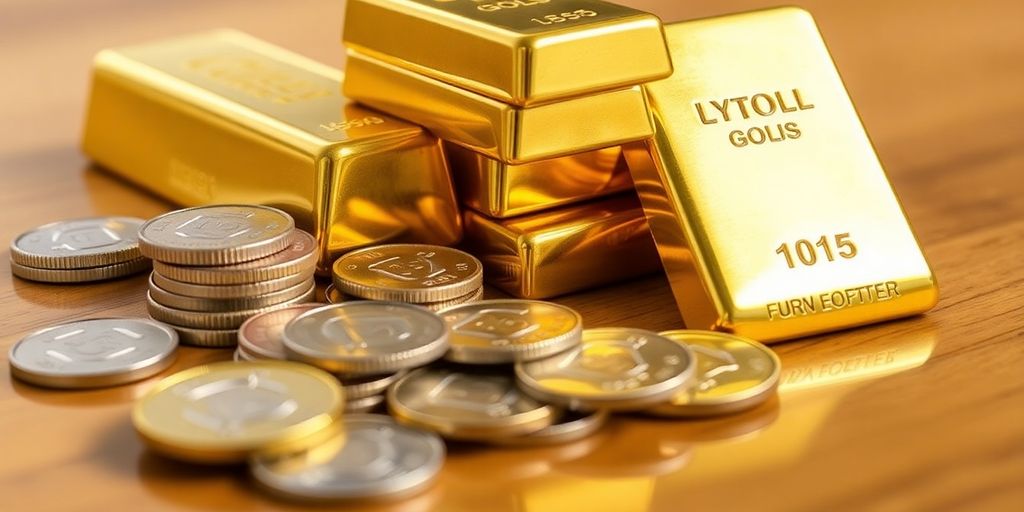
So, should we start buying gold or silver through our bank? This is a question many people ask themselves, especially when looking for a safe investment. Banks offer this service, but you need to understand what's involved. We'll take a look at the different options, the advantages, and the little things you need to know before making a decision.
Bullion bars and investment coins
Banks don't just sell banknotes! They also offer precious metals, mainly in two forms: bullion bars and investment coins. Bullion bars are large bars of gold or silver, often used for large investments. Coins, on the other hand, are more accessible and can be a good starting point. The advantage is the ease of purchase and the security that the bank provides.
Here is a small comparison table:
| Product | Benefits | Drawbacks |
|---|---|---|
| Ingots | Significant investment, safe haven | Requires a substantial budget, more complex storage |
| Rooms | More accessible, easy to store, collection potential | Less profitable in the short term, sometimes high premium |
Quality criteria for gold coins
When buying gold coins, you shouldn't just look for shine! Quality is super important. We're talking about purity (the percentage of pure gold in the coin), condition (a damaged coin is worth less), and premium (the difference between the gold price content in the coin and its selling price). A coin in perfect condition, with high purity, will have more value. It's a bit like buying a used car: you have to check the condition of the engine and the bodywork!
Traceability of gold bars
Traceability is a bit like the DNA of the ingot. Each ingot must have a unique number, a certificate proving its purity and weight, and the identity of the foundry. This ensures that you're not buying a fake. Reputable banks check all of this before selling an ingot. This is important because an ingot without traceability is like a banknote without a serial number: it's worthless. Some banks, like CIBC offers services for the purchase of precious metals from different accounts.
Buying gold from a bank is a bit like shopping at the supermarket: it's convenient and trustworthy, but you still need to check the labels and compare prices. Don't hesitate to ask your bank advisor questions to fully understand what you're buying and make sure it's the right investment for you.
Here are a few things to check:
- The purity of the metal (gold or silver).
- The state of conservation of the pieces.
- The traceability of ingots.
- Transaction and storage fees.
The specificities of coins
Obverse and reverse of the coins
The obverse and reverse are a bit like heads or tails, but more serious. The obverse, often called the "right," is where you find the effigy, the portrait of an important figure, or the name of the issuer. Think of the king on an old coin. The reverse is the other side, the one commonly called "tails." It often displays the coin's face value, such as "2 euros" or "10 francs." The distinction between these two sides is essential to identify and authenticate a coin.
The importance of slice and diameter
The edge is the coin's border, its thickness. It can be smooth, grooved, ridged, or even have inscriptions. The diameter is expressed in millimeters. These two elements are important for several reasons. First, they help identify the coin. Second, they can be an indicator of counterfeiting if the measurements don't meet standards. Finally, the edge can have aesthetic value, especially if it is worked.
The weight and purity of the coins
The weight of a coin is crucial in determining its value, especially if it is made of precious metal. It is expressed in grams and can vary from one coin to another. Purity, also called "title," indicates the amount of precious metal (gold, silver, etc.) in the coin. It is expressed in carats, thousandths, or as a percentage. For example, a coin made of 90% pure gold is said to be 22 carats (900/1000). Weight and purity are key elements in assessing the intrinsic value of a coin. It is also necessary to take into account the premium on money which can influence the price.
When you're interested in coins, you really have to pay attention to all these details. It's not just a question of "it's pretty" or "it's old." Weight, purity, edge, all of that counts enormously to know what you're getting. And then, it helps avoid scams, because there are some, believe me!
Here is a summary table of the important characteristics:
| Feature | Description
The price of precious metals and its impact
The London fixing and the real-time rate
The price of precious metals, such as gold, silver, and platinum, is a bit like the weather: it's constantly changing. But instead of looking at the clouds, we look at the financial markets. The "London fixing" is an important reference. It's a procedure where the price of metals is determined twice a day. Imagine a large trading floor where buyers and sellers agree on a price. This price then serves as the basis for many transactions.
In addition to the fixing, there is a real-time rate, which fluctuates constantly. It's a bit like watching a live football match: every second, the score (the price) can change. This rate is expressed in dollars per ounce (one ounce is equivalent to approximately 31,1 grams).
The LBMA's influence on the market
The LBMA, or London Bullion Market Association, is a bit like the club of precious metals experts. It's an association that brings together banks, governments, and investment funds. It plays an important role because it sets the rules of the game. It defines quality standards for bullion, ensures their traceability, and therefore influences the global market. It's a bit like the LBMA being the referee of a football match; it ensures that everything goes smoothly.
Here are some important points about the LBMA:
- It brings together more than a hundred companies from different countries.
- It sets the standards for “Good Delivery” ingots.
- It influences the price of precious metals.
The premium on investment products
When you buy gold or silver, you don't just pay the price of the metal. There's also what's called a "premium." It's a bit like the shipping cost when you order something online. The premium is the difference between the price of the raw metal and the price you buy it for. This premium can vary depending on several factors, such as the demand for a particular product. If everyone wants to buy gold coins investment, the premium will tend to increase. This is the law of supply and demand.
It's important to understand that the premium can impact your investment. The higher the premium, the longer it will take to realize a profit. Therefore, it's important to compare offers carefully before purchasing.
Here is a simplified example of the impact of the bonus:
| Scenario | Gold price (per ounce) | Prime | Purchase price (per ounce) |
|---|---|---|---|
| No bonus | €1800 | 0% | €1800 |
| With low premium | €1800 | 2% | €1836 |
| With high premium | €1800 | 5% | €1890 |
Advantages and disadvantages of buying from a bank
Safety and security of transactions
When we think of buying silver, the bank often comes to mind first. After all, it's a place we naturally associate with security. Banks offer a high level of security for transactions, which can be reassuring, especially when it comes to large investments. They are subject to strict regulations and have monitoring systems in place to prevent fraud. It's a bit like entrusting your assets to a reliable guardian.
The convenience of banking services
One of the main advantages of buying silver from a bank is convenience. You can often make purchases online or directly at a branch, which is convenient if you already have a bank account. Additionally, some banks offer the option of having precious metals delivered to your home or stored in their vaults. It's a bit like having an all-in-one service.
The choice of products and the expertise of the staff
While some banks offer a diverse range of investment products, from fractional coins to one-kilogram bars, others have a more limited selection focused on larger bars. It's therefore important to research the available products before making a decision. It's also important to be aware that bank staff aren't always specialized in precious metals, so they may not be able to provide the same in-depth advice as a specialist dealer. It's a bit like asking a general practitioner for specialist advice. If you need a quick loan, pawnbrokers may be a more accessible option than traditional bank loans.
Buying cash from a bank may seem simple, but it's important to weigh the pros and cons. Security and convenience come at a price, and you need to make sure the benefits offered match your needs and investment goals.
Resale and storage options
Selling your investment products to the bank
When we think about investing in silver, we often focus on buying. But selling is just as important. If you bought silver through a bank, it makes sense to start there when selling. Some banks offer a direct redemption service for your investment products., such as bullion or coins. However, be aware that not all banks offer this service, and some may reserve the right to refuse a buyback at their discretion. The buyback price will be based on the current market value, so it's a good idea to keep track of the silver price before making your decision. Don't hesitate to compare offers with others silver buying platforms to ensure you get the best price.
Secure storage solutions
Storage is crucial, especially if you're investing in large amounts of physical cash. Keeping cash at home can be risky due to potential theft or damage. Banks offer secure storage solutions, usually in the form of safe deposit boxes. These safes are located in secure vaults and are insured, providing peace of mind.
Here are some storage options to consider:
- Bank safes: A classic option, offering security and assurance.
- Specialized storage services: Companies dedicated to the storage of precious metals.
- Home Insurance : Check if your policy covers precious metals and adjust it if necessary.
Considerations on value and protection
Beyond physical security, it's important to consider the value of your investments and how to protect them. Silver, like any investment, can fluctuate in value. Therefore, it's essential to monitor the market and understand the factors that influence price. Additionally, ensure your investments are authentic and in good condition, as this can affect their resale value. Keep all certificates of authenticity and purchase receipts, as they will be needed when reselling. Finally, consider diversifying your investments to reduce risk.
Investing in silver can be a good strategy, but it's important to understand resale and storage options to protect your assets and maximize your profits. Don't hesitate to seek expert advice and do your own research before making a decision.
Alternatives to buying gold from a bank
Dealers specializing in precious metals
When you think of buying gold, a bank is often the first place that comes to mind. It's reassuring, we know, but there are other options, and they can be interesting. Precious metals dealers are a serious alternative. These companies specialize in buying and selling gold, silver, and other metals. They often have better market knowledge and can offer more competitive prices. They can also offer more in-depth advice on the different types of investments available. It's a bit like going to an expert instead of a general practitioner.
Compare offers to optimize your investment
Buying gold is a bit like shopping: you have to compare prices! Don't settle for the first offer you come across. Take the time to look at what the different market players are offering. Banks, specialist dealers, online platforms... each has its own rates and conditions. Look at transaction fees, commissions, and premiums on investment products. Comparison is the key to optimizing your investment and avoiding overpaying.
Here are some things to compare:
- Prices per gram or ounce
- Transaction fees
- Storage options
- The conditions of resale
The evolution of buying and selling practices
The methods for buying and selling gold have changed significantly in recent years. Previously, you had to go to an agency or a dealer. DNA investment products dealerToday, with the internet, everything is simpler and faster. You can buy gold online in just a few clicks, from the comfort of your couch. Platforms have multiplied, offering a wide selection of products and services. But beware: more choice also means more risks. It's important to research the reliability of the platforms before taking the plunge. Changing practices also have an impact on how you resell your gold. Some platforms offer online buyback services, which can be very convenient.
Buying and selling gold is constantly evolving. It's important to stay informed about new practices and technologies to make the best investment decisions. Don't let changes overwhelm you, and don't hesitate to seek expert advice to guide you through the process.
Looking to buy gold but don't want to go through your bank? No worries! There are other easy ways to do it, such as with precious metals experts. To find out more, all these options and much more, visit our website now.
In summary: gold, a unique investment
So, is it possible to buy silver from a bank? Yes, but not just any silver! We're talking about physical gold, in the form of ingots or coins. Banks can help you with this, but be careful, it's not always the best option. Prices are often higher, and the staff aren't always experts in precious metals. It's a bit like buying bread from the butcher; it's possible, but the baker will surely be better. It's the same for gold. It's better to turn to specialists. They know the market well, can advise you, and, generally, their prices are more attractive. So, if you're interested in gold to secure your savings, think about experts before knocking on the door of your usual bank!
Frequently Asked Questions
Can you really buy money, like bills or coins, in a bank?
No, you can't literally "buy money" at a bank. A bank allows you to exchange one form of money for another, such as banknotes for coins, or to access money you already have in your account. If you're talking about precious metals like gold, some banks do offer to buy it, but it's not money in the traditional sense of the word; it's more of an investment.
Do banks sell gold or other precious metals?
Yes, more and more banks are offering the option to purchase gold or silver in the form of bars or coins. This is one way to invest in these precious metals. However, not all banks do this, and conditions can vary. It's always a good idea to check directly with your bank.
What are the obverse, reverse, edge, weight and purity of a coin?
When talking about coins, the obverse is the side with the portrait or main symbol (the “heads”), and the reverse is the other side, often with the value (the “tails”). The edge is the edge of the coin, which can be smooth, ridged, or patterned. Weight and purity (the amount of precious metal in them) are important for collectible or investment coins because they influence their value.
How are gold and silver prices set, and what is the “premium”?
The price of precious metals, like gold, changes constantly. It's set on major exchanges, like London's, several times a day. Organizations like the LBMA (London Bullion Market Association) help set these prices. The "premium" is the small amount you pay above the base price of the metal; it covers the costs of manufacturing and selling it.
What are the advantages and disadvantages of buying precious metals from a bank?
Buying precious metals at a bank can be reassuring because it's a safe and well-known place. It's also convenient if your bank offers this service. However, prices can be a little higher than elsewhere, and the staff aren't always specialized in this type of product. The selection can also be limited compared to a specialist dealer.
How can I resell and store precious metals purchased from a bank?
If you've purchased precious metals, you can often resell them to the same bank or to other banks that offer this service. To keep them safe, some banks offer safe deposit boxes. This is a good option to protect your investment from theft or loss, as gold and silver are highly valuable.