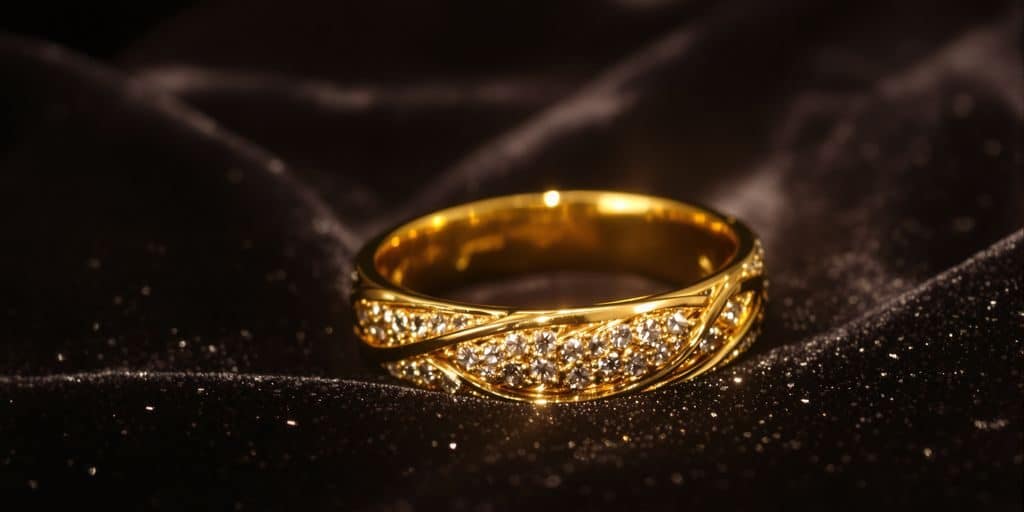
Are you considering investing in gold, whether in the form of jewelry, bars, or coins? It's a great way to secure your assets, but beware of the pitfalls! The world of gold can seem complex, and it's easy to make costly mistakes if you're not well-informed. This article is here to guide you and help you make the right choices while avoiding common pitfalls. We'll break down the key aspects to ensure your gold investment is a success.
Gold jewelry insurance: pitfalls to avoid
- Understand the different forms of investment gold: bars, ingots and coins each have their own specificities in terms of purity and value.
- Be wary of prices that are too low, as they often hide authenticity issues or additional charges.
- Always check the purity of the gold and ask for a certificate of authenticity to ensure the quality of your purchase.
- Find out about the tax rules applicable to the resale of gold to optimize your profits and anticipate taxes.
- Keep your proof of purchase and original packaging safe; this is essential to prove the provenance and quality of your gold when reselling.
Understanding the Different Types of Investment Gold
When it comes to investing in gold, it's easy to get lost in the details. But before you dive in, it's essential to understand the different forms investment gold can take. Just because it's gold doesn't mean everything is equal. There are important distinctions to make, especially if your goal is to protect your assets or make a profit.
Ingots and ingots: purity and certification
Ingots and bars are often the first image that comes to mind when thinking of physical gold. They are blocks of precious metal, usually of high purity. To be considered investment gold, they must meet certain criteria. In France, for example, ingots must have a purity of at least 995 thousandths (or 99,5% pure gold). Ingots, which are simply smaller bars, follow the same purity rules. What's really important here is certification. Look for bars that bear the "LBMA" (London Bullion Market Association) designation. This is a guarantee of quality and international recognition. Each bar must also have a unique serial number and be accompanied by a certificate of authenticity that details its weight, purity, the name of the foundry, and the date of manufacture. This ensures that you are buying quality gold that will be easily resalable.
Here is a quick overview of common formats:
- Ingots (1g to 100g) : Ideal for beginners or as a gift, they are more affordable. The 1g ingot, for example, often comes in a sealed package with its certificate.
- Ingots (250g, 500g, 1kg) : These formats are more traditional for investors who wish to acquire larger quantities. The 1kg ingot is the standard for central banks, but the 250g and 500g formats offer a good compromise between weight and flexibility for individuals.
Purity is the key word. Always make sure that the gold you buy is at least 995 thousandths for ingots, and that the certificate of authenticity is present and detailed.
Gold coins: legal tender and numismatic value
Gold bullion coins are another very popular category. To be considered as such, they must also meet specific criteria. In France, these are coins minted after 1800, with a purity of at least 900 thousandths (90% pure gold), and which were legal tender in their country of origin. Famous examples include the Napoleon (20 gold francs), the South African Krugerrand, or the British Sovereign. The advantage of coins is that they often have an intrinsic value linked to their weight in gold, but also a potential numismatic value. That is, their rarity, their state of preservation, or their history can increase their price beyond the simple value of the metal.
We must distinguish between two things:
- The value of metal : It fluctuates with the Gold prices on international markets.
- Numismatic value : It depends on collector demand and the rarity of the coin. A highly sought-after coin can be worth much more than its weight in gold.
It is important to note that some coins, although containing gold, are not considered investment gold (for example, coins minted before 1800 or those that are no longer considered legal tender). The purchase of these coins is subject to VAT, which is not the case for investment gold. Investment coins benefit from advantageous tax treatment upon resale, often different from that of ingots, which should be carefully understood.
Gold jewelry: sentimental value above all
Gold jewelry is another story. Sure, it contains gold, but its main value often lies in its aesthetic appearance, design, brand, or sentimental value. The purity of gold in jewelry is generally lower than that of bars or bullion coins. It's often referred to as karat: 18 karat (75% pure gold) is very common for jewelry, but 14 karat (58,5% pure gold) or even 9 karat (37,5% pure gold) is also found in some countries. Purchasing jewelry is subject to VAT, and reselling it is often done at a price lower than the value of the gold it contains, as manufacturing costs and the seller's margin must be taken into account. If you're looking to invest in gold for its safe haven or capital appreciation potential, jewelry is generally not the best option. They should be considered more as a personal pleasure or an inheritance, rather than a pure financial investment.
The pitfalls of buying physical gold

Investing in physical gold may seem simple, but beware of the pitfalls lurking behind offers that seem too good to be true. It's easy to get ripped off if you don't know exactly what to expect.
Be wary of prices that are too attractive
Let's be clear: If an offer seems unbeatable, there's often a reason. Unscrupulous sellers may offer unusually low prices to sell lower-quality gold or to hide additional fees. Always compare prices with the current gold price, which fluctuates daily. Remember that gold has an intrinsic value based on its purity and weight.
Check the authenticity and purity of gold
This is perhaps the most critical point. How can you be sure that what you are buying is 99,9% pure gold?
- Request a certificate of authenticity: Reputable sellers routinely provide a certificate detailing the weight, purity (often expressed in carats or thousandths, for example, 999,9‰ for fine gold), and origin of the metal. Ingots and bars must be accompanied by this document.
- Check the punch: Coins and bars usually bear a founder's or manufacturer's mark, which attests to their quality and origin. Internationally recognized investment bars often bear the LBMA (London Bullion Market Association) "Good Delivery" mark.
- Favor recognized brands: Refiners such as Umicore, Metalor or Heraeus are guarantees of quality and purity.
- Be careful with jewelry: If you buy gold jewelry, its value often lies more in the jeweler's craftsmanship and sentimental value than in the purity of the gold itself (which is often 18 karat, or 75% pure gold). It is also subject to VAT upon purchase, unlike investment coins and bars.
Understanding hidden fees and premiums
Above the gold price itself, other costs may be added. You should be careful about:
- The bonus: It is a surcharge applied to the price of physical gold, which covers the costs of manufacturing, certification, storage, and the seller's margin. It varies depending on the product (coins often have a higher premium than bars due to their numismatic value) and the seller.
- Transaction fees: Some sellers may charge a fee for each transaction, whether it is a purchase or a sale.
- Storage and insurance costs: If you don't store your gold at home, you'll have to pay for a bank vault or specialized storage service, not to mention insurance.
It's essential to request a detailed quote that includes all of these elements before committing. Good transparency about prices and fees will help you avoid unpleasant surprises.
Choosing the Right Gold Seller
Finding the right gold seller is a key step in securing your investment. It's not about rushing into anything, but rather about exercising discernment. Think of it like choosing a trusted partner for a major transaction.
Favor recognized and certified professionals
To begin with, absolutely avoid transactions with individuals. Always favor professionals who have a physical presence, are registered in France, and whose prices are clearly displayed, whether in store or on their website. Transparency is the key. Look for companies that can demonstrate their reliability, for example by being approved by recognized organizations or by having a long history in the field. A family business with a long history, such as Godot & Fils, which is approved by the Banque de France, can be a good indicator of reliability. Similarly, companies like GOLDMARKET highlight their expertise and commitment to quality, with LBMA-certified products and responsive customer service.
The importance of transparency in prices and conditions
Make sure the seller clearly displays their selling and buying prices. Compare the margins applied, often expressed as a percentage. For example, some sellers like GOLDMARKET advertise reduced commissions as low as 1%. It's also important to understand all the terms and conditions associated with the transaction: shipping costs, insurance, possible storage costs, and the terms and conditions for taking back your gold. A reputable company should have no qualms about providing you with all this information in detail.
Additional services: storage and guaranteed repurchase
Some vendors go further by offering additional services that can simplify your investment. Secure storage of your precious metals, whether in vaults in France or abroad, is an option to consider if you don't want to manage the custody yourself. Companies like Godot & Fils or GOLDMARKET offer this type of service, often with included insurance. Additionally, a guaranteed buyback program can offer you additional peace of mind, ensuring you can resell your gold quickly and at a fair price if you need to. These additional services can make a real difference in the overall management of your gold assets.
Optimize the taxation of your gold investment
When investing in gold, it's essential to understand how taxes will apply to your gains. It may seem a little complicated at first, but once you have the right information, it's much simpler.
Understanding the resale taxation rules
In France, the way your capital gains on gold are taxed depends primarily on your ability to prove the origin of your purchase. If you have kept your purchase invoice and the gold is in its original sealed and numbered packaging, you benefit from a more advantageous tax regime. In this case, you will be taxed on the capital gain realized, at a rate of 36,2%. However, a 5% reduction per year of ownership applies from the third year onwards. In concrete terms, after 22 years of ownership, your capital gain is completely tax-free.
If, unfortunately, you cannot prove the origin of your gold (no invoice, unsealed packaging, etc.), you will be subject to a flat tax of 11,5% on the total amount of the sale. This is a significant difference, hence the importance of keeping all documents related to your purchase.
There is also a category of gold coins, often referred to as tokens, which benefit from even more flexible taxation. As long as the total amount of your gold sales does not exceed €5 in a year, these coins are exempt from all taxes. This is a point to consider if you are purchasing this type of product.
The benefits of keeping proof of purchase
As you've just seen, keeping your purchase invoices and certificates of authenticity safe is far from a formality. It's the key to benefiting from optimized taxation when reselling your gold. Without these supporting documents, you're missing out on a potential exemption and exposing yourself to heavier taxation.
Think of it as insurance for your future gains. Keeping proof of purchase ensures you can prove the date and price you purchased your gold, which is essential for correctly calculating your capital gain and applying the correct tax rates.
Taxation of specific gold coins
Some gold coins, such as Napoleons or other collectible coins, may be considered movable property. Their resale taxation then follows the capital gains tax regime. If you have retained proof of purchase, you will be taxed on the capital gain with an annual allowance, leading to a total exemption after 22 years. If you cannot prove the origin, a flat tax of 11,5% of the sale price applies.
It is therefore always best to choose sellers who provide a detailed invoice and certificates of authenticity for your gold coins. This guarantees you tax flexibility when reselling.
Managing and preserving your gold
Once you've acquired your gold, the question of how to store it arises. It's not enough to simply buy it; you also need to know how to keep your investment safe. This is an often overlooked step, yet essential for preserving the value of your assets.
Secure storage solutions
There are several options for storing your gold. The first and most obvious is to keep it at home. If you choose this solution, a well-hidden safe is a minimum. However, you must be aware of the risks: theft, loss, or even forgetting where you hid it, especially if you have a lot of valuables. Another option is a bank safety deposit box. This is more secure, but it comes at an annual cost. Finally, there are specialized companies that offer storage solutions in ultra-secure safes, often insured and sometimes even abroad. This can be a worthwhile solution if you own large quantities of gold.
- Personal safe: The most accessible, but the least secure.
- Bank safe: Increased security, but annual cost.
- Specialized storage: Maximum security, insurance, but potentially higher cost.
The importance of sealed packaging
When purchasing physical gold, whether in bars or coins, it is highly recommended to keep it in its original packaging, often a sealed blister pack. This packaging serves several purposes. First, it protects the gold from oxidation and scratches, which is important if you plan to resell it one day. Second, it guarantees authenticity and traceability. Bars usually bear a unique number, and the accompanying certificate of authenticity is crucial. Keeping this sealed packaging with its certificate is therefore an essential step to preserve the value and facilitate the resale of your gold.
Insuring your assets in precious metals
If you store your gold at home or even in a bank vault, it's wise to consider insuring it. Conventional home insurance rarely covers amounts as high as those associated with a gold investment. Therefore, it's important to check the coverage limits and, if necessary, take out specific insurance for your precious metals. Specialized storage companies often include insurance in their services, which can simplify matters. Think carefully about this, as losing your gold would be a significant blow to your assets.
Storing your gold shouldn't be an afterthought. It directly impacts the long-term security and value of your investment. Take the time to choose the solution best suited to your situation and the amount of gold you own.
Diversify your assets beyond gold
Gold is all well and good, but you shouldn't put all your eggs in one basket, as they say. Your wealth is a bit like a garden: you have to cultivate it in all its diversity to make it resilient. If you've bet big on gold, that's one thing, but have you thought about what happens if the price of gold goes haywire? We've seen variations of nearly 10% in a few months, which is no small feat. Gold is a safe haven, yes, but it's not immune to economic shocks.
To truly secure your financial future, you need to look beyond the yellow metal. Consider other assets that can complement your strategy. Silver, for example, has a rich history and growing industrial utility. It's cheaper than gold, making it more accessible to begin diversifying. Additionally, its demand in sectors like photovoltaics and electronics gives it attractive potential.
Do not concentrate all your investments in gold
It's tempting to think that gold is the miracle solution, especially when economic news is frightening. But let's face it, investing too heavily in a single asset is taking an unnecessary risk. If the gold market takes a downturn, your entire capital could suffer. It's wiser to spread your savings across different asset classes. It's often recommended not to exceed 5% to 10% of your total assets in gold, especially if you're not a market expert.
Gold as a safe haven in a diversified portfolio
Gold has its place, there's no denying it. It acts as a stabilizer when other markets are going haywire. Think of it like insurance: you hope you never have to use it, but it's there in case something bad happens. In a well-balanced portfolio, gold can effectively offset losses in other investments. Strategies like Ray Dalio's "all-weather" portfolio even suggest dedicating a larger portion to it, around 15%, for rock-solid stability.
Other precious metals to consider
Beyond gold, there's silver, of course, but also platinum and palladium. These metals have their own market dynamics, often tied to specific industries. For example, platinum is essential in car catalytic converters, and palladium is used in electronics. Their value can therefore evolve differently from that of gold, which is perfect for diversification. Consider looking at bars or coins of these metals to broaden your investment horizons.
It's wise not to put all your eggs in one basket when it comes to your money. Gold is great, but there are other ways to grow your wealth. Consider diversifying your investments for added security and potential. To find out how, visit our website today!
In conclusion: invest with confidence
There you have it, you now have all the keys to approaching the gold market with confidence. Remember that information is your best ally. Take the time to choose your seller carefully, check certifications and prices. By following these tips, you'll put all the chances on your side to make a wise investment and secure your assets. Don't hesitate to seek the support of recognized professionals to guide you through the process. Gold can be an excellent way to diversify your assets and protect yourself against economic uncertainties, provided you do it right.
Frequently Asked Questions
Where is it safest to buy gold?
When buying gold, it's advisable to go through reputable professionals. They will guarantee the authenticity and purity of the gold and provide you with the necessary documents. Avoid sellers who seem too good to be true, as they often hide additional fees or sell poor-quality gold.
What are the different forms of gold that can be invested in?
There are several forms of investment gold: bars and ingots, which are certified pure gold, and gold coins, which have a face value and can also have collectible value. Gold jewelry is primarily a personal item; its primary value is sentimental, even if it contains gold.
What are the pitfalls to avoid when buying physical gold?
When buying gold, be wary of prices that seem too low, as this can be a sign of scams. Always check that the gold is authentic and of the correct purity. Also, check for hidden fees, such as manufacturing or storage charges, that could increase the final price.
How should I store my gold to keep its value?
To properly store your gold, keep it in a secure location, such as a home safe or a bank vault. It's also important to keep the purchase receipt and certificate of authenticity. This will help you when reselling and prove that you actually own the gold.
How does tax work when I sell my gold?
Gold taxation depends on your circumstances and how long you've held your gold. Generally, if you've held your gold for more than 22 years, selling it is often tax-free. It's always a good idea to check the current rules, as they can change.
Should I invest all my money in gold?
It's advisable not to put all your money into gold. Gold is a good safe haven, especially in times of crisis, but it's smarter to diversify your investments. You can also look into other precious metals, such as silver, to spread the risk.