
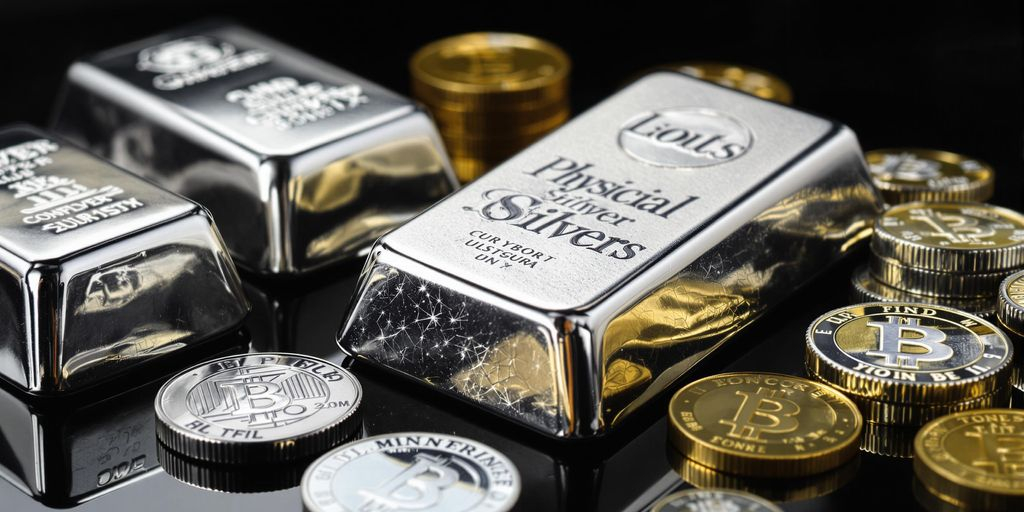
Investing in physical silver in 2025 could prove to be a wise decision for those looking to secure their wealth. With economic fluctuations and growing market uncertainty, silver is positioning itself as a safe haven. This article examines why investing in physical silver is a good idea, price forecasts for 2025, and the benefits and risks associated with this investment.
Key points
- Money is considered a safe haven asset in the face of economic crises.
- Forecasts for 2025 indicate a potential increase in the price of silver.
- Investing in physical silver provides protection against inflation.
- Risks include price volatility and liquidity challenges.
- Silver is more accessible than gold, making it an attractive option for new investors.
Money as a safe haven
History of silver as an investment
Silver, much more than just a metal, has a long history as a safe haven. For centuries, it has served as a currency and store of value. Its use dates back to ancient times, when it was prized for its rarity and beauty. Over time, silver has retained its appeal, even with the evolution of monetary systems. Today, in a complex financial world, money continues to be perceived as a strategic investment, providing some security in times of uncertainty.
Comparison with other assets
When we compare silver to other assets, such as stocks or real estate, we see some important differences. Stocks can offer high returns, but they are also riskier. Real estate is often considered a safe investment, but it can be illiquid. Silver, on the other hand, falls somewhere in between. It may not offer the same potential returns as stocks, but it is generally less volatile. And unlike real estate, it is easy to buy and sell. Here's a quick comparison chart:
| Active | Potential Yield | Risque | Liquidity |
|---|---|---|---|
| Stocks | High | High | Élevée |
| Real Estate | Moderate | Low | Low |
| Silver | Moderate | Moderate | Moderate |
Role of money in portfolio diversification
Money can play an important role in diversifying a portfolio. By including cash, one can reduce the overall risk of the portfolio. Diversification is a key strategy for protecting capital and improving long-term returns. Silver, as a tangible asset, can help offset potential losses from other, riskier investments. It's a bit like having a safety net: it doesn't guarantee success, but it helps prevent drastic declines.
Investing in silver is a bit like planting a fruit tree. It takes time to grow, but once it's there, it can bear fruit for years to come. It's a long-term investment that can help protect your wealth and make it grow.
Price forecast for 2025
Factors influencing the price of silver
The price of silver, like that of any asset, is influenced by a multitude of factors. In 2025, several key elements could play a decisive role. Inflation remains a major concern, and if it persists, silver could see its appeal increase as a protection against inflationThe monetary policies of central banks, particularly the US Federal Reserve (Fed) and the European Central Bank (ECB), will also have a significant impact. Lower interest rates could boost demand for silver. Finally, industrial demand, particularly in the electronics and renewable energy sectors, is a significant factor.
Analysis of market trends
Analyzing silver market trends requires monitoring several indicators. In 2024, an ounce of silver was trading at an average price of around $25, with peaks as high as $28. This upward trend could continue in 2025, supported by renewed investor interest in precious metals. It is crucial to monitor the evolution of silver inventories in major warehouses, as well as investment flows into silver-backed ETFs (Exchange Traded Funds). Macroeconomic data, such as GDP growth and unemployment rates, will also provide valuable insights.
Expert projections
Experts are divided on silver price projections for 2025. Some anticipate continued upward movement, with price targets of up to $30 per ounce or even higher, in the event of high inflation or geopolitical tensions. Others are more cautious, highlighting silver's volatility and the risk of a market correction. It is therefore essential to diversify your portfolio and not invest all your savings in silver.
It is important to note that price forecasts are estimates only and are not a guarantee of future performance. Investors should conduct their own research and consult a financial advisor before making any investment decisions.
Here is a summary table of the different projections:
| Source | Price forecast for the end of 2025 (USD/ounce) |
|---|---|
| Analyst A | 28-32 |
| Bank B | 25-30 |
| Company C | 22-27 |
It is important to note that these figures are indicative and may vary depending on market conditions. It is therefore important to follow the financial news from close.
Benefits of Investing in Physical Silver
Securing savings
Physical money, unlike digital assets or stocks, offers a reassuring tangibility. It can be touched, stored, and won't disappear in the event of a major financial crisis. It's a bit like having a concrete Plan B, something solid to fall back on when the rest of the world seems to be faltering. It's a way to regain control over your savings.
Protection against inflation
Inflation, this silent erosion of our purchasing power, is a constant concern. Silver, like other precious metals, tends to maintain or even increase its value during inflationary periods. Why? Because its quantity is limited, unlike currency, which central banks can print at will. It's a kind of insurance against the devaluation of paper money. Moreover, silver metal is attracting increasing attention from investors. It's an accessible alternative to gold, offering interesting prospects in terms of asset diversification and protection against inflation.
Accessibility compared to gold
Gold is often seen as the ultimate safe haven, but its high price makes it inaccessible to many. Silver, on the other hand, is much more affordable. You can start investing with small amounts, which makes it an attractive option for young investors or those looking to diversify their portfolio without breaking the bank. It's a bit like a gateway to the world of precious metals. Indeed, its affordable price compared to gold allows individuals to invest in precious metals even with limited capital.
Investing in physical silver is a bit like planting a tree. You might not see immediate results, but over time, it can become a valuable and lasting asset. It's a long-term strategy that requires patience and a good understanding of the market, but it can pay off handsomely.
Risks associated with investing in silver
Investing in physical silver, like any other asset, carries risks that are important to understand before taking the plunge. Let's face it, there are ups and downs, and you have to be prepared to absorb them.
Price volatility
Silver is known for its volatility. Its price can fluctuate significantly over short periods of time. This volatility may be due to various factors, such as variations in supply and demand, global economic conditions, or market speculation.
Imagine this: You buy silver at a certain price, and a few weeks later, its price drops sharply. This can be painful, especially if you had planned to sell it quickly. That's why it's crucial to take a long-term view and not panic about short-term fluctuations.
Liquidity risks
Unlike stocks or bonds, physical silver can be less liquid. This means it can be harder to sell quickly, especially if you need the money urgently. Finding a buyer at the right price can take time, and you may be forced to sell at a lower price than you expected.
It's therefore important not to invest all your savings in physical cash. Keep some of your savings in liquid form, easily accessible when needed. Think of physical cash as a long-term investment, not as a source of immediate liquidity.
Tax Considerations
Taxation related to physical silver can be complex and vary depending on the country. In France, for example, capital gains realized on the sale of silver are subject to tax. It is therefore important to research the current tax rules before investing.
Here are some points to consider:
- Capital gains tax: Find out the tax rate applicable to your winnings.
- Declaration: Don't forget to report your silver sales to the tax authorities.
- Tax advice: Do not hesitate to consult a tax advisor to optimize your situation.
In summary, investing in physical silver can be interesting, but it is essential to fully understand the associated risks. price volatility, liquidity issues, and tax considerations are all factors to consider before making a decision. Properly diversifying your portfolio remains the key to limiting risks and securing your savings. Remember, investing always involves some uncertainty, so be careful and informed!
Strategies for buying physical silver
Acquiring physical silver requires a thoughtful approach. It's not just about buying, but about optimizing your investment based on your goals and risk tolerance. There are several options available, each with its own advantages and disadvantages.
Choosing between bullion and coins
Choosing between silver bars and coins is a matter of personal preference, but also of strategy. Bars are generally purer and offer a more favorable price per gram, especially for larger quantities. However, coins, especially bullion coins, can be easier to resell and are sometimes exempt from VAT, as explained in this article. article on investment. Coins may also have added numismatic value, in addition to their monetary value.
Here is a simplified comparison table:
| Characteristic | Ingots | Rooms |
|---|---|---|
| Purity | Very high | Variable |
| Price per gram | Lower (usually) | Higher |
| Liquidity | Good (for large quantities) | Very good |
| VAT | Often applicable | Sometimes exempt |
| Added value | limited | Potential (numismatics) |
Where to buy physical silver
There are several options available to you for purchasing physical silver:
- The banks : Although some banks offer this service, they are not always the most competitive in terms of price.
- Specialized brokers: These professionals are often the most qualified to advise you and offer competitive prices. They may also offer secure storage services.
- Precious metal shops: These physical stores allow for direct and immediate purchases, but it is important to compare prices.
- Online platforms: There are many platforms that allow you to buy silver online, but you should be careful about the seller's reliability and the shipping and insurance costs.
Tips for New Investors
If you are new to investing in physical silver, here are some tips:
- Do your research: Learn about the different types of silver available, market prices, and different sellers.
- Compare prices: Don't settle for the first price you find. Compare offers from different sellers to get the best price.
- Buy from trusted sellers: Make sure the seller is reliable and reputable. Check customer reviews and any certifications.
- Store your money safely: If you choose to store your money at home, make sure you have a secure safe. You can also opt for a professional storage service.
Investing in physical silver is an important decision. Take the time to inform yourself and define your strategy before taking the plunge. Don't hesitate to consult a financial advisor to help you make the best decisions based on your personal situation.
Impact of Economic Trends on Money
Inflation and devaluation of currencies
Inflation, the monster that erodes purchasing power, has a direct impact on money. When fiat currencies lose their value, investors often turn to tangible assets like silver to secure savingsIt's a bit like seeking solid shelter during a financial storm. Currency devaluation, whether due to loose monetary policies or economic crises, can also boost the price of silver.
Geopolitical context
Geopolitical tensions, trade wars, economic sanctions… all of this creates uncertainty. And uncertainty is the playground of safe havens. Silver, like gold, tends to attract capital in times of crisis. An unstable global context can therefore increase demand and, consequently, the price of silver.
Industrial demand for silver
Silver isn't just a precious metal; it's also an essential industrial metal. It's found in electronics, solar panels, batteries, and more. The energy transition and the development of green technologies are boosting industrial demand.
If industrial demand grows faster than supply, it puts upward pressure on prices. And with carbon reduction targets in place, it's a safe bet that demand for silver will remain strong in the coming years.
Here is an overview of industrial demand:
| Sector | Use of money | Impact on demand |
|---|---|---|
| Electronics | Components, conductors | High |
| Solar panels | Silver paste for conductivity | Very strong |
| Batteries | Electrodes, energy storage | croissants |
| Medical | Antibacterial applications | Moderate |
In short, money is influenced by a multitude of economic factors. Monitoring inflation, geopolitical tensions, and industrial demand is essential for anticipating price movements and making informed decisions.
Money in the context of precious metals
Silver, like gold, is a member of the precious metals family, but it has characteristics that distinguish it and influence its role in the economy and investment portfolios. While gold is often perceived as the ultimate safe haven, silver combines this quality with strong industrial demand, creating unique price dynamics. In 2024, interest in precious metals experienced a resurgence, and silver followed suit.
Comparison with gold
Silver and gold share several similarities as precious metals. Both are considered tangible assets that can serve as a hedge against inflation and currency devaluation. However, their differences are notable:
- Price: Silver has historically been cheaper than gold, making it more accessible to small investors.
- Volatility: The price of silver tends to be more volatile than gold, potentially offering greater gains but also increased risks.
- Industrial demand: Silver has a much greater industrial demand than gold, meaning its price is influenced by economic conditions and technological advancements.
Role of precious metals in the economy
Precious metals, particularly gold and silver, play an important role in the global economy. They serve as:
- Safe havens: In times of economic or geopolitical uncertainty, investors turn to precious metals to protect their capital.
- Hedge against inflation: Precious metals have historically retained their value, or even increased, during times of inflation.
- Diversification assets: Adding precious metals to an investment portfolio can reduce overall risk due to their low correlation with other assets.
Silver, with its dual role as a precious metal and industrial commodity, offers a unique opportunity for investors. Its growing demand in sectors such as electronics and renewable energy could support its price in the long term.
Evolution of the perception of money
The perception of money has evolved over time. Once used as currency, it is now considered an investment asset and a strategic commodity. Here are some key points:
- Investor Request: With economic uncertainties, interest in money continues to grow.
- Limited offer: Silver production is restricted, which supports prices in the medium and long term.
- Growing role: Money is emerging as a strategic choice to diversify and secure an investment portfolio.
In 2025, silver is expected to continue to attract investor interest, particularly those looking to invest in silver physical to secure their savings. parts purchases and ingots could therefore increase, thus supporting the price of this precious metal. It is important to follow the market trends to make informed decisions. A essential metal to the energy transition.
In the world of precious metals, silver plays an important role. It's an asset that can protect your money against inflation and economic crises. If you want to learn more about buying and selling silver, visit our website to discover our offers on bullion bars and coins. Don't miss this opportunity to invest in silver!
Conclusion
In summary, investing in physical silver in 2025 can be a wise decision. With economic uncertainty looming, silver presents itself as a solid alternative for protecting your wealth. Its value tends to increase, especially in times of crisis. Moreover, it is accessible to all, making it an attractive choice for diversifying your investments. So, if you're looking to secure your savings while benefiting from growth potential, silver may just be the solution you've been waiting for.
Frequently Asked Questions
Why invest in physical silver?
Investing in physical silver helps protect your savings against inflation and economic crises.
What are the advantages of buying silver in the form of bars or coins?
Silver bars and coins are tangible investments that can be easily stored and traded.
How is the silver market doing in 2025?
The forecast for 2025 is positive, with silver prices expected to rise due to growing demand.
What risks are associated with investing in silver?
Investing in silver can be volatile, and there are liquidity risks and tax considerations to consider.
Where can you buy physical silver?
Physical money can be purchased at specialized counters, banks, or online sales sites.
How do I diversify my portfolio with cash?
Money can be a good complement to other assets, such as stocks or real estate, to diversify and reduce risk.
