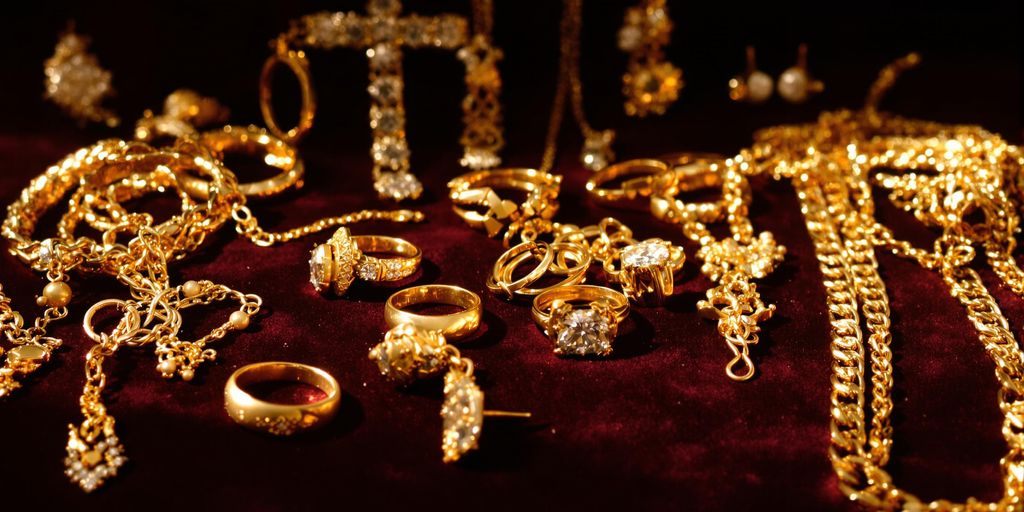
In the jewelry world, gold is often considered a valuable investment. If you're wondering what types of gold jewelry are acceptable as pawn, this article will shed some light on the different options available. Whether it's solid gold jewelry, collectibles, or even dental gold, there are many options for obtaining a pawn loan. Let's explore the types of jewelry that can be pawned and the criteria to consider.
Key points
- Solid gold jewelry such as necklaces and bracelets are often accepted.
- Gold coins, including bullion and antique coins, are also valued.
- Dental gold can be pawned, even in small amounts.
- Jewelry in poor condition may be accepted, but its value will be reduced.
- To sell jewelry, documents such as ID and proof of address are required.
Solid gold jewelry accepted
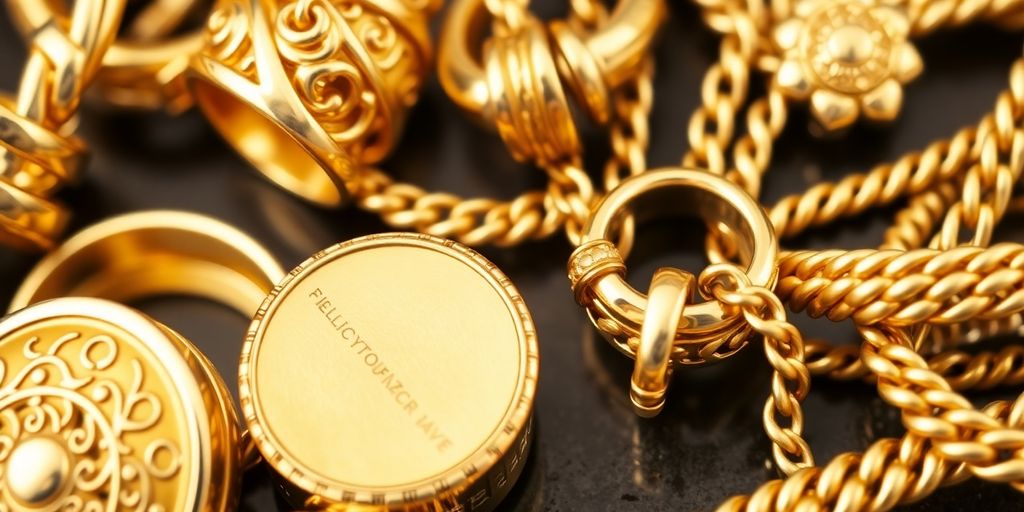
When we talk about solid gold jewelry, we immediately think of those pieces we've had for years, the ones that have real sentimental, but also financial, value. But which types are actually acceptable if you want to pawn them? Well, the good news is that quite a few items fall into this category.
Necklaces and bracelets
Solid gold necklaces and bracelets are generally welcome. Whether it is simple chains, curb chains, or more elaborate models with pendants, they can be accepted. The important thing is the weight of gold and its degree of purityThe purer the gold (18 karat, 22 karat, or even 24 karat), the higher the value. Clasps and decorative elements are also taken into account, but it is mainly the weight of the gold that counts.
Rings and earrings
Solid gold rings and earrings follow the same rules. Rings of all kinds—signet rings, engagement rings (without gemstones, which are valued separately), wedding bands—are generally accepted. For earrings, whether dangles, studs, or hoops, it's the same: solid gold is an asset.
Wedding rings
Solid gold wedding bands are particularly attractive. They're often made of 18-karat gold, which gives them good value. Even if they're engraved or a little worn, they retain their value based on the weight of the gold. It's a bit like a safe investment, even if you didn't necessarily think of it that way at first.
It's always a good idea to have your solid gold jewelry appraised by several professionals. Prices can vary, and it's best to be sure you're getting the most value for your property. Don't hesitate to shop around to get a fair and competitive offer.
In short, if you have solid gold jewelry that's no longer in use, pawning it can be a good idea. Remember to check the hallmark that indicates the karat of the gold; this can give you an idea of the value of your belongings before you even leave. And don't forget, the overall condition of the jewelry also plays a role, even if it's mainly the quantity of gold that counts.
Gold coins and ingots
Now we come to a somewhat separate category: gold coins and ingots. They're not really jewelry, but they're still gold, and they might be worth pawning. Let's see what's generally accepted.
Certified gold bars
Certified gold bars are almost always accepted as collateral. Certification is a bit like an identity card for gold. It guarantees the purity and weight of the ingot. Certification bodies like the LBMA (London Bullion Market Association) are leading authorities in the field. A certified ingot is a sign of trust for those who accept it as collateral.
Ancient coins
Antique coins, especially gold ones, can have a value that goes beyond their weight in gold. This is known as numismatic value. Coins sought after by collectors are often accepted as collateral, but their valuation is more complex. Their condition, rarity, and market demand must be taken into account. For example, a insurance for inherited gold bars may be a good idea to protect these precious assets.
Collectibles
Collectible coins, such as Napoleons or Sovereigns, are also often accepted. Their value fluctuates depending on the Gold prices, but also their state of conservation and their rarity. A piece in perfect condition will be worth much more than a worn piece.
It's important to note that the value of a collectible coin isn't limited to its weight in gold. History, rarity, and condition play a major role in its final value. Therefore, it's advisable to have these coins appraised by an expert before pawning them.
Here are some examples of commonly accepted gold coins:
- Napoleon (20 Gold Francs)
- Sovereign
- Krugerrand
- 20 Gold Dollars
And for the ingots, we find different sizes:
- 1 gram ingot (ingotin)
- 100 gram ingot
- 1 kg ingot
Dental gold and its forms
Dental gold, often overlooked, represents an interesting source of value. It comes in various forms and can be accepted as collateral, although its valuation may differ from traditional jewelry. Let's take a look at the different forms it takes and how it's valued.
Dental gold in small quantities
Dental gold is often found in small quantities, such as crowns, bridges, or inlays. These small pieces, while individually modest, can accumulate significant value due to the purity of the gold used. Quantity is not always a limiting factor, as purity often compensates for low weight.
Dental gold jewelry
Although less common, there is jewelry made from recycled dental gold. These creations can take the form of pendants, earrings, or even rings. The appeal lies in the unique history of this material and its potential for reuse. It's important to note that the value of this jewelry will depend on its design, condition, and, of course, the quantity and purity of the gold.
Dental gold valuation
Evaluating dental gold is a little different than evaluating traditional jewelry. Here are some points to consider:
- Purity: Dental gold is often an alloy, so it's important to determine the percentage of pure gold it contains. This is where professional expertise is helpful.
- Presence of other metals: Dental alloys may contain other metals (platinum, silver, etc.) which may influence the total value. It is therefore important to check the composition of dental gold.
- State: The general condition of dental gold (presence of residue, dental cement, etc.) can slightly affect its value. Pre-cleaning may be necessary.
It's important to have your dental gold appraised by a qualified professional to get an accurate estimate of its value. Don't settle for the first offer; compare prices to ensure you're getting the best possible return. Don't hesitate to ask for an explanation of the appraisal method used.
Broken gold jewelry
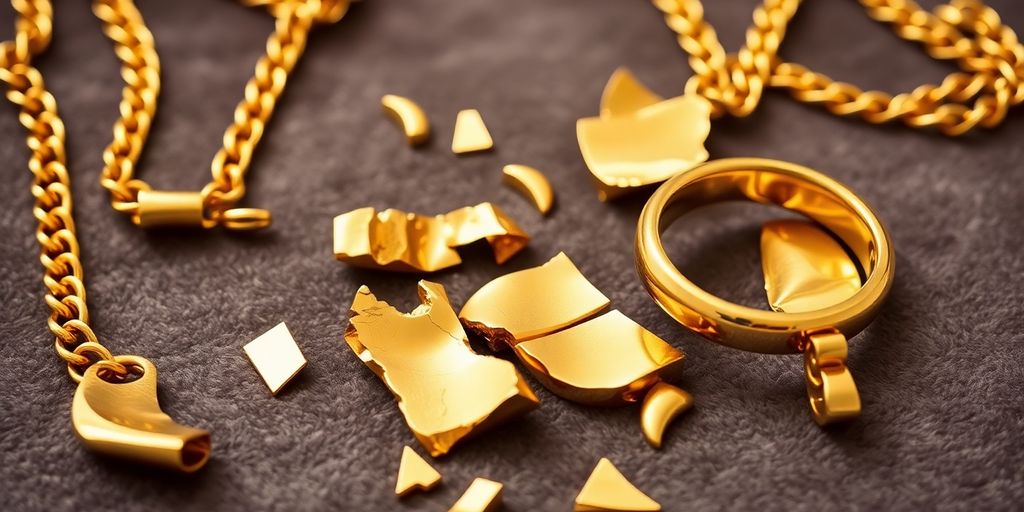
We all have a broken gold chain, a missing earring, or a deformed ring tucked away in a drawer. The good news is that These damaged jewels may still have valueEven though they're no longer portable, their weight in gold remains an asset. Let's see how it goes.
Acceptance of damaged jewelry
Most gold buyers accept broken jewelry. Whether it's a simple broken chain or a faulty clasp, the overall condition of the jewelry is less important than its gold composition. 18k gold jewelry, 14 carats, or even less pure, are generally accepted. The important thing is to be able to determine the amount of gold present.
Broken Jewelry Assessment
The evaluation of broken jewelry follows a similar process to that of jewelry in good condition, but with a few nuances:
- Identification of the caratage: Determining the purity of the gold (10k, 14k, 18k, 22k, 24k) is the first step. A hallmark often indicates the karat, but testing may be necessary.
- Accurate weighing: The jewel is weighed precisely, subtracting the weight of any stones or non-precious elements.
- Calculation of the value: The value is calculated based on the weight of pure gold and the current market price.
Value of jewelry in poor condition
The value of jewelry in poor condition depends mainly on two factors: the weight of the gold and its purity. The jewelry's workmanship or aesthetics are no longer taken into account, unlike jewelry in good condition, which can be sold as used jewelry. Expect an offer based solely on the value of the precious metal.
It's important to note that even if a piece of jewelry is broken, it retains its intrinsic gold value. Don't be discouraged if a jeweler offers you a low price; compare offers and research the current gold price before making a decision.
Jewelry evaluation criteria
When it comes to appraising gold jewelry, several factors come into play. It's not just a matter of "it's gold, so it's worth this much." There are important details that can significantly affect the price. Let's take a closer look.
Purity of gold
The purity of gold, expressed in carats, is a determining factor. Pure gold (24 carats) is rare and more malleable, so it is often alloyed with other metals to increase its strength in jewelry. The higher the number of carats, the greater the proportion of pure gold, and therefore the higher the value. For example:
| Carats | Percentage of gold | Typical use |
|---|---|---|
| 24 carats | 99.9% | Bullion bars, investment coins |
| 18 carats | 75% | High quality jewelry |
| 14 carats | 58.3% | Common jewelry |
| 9 carats | 37.5% | Entry-level jewelry |
Weight of jewelry
Weight is another key element. It is measured in grams. Obviously, the heavier a piece of jewelry, the more gold it contains, and the higher its intrinsic value. The price of gold varies daily depending on the market, so the weight is always multiplied by the current price of gold. This is raw data, but essential.
Brands and origin
Marks and provenance can add considerable value to a piece of jewelry. A piece of jewelry from a prestigious jewelry house, such as Cartier or Van Cleef & Arpels, will be worth far more than the gold alone. Likewise, antique jewelry or jewelry with a special history can be of interest to collectors. Hallmarks, those small, discreet marks, are also important. They indicate the purity of the gold and the identity of the maker. They're a bit like the jewelry's identity card.
Appraising jewelry is a complex process that requires expert advice. It's always best to hire a professional to get an accurate and reliable estimate. Don't settle for just one opinion; compare offers to ensure you're getting the best price. It's a bit like shopping; you have to compare to avoid getting ripped off.
Alternatives to selling jewelry
Sometimes, we're not sure we want to part with our gold jewelry, even if we need the money. Fortunately, there are alternatives to selling it outright. These options can allow you to raise cash while still being able to reclaim your belongings later. Let's explore some options.
Pawn shops
Pawn shops are a great option if you need quick cash but don't want to sell your jewelry. The principle is simple: you deposit your jewelry as collateral and receive a loan. The loan amount depends on the estimated value of your jewelry. If you repay the loan within the agreed timeframe, you get your jewelry back. Otherwise, the lender can sell your jewelry to get their money back. This is a quick solution, but beware of interest rates, which can be high. Make sure you understand the terms of the loan before committing. It's a bit like a quick credit but with your jewelry as collateral.
Auction sale
If your jewelry has special value beyond the mere weight of the gold (for example, if it's antique, signed by a renowned designer, or set with precious stones), auctioning may be an attractive option.
- Potential to achieve a price higher than the simple value of gold.
- Requires having your jewelry appraised by an expert.
- Involves sales fees (commissions).
Selling at auction can be time-consuming, as you wait for the next sale and hope that buyers are interested. There are also costs to consider, such as appraisal fees and sales commissions. However, if your jewelry is particularly valuable, it may be worth it.
Exchanges for other goods
Although less common, exchanging jewelry for other goods or services can be an interesting alternative. Some jewelers or collectors may be interested in an exchange, especially if your jewelry is rare or antique. This can be a way to acquire something new without spending money, while also parting with jewelry you no longer use. For example, you could exchange jewelry for a luxury watch, or even professional services such as legal advice or training.
Documents required for the sale
When you decide to sell your gold jewelry, you often think about the value of gold and the market price, but you sometimes forget one essential aspect: the paperwork required. It's a bit like when you want to sell your car; there's always paperwork to sort out. So, what are these famous documents?
Pièce d'identité
This is the basic document, the essential one. A valid ID is absolutely necessary. This could be your ID card, your passport, or even a residence permit if you're not a French national. The goal is to prove who you are. It's a security measure to avoid problems, and it's mandatory.
Proof of address
Next, you'll need recent proof of address. An electricity or gas bill, a rent receipt, or even a tax notice will do. The idea is to confirm that you do indeed live at the address you provide. This is another security measure to prevent fraudulent sales. It's a bit of a hassle, but it's the rule. Remember to sell jewelry safely.
Certificates of Authenticity
If you have certificates of authenticity for your jewelry, that's a plus. It can help prove the value of your items, especially if they're collectibles or designer jewelry. But be careful, this isn't always essential. If you don't have a certificate, it's not necessarily a problem; the appraiser will still be able to evaluate your jewelry.
It's important to note that requirements may vary slightly from one establishment to another. Some may request additional documentation depending on the type of jewelry or the amount involved. Therefore, it's always best to check with the professional you plan to sell your items to beforehand.
In short, to sell your gold jewelry, remember to bring your ID, proof of address, and possibly certificates of authenticity if you have any. With that, you're all set!
To sell your belongings, it's essential to gather certain documents. You'll need proof of identity, proof of address, and, if possible, certificates of authenticity for your items. These documents help prove the provenance and value of what you're selling. To learn more about the selling process, visit our website!
Conclusion
In short, if you're considering pawning your gold jewelry, there are several options. Whether it's necklaces, rings, or even dental gold, many types of jewelry are accepted. It's essential to research each establishment's requirements, as criteria can vary. Remember to have your pieces appraised by experts to get the best price. Whether you choose to sell or pawn, take the time to compare offers and choose what's best for you.
Frequently Asked Questions
What types of gold jewelry can I pawn?
You can pawn necklaces, bracelets, rings, earrings and even wedding bands.
Is dental gold accepted?
Yes, dental gold is accepted, regardless of quantity.
Are broken jewelry accepted?
Yes, even damaged jewelry can be accepted as a pledge.
What documents do I need to provide to sell my jewelry?
You will need proof of identity, proof of address and possibly a certificate of authenticity.
How is jewelry appraisal carried out?
An expert evaluates your jewelry based on its weight, purity and provenance.
Can I get a pawn loan for my jewelry?
Yes, you can get a pawn loan using your jewelry as collateral.