
Are you wondering what the difference is between tokenized gold and gold-backed cryptocurrencies? It's an excellent question, especially given the rapid evolution of the financial world. Gold, a historical safe haven, is now encountering blockchain technology. But what does this mean in practice? Are they the same thing? This article will clarify everything for you, explaining the nuances between these two digital approaches to gold.
Key Takeaways
- Tokenized gold digitally represents physical gold, with each token linked to a specific quantity of stored metal. It is a form of digital ownership of gold.
- Gold-backed cryptocurrencies are tokens whose value is directly linked to the gold price, but they do not necessarily represent the direct property of a specific physical quantity.
- The main difference lies in the ownership and custody structure: tokenized gold often implies direct ownership of the underlying physical gold, while gold-backed cryptos can be more abstract in their link.
- The regulatory framework varies: tokenized gold is increasingly regulated by regulations such as MiCA in the EU, while gold-backed cryptos can operate in less defined areas.
- Although both offer exposure to gold via blockchain, tokenized gold emphasizes direct ownership and verifiability of the physical asset, potentially offering more transparency on the reserve.
Understanding tokenized gold
What is tokenized gold?
So, you're wondering what tokenized gold is, right? Basically, it's a modern way to own gold, but in digital form. Imagine you buy physical gold, but instead of storing it at home or in a vault, you receive a token on the blockchain. This token represents a specific amount of real gold, which is securely stored in vaults, often audited by independent companies. It's a bit like having a digital certificate that proves you own a portion of that physical gold.
The idea is to combine the enduring value of gold, which has existed for millennia, with blockchain technology. This makes gold more accessible, easier to trade, and easier to divide. You no longer need to worry about the complicated logistics of physical gold, such as storage or transportation. It's an approach designed to simplify investing in this precious metal.
How does gold tokenization work?
The process of tokenizing gold is a bit like transforming physical ingots into digital assets. You take real gold and store it in secure locations, often managed by regulated custodians, for example in Switzerland or New Zealand. Then, each quantity of gold is represented by a digital token, created using smart contracts on a blockchain. These contracts are extremely important because they directly link the token to a specific quantity of gold, sometimes even to gold bars identified by their serial number, weight, and purity.
To ensure everything is in order, regular audits are conducted by independent third parties. They verify that the amount of physical gold corresponds to the number of tokens in circulation. It's a bit like cross-counting to guarantee trust. These tokens can then be issued on different blockchains, such as Ethereum or Polygon, to facilitate their exchange and use. Holders of these tokens generally have several options: they can exchange them for physical gold, convert them into traditional currency, or even use them in other decentralized finance (DeFi) applications.
The underlying structure of tokenized gold
Behind every gold token lies a well-designed structure to ensure security and transparency. Physical gold is typically stored in institutional-grade vaults located in jurisdictions renowned for their financial stability. These gold bars are allocated, meaning they are specifically reserved for token holders.
Here is an overview of this structure:
- Institutional-level conservation: Gold is stored in secure facilities, often in offshore jurisdictions known for their strict financial regulations.
- Smart contract currency: Each token is issued via smart contracts on the blockchain, creating a direct link between the digital asset and physical gold.
- Matching by third parties: Frequent audits by independent companies verify that the gold reserves correspond to the tokens in circulation. These reports are often made public.
- Multi-chain deployment: The tokens can be available on different blockchains (Ethereum, Polygon, etc.) to maximize liquidity and accessibility.
- Buyback protocols: Token holders have options to redeem their physical gold, convert it to fiat currency, or integrate it into DeFi platforms, depending on the issuer's terms.
Trust in tokenized gold rests on transparent audits and robust physical storage. Without these elements, the token would be nothing more than a digital promise.
It is important to note that the regulation of tokenized gold varies from country to country. For example, in the European Union, the MiCA regulation governs these assets, requiring issuers to prove their reserves and comply with strict rules. In the United States, the situation is more complex, as the SEC considers certain tokens as potential securities.
Gold-backed cryptocurrencies: a digital alternative
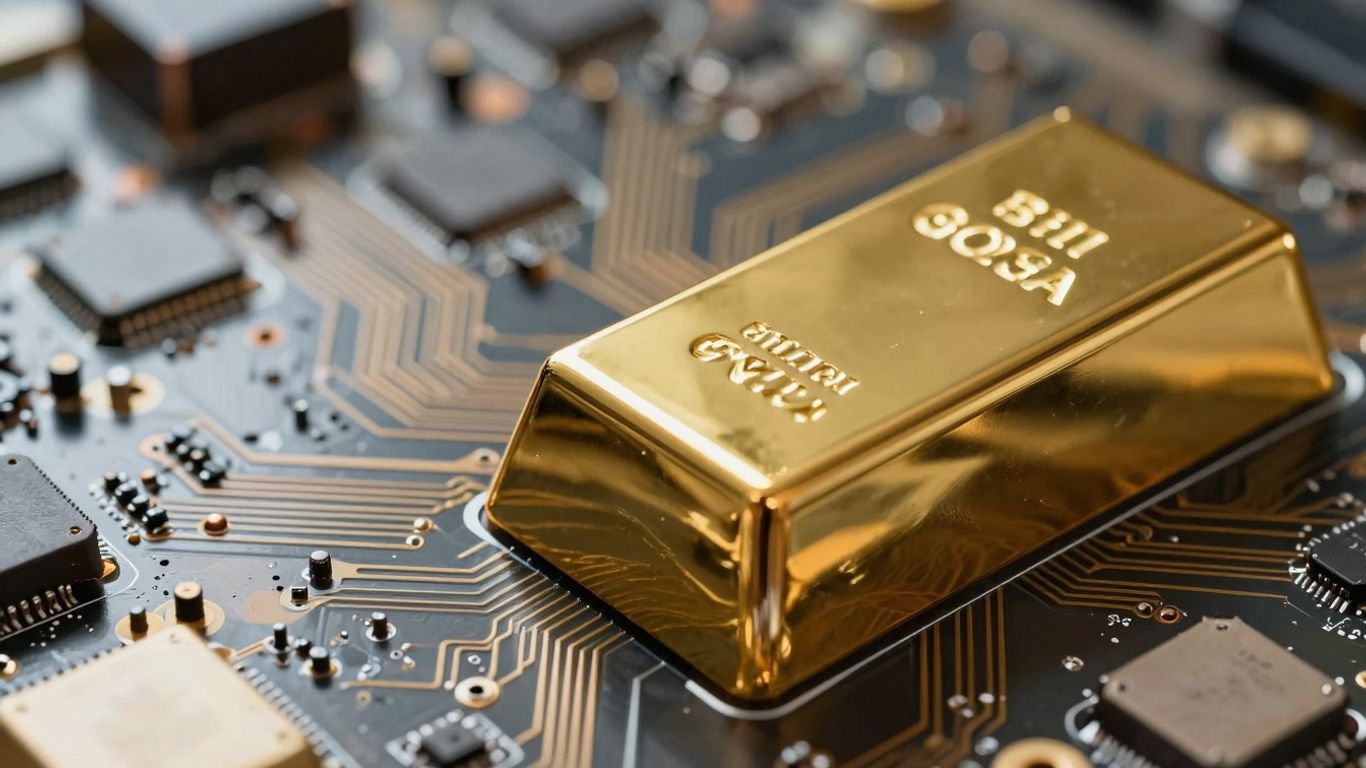
While physical gold has always been a safe haven, the digital world has seen the emergence of alternatives for owning this precious metal. Gold-backed cryptocurrencies, also known as 'gold stablecoins', are designed to reflect the value of gold. They aim to combine the stability of gold with the flexibility and accessibility of cryptocurrencies.
The fundamental principles of gold cryptocurrencies
The idea behind these cryptocurrencies is simple: each token you own is supposed to represent a specific amount of physical gold. This gold is usually stored in secure vaults, often audited by independent third parties to ensure that the amount of gold matches the number of tokens in circulation. It's a bit like having a digital certificate proving that you own a fraction of a real gold bar.
Here are some key points to understand:
- Backing by physical gold: Each token is linked to a defined amount of gold (e.g., one troy ounce).
- Secure storage: Physical gold is stored in secure warehouses, which are often audited.
- Transparency: Issuers typically publish audit reports to show that gold reserves are sufficient.
- Accessibility: You can buy and sell these tokens on cryptocurrency exchange platforms, 24/7.
The goal is to make investing in gold easier and more accessible, by eliminating the hassles associated with physical storage and security.
Major gold-backed cryptocurrency projects
The market for gold-backed cryptocurrencies is not huge, but a few projects have stood out. They vary slightly in their structure and approach, but the basic idea remains the same.
| Platform | Transmitter | Market Capitalization (approx.) | Main Features |
|---|---|---|---|
| Pax Gold (PAXG) | Paxos Trust Company | 784 $ millions | Redeemable in LBMA gold, verified reserves, high liquidity |
| Tether Gold (XAUT) | TG Commodities Ltd | 833 $ millions | Swiss safe deposit boxes, fractional buybacks, the Tether ecosystem |
| VNX Gold (VNXAU) | VNX Commodities AG | 2.5 $ millions | Regulated in Liechtenstein, several blockchains |
These projects aim to offer a simple way to invest in gold using blockchain technology. They are often built on popular blockchains like Ethereum, which allows for easy integration with other decentralized finance (DeFi) applications.
How to buy gold-backed cryptocurrencies?
To get started, you will generally need an account on a cryptocurrency exchange platform that lists these tokens. Here are the typical steps:
- Choose a platform: Opt for a reputable and secure exchange, such as Uphold, which is known for its compliance and wide range of assets.
- Create and verify your account: Follow the registration process and complete the identity verification (KYC).
- Deposit funds: Fund your account with fiat currency (euros, dollars, etc.) via bank transfer, credit card, etc.
- Buy the token: Search for the gold token you are interested in (e.g., PAXG) and place a buy order.
- Store your assets: You can leave your tokens on the exchange platform or transfer them to a personal cryptocurrency wallet for more control.
It's a process quite similar to buying any other cryptocurrency, but with the assurance that your investment is backed by physical gold.
The key differences between tokenized gold and gold-backed cryptocurrencies
So, you might be wondering what the real difference is between these two ways of owning gold digitally. That's a great question, because the terms can be confusing. Basically, tokenized gold is like having a digital certificate that directly represents a quantity of physical gold stored somewhere. Gold-backed cryptocurrencies, on the other hand, are a bit different. They're designed to track the price of gold, but they aren't always directly tied to a specific amount of physical gold held by the issuer.
Nature of the digital representation
Tokenized gold is the most direct representation. When you buy a gold token, say PAXG, each token is meant to correspond to one troy ounce of physical gold, stored in a secure vault. It's a bit like fractionating a gold bar to make it more accessible. The token's value is therefore intrinsically linked to the value of the physical gold it represents. This approach aims to replicate gold ownership, but in the digital world. You can even, in some cases, exchange your tokens for physical gold, which reinforces this direct link. It's a way to own gold without having to manage storage or insurance yourself. Tokenized gold transforms physical gold into digital tokens on the blockchain, making it more accessible and easier to trade. Each token represents a quantity of real gold. stored securely.
Gold-backed cryptocurrencies, on the other hand, function more like stablecoins, but pegged to the price of gold. Their value is supposed to track the price of gold, but there isn't always a direct guarantee of physical gold for each unit of the cryptocurrency. Think of it as a bet on the price of gold, rather than direct ownership. The issuer may use complex financial strategies to maintain this price parity, which can include derivatives or other assets. Transparency regarding the physical gold reserve can vary considerably from project to project.
Ownership and custody structure
With tokenized gold, the ownership structure is generally quite clear. You hold tokens that give you ownership rights to a specific quantity of gold. This gold is physically stored by a trusted third party, often a company specializing in precious metals storage. Regular audits by independent firms verify that the quantity of physical gold matches the number of tokens in circulation. It's a bit like owning stock in a company, but the underlying asset is physical gold.
The safekeeping of physical gold is therefore entrusted to professionals, often in jurisdictions renowned for their stability and security. Smart contracts on the blockchain manage the issuance and transfer of tokens, but ownership of the physical gold is managed off-chain by the custodian.
For gold-backed cryptocurrencies, the ownership and custody structure is less straightforward. There isn't always a 1:1 link to stored physical gold. The issuer may hold a certain amount of gold or use financial instruments to replicate gold's performance. Custody can be less transparent, and it's important to understand how the issuer maintains price parity. Trust is required to properly manage the reserves or financial strategies that support the cryptocurrency's value.
Regulatory framework and compliance
The regulatory framework is a major point of contention. Tokenized gold, because it is directly linked to a physical asset, often falls under stricter regulations, similar to those governing precious metals. In the European Union, for example, the MiCA (Markets in Crypto-Assets) regulation increasingly governs these assets. Issuers must prove their reserves, ensure the legal custody of the gold, and publish documents approved by regulators. In the United States, the situation is more complex, as the SEC can consider certain gold tokens as financial securities.
Gold-backed cryptocurrencies, on the other hand, navigate an even more ambiguous regulatory landscape. They can be considered crypto-assets, derivatives, or even securities, depending on how they are structured and presented. Compliance can vary significantly from one jurisdiction to another, and some projects may operate in regulatory gray areas. It is therefore crucial to verify the issuer's license and compliance before investing in this type of digital asset.
Advantages and disadvantages of each approach
So, we've seen what tokenized gold and gold-backed cryptocurrencies are. Now, you need to carefully weigh the pros and cons of each option to figure out what suits you best. It's not always black and white, you'll see.
Advantages of tokenized gold
Tokenized gold is a bit like an unlikely marriage, combining the ancient precious metal with blockchain technology. It has some appealing advantages:
- Increased accessibility: No more hassle buying, storing, and selling physical gold. With a token, you can own a fraction of it, even if you don't have thousands of euros to spare. It's like having a small piece of gold in your digital wallet.
- Improved liquidity: In theory, you can trade your gold tokens 24/7, without going through complicated intermediaries. This makes gold easier to move, a bit like a classic cryptocurrency.
- Transparency and traceability: Thanks to blockchain, you can often verify where the gold representing your tokens is stored. Some projects even give you access to the serial numbers of the ingots. That's not the case with a gold bar hidden under your mattress, is it?
- DeFi integration: You can use your gold tokens in the world of decentralized finance. For example, you can deposit them in liquidity pools to earn interest. This is where it gets interesting for those who like to play with returns.
Tokenized gold seeks to replicate the advantages of physical gold while leveraging the flexibility and efficiency of digital technologies. It's an attempt to modernize a very old asset.
Disadvantages of tokenized gold
But be warned, all is not rosy in the world of digital gold. There are some points that might make you hesitate:
- Counterparty risk: Your token is backed by physical gold stored somewhere. If the company managing that storage goes bankrupt or gets hacked, your gold could disappear. That's the risk of relying on a third party.
- Technical complexity: Even though it's simpler than physical gold, you still need to understand how crypto wallets, blockchains, transaction fees (gas fees) work… It can be a little intimidating at first.
- Vague regulations: The legal framework surrounding gold tokens is not always clear. It can vary from country to country, and this can complicate things, especially for large investors.
- Fragmented liquidity: While the idea is to improve liquidity, in practice it can be spread across different blockchains or platforms. Sometimes, selling your tokens can be more complicated than expected.
Advantages of gold-backed cryptocurrencies
Gold-backed cryptocurrencies are a similar concept, but with an approach closer to traditional cryptocurrencies. Here's what you might like:
- Relative stability: Unlike cryptocurrencies like Bitcoin, which can experience wild fluctuations, a gold-backed cryptocurrency aims to track the price of the precious metal. This offers a kind of safe haven against the extreme volatility of other altcoins.
- Ease of exchange: They are designed to be easily traded on crypto platforms. You can buy and sell them quickly, often with lower fees than for physical gold.
- DeFi return potential: Like gold tokens, you can use them in DeFi protocols to generate passive income. It's a way to make your money work for you, even if it's supposed to represent gold.
- Global Accessibility: You can buy and sell these cryptocurrencies from anywhere in the world, as long as you have an internet connection. No need to worry about borders or bank opening hours.
Disadvantages of gold-backed cryptocurrencies
But as with tokenized gold, there are points to consider:
- Issuer dependency: Trust in the cryptocurrency issuer is paramount. You need to be sure they actually hold the promised gold and are transparent about their reserves. If the issuer runs into problems, your cryptocurrency could lose its value.
- Risks associated with blockchain: Cryptocurrencies are subject to the risks of exchange platform hacking, smart contract bugs, and wallet security issues. This is the downside of technology.
- Market volatility: Even though they are backed by gold, their price on crypto markets can sometimes deviate slightly from the real price of gold, especially during periods of high activity or panic on crypto markets.
- Regulatory complexity: Cryptocurrency regulation is still evolving. These hybrid assets may find themselves in a grey area, with uncertainties regarding their long-term legal status.
Yield and utility in decentralized finance
So, you might be wondering if these gold tokens are only good for holding in a digital wallet, or if there's a way to put them to work for you. Good news: the answer is yes! Decentralized finance, or DeFi, opens doors to generating returns with your tokenized gold. It's a bit like lending your physical gold to a bank, but in a digital and often more accessible form.
Generating income with gold tokens
How does it work in practice? Well, you can use your gold tokens, such as PAXG or XAUT, on DeFi platforms. The main idea is to deposit them in liquidity pools or offer them for lending. By doing so, you help facilitate trading on these platforms or lend funds to other users. In return, you receive interest or transaction fees. It's a way to diversify your income streams, in addition to the potential appreciation of the gold price.
For example, some platforms offer annual returns that can be quite attractive. The figures vary considerably, of course, depending on supply and demand on the platform, but opportunities can be found.
| Project/Pool | Annual Yield (APY) | Liquidity (USD) |
|---|---|---|
| XAUT-USDT (Uniswap) | Up to 33.61% | ~1.06M |
| PAXG-USDC (Curve) | ~ 15-20% | ~5M+ |
It's important to look closely at the current figures, as they're constantly changing. And be aware that these high returns often come with their share of risks; we'll discuss that shortly.
The real utility of gold tokens beyond ownership
Beyond simply generating income, tokenized gold finds its value in its ability to integrate into the broader crypto ecosystem. You can use it as collateral to borrow other cryptocurrencies, for example. Or, you can more easily exchange it for other digital assets without going through traditional intermediaries. This flexibility is what distinguishes it from physical gold. You can transfer it to the other side of the world in minutes, which is impossible with gold bars. It's a bit like owning gold, but with the speed and reach of an online transaction. Think about tokenized gold as a gateway between the world of traditional finance and that of cryptocurrencies.
Risks associated with DeFi returns
Now, let's be clear: all that glitters is not gold, especially in DeFi. These attractive returns don't come without risk. There's what's called "impermanent loss" when you provide liquidity, meaning the value of your deposited assets can decrease compared to if you had simply kept them. Crypto market volatility is also a significant factor. And then there's always the risk of platform hacks or bugs in smart contracts. That's why it's crucial to do your own research before jumping in. Carefully examine the platform's reputation, the security measures in place, and fully understand the risks before investing your tokenized gold.
In summary, tokenized gold offers interesting opportunities to generate income through DeFi. However, it is essential to approach these opportunities with caution, fully understanding the mechanisms and risks inherent in this rapidly evolving ecosystem.
The future of gold in the digital landscape
As the world continues its digital transformation, gold, that old friend of investors, is also finding its place in this new universe. You might be wondering how gold, so tangible, can fit into the world of blockchains and cryptocurrencies. Well, it's a bit like giving a millennia-old asset a new digital identity.
Institutional and regulatory adoption
Major financial institutions are starting to look at tokenized gold with greater interest. They see it as a way to combine the security of physical gold with the flexibility of digital assets. Of course, all of this needs to happen within a well-defined framework. Regulators around the world are working to establish clear rules so that everyone feels secure. It's a bit like building a new highway: you need solid plans, traffic rules, and controls to make it run smoothly.
- Regulators are seeking to establish clear frameworks for tokenized gold.
- Financial institutions are exploring the benefits of tokenization for gold.
- Compliance and security are priorities for large-scale adoption.
The evolution of blockchain technology for gold
Blockchain technology itself is constantly evolving, and this has a direct impact on how gold is represented digitally. We are seeing the emergence of faster, more secure, and more efficient solutions. Think of blockchains that enable near-instantaneous transactions or systems that automatically verify the presence of physical gold. It's a bit like upgrading from an old phone to a state-of-the-art smartphone: everything becomes simpler and more efficient.
Technological innovation continues to shape how gold is integrated into the digital ecosystem, paving the way for new applications and increased accessibility.
Outlook for investors
For you, as an investor, this means more options. You can potentially buy, sell, or even use your tokenized gold more flexibly than before. Imagine being able to use your gold as collateral for a decentralized loan, for example. Of course, you need to remain cautious and fully understand the risks, but the future looks promising for those looking to diversify their investments with digital assets backed by safe havens like gold.
| Tokenized Gold Project | Blockchain Platform | Key Feature |
|---|---|---|
| Pax Gold (PAXG) | Ethereum, Polygon | LBMA verified, refundable |
| Tether Gold (XAUT) | Ethereum, Tron | Swiss safe storage |
| VNX Gold (VNXAU) | Ethereum, Polygon, Solana | Regulated in the EU, LBMA certified gold |
Gold takes on a new dimension in the digital ageIt's no longer just about gold bars and jewelry, but also about how we buy and sell these treasures online. Think about it: gold, a timeless precious metal, is finding its place in our connected world. It's a fascinating evolution that opens new doors for investors and enthusiasts alike. Want to learn more about this transformation? Discover how gold is adapting to our modern era and how you can benefit. Visit our website to explore all the possibilities and grow your golden wealth.
So, what are your takeaways from all this?
So, that's it. As you can see, there are similarities between tokenized gold and gold-backed cryptocurrencies, that's for sure. Both allow you to enter the world of gold without having to deal with the hassles of physical gold. But be careful, the details matter. Tokenized gold is often a more direct representation, almost like having a serial number for your gold. Gold-backed cryptocurrencies, on the other hand, can sometimes be a bit more complex, with varying corporate structures and regulations. The most important thing is to fully understand what you're buying. Take the time to look into who's behind the project, how the gold is stored, and what the rules are for reselling or exchanging it. Because ultimately, whether it's in digital form or not, gold is still gold: a way to secure your money. It's up to you to choose the option that suits you best!
Frequently Asked Questions
What is tokenized gold, in simple terms?
Imagine transforming physical gold, like a bar, into a small digital piece on the blockchain. That's tokenized gold! Each small digital piece (a 'token') represents a real quantity of gold that is securely stored somewhere. It's like having a digital certificate that proves you own a portion of a real gold bar.
And what about gold-backed cryptocurrencies, is it the same?
It's very similar! Gold-backed cryptocurrencies, like Pax Gold (PAXG) or Tether Gold (XAUT), are also digital tokens that represent physical gold. The difference often lies in how they are managed and the rules that govern them. Sometimes, tokenized gold is more directly linked to specific gold bars, while gold-backed cryptocurrencies can be issued by companies that manage large quantities of gold.
Can I really own physical gold with these tokens?
Yes, generally. The idea is that each token you buy corresponds to a quantity of real gold, which is stored in secure vaults. Often, you can even request to exchange your tokens for physical gold if you wish, although this may incur fees or specific conditions.
Is it safe to buy gold in digital form?
It's considered quite safe because physical gold serves as collateral. However, as with anything in the world of cryptocurrencies, there are risks. You need to ensure that the company issuing the tokens is reputable, that the gold is properly audited and securely stored, and understand how the platforms where you buy and sell these tokens operate.
Why choose digital gold over physical gold?
Digital gold is easier to buy, sell, and transfer, much like a traditional cryptocurrency. You don't have to worry about storing it at home or transporting it. It's also easier to buy small amounts, making it a more accessible investment for beginners.
Can I make money with these gold tokens?
Yes, you can potentially earn money in two ways. First, if the value of gold increases, the value of your tokens also increases. Second, some platforms allow you to 'lend' your gold tokens to earn interest, much like in traditional finance, but with the risks associated with cryptocurrencies.