You might be wondering where gold likes to hide in nature? Well, it's not just anywhere. Gold has its preferences, and it often resides in very specific types of rock. If you're interested in prospecting or simply geology, understanding these host rocks is a crucial step. Let's look at the main types of rocks that can contain gold, and why.
Key Takeaways
- Gold is found primarily in three major rock families: igneous, metamorphic, and sedimentary.
- Igneous rocks such as granite or volcanic rocks can contain gold, often linked to magmatic intrusions.
- Metamorphic rocks, such as schists and quartzites, are also frequent hosts for gold, following transformations under pressure and heat.
- Although less common, gold can be found in sedimentary rocks, particularly in placers formed by erosion and transport.
- Quartz is a mineral very often associated with gold, forming veins where the precious metal can be trapped.
Igneous rocks as hosts to gold
When we talk about finding gold, we often think of rivers or mountains, but the rock it comes from is just as important. Igneous rocks, those formed from cooled magma, are good candidates for containing gold. Think of it like the
Metamorphic rocks and gold mineralization
You know, when we talk about rocks that contain gold, we mustn't forget those that have been transformed by heat and pressure. These are metamorphic rocks. They've been through quite a journey, and it's often in these extreme conditions that gold finds a way to concentrate.
Shale, a common indicator
Shale is a rather unique rock. You can often recognize it by its layered appearance, as if it were made up of thin plates. When you find shale, especially if it's dark-colored, like black shale, it can be a good sign. These rocks have been subjected to enormous pressures, and sometimes gold has seeped into the cracks or mixed with other minerals during this transformation. Green shale, rich in chlorite, is often seen and is a good indicator for prospectors.
Quartzites and their association with gold
Quartzites are rocks that originated as sand, which was transformed into solid rock and then metamorphosed. Imagine sand compacted, heated, and pressed: that's quartzite. These rocks are quite hard and resistant. Gold can be found trapped within the quartz grains themselves, or more often, in quartz veins that run through the quartzite. It's a bit like finding a needle in a haystack, but if you know where to look, it can pay off.
Amphibolites and gneisses
Amphibolites and gneisses are other examples of metamorphic rocks that can contain gold. Amphibolites, for example, often originate from volcanic rocks that have undergone metamorphism. Gneisses, on the other hand, often exhibit bands of light and dark minerals, a sign of intense recrystallization under pressure. In these environments, gold can be remobilized by hot fluids circulating during metamorphism. It is a complex process, but one that can result in significant concentrations.
Metamorphic rocks, through their history of transformation under high pressure and temperature, create environments conducive to the migration and concentration of gold. The internal structures of these rocks, such as schistosity or quartz veins, become natural traps for this precious metal.
Sedimentary rocks and gold deposits
Although less common than igneous or metamorphic rocks for finding gold, sedimentary rocks still play a role in the formation of some deposits. Think of erosion: over time, rocks containing gold are worn away, and gold particles are transported by water and wind. These particles eventually settle and accumulate in specific locations, forming what are known as placer deposits.
Gold placers in conglomerates
Conglomerates, rocks formed by the accumulation and cementation of pebbles and gravel, can sometimes contain gold. Imagine an ancient riverbed where gold-rich sediments accumulated and were lithified over millions of years. It's a bit like finding hidden treasure in a rock.
- Transport and storage: Gold, being denser than most other materials, tends to settle in areas where the current slows down.
- Accumulation: Over time, these gold particles combine with other sediments to form layers.
- Lithification: Pressure and minerals dissolved in the water will cement these sediments, transforming everything into rock, like conglomerate.
Limestone and dolomite as potential hosts
Carbonate rocks, such as limestone and dolomite, are not the first that come to mind when thinking about gold. Yet, under certain conditions, they can become interesting hosts. This is often the case in so-called "Carlin-type" deposits. There, the gold is not necessarily visible to the naked eye; it is often very finely dispersed within the rock, or trapped within the minerals that have weathered the limestone or dolomite. These hydrothermal fluids that have interacted with the rock have been able to transport and deposit the gold.
Sandstone and its role in gold concentration
Sandstones, composed primarily of sand grains, can also be associated with gold deposits. Sometimes, gold can be transported and deposited in the spaces between the sand grains. More rarely, gold can be concentrated in specific structures within the sandstone, such as conglomerate lenses or areas where fluids have circulated. The presence of certain minerals, such as pyrite, in sandstone can also be a good indicator.
Quartz, an essential companion mineral
The veins of dike quartz
When we talk about gold, quartz often comes to mind, and for good reason! This mineral, composed of silicon dioxide (SiO2), is a true ally for prospectors. It is often found in the form of veins, which are actually fissures in the host rock, later filled by silicate deposits. These quartz veins can contain gold, but be aware, it's not always the case. Quartz is very common, gold much less so. What makes these veins interesting are often the other minerals found within them, such as calcite or sulfides. As these minerals transform, they leave traces, like iron spots, which are good indicators.
Quartz as an indicator of the presence of gold
So how does quartz help us find gold? Well, we need to look beyond just plain white, transparent quartz. A colored quartz, with dark inclusions or rust hues, is often a more promising sign. These colors come from metallic oxides, such as pyrite, which transforms into iron oxides. If you see rocks with a high iron oxide content, like hematite or magnetite, that's an excellent starting point. Similarly, if you find quartz pebbles in a stream, especially if they are weathered and show signs of mineralization, this can indicate the presence of gold upstream.
Gold trapped in quartz
Sometimes, gold isn't just next to quartz; it's literally trapped inside. Imagine tiny flakes or grains of gold embedded within the quartz. This is the result of complex geological processes where the gold was deposited along with the quartz. Spotting this often requires a trained eye, or even a magnifying glass. Pieces of quartz that appear particularly
Minerals associated with gold
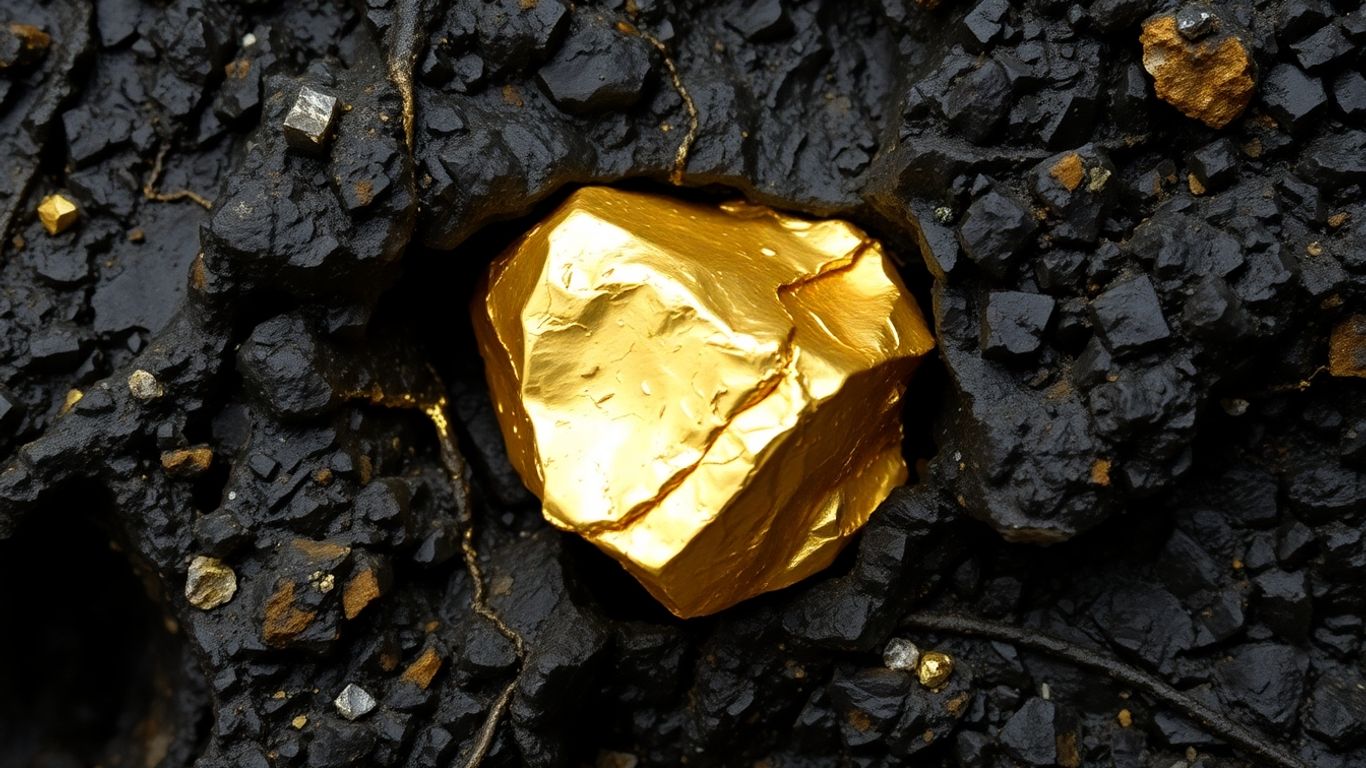
When you're looking for gold, you shouldn't just look at the main rock. Often, other minerals are there to give you clues. They're like little signposts left by nature. Knowing them will greatly help your prospecting.
Sulfides: pyrite and chalcopyrite
Pyrite is sometimes called "fool's gold." It's an iron sulfide that can resemble gold, but be careful, it's not the same thing! It's often found near areas where gold is discovered. Chalcopyrite, another sulfide, contains copper and iron, and sometimes it can also contain small amounts of gold. Keep an eye out for these shiny yellow minerals; they can help you find them.
Oxides and their role
Quartz is a very common companion to gold. You'll often find it in quartz veins, those rock formations that can contain gold. If you see a lot of quartz, that's a good sign. Hematite, an iron oxide, can also be associated with deposits, especially when it changes over time. These oxides can tell you that you're on the right track.
Silicates as indicators
Feldspars, for example, are minerals found in many different rocks, including those containing gold. Mica, especially biotite, is also sometimes present in gold-bearing areas. Tourmaline, found in certain metamorphic rocks, can also indicate the presence of gold. These minerals are a little less obvious, but they are part of the puzzle.
It's important to remember that the presence of these minerals is not a guarantee of finding gold. However, they serve as excellent indicators to guide your search and increase your chances of success. Think of them as valuable aids in your quest.
Here are some minerals to watch out for:
- Pyrite Iron sulfide, often confused with gold.
- Chalcopyrite Copper and iron sulfide, may contain gold.
- Quartz : Very common in gold veins.
- Hematite Iron oxide, sometimes associated with gold.
- Mica : Present in certain gold-bearing rocks.
By carefully studying the minerals around you, you can better understand the site's geology and refine your prospecting strategy. It's a bit like reading a secret map left by the Earth. Remember that French law regulates the buying and selling of precious metals, so it's wise to familiarize yourself with the regulations. criteria for investment gold if you plan to sell your discoveries.
Geological indicators for gold prospecting
So, you want to find gold, huh? It's an exciting adventure, but you have to know where to look. Nature gives us clues; we just have to know how to read them. Think of it like a treasure hunt, but with the Earth as your map.
The contact zones between different rocks
Imagine two types of rock meeting. This is often where interesting things happen. These contact zones, where rock formations change abruptly, are like weak points in the Earth's crust. When gold rises from deep underground, it tends to settle in these fissures. Look for these spots where the geology takes a sharp turn, especially if the rocks meet at a right angle. It's a bit like finding an intersection on a map.
The color changes of the rocks
Sometimes, the rock itself speaks to you. A rock that changes color, for example, can be a sign. Often, it's the oxidation of iron that causes these changes, resulting in red, yellow, or brown hues. These same processes that alter the rock can also be linked to the presence of gold. If you see these color variations in an area known to have gold potential, don't ignore it. It's a bit like spotting an unusual stain on an old piece of parchment.
Rock outcrops and faults
Outcrops are those sections of rock that protrude from the ground, where you can see the structure directly. They're an incredible opportunity for a prospector! Examine them carefully. Faults are large fractures in the rock. Gold likes to seep into these areas. If you find an outcrop that shows signs of fractures or shearing, especially if there are veins of quartz or minerals like pyrite, you're on the right track. Think of them as veins in the human body, but for the Earth.
Here are some points to keep in mind as you explore:
- Quartz veins: Gold loves to hide in quartz veins. If you see white or milky quartz, especially if it's associated with other minerals, that's a good sign.
- Indicator minerals: Pyrite (often called "fool's gold" because it shines like gold but is not), chalcopyrite, or even arsenopyrite can put you on the right track.
- Hydrothermal alterations: Look for signs such as silicification (the rock becomes harder and often lighter in color), argillation (the rock turns into clay), or serpentinization (a greenish rock). These processes are often linked to the circulation of fluids that can transport gold.
Prospecting is a bit like being a nature detective. You have to observe, analyze, and connect the clues. Every change in rock, every strange color, every fracture can be a piece of the puzzle that will lead you to your treasure.
To find gold, you have to know where to look! geological indicators These clues are like maps showing us the most promising spots. They help us understand how gold formed and where it might have been hiding. It's a bit like being a nature detective. Want to learn more about these clues and how they guide gold prospecting? Visit our website to discover all the secrets of gold prospecting and how we can help you with your project.
So, ready to go gold hunting?
There you have it, you now have a better idea of the types of rocks that can hold gold. It's not always easy to spot, is it? It takes a keen eye and patience. But by keeping this information about igneous, metamorphic, and sedimentary rocks in mind, and paying attention to the minerals found alongside them, you increase your chances. Who knows, maybe your next outing will be the one! Remember that nature is full of surprises, and gold is something you have to earn.
Frequently Asked Questions
In which types of rocks is gold most often found?
Gold likes to hide in many types of rock. It is often found in rocks that come from cooled magma, such as granite. Rocks that have been transformed by heat and pressure, such as shale or quartzite, can also contain it. Sometimes, even in older rocks formed by the accumulation of sediments, such as conglomerates, gold can be discovered.
What is quartz and what is its connection to gold?
Quartz is a very common rock, often white or transparent. When you see veins of quartz in rock, it's often a good sign for finding gold. Imagine cracks filled with this mineral: gold likes to settle there. But be careful, quartz alone doesn't necessarily mean there's gold, because it's everywhere!
Are there any minerals that can help us locate gold?
Absolutely! Some minerals are like little brothers of gold. Pyrite, sometimes called "fool's gold" because of its resemblance, is often found near gold. Chalcopyrite, a mixture of copper and iron, can also contain a little. Looking for these minerals can give you a good clue.
How can the color of rocks indicate the presence of gold?
Sometimes, the earth speaks to us through its colors. If a rock changes hue, for example, becoming redder, yellower, or browner, it could be due to iron oxidizing. This is the same kind of process that can bring gold to the surface. So, a rock that changes color, especially in an area where gold is being prospected, is a sign to watch for.
Where can gold be found in waterways?
When gold is released from its original rock, water can carry it away. You can then find it in riverbeds or streams. Over time, the water concentrates the heavier gold particles in certain places. Look where the water slows down, such as in river bends or behind large rocks; that's where gold can accumulate.
What is a 'vein' gold deposit?
A 'vein' gold deposit is when gold is trapped in veins of quartz within hard rock. Think of cracks in the rock that fill with white quartz. This is where gold, transported by special liquids, has been able to deposit over the years. Spotting these rock formations with quartz veins is a classic indicator of gold potential.