You might be wondering what the different karats of gold are and what they really mean when you see jewelry or gold bars. It's a legitimate question, as the term 'carat' comes up frequently. In fact, the karat system is used to measure the purity of gold. Understanding this will help you make better purchasing decisions. So, let's delve into the world of karats together to gain a clearer understanding.
Key Takeaways
- The carat system measures the purity of gold, where 24 carats represent the purest gold.
- Different carats (24K, 18K, 14K, etc.) indicate the percentage of pure gold in an alloy.
- The higher the number of carats, the purer the gold, but it is also softer and therefore less resistant for everyday use such as jewelry.
Understanding the purity of gold: the carat system
When we talk about gold, especially jewelry, we often hear about "carats." But what exactly does that mean? It's actually quite simple, and it helps us understand the true value of a gold object. The carat system is a bit like a recipe: it tells us how much pure gold is in an object.
What is a karat of gold?
Imagine that pure gold, the brightest and most malleable kind, is divided into 24 equal parts. Well, a carat is one of those 24 parts. So, when we say a piece of jewelry is "24-carat," it means it's made of 24 parts pure gold out of 24. It's 100% gold, or almost (we're talking about 99,99% to be precise). It's the purest gold you can find.
But here's the thing: pure gold is also a very soft metal. It scratches easily and deforms quickly. To make it stronger, especially for making jewelry that needs to withstand everyday wear and tear, it's mixed with other metals. This is called an "alloy." The most common metals added are copper, silver, zinc, or sometimes nickel. These metals change the color of the gold and, more importantly, make it more durable.
The carat system allows us to know exactly what proportion of pure gold is in this alloy. The higher the number of carats, the more pure gold there is. It's as simple as that!
The meaning of the different karats: 24K, 18K, 14K and above
Here's how this translates concretely for the carats you'll see most often:
- 24 karat (24K) This is the purest gold, 24/24. It contains 99,9% pure gold. It is very yellow, shiny, but also very soft. It is mainly found in investment ingots or in very traditional jewelry in some cultures, but rarely in everyday jewelry stores.
- 18 karat (18K) Here, we have 18 parts pure gold out of 24. That represents 75% pure gold. The remaining 25% is other metals. It's an excellent compromise between the rich color of gold and good durability. It's also the standard for fine jewelry and luxury pieces.
- 14 karat (14K) The proportions drop to 14 parts pure gold out of 24, or approximately 58,3% pure gold. This is a very common alloy, especially in countries like the United States. It is even more durable than 18-karat gold and often slightly less expensive. The color is a bit less intense than that of 18K gold.
- 10 karat (10K) Here, we have 10 parts pure gold out of 24, which is approximately 41,7% pure gold. This alloy prioritizes durability and price. The gold color is more subtle, and the alloy is much more resistant to impacts and scratches.
There are also other carats such as 9K (37,5% pure gold) or 8K (33,3% pure gold), which are even more resistant and less expensive, but contain less gold.
The carat system is therefore essential for understanding the composition of a gold object. It indicates the amount of pure gold present in the alloy, which directly influences its value, color, and durability. This is key information for making an informed purchase, whether for jewelry or an investment.
Here is a small table to summarize:
| Carat | Percentage of pure gold | Typical composition |
|---|---|---|
| 24K | 99,9% | Pure gold |
| 18K | 75% | 75% Pure Gold + 25% Other Metals |
| 14K | 58,3% | 58,3% Pure Gold + 41,7% Other Metals |
| 10K | 41,7% | 41,7% Pure Gold + 58,3% Other Metals |
The different levels of gold purity
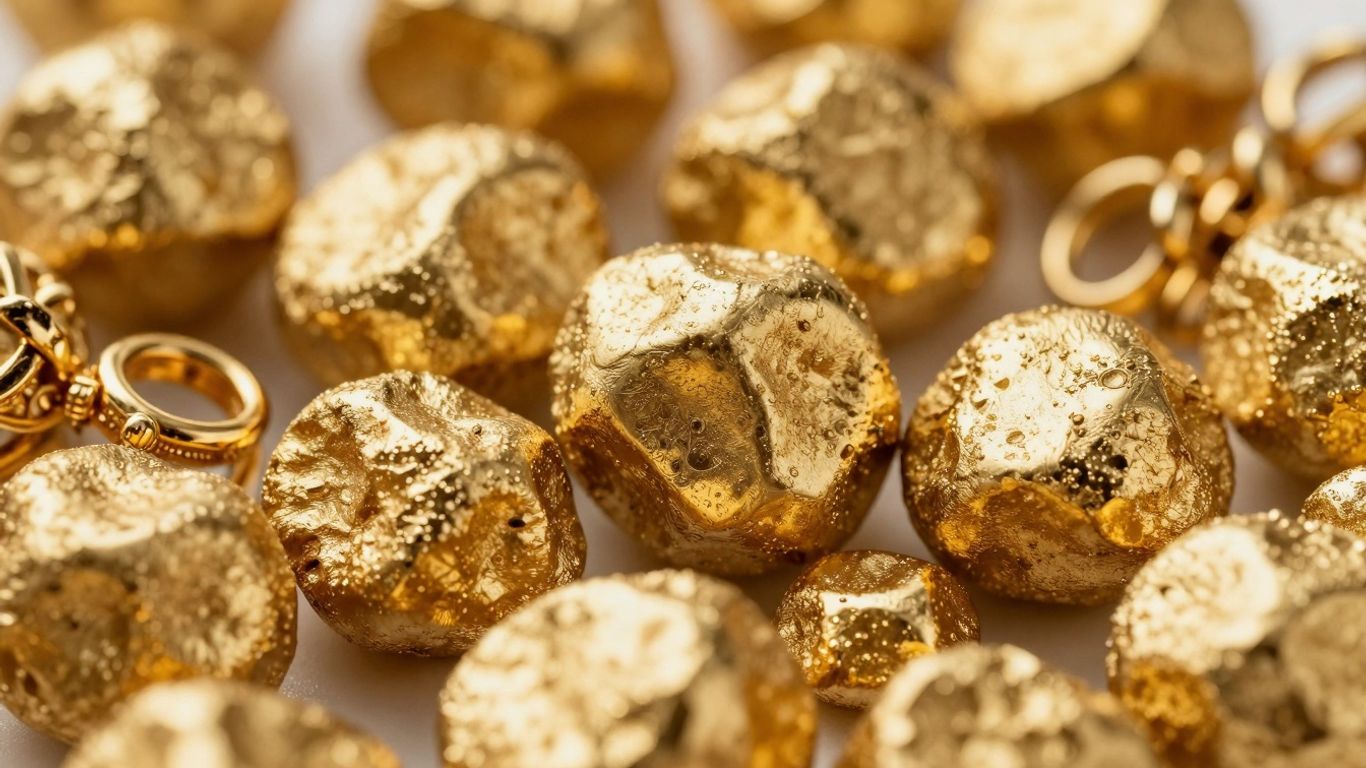
24-carat gold: maximum purity
When we talk about 24-karat (24K) gold, we're referring to the purest gold you can find. It's composed of 99,9% pure gold, with very few other metals, if any. That's why it has such a bright and vibrant yellow color. However, it's important to know that pure gold is quite soft. That's why 24-karat gold jewelry is less common in everyday jewelry stores.because they would be more likely to deform or be damaged. It is mainly found in investment gold, such as ingots, where purity is the primary criterion.
18-karat gold: a balance between purity and durability
18-karat (18K) gold is an excellent compromise. It contains 75% pure gold, the remainder being an alloy of other metals such as copper, silver, or zinc. This alloy gives it greater durability than 24-karat gold, while retaining a beautiful golden color and high value. It is, in fact, the most commonly used type of gold in traditional jewelry, whether for rings, necklaces, or bracelets. 18-karat gold is also used to create specific alloys for rose gold or white gold.
Here is a small table to help you see things more clearly:
| Carat | Percentage of pure gold | Alloy percentage |
|---|---|---|
| 24K | 99,9% | 0,1% |
| 18K | 75% | 25% |
14-karat gold and below: alloys for strength
As the karat number decreases, the proportion of pure gold diminishes while that of other metals increases. 14-karat (14K) gold, for example, contains approximately 58,3% pure gold. It is even more durable than 18-karat gold, making it ideal for jewelry that will withstand daily wear and tear, such as wedding bands or children's jewelry. It is also commonly found in costume jewelry or pieces sold at more affordable prices. The lower the karat number (such as 10K or 9K), the more the gold is considered an alloy, with a lower pure gold content but greater strength.
It's important to note that the color of gold can vary depending on the metals added to the alloy. For example, adding copper produces pinkish hues, while nickel or palladium can create white gold. The purity of the gold doesn't directly influence the color, but rather its richness and brilliance.
Gold isn't all the same! There are different grades, or purities, of gold. Some are rarer and therefore more valuable than others. Understanding these levels helps you know what you're buying or selling. It's a bit like choosing between pure and diluted fruit juice; quality makes all the difference. Want to learn more about different purities of gold And how do they affect their value? Visit our website to discover all the secrets of pure gold and its different forms.
So, which carat of gold should you choose?
There you have it, you now have a better understanding of how the karat system works for gold. Whether you're looking for a piece of jewelry to treat yourself, a solid investment like a gold bar, or even a gift, understanding these different levels of purity will help you make an informed choice. Remember that the most important thing is to find what suits you best, whether it's in terms of color, durability, or budget. Gold, in all its forms and karats, remains a safe and timeless investment.
Frequently Asked Questions
What is the difference between the different carats of gold?
Basically, karats are like a grade that indicates how pure the gold is. The higher the number, the more pure gold it contains. For example, 24 karats is almost pure gold, super shiny but a bit soft. 18 karats is 75% pure gold, so a good mix of beauty and durability. 14 karats has slightly less pure gold, but it's even more robust, perfect if you wear your jewelry often.
Is the purest gold (24 carats) always the best choice?
Not necessarily! 24-karat gold is beautiful with its intense yellow color, but it's very soft. Imagine a pure gold ring: it could easily lose its shape if you wear it every day. For jewelry that's worn frequently, like rings or bracelets, 18-karat gold is often a better compromise. It's gorgeous and durable enough to withstand the test of time without too much trouble.
How can I tell what carat my gold jewelry is made of?
The easiest way is to look for a small hallmark on the piece of jewelry. It's like a small engraved mark, often inside a ring or on the clasp of a necklace. This hallmark tells you how much pure gold it contains. For example, you might see '750' for 18 karats, or '585' for 14 karats. If you can't find a hallmark, a jeweler will be able to tell you what karat it is.