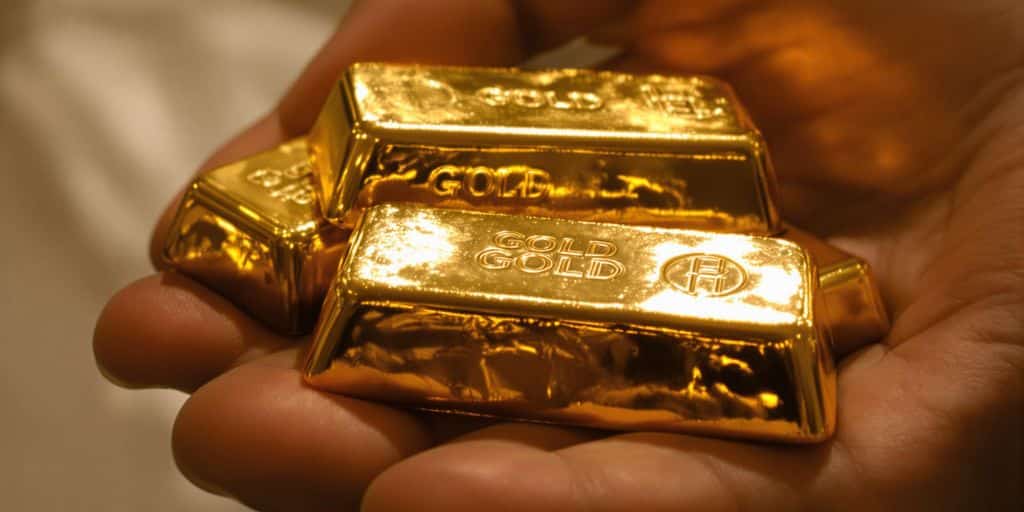
We often ask ourselves this question when we own gold: should we sell it now or wait for the next price increase? It's a real question, especially right now. The gold market is a bit of a roller coaster, it goes up, it goes down, and we never really know when to take the plunge. We'll take a look at what's happening in the market, what to know before selling, and how to make the right choice for your gold.
Key Takeaways
- The gold market is influenced by many things, such as the global economy and geopolitical events.
- Selling now can be a big win if the price is high, but there is always the risk of missing out on a future rise.
- Understand the comment gold price is fixed and what makes it move is important to make a good decision.
- Gold is a bit of a safe haven; it can help protect your money when inflation hits.
- Before selling, calculate carefully what you will gain and find out about the procedures and taxes, that's the basics.
Analysis of the current situation of the gold market
The gold market is really interesting right now. We're seeing some big moves, and it's influenced by a lot of things, from economic factors to geopolitical events. Since the beginning of 2025, gold has reached highs not seen in a long time, flirting with $3000 an ounce. This is largely due to a global economic situation that is, shall we say, particularly favorable.
Determining economic factors
Inflation is still here, and central banks are continuing their monetary policies. Basically, they're lowering interest rates, which encourages people to buy gold as a hedge against currency devaluation. And then, currencies keep moving, which makes gold even more attractive as a safe haven. It's a bit of a mess, but it's benefiting gold. To better understand, here are some key factors:
- Persistent inflation
- Accommodative monetary policies
- Currency fluctuations
Impact of geopolitical tensions
International tensions also play a role. Conflicts, whether in Eastern Europe or the Middle East, create anxiety among financial markets. As a result, investors prefer gold because it's safer. These crises, historically, have always increased the demand for gold. It's a little sad, but that's how it is. global tensions have a direct impact on the price of gold.
Role of central banks
Central banks play an important role in the gold market. They hold gold reserves, and their decisions can influence the price. For example, if a central bank decides to buy a lot of gold, it can drive up the price. It's a bit like they set the tone. Understanding the role of central banks is essential for anticipating market movements. They act as major players, and their actions are closely scrutinized by investors.
Overall, the gold market is well positioned to continue rising. If the situation remains unstable in the stock and bond markets, we could see the price of gold reach even higher levels this year. It's a bit like insurance, but in precious metals.
Sales Strategies: Now or Later?
Deciding when to sell your gold is a bit like playing chess. You have to anticipate, observe, and above all, not rush. Right now, with prices flirting with record highs, the desire to make profit is strong. But is it really the right time? That's the million-dollar question, and the answer... it's not so simple.
The benefits of selling now
The main advantage, let's be clear, is the money right away. Prices are high, so you're making a nice profit. But beyond that, selling now also means:
- Avoid stressing if the market declines. You sleep better when you've secured your gains.
- Have cash available for other projects, whether it's an investment, a trip, or redoing your kitchen.
- Simplify your life. Fewer assets to manage, fewer worries.
The risks of selling too early
Be careful, the lure of immediate profit can sometimes mask future opportunities. Selling too quickly runs the risk of:
- Missing out on a potential price surge. If the global economy gets more complicated, gold could rise further.
- Depriving yourself of an asset that protects against inflation. Gold is a bit like insurance in case of a crisis.
- Forget about fees and taxes that eat into your profits. You have to calculate your move carefully.
The art of timing
Knowing when to sell is a combination of flair, analysis, and self-awareness. There's no magic formula, but here are a few tips:
- Clearly define your financial goals. Why did you buy gold in the first place? What do you expect from this sale?
- Follow economic news and expert forecasts. No one has a crystal ball, but it provides some guidance.
- Be honest about your risk tolerance. If you panic at the slightest fluctuation, it might be better to lock in your profits.
Basically, the decision is yours. You have to weigh the pros and cons, based on your personal situation and your ambitions. And above all, don't let yourself be swayed by fear or greed. It's your gold, it's your choice.
Understanding the price of gold and its fluctuations
The price of gold is a bit like the weather: it changes all the time! But unlike the weather, we can try to understand why it changes. Understanding these movements is essential to making informed decisions, whether to buy or sell gold.
The London fixing and the continuous rate
There are several ways to determine the price of gold. The best known is the London Fixing. It's a sort of "snapshot" of the price of gold at a specific time of day. There's also the continuous rate, which changes constantly, 24 hours a day.
- The London fixing is established twice a day.
- The streaming course is updated in real time.
- Both are expressed in dollars per ounce.
Factors influencing the price per ounce
Several things can move the price of gold. Inflation, for example, tends to drive up the price of gold. Geopolitical tensions too, as gold is often seen as a safe haven. And then there are central bank decisions, which can also have an impact. Right now, international tensions are pushing investors towards this precious metal.
It's important to follow economic and political news to try to anticipate gold price movements. But be careful, it's not an exact science!
Peak and trough history
The history of gold prices is one of ups and downs. There have been periods of strong growth, such as in the 70s, and periods of decline. Looking at history can give us an idea of market cycles, but that doesn't mean history will repeat itself.
| Year | Event | Impact on the price of gold |
|---|---|---|
| 1980 | Historic peak ($850 per ounce) | Strong increase |
| 2002 | Historic low (around $300) | Sharp decline |
| 2012 | Recent peak (over $1800) | Strong increase |
Gold as a safe haven and diversification asset
Gold has always had this image of a safe bet, a bit like a good old friend you call when things go wrong. But beyond that, it's also an interesting tool for diversifying your assets. You don't put all your eggs in one basket, as the saying goes.
Protection against inflation
Inflation is a bit like an invisible tax that eats away at purchasing power. Gold, on the other hand, tends to maintain its value, or even increase, when prices rise. It's not magic, but it helps. Historically, gold has proven its ability to retain its value in the face of monetary erosion. That's why many people see it as insurance against unpleasant economic surprises. Central banks, for example, increase their gold reserves in times of uncertainty. It's an unmistakable signal. In fact, if you want to know more, you can watch how gold protects against inflation.
Diversification of the investment portfolio
Diversification is key. Don't just stick to stocks or bonds, but add a touch of gold. This helps smooth out the portfolio's overall performance. When stock markets are struggling, gold can act as a buffer. It's a bit like having a joker in your deck of cards.
Here are some benefits of diversifying with gold:
- Reduction of overall portfolio volatility.
- Performance potential in times of crisis.
- Access to an asset uncorrelated with traditional markets.
Comparison with other financial assets
Gold is good, but it must be compared to other options. Stocks can be very profitable, but they are risky. Bonds are safer, but less profitable. Real estate is tangible, but requires a large initial investment. Gold, on the other hand, offers an interesting compromise. It is less volatile than stocks, more liquid than real estate, and it can serve as a safe investment in case of turbulence. After that, everyone sees noon at their door, and the choice depends on their objectives and their risk tolerance.
Gold does not generate direct income like dividends from stocks or interest from bonds. Its appeal lies primarily in its ability to preserve capital and act as insurance against economic and financial crises. It is a long-term investment, rather than a source of immediate income.
Practical aspects of reselling gold
Reselling gold may seem simple, but there are a few practical aspects that deserve special attention. You don't just start selling your gold without a little preparation.
How to calculate your capital gain
Calculating your capital gain is essential for anticipating tax liability and assessing the true profit from the sale. It's actually quite simple. Capital gains are the difference between the sale price and the purchase price, less any acquisition-related costs (e.g., brokerage fees). It is important to keep all purchase invoices to justify the purchase price.
Here is a simple example:
| Element | Amount (€) |
|---|---|
| Selling price | 20 000 |
| Purchase price | 15 000 |
| Purchase costs | 500 |
| Gross capital gain | 4 500 |
Sales Procedures and Best Practices
Gold sales follow specific procedures to ensure security and transparency. Here are some best practices:
- Have your gold appraised by a professional: Before selling, get an accurate estimate of your gold's value. Several experts can help you.
- Compare offers: Don't settle for the first offer. Contact multiple buyers to get the best price.
- Secure the transaction: Favor secure payments (bank transfer, cashier's check) and avoid large cash transactions. To properly sell his shares, you have to find out more.
- Check the buyer's reputation: Make sure the buyer is a reputable and trustworthy professional.
Transparency is essential. Don't hesitate to ask questions about valuation methods and fees. An honest seller will always be willing to provide you with clear and detailed explanations.
Tax declaration of the sale of gold
The sale of gold is subject to specific taxation. There are two possible regimes:
- Flat-rate tax on precious metals: 11,5% of the sale price (including CRDS). This scheme applies if you cannot justify the purchase price.
- Capital gains tax: 36,2% (19% income tax + 17,2% social security contributions) on the capital gain realized. This regime is possible if you can justify the purchase price and opt for this regime.
It is important to declare the sale of gold on your tax return. Don't hesitate to consult a tax advisor to optimize your situation and avoid mistakes. Understanding the tax implications is essential.
Tips for an informed decision
Making a decision about selling your gold, whether it's coins like Napoleons or ingots, requires careful consideration. We're not talking about selling an old table here, it's money! You have to weigh the pros and cons, and above all, not rush into things. Here are some tips to help you see things more clearly.
Evaluate your personal financial goals
Before you do anything, ask yourself why you bought gold in the first place. Is it for retirement? For a real estate project? Or just to grow your savings? Your initial goals will influence your decision to sell. If you had planned to keep your gold for 20 years, a small increase today might not change your mind. It is essential to align your sales strategy with your long-term financial aspirations.
Consult gold market experts
Talking to an expert can really help. These professionals follow the gold market daily and can give you personalized advice. They understand the trends, risks, and opportunities. Don't hesitate to contact several experts to compare their analyses. It's like requesting several quotes for work; it allows you to get a more comprehensive overview.
Stay informed about economic trends
The economy is a bit like the weather: it's constantly changing. Interest rates, inflation, geopolitical crises... all of these things have an impact on the price of gold. The more informed you are, the better you can anticipate market movements. Read the economic press, follow expert analyses, and above all, don't trust rumors. An informed decision is one based on facts, not hearsay. To manage your savings well, you need to monitor the price of gold.
Staying up-to-date with the latest economic news is essential to making an informed decision about selling your gold. Financial markets are influenced by a multitude of factors, and understanding these influences can help you optimize the timing of your sale.
To make the best decisions, it's important to be well-informed. We help you understand the gold and silver market. Visit our site to learn more and make informed choices.
Conclusion
So, what do you do with your gold? That's the million-dollar question. Frankly, there's no easy answer. The gold market is a bit like the weather; it changes all the time. One day, it skyrockets, the next, it drops a bit. What's certain is that gold remains a safe bet when the economy is playing up. If you have gold, now might be a good time to think about it. Take a good look at your goals. Do you need money right away for a project? Or can you wait, hoping it goes up even more? It's up to you. But don't forget to do your research and, if necessary, seek the advice of someone who knows what you're doing. That way, you'll make the best decision for you, without regrets.
Frequently Asked Questions
When is the best time to sell my gold?
The best time to sell your gold depends on several things, such as the current price of gold, your cash needs, and what you think will happen in the market. If the price is high and you need the money, now might be a good time. But if you think the price will rise further, you might want to wait.
What causes the price of gold to change?
The price of gold changes constantly. It is influenced by the global economy, major events in the world (such as wars), and the decisions of major banks. When people are worried about the economy, they often buy gold, which drives up its price.
Can you lose money selling gold?
Yes, it's possible. Even though gold is considered a safe bet, its price can fall. If you bought gold when its price was very high and sold it when it's lower, you could lose money.
Where can I sell my gold?
To sell your gold, you can go to professionals like Goldmarket. They can estimate the value of your gold and offer you a price. It's important to compare offers from several buyers to get the best price.
Do I have to declare the sale of my gold to the tax authorities?
Yes, you must declare the sale of your gold to the tax authorities if you made a profit (a capital gain). The rules can be a bit complicated, so it's a good idea to seek expert advice or check the information on the tax website.
Why is gold considered a safe bet?
Gold is often seen as a safe haven—a secure investment when the economy is struggling. It can help protect your money against inflation (when prices rise) and crises. This is why many people buy it to diversify their investments.