
Have you ever heard of inflation? It's that little thing that makes your money buy less and less over time. As a result, we're all wondering how to protect our savings. Gold is often the first idea that comes to mind, but is it really the best solution? We're going to take a closer look, asking ourselves whether silver is an effective hedge against inflation.
Key Takeaways
- Gold is often seen as a safe bet to protect against inflation, thanks to its history and rarity.
- Understanding inflation means understanding how it eats away at purchasing power and affects our savings.
- Diversifying your investments, particularly into real estate or commodities, can help counter the effects of inflation.
- Every anti-inflation strategy has its pros and cons: the costs and risks must be carefully weighed.
- Whether it's bullion, coins, or ETFs, there are several ways to invest in gold, each with its own unique characteristics.
Gold, a safe haven against inflation
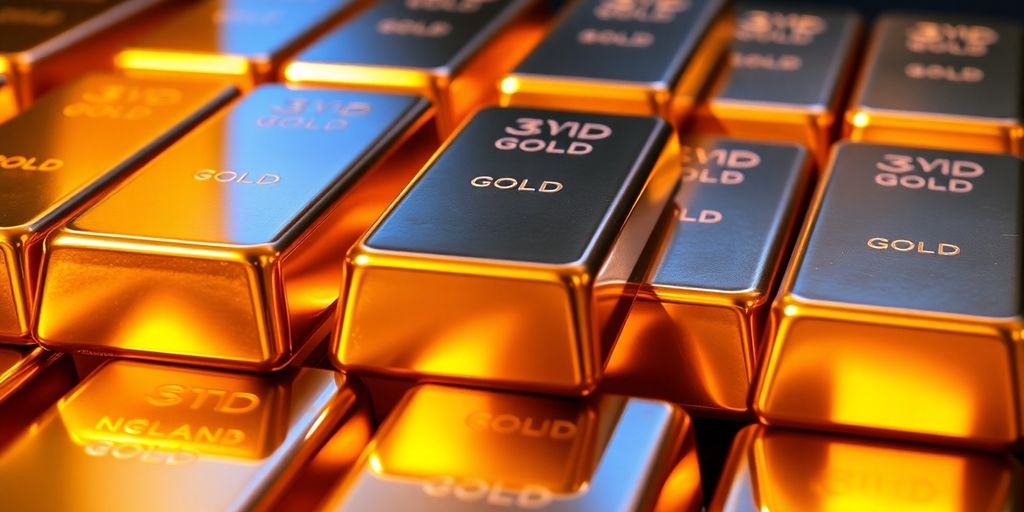
Gold, the precious metal that has shone for millennia, is often cited as a safe haven, especially when inflation begins to erode our purchasing power. But is that really the case? They say gold retains its value when currencies lose ground. It's true that, unlike banknotes, you can't print more of it at will. The supply of gold is limited by what can be extracted from the earth, and that changes everything.
Gold as a precautionary asset
When times are uncertain, whether due to inflation or other economic concerns, many people turn to gold. It's a bit like putting money aside in a safe. It's seen as a solid store of value. However, it's important to note that gold doesn't earn anything directly, like dividends from stocks or interest from bonds. If interest rates rise, holding onto gold can cost more in terms of missed opportunities. It's a bit of a dilemma: it protects, but it doesn't produce.
The History of Gold as Money
Gold is nothing new as a medium of exchange. Humans have been using it for thousands of years, long before coins. The kings of Lydia, for example, minted the first gold coins around the 8th century BC. Later, the Louis d'Or became a symbol of safe investment. The gold standard, in which currencies were tied to a fixed amount of gold, was the norm for a long time, until the United States ended it in 1971. History shows that gold has always had an important place in global finance, even if its role has evolved. It has even been a reason to explore and conquer new continents, such as America.
Gold price volatility
Le gold price, it moves. It is measured in ounces (about 31 grams) and can fluctuate quite a bit. Several things influence its price: central banks selling or buying gold, demand for jewelry, especially in India and China, industry needs, mining costs, and of course, investor speculation reacting to economic news. For example, the price per ounce has experienced dramatic ups and downs, going from less than $300 in 2002 to over $1800 in 2012, before falling back down. This fluctuation shows that even though gold is a safe haven, it is not immune to market movements. It is important to understand that the Gold prices is not always predictable.
Understanding the mechanisms of inflation
Inflation is when your money loses its value over time. This means that with the same amount of money, you can buy fewer things than before. It's a bit like everything going up in price, but your salary isn't keeping up. It can be quite frustrating, especially when you think about your savings.
The erosion of purchasing power
When inflation rises, the purchasing power of your money decreases. Imagine that you had 100 euros last year and could buy 10 items with it. If inflation is 10%, this year, those same 10 items will cost 110 euros. Your 100 euros will no longer be enough to buy those 10 items. That's what purchasing power is all about. It affects everyone, from consumers to savers.
The causes of inflation
Several things can cause inflation. Sometimes, it's because there is too much money in circulation relative to the available goods and services. This is called the quantity theory of money. Other times, it's the increase in production costs for businesses (raw materials, energy, wages) that affects prices. Monetary policies by central banks, such as lower interest rates, can also encourage inflation. For example, low rates make borrowing easier, which can boost demand and therefore prices. Geopolitical tensions or supply shocks, such as a poor harvest or an energy crisis, can also cause the prices of certain products to skyrocket. Broadly speaking, inflation is often the result of an imbalance between demand and supply, or an increase in costs.
The effects of inflation on savings
Inflation has a direct impact on your savings. If your money is placed in an account that earns less than the inflation rate, its real value decreases. For example, if you have 1000 euros in an account that earns 1% per year, but inflation is 3%, after a year, you will have 1010 euros. But since prices have risen by 3%, what you could buy with 1000 euros last year will now cost you 1030 euros. Your 1010 euros will therefore not be enough to buy as much as before. That's why it's important to look for investments that offer a return higher than inflation to protect your assets. central bank gold reserves are often seen as a protection against this.
Investment strategies to counter inflation
When inflation rises, we all look for ways to protect our money. That's where investment strategies come in. It's not just about putting your money aside, but about putting it to work so that it retains its value, or even increases in value. There are several ways to defend against this erosion of purchasing power.
Portfolio diversification
It's a bit like not putting all your eggs in one basket. If some of your investments lose value due to inflation, others may gain value, or at least remain stable. This helps smooth out the blows. You can mix stocks, bonds, real estate, and of course, commodities like gold. The idea is that these different asset classes don't all react in the same way to economic changes.
Investing in real estate and commodities
Real estate has often been seen as a safe bet. Rents can increase with inflation, and so can property values, in theory. Commodities, like the much-discussed gold, also have a reputation for holding up well when prices rise. This is because their value is often tied to physical assets, not just numbers on a screen. Think about sell your shares to buy gold may be an option for some.
Inflation-indexed bonds
These are designed specifically for this purpose. Their yield is directly linked to the consumer price index. If inflation rises, the yield on these bonds also increases. It's a fairly straightforward way to protect yourself. You just need to understand how they work and the associated risks, because nothing is ever 100% guaranteed.
It's important to remember that each strategy has its own advantages and disadvantages. What works for one person may not work for another. It's important to carefully analyze your personal situation before making any decisions.
The Advantages and Disadvantages of Inflation Hedges
Protecting yourself from inflation is a bit like wanting to keep your purchasing power intact when prices rise. It's an attractive idea, but as with any investment, there are pros and cons to consider. It's important to weigh the pros and cons carefully before taking the plunge.
Costs associated with anti-inflation strategies
Investing in strategies designed to counter inflation comes at a price. We're not just talking about the purchase price of gold or index-linked bonds. There are also management fees, especially if you use funds or ETFs. These fees, while they may seem small at first, can add up over time and eat into your returns. It's a bit like paying a custodian to protect your money, but that custodian takes a commission on everything they keep. You also have to consider transaction fees when you buy or sell, and sometimes even storage fees if you hold physical assets like gold. Not to mention the tax that applies to capital gains, which can vary depending on the type of asset and the holding period. You really have to do the math to see if it's worth the effort.
Potential risks of hedging assets
Despite their reputation for protection, assets considered inflation hedges are not without risk. Gold, for example, can be very volatile. Its price can skyrocket, but it can also fall quite dramatically. It's not a 100% sure thing. Inflation-linked bonds, on the other hand, are generally more stable, but their yield can be lower than that of other, riskier investments. Moreover, if inflation doesn't rise as expected, these bonds may not deliver the expected return. There's also counterparty risk, especially with certain complex financial products. And then there's liquidity risk: if you need to sell your hedging assets quickly, you may not find a buyer at the price you want, especially during a crisis. So it's important to understand what you're investing in.
The Long-Term Benefits of Inflation Protection
Despite the costs and risks, hedging against inflation can bring significant benefits in the long run. The main idea is to preserve your purchasing power. When inflation erodes the value of money, having assets that maintain or increase their value can make a real difference. Think about your savings: if they don't earn at least as much as inflation, they lose value every year. Hedges can help prevent this. They can also bring some stability to your overall portfolio, especially in times of economic uncertainty. By diversifying your investments with assets that react differently to inflation, you reduce the overall risk of your assets. It's a prudent strategy that can pay off over time, giving you more peace of mind for your future projects. It's a bit like putting money aside for a rainy day, but in an investment version. Knowing how to manage your investment portfolio is therefore essential to get the most out of it.
The role of central banks and financial markets
Central banks and financial markets play a significant role in how gold is perceived and used as an inflation hedge. They are not just passive observers; their actions and policies have a direct impact on the value of gold and how investors use it.
Central Banks' Gold Reserves
Many central banks hold gold in their reserves. It's a bit like insurance for them. The United States, for example, has huge gold reserves, including at Fort Knox. As of December 2003, it was estimated that central banks around the world held about 28 tons of gold, which was roughly a quarter of the world's gold stockpile. These reserves aren't static; central banks buy and sell gold, and these transactions can really influence the price of the yellow metal. When they buy, demand increases, which drives up prices. When they sell, the opposite is true. Markets closely monitor these movements to understand central bank sentiment.
The influence of monetary policies
Monetary policies, such as setting interest rates, are another major lever. When a central bank decides to lower rates to stimulate the economy, this can sometimes lead to inflation. In this case, people seek safer assets, such as gold. Conversely, if rates rise to combat inflation, this can make other investments, such as bonds, more attractive, but it can also lower the value of bonds already issued. It's a delicate balance. For example, after the 2008 financial crisis, very loose monetary policies pushed some investors towards gold, as they feared currency devaluation.
History shows that periods of economic uncertainty and expansionary monetary policies have often seen gold gain popularity as a safe haven.
Transactions in precious metals markets
Gold is listed on major global financial markets such as London, New York, and Tokyo. London, in particular, is a nerve center for trading physical precious metals. There are two types of quotations: the fixing, which is a reference price established twice daily by the London Bullion Market Association (LBMA), and the real-time price, available 24/24. These transactions, especially in times of crisis, are seen as a barometer of global economic health. The LBMA, which brings together major financial institutions, plays a key role in setting prices, even though no French players are members. Transactions on these markets, whether speculative or based on real demand (jewelry, industry), largely determine the price of gold.
Investing in gold: bars, coins and ETFs
When we talk about investing in gold, we often think of ingots, those shiny bars that are the stuff of dreams. But that's not the only option. There are also gold coins, which have their own history and advantages. And then there are ETFs, a more modern way to gain exposure to the yellow metal without necessarily owning it physically.
Choosing between gold bars and coins
Bullion bars are the classic. They come in all sizes, from a small gram to a large one-kilo bar. It's pretty simple: the larger the bar, the lower the price per gram, generally. It's a bit like buying in bulk. Gold coins, on the other hand, are different. They often have numismatic value in addition to their intrinsic gold value. Think Napoleons or Sovereigns. Their price can vary depending on their rarity and condition, not just the Gold pricesIt's a little more complex, but it can also offer opportunities.
- Ingots: Simplicity, price per gram often lower for large formats.
- Parts : Historical and numismatic value, easier to resell in small quantities, but more variable price.
Understanding Gold-Backed ETFs
ETFs, or Exchange Traded Funds, are another story. These are funds that are bought and sold on the stock market like stocks. A gold ETF means that the fund holds physical gold, often in secure vaults. When you buy a share of this ETF, you indirectly own a small fraction of that gold. This is convenient because you don't have to worry about storing or insuring the metal yourself. The ETF's price generally follows that of gold. This is a fairly liquid way to gain exposure to the gold market, but you should carefully consider the management fees and how the fund is structured. It's important to know that ETFs are investment products that replicate the performance of an index, in this case the price of gold. They are regulated, which adds a layer of security.
Gold-backed ETFs offer a convenient and liquid way to invest in the precious metal, without the constraints of physical ownership. They are a good option for those seeking direct exposure to the price of gold through the stock markets.
Procedures for selling and buying gold
Whether you have bars, coins, or ETF shares, how you buy and sell them is important. For bars and coins, you must go through recognized professionals, such as precious metals dealers. They will ask for your ID and give you a purchase certificate. The sale is also done with them, and the price will depend on the daily rate. For ETFs, it's the same as for stocks: you go through your stockbroker. It's generally faster and simpler. You just have to be aware of transaction fees and possible capital gains taxes. Purchasing physical gold, whether bars or coins, is a transaction that must be declared in certain cases, particularly when reselling. It's always a good idea to find out about the current tax rules. optimize your gold investment.
Want to add some gold to your life? Whether in the form of shiny bars, antique coins, or convenient ETFs, gold is a safe bet. It's an easy way to protect your money and make it grow. Want to learn more about how? buy gold Visit our website to discover all the options!
So, is gold really the solution?
Simply put, gold can help protect your money when prices rise. It's a bit like insurance for your purchasing power. But be careful, it's not a magic wand. There are fees and risks, and the price of gold can also be a roller coaster. So, you need to think carefully and not put all your eggs in one basket. Diversifying your investments is often the key to getting through periods of inflation without too much worry. Weigh the pros and cons carefully before taking the plunge.
Frequently Asked Questions
What is inflation and how does it affect my money?
Inflation is when the prices of everything increase and your money buys fewer things than before. For example, if a pack of sweets cost 1 euro last year and costs 1,10 euros this year, it's because of inflation.
Why is gold said to be a safe haven against inflation?
Gold is often seen as a safe bet because it's rare and difficult to produce. When prices rise everywhere (inflation), gold tends to maintain its value, or even increase. It's like a shield for your money.
How can I prevent my money from losing value due to inflation?
To protect yourself from inflation, you can diversify your money. This means not putting everything in one basket. For example, you can buy gold, invest in houses (real estate), or in companies that sell things that people always need.
How can you invest in gold?
Investing in gold can be done in several ways: buying gold bars or coins, or buying shares in funds that hold gold (called ETFs). Each method has its advantages and disadvantages, such as fees or ease of resale.
What is the role of banks and financial markets with gold?
Central banks, which are like banks within banks, often hold gold. They also influence the price of silver with their decisions. The gold market is therefore somewhat controlled by these large institutions.
Is hedging against inflation with gold still a good idea?
Yes, there are advantages, such as protecting your money from inflation. But there are also disadvantages: gold can sometimes change in price quickly, and there are fees to buy or store it. You should think carefully before taking the plunge.
