
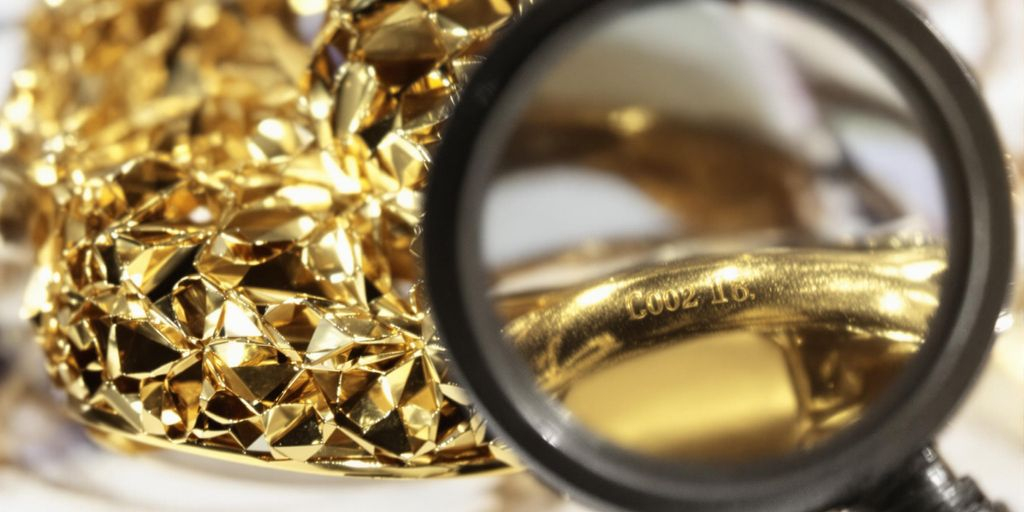
Identifying a hallmark on a piece of gold jewelry is essential to ensure its authenticity and value. Every piece of gold jewelry must bear a hallmark that attests to its quality and purity. In this article, we'll explore what a hallmark is, how to find it, the different types of hallmarks, and mistakes to avoid when identifying one.
Key points
- The hallmark is a mark that certifies the purity of a gold jewel.
- The hallmark is found on different parts of the jewel, depending on its type.
- There are several types of hallmarks, each with a specific meaning.
- To recognize a hallmark, you need to know how to interpret the symbols and numbers.
- Verifying the authenticity of a piece of jewelry requires knowing the hallmarking rules in force.
The hallmark: definition and importance
What is a punch?
A hallmark is a bit like a piece of jewelry's identity card. It's a mark, often discreet, affixed to precious objects, especially those made of gold, to indicate their authenticity and precious metal content. Imagine a small stamp, engraved with symbols and numbers, that tells the story of the piece. It is a guarantee for the buyer and a signature for the manufacturer.
Why is the punch essential?
The punch plays a crucial role for several reasons:
- Authentication: It confirms that the jewel is indeed made of gold (or other precious metal) and not an imitation.
- Gold content: It indicates the percentage of pure gold contained in the alloy (for example, 750 for 18-carat gold). This is important for knowing the value of the jewelry.
- Traceability: Certain hallmarks allow the manufacturer or importer to be identified, ensuring a certain traceability of the jewelry. In France, precious gold objects weighing more than 3 grams must be marked with three hallmarks: the maker's mark, the responsibility hallmark, and the guarantee hallmark.
- Value : Hallmarked jewelry is generally more valuable than unhallmarked jewelry because its authenticity is certified. If you wish sell gold, the punch is an important element.
Without a punch, it's difficult to know what you're buying or selling. It's a bit like buying a car without a registration document: risky and potentially illegal.
The different types of punches
There are several types of punches, each with a specific function:
- Master's (or goldsmith's) mark: It identifies the maker of the jewelry. It is usually diamond-shaped and contains the goldsmith's initials. This is his signature.
- Guarantee hallmark: It certifies the precious metal content of the jewel (gold, silver, platinum). It is affixed by an official body (Customs in France) or an approved inspection body (OCA). For example, a hallmark Dog head indicates platinum with a strength of 850‰.
- Responsibility stamp: It identifies the importer of the jewel if it was made abroad. It is oval in shape.
There were also older hallmarks, such as the hallmarks of jurande, charge and discharge, used to indicate the nature of the metal, the year of manufacture, the provenance of the object and the correct payment of duties and taxes. These hallmarks are less common today, but can still be found on antique jewelry. Understanding these marks helps avoid identify counterfeit gold coins.
Where to find the hallmark on a piece of jewelry
Knowing where to look for the hallmark on a piece of gold jewelry is crucial to confirm its authenticity. The location can vary depending on the type of jewelry, but some locations are more common than others. Here are some guidelines to help you in your search.
Common punch locations
The hallmark is not always easy to spot, as it is intentionally discreet. However, certain locations are preferred by manufacturers. Here is a list of the most common places you can find a hallmark:
- Rings and wedding bands: Inside the ring, sometimes outside if the inside is too narrow.
- Necklaces and bracelets: Near the clasp, on one of the links connecting the clasp to the rest of the jewel.
- Earrings : On the hook, shank or back part of the loop.
- Watches: Under the case, inside the bracelet (if metal), or on the buckle of the leather bracelet.
- Pendants: On the bail (the ring that allows the pendant to be hung), or on the back of the pendant itself.
Feel free to use a magnifying glass to help you search, as the punches can be very small.
Specific jewelry and their hallmark
Some types of jewelry have more specific hallmarking locations. For example, on a Gold ring, the hallmark is often found inside the ring, but on a curb chain, it will almost always be near the clasp. Here are some examples:
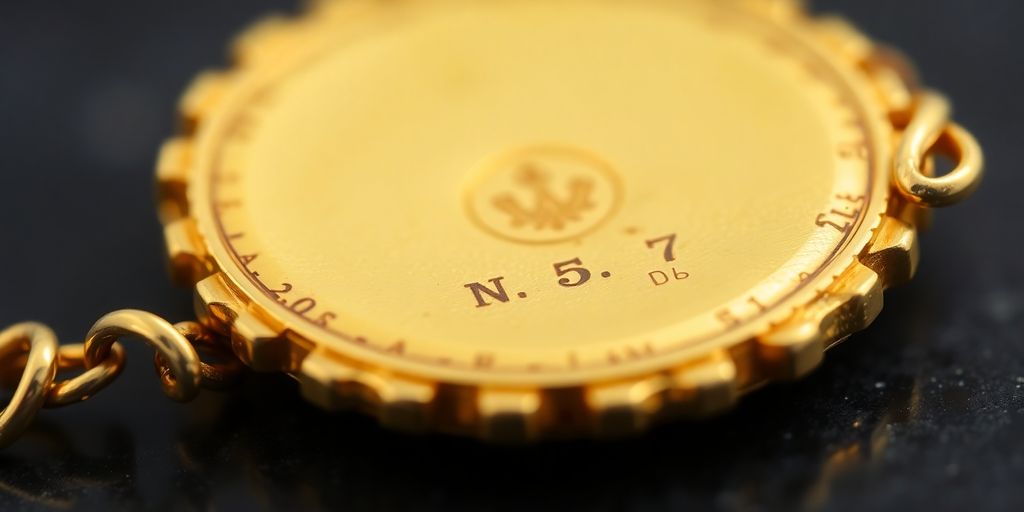
- Fine chains: The hallmark can be affixed to a small plate welded to the chain, near the clasp.
- Medals: Often punched on the back, near the bail.
- Pins: Usually stamped on the clasp or back of the brooch.
Hallmarking rules in France
In France, the hallmarking of jewelry is regulated. The law stipulates that precious objects made of gold, silver, and platinum weighing more than 3 grams must be marked with at least one guarantee hallmark. This obligation aims to protect consumers and guarantee the authenticity of precious metals. There are different types of punches, each having a particular meaning.
It's important to note that the absence of a hallmark does not necessarily mean the jewelry is not gold. Antique jewelry, or jewelry weighing less than 3 grams, may not be hallmarked. However, the presence of a hallmark is a strong indicator of the jewelry's authenticity.
It is also possible to find a serial number on the jewel, which allows its manufacture to be traced.
The different types of gold hallmarks
Maker's mark
The master's mark is a bit like the craftsman's signature. It identifies the manufacturer or importer of the jewelry. It's a legal requirement, and each master craftsman has their own unique hallmark, registered with the warranty office. Imagine it—it's like a secret code that allows you to trace the jewelry's origins. If you see a diamond with initials or a symbol, it's probably the master hallmark. This is important information, especially if you're interested in the jewelry's history or its creator.
Guarantee stamp
The guarantee hallmark is the seal of the State. It ensures that the jewelry meets gold purity standards. In France, guarantee hallmarks vary depending on the gold content (the percentage of pure gold in the alloy). For example, for 18-karat gold, we often find an eagle's head. It's a bit like a quality label. If you see this hallmark, you can be sure that the jewelry contains the stated quantity of gold. It's reassuring, isn't it?
Responsibility stamp
The hallmark, sometimes confused with the maker's mark, identifies the person or company that introduced the jewelry to the French market. It is mandatory for imported jewelry. It's a bit like an identity card for jewelry from elsewhere.
Basically, these hallmarks are there to protect us, the consumers. They guarantee the authenticity and quality of gold jewelry. It's a bit like a traceability system, allowing you to know where the jewelry comes from, who made it, and whether it's solid gold or gold-plated. It's important to know them, especially if you plan to buy or sell gold jewelry.
In addition to these main hallmarks, there are other marks, such as those indicating gold plating. These marks are often square in shape, making them easy to distinguish from solid gold hallmarks. Moreover, if you have any doubt about the value of gold coins, do not hesitate to consult an expert. He will be able to help you decipher the hallmarks and estimate the value of your jewelry.
How to recognize a hallmark on a gold jewel
Symbols and meanings
So, you have a piece of gold jewelry and you want to know if it's really gold, and what type? The first thing to do is look for the hallmark. The hallmark is a small mark affixed to the jewel which indicates its gold content. In France, symbols vary according to the number of carats. For example, a hallmark representing an eagle's head is often associated with 18-carat gold (750 thousandths). A seahorse, on the other hand, indicates 24-carat gold. It's a bit like a secret code that only connoisseurs can decipher. There is a jewelry engraving which can help you identify the hallmark.
Interpreting numbers and letters
In addition to symbols, you'll often find numbers and letters on the hallmark. These are crucial for determining the purity of the gold. The numbers usually express the gold content in thousandths. For example, "750" means the jewelry contains 75% pure gold. The letters, on the other hand, can indicate the jewelry's origin or the maker's mark. It's a bit like reading an ID card for your jewelry. The higher the karat of gold, the more gold the jewelry contains. For example, when talking about a 9-karat or 18-karat ring, the ring that contains 18 karats is more valuable because it contains more gold.
Differences between punches
It's important to know that there are different types of hallmarks, each with a specific meaning. The maker's mark identifies the manufacturer, while the guarantee mark ensures that the jewelry has been inspected by an official body. There's also the responsibility mark, which indicates the importer of the jewelry if it was made abroad.
It's a bit like having multiple signatures on an official document: each has its own role and meaning. If you see a hallmark that doesn't match anything known, there's reason to ask questions. It's best to have the jewelry inspected by an expert to avoid unpleasant surprises.
Here is a summary table of the most common punches:
| Punch type | Common symbol | Meaning |
|---|---|---|
| 24k gold | sea horse | Pure gold |
| 18k gold | Eagle head | 75% pure gold |
| 14k gold | Scallop shell | 58,5% pure gold |
| 9k gold | Clover | 37,5% pure gold |
The role of the hallmark in the sale of a gold jewel
Authentication of the jewel
The hallmark plays a decisive role in the authentication of a piece of gold jewelry. It's a bit like the jewelry's identity card. It attests to the quantity of pure gold contained in the alloy. Without a hallmark, it's hard to be sure what you're getting. Imagine buying a car without a registration document; it's a bit like the same thing. The hallmark ensures that the piece of jewelry matches what was advertised, thus avoiding unpleasant surprises.
Impact on value
The hallmark has a direct impact on the value of a piece of gold jewelry. A piece of jewelry with a recognized and identifiable hallmark will have a higher value than one without a hallmark or with a questionable hallmark. This makes sense, because the hallmark provides a guarantee of the quality and quantity of gold. It's a bit like buying a investment coin : the more certified it is, the more expensive it is. Here are some factors that can influence the value:
- The purity of gold (expressed in carats)
- The weight of the jewel
- The presence and clarity of the hallmark
Sales Regulations
In France, the sale of gold jewelry is subject to strict regulations. The hallmark is a central element of these regulations. It ensures that the jewelry sold meets quality and purity standards. Gold professionals, such as jewelers and precious metal experts, are required to verify the presence and authenticity of the hallmark before proceeding with a sale or purchase. This is a legal obligation, but also a guarantee for the consumer. If you are considering selling gold jewelry, here are some points to remember:
- Have your jewelry appraised by a professional.
- Check that the punch is clearly visible and identifiable.
- Keep all documents relating to your jewelry (invoices, certificates, etc.).
The hallmark is an important indicator, but it shouldn't be relied upon blindly. It's always best to consult an expert to authenticate gold jewelry, especially if it's a valuable piece. An expert will be able to perform additional tests and give you an accurate estimate of your jewelry's value.
Techniques for verifying the authenticity of a gold jewel
Use a magnet
Gold is not magnetic. That's a fact. If you hold a powerful magnet near your jewelry and it's attracted to it, chances are it's not pure gold. This test is quick and easy, but it is not foolproof. Some non-precious metals used in counterfeits aren't magnetic either. So, a negative result doesn't guarantee authenticity, but a positive result is a clear red flag. It's a bit like checking if your car has enough gas before a long trip: it's not the only thing to check, but it's a good starting point.
White vinegar test
The white vinegar test is another simple method you can try at home. Pour a few drops of white vinegar onto the jewelry. If the jewelry changes color, it's likely not pure gold. Real gold doesn't react to vinegar. It's a bit like observing a plant: if it wilts after being watered, there's a problem.
Consult an expert
If you have any lingering doubts, the best option is to consult an expert. A professional jeweler has the experience and equipment to accurately assess the authenticity of your jewelry. They can perform more in-depth tests, such as an acid test, to determine the purity of the gold. Additionally, they can examine the gold hallmarking and other characteristics that could indicate whether the jewelry is authentic or not. It's a bit like going to the doctor when you have a health problem: it's best to trust a professional for an accurate diagnosis.
Common mistakes to avoid when identifying a hallmark
Identifying a hallmark on a piece of gold jewelry may seem simple, but some mistakes can be misleading. Here are the pitfalls to avoid for proper identification.
Confusing the punches
This is a common mistake, especially for beginners. There are different types of hallmarks, each with a specific meaning. Confusing a master's hallmark with a guarantee hallmark can lead to misinterpretation of the quality or origin of the jewelry. For example, a maker's mark indicates the craftsman or company that created the jewelry, while a guarantee mark certifies the precious metal content. It is crucial to be familiar with the different types of hallmarks and their associated symbols.
Ignoring important details
A hallmark is small, and it's easy to overlook crucial details. The shape of the hallmark, the letters, numbers, and even wear on the jewelry can influence interpretation. A partially erased hallmark can make identification difficult, but some remaining details can still provide clues. Take the time to carefully examine the hallmark from different angles and in adequate lighting. Using a magnifying glass can be very helpful to ensure you don't miss anything. Ignoring these details can lead to an erroneous conclusion about the jewelry's authenticity.
Do not check the origin
The provenance of a piece of jewelry can provide valuable insight into the hallmarks you can expect to find. Antique jewelry, for example, may have different hallmarks than those used today. Similarly, jewelry made abroad may bear hallmarks specific to its country of origin. It is therefore important to research the history of the jewelry and know the hallmarking rules in France and in other countries. The absence of a hallmark does not necessarily mean that the jewelry is fake, but it may indicate that it was made before the introduction of mandatory hallmarks or that it was imported without being hallmarked in France.
It's always best to cross-reference the information obtained from the hallmark with other elements, such as the style of the jewelry, the materials used, and its general condition. When in doubt, it's strongly recommended to consult a jewelry expert for a professional evaluation.
Here are some points to remember:
- Always check for the presence of a hallmark.
- Do not rely solely on the hallmark to determine authenticity.
- If in doubt, consult a professional.
When trying to identify a hallmark, it's easy to make mistakes. For example, failing to check the provenance or ignoring the hallmark's details can lead to confusion. To avoid this, take the time to educate yourself. If you'd like to learn more about hallmark identification and avoid common pitfalls, visit our site for helpful tips and resources. Don't let mistakes cost you!
Conclusion
In short, identifying a hallmark on a piece of gold jewelry is essential to guarantee its authenticity and value. Whether it's an eagle for 18-karat gold or a seahorse for 24-karat gold, each symbol has its importance. Don't forget to check the various places where the hallmark can be hidden, such as inside rings or near clasps. If you have any doubts, don't hesitate to consult a professional. This will allow you to be sure of the quality of your jewelry and avoid unpleasant surprises.
Frequently Asked Questions
What is a hallmark on a gold jewel?
A hallmark is a small mark that proves that the jewelry is made of gold and indicates its purity.
Why is it important to check the hallmark?
The hallmark ensures that the jewelry is authentic and of good quality, which is essential when making a purchase.
Where can you find the hallmark on a piece of jewelry?
The hallmark is often found inside rings, near the clasp of necklaces and under watches.
What types of hallmarks are there for gold?
There are several types of hallmarks, such as the master hallmark, the guarantee hallmark and the liability hallmark.
How can you recognize a hallmark?
A hallmark can be recognized by its symbols and numbers, which indicate the purity of the gold.
How to check the authenticity of a gold jewel?
You can use a magnet, test with white vinegar, or consult an expert to verify authenticity.
