
Investing in gold is good. But knowing when you actually start making money is even better. That's where break-even analysis comes in. And if you're buying physical gold, there's one more thing to consider: the premium. So, how do you calculate the break-even point of a gold investment while taking the premium into account? Let's take a look.
Key Takeaways
- The break-even point is the moment when your investment starts to be profitable, that is, when the gains cover all your expenses.
- To calculate this point, it is necessary to clearly distinguish between initial costs (purchase) and holding costs (storage, insurance).
- The premium on physical gold is the additional cost you pay compared to the price of pure gold. It increases your acquisition cost and therefore your break-even point.
- The price of gold, additional costs (transactions, storage) and taxation directly influence when you reach your break-even point.
- To optimize your break-even point, consider how you buy your gold (ingots, coins) and when you decide to sell it.
Understanding the break-even point in gold investing
When we talk about investing in gold, we often think about its potential increase in value. But to truly know if your investment is profitable, you need to look beyond the simple purchase price. This is where the break-even point comes in, a key concept for any savvy investor.
Defining the break-even point for an investment
The break-even point is essentially the starting point of your investment. It represents the total amount you need to recoup just to cover all your expenses. Basically, it's the minimum revenue (or in our case, the selling price) required to avoid losing money. If you sell your gold at this price, you break even: neither profit nor loss. It's an essential step before you can start making any money.
The break-even point: a temporal measure of profitability
If the break-even point tells you how much You need to recover, neutral tells you when You'll get there. It's expressed in time: days, months, or years. To calculate it, you divide the break-even point by the average revenue generated per period. In the context of gold, this might seem a bit abstract because you don't have regular income like a business. However, you can adapt it by considering the time it takes for the value of gold to increase enough to cover the initial costs and any potential holding costs. In short, the break-even point tells you how long it will take for your investment to become profitable.
Distinction between fixed and variable charges in gold
To fully understand the break-even point, it's necessary to distinguish between costs. In gold investment, we can identify:
- Fixed costs: These are the costs that remain constant, regardless of the amount of gold you own or the time that passes. Consider the cost of secure storage if you don't have one at home, or certain initial advisory fees. These costs are incurred once and for all or on a recurring basis, irrespective of the gold's performance.
- Variable costs: They are more directly related to buying and selling. The most obvious is the premium you pay when buying (we'll come back to that!), as well as transaction fees (brokerage, commissions) when buying and especially when reselling. These costs vary depending on the volume and frequency of your transactions.
Calculate the break-even point of your gold investment
To know when your gold investment truly starts to pay off, you need to calculate its break-even point. It's a bit like knowing how far you need to drive before your car starts saving you money on gas compared to a taxi. For gold, this means determining the minimum selling price you need to reach to cover all the costs incurred since the purchase.
Identify acquisition and holding costs
Before you can calculate anything, you need to have a clear understanding of all the expenses related to your gold. Think about everything you've paid, not just the initial purchase price. There are often hidden costs that add up.
- Initial purchase cost: This is the price you paid for the gold itself. If you bought bars or coins, this includes the price of the metal at the time of purchase.
- Prime: We'll discuss this in more detail later, but it's the premium you pay above the spot price of gold, often related to manufacturing, certification, or the brand. It's a significant part of your total cost.
- Transaction fees : Every time you buy or sell, there are fees. These can be commissions for the seller, bank fees, or costs related to the exchange platform.
- Storage costs: If you don't keep your gold at home (which isn't always recommended for security reasons), you pay for a safe deposit box, a bank, or a specialized storage service. These fees can be monthly or annual.
- Insurance costs: To protect your investment against theft or loss, you may need insurance. This is an additional cost to consider.
Determine the revenue needed to cover the costs
Once you have a list of all your costs, the next step is to calculate how much you need to earn by selling your gold just to break even. It's the revenue (or rather, the total selling price) that covers both your losses and your gains. This is called the break-even point.
The basic formula for the break-even point in value is as follows:
Seuil de Rentabilité = Charges Fixes / (1 - (Charges Variables / Chiffre d'Affaires))
In the context of gold, it's a bit different because we're not talking about revenue in the traditional sense. Instead, we're looking at the necessary selling price. To simplify, you need to sell your gold at a price that covers your total acquisition cost (purchase price + premium + various fees).
Key formulas for calculating the break-even point
To be more precise, here's how you can approach the calculation for your gold investment:
- Calculate your total acquisition cost per unit (gram, ounce, coin, ingot):
Coût Total par Unité = Prix d'Achat Brut + Prime + (Frais de Transaction / Nombre d'Unités) + (Frais de Détention Annuels / Nombre d'Unités)
You need to spread the transaction and holding costs over the number of units you own to get a cost per unit. - Let's take a simple example: you buy a 100g gold bar for €6000. The premium and transaction fees cost you €200. You pay €50 per year for storage. After two years, your total cost for this gold bar will be €6000 + €200 + (€50 * 2) = €6300. To be profitable, you must sell this gold bar for at least €6300. Your break-even point is therefore €63 per gram (€6300 / 100g).
It's important to remember that the break-even point isn't a guarantee of profit. It's simply the point at which you stop losing money. Anything you earn above that point is your actual profit.
Include the bonus in the break-even point calculation
Understanding the concept of a premium on physical gold
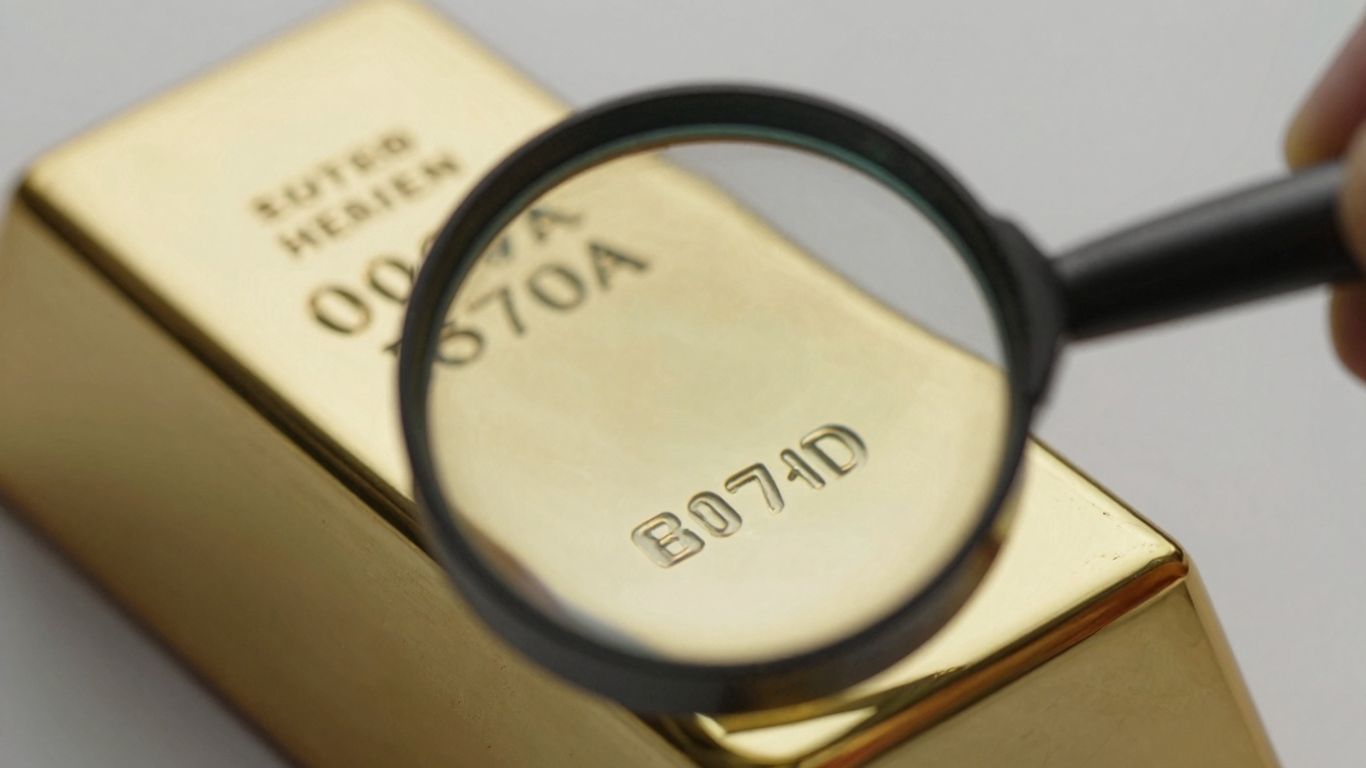
When you buy physical gold, whether in the form of bars or coins, you'll notice that the price you pay isn't exactly the same as the real-time gold price. This difference is called the "premium." Essentially, it's the extra cost you're willing to pay to own the physical object, including its production, certification, transportation, and the seller's profit. The premium can vary considerably. It depends on supply and demand for a specific product, its purity, weight, and even the refiner's brand. For example, a small, highly sought-after coin will often have a higher premium than a large, standard bar.
Impact of the premium on the acquisition cost
This premium is added directly to your purchase price. If the price of gold is €60,000 per kilo, but you buy a 1-kilo ingot with a 2% premium, you will actually pay €61,200. This additional cost is important to consider because it's an extra expense that your investment must first recoup before it starts to become profitable. It's a bit like having to repay this "advance" before seeing your money grow. The higher the premium, the further back your starting point for profitability is.
Adjusting the break-even point with the premium
To calculate your true break-even point, you absolutely must include this premium in your acquisition costs. Instead of considering only the price of gold as your base cost, you must use the total price you paid, including the premium. This means that your break-even point, expressed in euros, will be higher. Consequently, the time required to reach this point (your break-even point in days or months) will also be longer. Therefore, you must be realistic: your investment must not only keep pace with the rise in the price of gold, but also exceed it by a sufficient amount to cover the initial premium. This is an often overlooked step, but it is essential for gaining a clear understanding of the true performance of your investment.
Here's how it works in practice:
- Actual acquisition cost = Gold price at the time of purchase + Premium applied.
- Adjusted break-even point = Actual acquisition cost + All other charges (storage costs, insurance, etc.).
- Neutral point adjusted = Adjusted break-even point / (Annual revenue / 360 days).
Remember that the bonus isn't a fixed amount. It can vary from one purchase to another, and even for the same product depending on the seller and the time. So, be sure to check before each purchase to get the most accurate calculation possible.
Factors influencing the break-even point of gold
Several factors can influence your break-even point calculation for gold. It's not just about how much you paid and how much you hope to sell for. You need to look a little further.
The price of gold and its volatility
Le gold priceIt goes up and down, that's a fact. It's not a straight line, far from it. Sometimes it climbs quickly, other times it stagnates or falls. This fluctuation is called volatility. When the price of gold rises, your break-even point, theoretically, approaches more quickly. If the price falls, it moves further away. So you have to keep an eye on the general trends.
- Major trends Is the price of gold generally rising over several years? Or is it falling?
- World events Economic crises, geopolitical tensions, all of that can cause the price of gold to skyrocket.
- The speculation Financial markets can also influence the price, sometimes quite rapidly.
The price of gold is influenced by a multitude of factors, ranging from central bank monetary policies to global geopolitical tensions. It is therefore essential to monitor these indicators to anticipate market movements.
Transaction and storage fees
When you buy gold, there are often fees involved. Consider seller commissions, secure transport costs, and even VAT in some cases (although investment gold is often exempt in France, double-check).
Next, there's storage. If you keep your gold at home, you'll need a sturdy safe. If you entrust it to a specialized company or a bank, there will be storage fees. These costs are added to your initial investment and must be factored in when calculating your true break-even point.
- Purchase costs Commissions, possible taxes.
- Storage costs Personal safe, external security, insurance.
- Resale Fees : Seller's commissions upon transfer.
Capital gains taxation
When you sell your gold and make a capital gain (you sell it for more than you bought it for), there are often taxes to pay. In France, for example, there are different tax regimes depending on how long you've held your gold. The longer you keep your gold, the lower the tax burden will be, even zero after 22 years of ownership for capital gains tax. You must therefore factor these potential taxes into your calculations. A gross capital gain can become a much smaller net capital gain once taxes are deducted. This can shift your actual break-even point.
- Holding period This is often the key factor for taxation.
- chosen tax regime Flat-rate tax or actual capital gains regime.
- Tax rate Which varies according to the regime and duration.
It is always wise to consult a tax advisor to fully understand the tax implications of your gold investment.
Strategies to optimize your gold break-even point
Once you've calculated your break-even point, the goal is to reduce it as much as possible. This means you want to reach profitability faster. Fortunately, there are several ways to achieve this.
Choosing the right investment format (bullion, coin)
The choice between gold bars and coins is not insignificant, especially when considering the break-even point. Gold bars, particularly larger ones, often have a lower price per gram, which may seem attractive at first glance. However, their liquidity may be lower, and the premium demanded by the seller may be more substantial. Gold coins, on the other hand, may have a higher purchase premium, but they are often easier to resell and can even appreciate in value due to their historical or numismatic significance, independent of the price of pure gold. Consider what best suits your exit strategy and your liquidity needs.
- Ingots: Generally more advantageous per gram for larger formats, but potentially less liquid. The premium is often lower on the pure weight.
- Parts : Purchase premium often higher, but better liquidity and potential for historical or numismatic added value.
- Ingots (small ingots): A good compromise, easier to resell than large ingots, with a reasonable premium.
Diversify purchases to smooth out costs
It's rarely wise to invest all your money at once. By spreading your gold purchases over time, you smooth out the average purchase price. It's a bit like buying at different price levels, which can significantly reduce the average cost per gram. If the price of gold rises between two purchases, you've bought some at a lower price. If it falls, you can take advantage of the lower price to buy more. This approach, often called "Dollar Cost Averaging" (DCA) in the financial world, helps reduce the risk of buying at the peak and thus improves your break-even point.
Buying small amounts of gold regularly, rather than a large sum all at once, can help you achieve a lower average purchase price. This makes your break-even point more attainable.
Anticipating periods of strategic resale
Selling is when you realize your profit (or loss). Knowing when to sell is just as important as knowing when to buy. If you've calculated your break-even point, you know the selling price at which you start to be profitable. But you also need to consider the market context. Are there any major economic events that could drive up the price of gold? Are resale premiums more attractive at certain times? Sometimes, waiting a few extra months can make a significant difference to your final profitability. You also need to think about taxes: depending on the tax regime chosen, the timing of the sale can impact the amount of tax payable.
Scenario analysis for the break-even point of gold
Optimistic scenario: rapid rise in the price of gold
Imagine the price of gold skyrockets. It's every investor's dream scenario, isn't it? In this situation, your break-even point—the point at which your investment starts to become profitable—will be reached much faster. The initial costs, including the premium you paid, will be quickly offset by the capital gain. If you bought gold at €1000 an ounce and the price rises to €1500, your break-even point will be much closer. You could even surpass it in just a few months, depending on additional costs. That's when you realize you made a smart move!
Pessimistic scenario: stagnation or decline in the price
Now, let's look at the other side of the coin. If the price of gold stagnates or, worse, falls, your break-even point becomes further away. Acquisition costs, including the premium, become more burdensome. It will then take longer for the resale price to exceed your initial expenses. In this case, patience is key. It's possible that your break-even point will only be reached after several years, or even never if the decline is too pronounced and you have to sell at a loss. This is where diversification becomes crucial to avoid putting all your eggs in one basket.
Impact of premium variations on the break-even point
The premium, that small additional cost you pay for physical gold, plays a significant role. If the premium increases, your acquisition cost rises, and therefore your break-even point shifts further into the future. Conversely, if you manage to buy gold with a low premium, or if the premium decreases when you resell, your break-even point will be reached more quickly. It is therefore wise to monitor not only the price of gold, but also the evolution of the premiums charged by sellers. Sometimes, waiting for a period when premiums are lower can make a real difference to your long-term profitability.
Are you wondering when the price of gold will stop falling? Our section "Scenario analysis for the break-even point of goldExplore different possibilities. We break down the factors influencing the market to help you better understand the situation. Don't stay in the dark; discover our forecasts and advice to make the best decisions. To learn more and access our detailed analyses, visit our website today!
In conclusion: your gold investment, if well calculated
There you have it, you now have all the information you need to calculate the break-even point of your gold investment, even taking into account that infamous premium. It's not so complicated once you have the right formulas and understand the difference between the purchase price and the actual value of gold. Remember that understanding these figures helps you make more informed decisions about your assets. If you still have any doubts or need a little help, don't hesitate to consult experts. They are there to guide you through the sometimes complex world of precious metals.
Frequently Asked Questions
What is the break-even point for my gold investment?
The break-even point is like the moment your gold investment starts paying you back. Imagine you buy gold. The break-even point is when the resale price of your gold covers exactly what you spent to buy it, plus any fees. Before this point, you lose money; after, you start making money.
How does the premium on gold change my break-even point?
The premium is a small additional cost you pay on top of the price of the gold itself, especially for coins or small bars. Paying a premium means your purchase cost is higher. Therefore, to reach your break-even point, the price of gold will need to rise a bit more to offset the premium you've already paid.
What expenses are taken into account when calculating my break-even point?
To calculate your break-even point, you need to consider all your expenses. This includes the purchase price of the gold, of course, but also the costs of buying it (like commissions), the costs of storing it safely (if you use a safe deposit box, for example), and even the costs if you resell it later. All these costs add up and raise the price your gold needs to reach for you to stop losing money.
Does the price of gold affect my break-even point?
Absolutely! The price of gold is the price at which you can sell it. If the price rises significantly, you'll reach your break-even point faster. But if the price stagnates or falls, it will take longer, and you might never even reach your break-even point if the price doesn't rise enough to cover your expenses.
How can I make my neutral point easier to reach?
To make it easier to reach your break-even point, you can try buying your gold at a better price, for example by negotiating. Choosing gold formats with a lower premium can also help. And of course, buying regularly rather than all at once can smooth out your costs. The idea is to reduce your expenses as much as possible so that your investment has less of a road to becoming profitable.
Is the calculation of the break-even point the same for gold bars and gold coins?
The principle is the same, but the calculation can be slightly different due to premiums. Gold bars often have a lower premium, or even none for large bars, making the break-even point simpler to calculate. Coins, on the other hand, often have a higher premium due to their historical significance or rarity, so your break-even point will be higher, and the coin's price will need to increase significantly to exceed it.