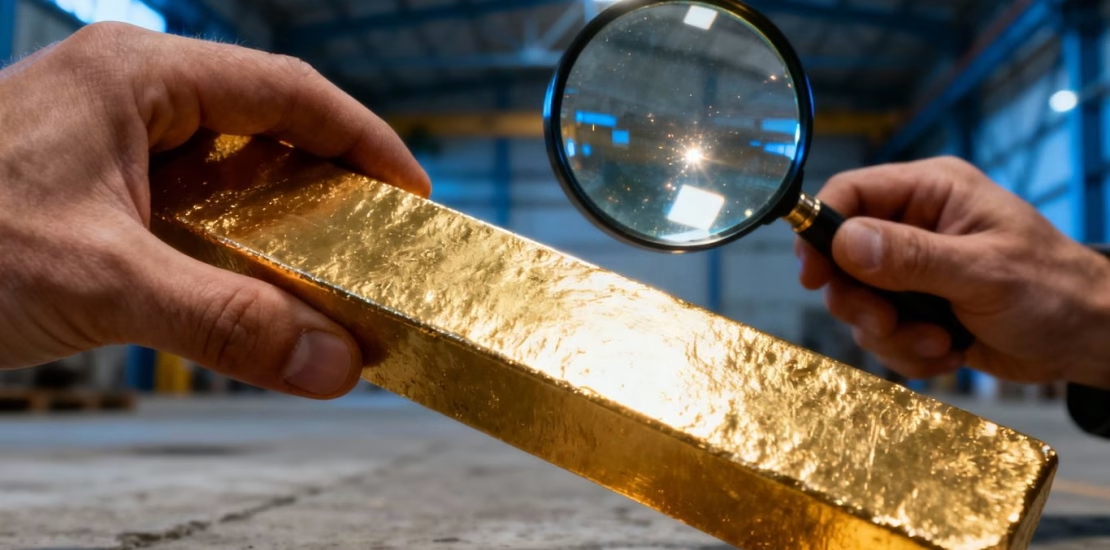
Wondering how banks ensure the gold they hold or trade is genuine? It's a legitimate question when dealing with such a precious asset. It's not enough to simply look at the metal's luster; there's a whole process behind it to guarantee that the gold is pure and hasn't been counterfeited. Let's take a look at what banks do to verify gold's authenticity, because trust is earned.
Key Takeaways
- Gold bars bear specific markings such as hallmarks and unique numbers, which are essential for their identification and certification.
- Banks rely on certificates of authenticity, often issued by recognized refiners, to validate the purity and origin of gold.
- Physical and chemical tests, as well as the use of advanced equipment, are employed to analyze the composition of the gold and confirm its nature.
- The traceability of gold, from its origin to its transformation, is a major guarantee of trust, even if recycled gold poses particular challenges.
- Adherence to international standards, such as those defined by the LBMA, ensures that gold meets globally recognized standards of quality and purity.
Guarantees of authenticity for gold bars
When you invest in gold bullion, you want to be absolutely certain of what you're buying. That's perfectly normal! Fortunately, there are several ways to ensure your gold is genuine and has the value it's supposed to have. Think of it as an identity check for your precious metal.
The crucial role of certificates of authenticity
The certificate of authenticity is like your gold bar's identity card. This document, often provided with the bar or included in its protective packaging (blister pack), gives you all the important information. It generally includes:
- The exact weight ingot.
- The purity gold, often expressed in thousandths (for example, 999,9‰, which means almost pure gold).
- A unique serial number which allows this specific ingot to be identified.
- The name of the foundry or refiner who made it.
- The production date.
This certificate is tangible proof that strengthens your confidence in your investment. Without it, proving the value and origin of your gold would be much more difficult, especially if you decide to resell it later. It's a kind of insurance for your purchase.
The importance of hallmarks and unique numbers
In addition to the certificate, the gold bars themselves bear markings that attest to their authenticity. Investment bars, especially those produced by reputable refiners, display clear markings. You will see the manufacturer's name, the purity (often "999‰" or "999,9‰"), and most importantly, the unique serial number. This number must exactly match the one on the certificate of authenticity. This cross-checking adds an extra layer of security. If the bar is sealed in a tamper-evident blister pack, this can also serve as the certificate or contain it. Be very careful: if the blister pack appears to have been opened or if the markings on the bar do not match the information on the certificate, be wary.
Genuine gold is not magnetic. If a magnet attracts your gold bar, this is a major red flag, as pure gold does not react to magnetic fields. While some fakes may be made with non-magnetic alloys, a positive magnetic test is a clear indicator that it is not pure gold.
International standards and quality labels
For your ingots to be recognized and accepted worldwide, they must meet certain standards. The best known is that of the London Bullion Market Association (LBMA)Gold bars that meet LBMA criteria, often referred to as "Good Delivery," are considered to be of the highest quality and purity. They are manufactured by LBMA-accredited refiners, guaranteeing a rigorous production process and compliance with international standards. When you see an LBMA-certified gold bar, you have the assurance that it is a trusted product, accepted on global markets. This gives you added peace of mind regarding the value and ease of reselling your gold.
Analysis and verification methods
So, you're wondering how to be sure that the gold you're holding is real gold? That's an excellent question, and frankly, there are several ways to check. Let's be honest, banks and professionals have quite sophisticated tools, but there are also more accessible methods to give you a better idea.
Physical and chemical tests to identify gold
To begin, let's talk about tests you could even do at home, or at least understand how they work. These are fairly basic methods, but they already provide good indications.
- The ceramic test: Take an unglazed ceramic object, like the bottom of a plate, for example. Gently rub your gold object on it. If it leaves a black mark, be wary; it's probably not gold. If the mark is golden, that's a good sign.
- The vinegar test: Yes, vinegar can be used for that! Pour a few drops onto the object. If the gold changes color, it's probably an alloy or not pure gold. Real gold doesn't react.
- The density test: Gold is a fairly dense metal. By comparing the weight of your object to its volume, you can get an idea of its composition. It's a bit more technical, but it's based on simple physical principles.
It's important to note that these home tests aren't foolproof. They can alert you to obvious fraud, but for definitive confirmation, you need to investigate further.
The use of state-of-the-art equipment for analysis
When we talk about serious verification, especially in the banking sector or for large investments, we use machines. This equipment allows us to go far beyond simple tests.
- Spectrometry: This technique analyzes the light reflected or emitted by a material to determine its chemical composition. Essentially, it allows you to know exactly which elements make up your object and in what proportions. It's very precise for identifying the purity of gold and detecting any alloys or impurities.
- X-ray fluorescence (XRF) analysis: This device uses X-rays to identify the elements present in a sample. It is fast, non-destructive, and provides a fairly accurate chemical composition. It is often used to verify hallmarks and the composition of jewelry or ingots.
- Precision balance and volume measurement: To calculate density with great accuracy, high-precision balances coupled with volume measurement systems are used. This allows confirmation as to whether the density corresponds to that of pure gold or a specific alloy.
Professional expertise for a reliable assessment
Beyond machines, there is also human expertise. Experts have experience that allows them to spot things that machines might not necessarily see, or to confirm results.
- The expert eye: A good connoisseur can often spot warning signs just by looking at the object: the color, the finish, the presence of hallmarks, wear and tear… This is a first step that requires a lot of practice.
- More advanced chemical tests: Experts can use acids of varying strengths to test the reaction of gold at specific points on the object. This is a more invasive but highly effective method for confirming purity.
- Knowledge of standards and manufacturers: Knowing which manufacturers are recognized, the applicable standards (such as those of the LBMA), and the characteristics of genuine ingots or coins is essential. An expert can recognize a quality product and ensure that it meets the expected standards.
In summary, verifying the authenticity of gold combines simple methods, advanced technologies, and the trained eye of professionals. It's a set of checks designed to guarantee that you are dealing with genuine precious metal.
Gold traceability: a guarantee of trust
Understanding the origin of gold
When you buy gold, you might wonder where it comes from, right? That's normal. Knowing the journey of this metal, from the mine to your hands, is called traceability. It's a bit like knowing the history of a car before buying it. It gives you an idea of its reliability and its history. It's the same for gold; it helps ensure that it hasn't financed conflicts or been extracted under deplorable conditions. It's the foundation for having confidence in your investment.
Technologies for tracking gold
Fortunately, today we have tools that help us track gold. Certificates of authenticity, for example, are extremely important. They give you all the information: the weight, the purity, and above all, a unique number. This number is like an identity card for your gold bar. It tells you who made it and when. Often, the gold bar is sealed in special packaging, a blister pack, which contains or serves as the certificate. If this blister pack is intact and the information on the gold bar matches that on the certificate, that's a good sign. It shows that the gold bar hasn't been tampered with along the way.
We can also obtain information about the chemical composition of gold. Each mine has a kind of unique chemical signature. By analyzing this, we can get clues about the origin of the gold. It's a fairly advanced method, requiring lab equipment, but it allows us to detect unusual things.
And then there are newer technologies, like blockchain. It allows for the creation of a secure and transparent history of gold, from the mine to the sale. It's a bit like a large, tamper-proof ledger.
The challenges associated with recycled gold
Recycled gold is gold that has already had a life, like old jewelry or coins. It's great for the environment because it prevents the reopening of mines. But traceability is a bit more complicated. It's necessary to ensure that this recycled gold meets the same standards as new gold. This is a challenge because its origin and history must be proven, even if it has already been melted and remelted several times. Companies that work with recycled gold must implement systems to guarantee this traceability, which can be expensive. But it's essential so you can have confidence, even when you buy gold that has already been used.
Traceability is the guarantee that the gold you buy doesn't have a shady history behind it. It concerns ethics, the environment, and ultimately, the confidence you can have in your investment.
The manufacturing and certification process
Stamping and casting techniques
When we talk about gold bars, especially those intended for investment, their manufacturing process is already a crucial first step in quality control. Two main methods are used: stamping and casting. Stamping is a bit like taking a sheet of pure gold and hammering it with a press to give it its shape. This produces very uniform bars with clean lines, and it requires precision to ensure everything is perfectly straight. The other method, casting, involves melting the gold and then pouring it into molds. Once cooled, the piece is refined. This sometimes results in a slightly rougher appearance, but the quality is still there. When these two techniques are well executed, they already guarantee a certain level of quality and market recognition. It's a bit like the bar's identity card; it all starts there.
The role of globally recognized cheese refiners
Gold refiners are the artisans of gold. They take raw gold and purify it to make ingots. When they are recognized worldwide, like those certified by the LBMA (London Bullion Market Association), it's a guarantee of quality. They follow precise processes, and each ingot they produce is marked. This unique number is proof that it comes from a reliable source and has undergone a controlled process. It's thanks to them that we can have confidence in the quality and origin of the gold we buy. They are truly at the heart of the chain of trust. The best-known, like C-Hafner, Metalor, or Heraeus, are names you'll often see associated with high-quality ingots.
The combination of markings and certificates
Beyond the manufacturing process and the refiner, there are more direct ways to identify a piece of gold and ensure its authenticity. These include markings that aren't necessarily visible to the naked eye. Physical marking often involves engraving information directly onto the ingot or its packaging: the unique serial number, the weight, the purity (the gold fineness), and sometimes even the refiner's name. It's like a fingerprint for each piece of gold. Then there's optical marking, which uses more advanced technologies, such as holograms or microprinting, visible only with specific equipment. The idea is to make counterfeiting even more difficult. And of course, every genuine gold ingot comes with a certificate of authenticity. This certificate contains all the information about the ingot: its serial number, weight, purity, the manufacturer's name, and the date of manufacture. It is this combination of markings and certificates that helps you to have confidence in the product you are buying.
The importance of purity and standards
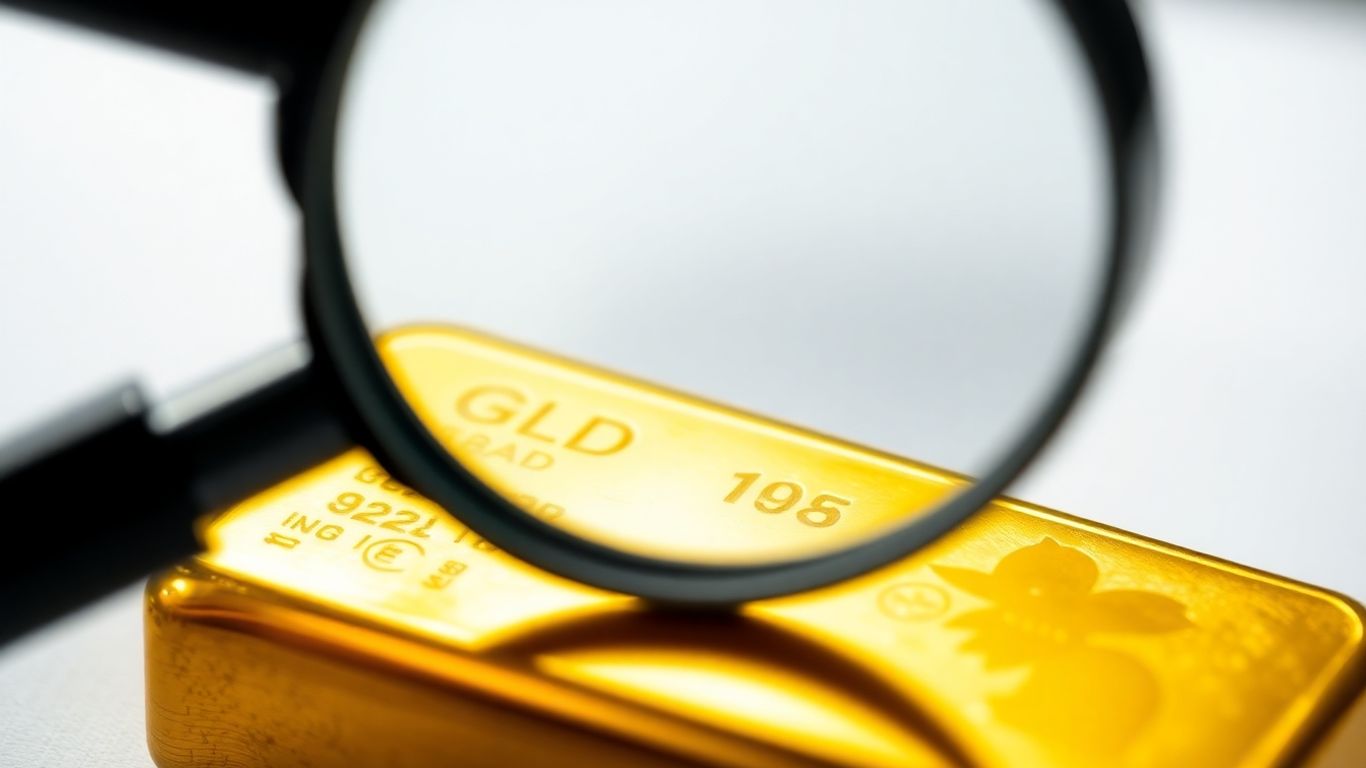
The different levels of gold purity
When talking about gold, it's essential to understand that not every coin or ingot is necessarily 100% pure gold. In fact, pure gold is 24 karats, or 999,9 parts per thousand (or 99,99%). This is what you find in high-quality investment-grade gold bars. But to make jewelry, for example, pure gold is often mixed with other metals like copper, silver, or zinc. Why? To make it more durable, harder, and to give it different colors, like rose gold or white gold.
Here's a brief overview of the carats you might encounter:
- 24 carat (999,9‰) This is the purest gold, the kind used for investment bars and certain coins. It is very malleable and has that characteristic intense yellow color.
- 18 carat (750‰) It is an alloy composed of 75% pure gold and 25% other metals. It is a very common standard in jewelry, offering a good balance between the value of gold and the durability of the piece.
- 14 carat (585‰) Here, we have 58,5% pure gold. It's an even more resistant alloy, often used for jewelry that has to withstand daily wear and tear.
- 9 carat (375‰) It contains 37,5% pure gold. It's a more economical option, but the proportion of gold is lower.
Understanding these different levels of purity helps you know exactly what you are buying and what the true value of your gold is.
The LBMA's 'Good Delivery' standards
For gold to circulate freely on international markets, it must meet very specific criteria. This is where the LBMA, the London Bullion Market Association, comes in. They have established standards called 'Good Delivery'. Essentially, it's the ultimate quality label for gold bullion.
For a gold bar to be 'Good Delivery', it must meet several criteria:
- Purity It must have a minimum purity of 99,5% (or 995 parts per thousand). Investment bars often go further, with 99,99% pure gold.
- Weight 'Good Delivery' bars have standardized weights, usually around 400 ounces (about 12,5 kg), although other formats exist for investors.
- Manufacturer It must be produced by a refiner who is himself accredited by the LBMA. These refiners are audited regularly to ensure they comply with the standards.
- Marking Each ingot must bear clear information: the name of the refiner, its weight, its purity, and a unique serial number for traceability.
Having a gold bar certified 'Good Delivery' by the LBMA guarantees that it is accepted worldwide by banks and professionals. It is a sign of trust and liquidity.
Compliance with standards for international recognition
Beyond the LBMA, other labels and certifications exist that aim to guarantee the quality and origin of gold. For example, standards like those promoted by the Responsible Jewellery Council (RJC) or initiatives like Fairmined focus on the ethical and responsible aspects of gold mining and processing. These standards cover not only the purity of the metal, but also working conditions, environmental protection, and combating conflict financing.
For you, as a buyer, paying attention to these different standards means ensuring not only the intrinsic value of your gold, but also its history. A gold bar or piece of jewelry that meets these standards is easier to resell and gives you greater assurance about the overall quality of the product. It's a bit like choosing an organic or fair trade product: you know there's a process behind it that goes beyond the product itself.
When buying or selling gold, it's extremely important that everything is clear and compliant. We're talking here about the Metal purity and rules to followThis is how we ensure everyone is treated fairly and that transactions are secure. If you want to learn more about how we do this and why it's essential, visit our website. We explain simply how we guarantee quality and trust in the world of gold.
So, what do we remember?
So, as you can see, verifying the authenticity of gold isn't so simple. Between certificates, unique serial numbers, and tests, there are quite a few measures in place to ensure that the precious metal you're buying is indeed what it's advertised to be. It's a bit of an obstacle course, but it's reassuring to know that efforts are being made to make everything clearer. Don't forget to check these details when making your choice; it can make all the difference to your peace of mind.
Frequently Asked Questions
How can you tell if a gold ingot is truly authentic?
To be sure your gold bar is actually gold, check if it has a unique number engraved on it. This number is extremely important because it's linked to a certificate. This certificate is like the gold bar's identity card: it tells you where the gold comes from, who made it, and when. Reputable companies use methods to track the gold from the mine to the final ingot. This is how they ensure everything is done properly and without any problems.
What is the LBMA and why is it important for gold?
The LBMA is like a large club of gold professionals based in London. When a gold bar is certified by the LBMA, it means it meets very strict standards for quality and purity. It's a bit like a globally recognized seal of approval. It guarantees that your gold is of good quality and will be easy to resell if you need it.
Is gold that has already been used and recycled as easy to track as brand new gold?
It's a rather complicated question! With gold that's already been used and is recycled, it's more difficult to know exactly where it came from at the very beginning. Experts believe we need to improve how we track this recycled gold because it's used in so many different areas. It's a challenge to ensure there aren't any hidden problems.
What new technologies help track gold?
There are some really interesting inventions! Blockchain, for example, creates a very secure digital history for gold that can't be altered. There are also techniques that give gold a kind of unique signature, or software that immediately detects if something is amiss in the declared quantities or origins. It's like having detectives for gold!
How do banks verify if a gold bar is genuine and not a fake copy?
Banks use several methods. They check if the gold bar has a unique number that corresponds to its certificate of authenticity. They may also use special equipment to analyze the chemical composition of the gold, such as X-ray fluorescence (XRF), which reveals exactly what's in it. Sometimes, they even perform density tests to verify that the weight corresponds to its size. It's a bit like experts making the gold talk!
Why is it so important to have a certificate of authenticity for my gold?
A certificate of authenticity is like your gold's ID card. It proves that your ingot or piece of jewelry is what it claims to be, indicating its purity, weight, and often its origin. This is extremely important if you want to resell your gold later, because the buyer will want to be sure of what they're buying. Without a certificate, you risk having to accept a much lower price. It's concrete proof that gives you confidence.