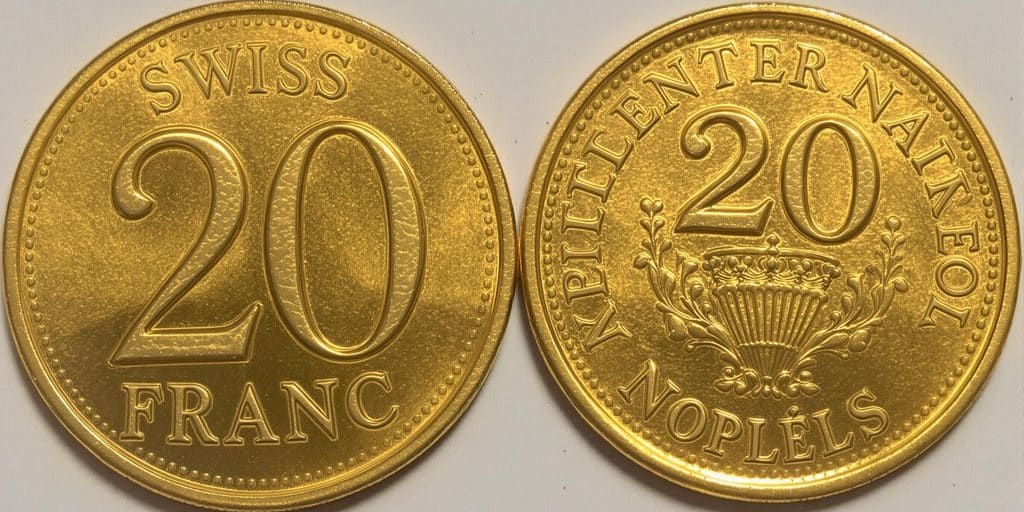
Se get started in gold coin investing, it's a great idea to diversify your assets. But with so many options, how do you choose the right one to start with? If the famous Napoleon often acts as a figurehead, the Swiss 20 Franc gold coin also deserves to be dwelt on. So, 20 Swiss Francs Gold vs Napoleon, which coin is best suited to take your first steps into the fascinating world of investment gold?
Key Takeaways
- Le Napoleon is an iconic French piece, recognized worldwide and easy to resell, which makes it a safe bet for beginners.
- La 20 Swiss Franc Gold coin shares similar characteristics to the Napoleon, notably its compliance with the Latin Monetary Union, which ensures good liquidity.
- For an investment, favor parts with a low premium, that is to say, whose price is closest to their weight in gold.
- Avoid cleaning your gold coins, because this can decrease their value; the patina is part of their history.
- Other pieces like the British Sovereign or Liberty 20 dollars are also interesting options to diversify an investment portfolio in precious metals.
20 Swiss Francs in Gold
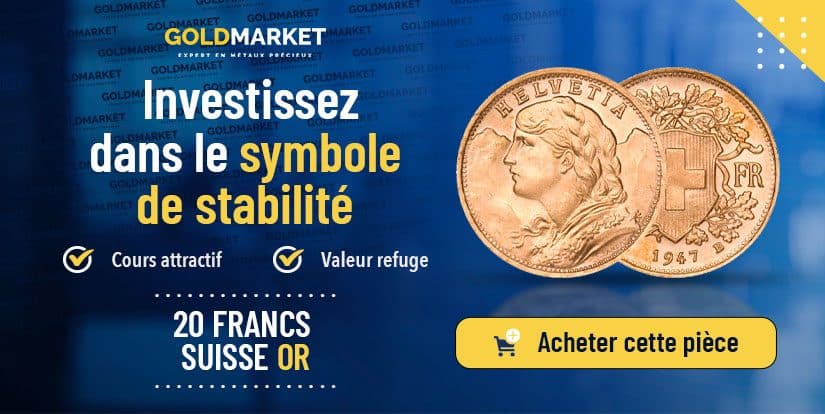
La 20 Swiss Franc gold coin is an interesting option for those new to gold investing. It is part of the Latin Monetary Union, an agreement that has allowed several countries, including Switzerland, France, Italy, and Belgium, to have coins with common physical characteristics, such as weight and diameter. This means that the 20 Swiss Francs shares the same dimensions as the French Napoleon, which makes it easier to compare and exchange them on the market.
Its premium, that is to say the difference between its face value and its intrinsic value in gold, is generally very low, or even zero. This makes it a room where you pay almost the Gold prices content, with little additional cost. This is a definite advantage when you're looking to invest as close as possible to the gold price. It's also fairly easy to resell, an important point for the liquidity of your investment. It's often found in the same price range as the Napoleon, around 200 to 250 euros depending on the gold price.
Characteristics of the 20 Swiss Francs Gold Coin
Here is a small table to help you see more clearly the specificities of this gold coin:
| Characteristic | Details |
|---|---|
| Gross weight | 6,45 grams |
| Title (purity) | 900 ‰ (90% fine gold) |
| Diameter | 21 mm |
| Fine gold content | 5,805 grams |
| Country of Issue | Switzerland |
| Common minting years | 1883-1949 (with more recent re-strikes) |
Advantages of the 20 Swiss Francs
- Low premium: You buy gold as close as possible to its spot price.
- Liquidity: Easy to buy and resell on the market.
- Acknowledgement : It is part of the Latin Monetary Union system, therefore well understood internationally.
- Diversification: Allows you to diversify your gold assets.
Potential Disadvantages of the Swiss Cross
- Less emblematic than the Napoleon: although recognized, it does not have the same historical aura in France.
- Variety of years: There are many years of minting, some may have a slightly higher premium if they are rarer, but overall they remain very similar.
THEpurchase of gold coins like the 20 Swiss Francs is a process that requires a little thought. It is always good to find out about the price of gold and the factors that influence it to make the best choices. Remember to diversify your purchases and favor trusted sellers to avoid unpleasant surprises. Investing in gold can be a good strategy to protect your purchasing power over the long term.
20 Napoleon Francs
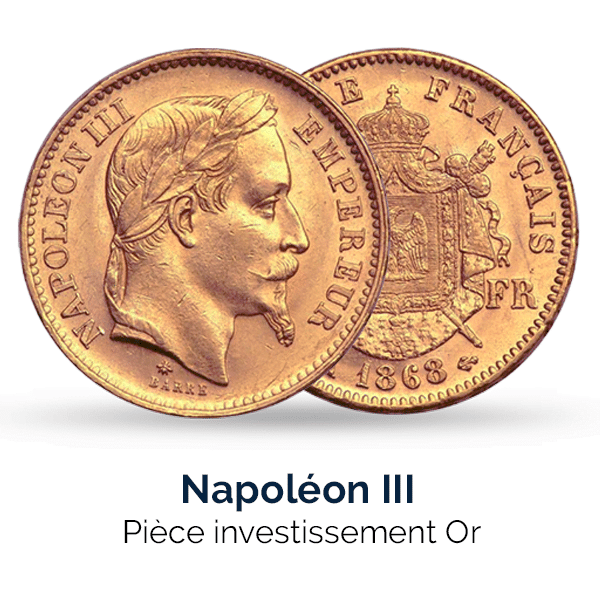
Ah, the Napoleon! When we talk about gold coins in France, this is often the first that comes to mind. And for good reason, it has been minted since 1802, even if the most common versions for investment date from 1852 to 1870. It is a coin that has survived the ages and is recognized everywhere. Its size is approximately 21 mm and it weighs 6,45 grams, with a fine gold content of 5,80 grams. It is a a safe bet for those new to gold investing, because it is easy to buy and resell.
Sa value is quite stable, which makes it less risky than other more volatile investments. We find several types of Napoleon, such as Napoleon I, Napoleon III Laureate Head or Bare Head, and even Geniuses. For investment, we often favor versions with a low premium, that is to say, whose price is as close as possible to its intrinsic value in gold.
coins struck in large numbers, such as some Marianne Coq, have a near-zero premium, meaning they trade essentially at their weight in gold. This is an advantage when you want a simple and straightforward investment. It's worth noting that in the 80s, the premium on these coins could reach 100% of their gold value, which attracted a lot of investors, but also fraudsters!
It is important to know that The value of a gold coin is not just about its weight. Preservation quality plays a major role. A coin in perfect condition, without scratches or wear, will have a higher value than a damaged one. It is also strongly recommended not to clean your gold coins, as this can reduce their value. Patina, the thin layer that forms over time, is part of its history and can even be a guarantee of quality for collectors. If you are looking to acquire Napoleons, it is advisable to find out the value of the coins in 2025 to make the best possible choice.
The different types of Napoleon
There are several effigies and periods for 20 Franc Napoleon coins, each with its own specificities. The most common for investment are often those with a low premium.
Napoleon
This is one of the earliest effigies depicting the emperor. These coins are interesting, but some may command a higher premium, making them more suitable for numismatists than novice investors.
Napoleon III (Laureate Head and Bare Head)
These coins, minted during the Second Empire, are very popular. The version with a laureate head (crowned with laurels) is particularly sought after. They are generally easy to find on the market.
Engineering (3rd Republic)
Depicting a winged genie, these coins are also common and valued for their low premium, approaching their intrinsic gold value.
20 Francs Marianne Coq
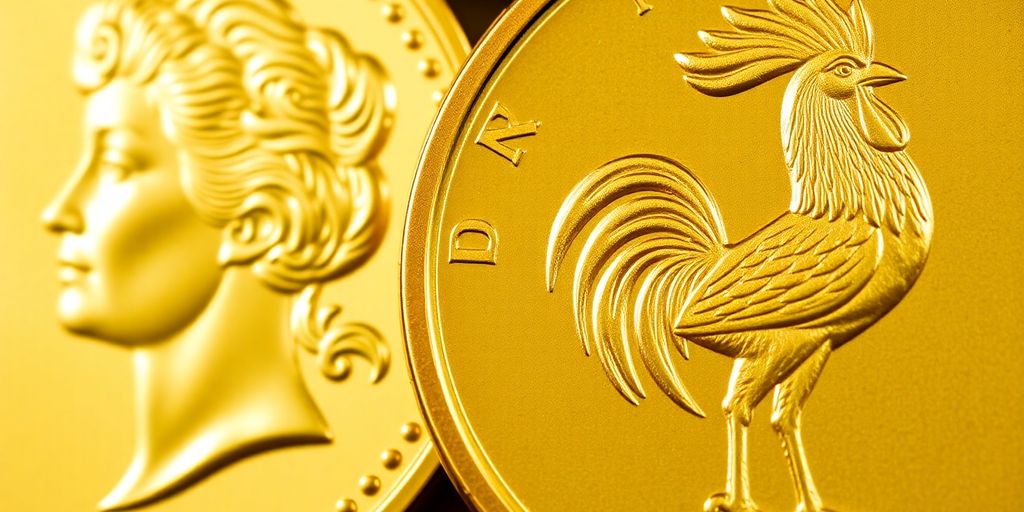
Ah, the Marianne Coq ! Another French gold coin that's really popular. It was minted between 1898 and 1914, and frankly, she is as popular as the NapoleonPeople love it for the same reasons: it's easy to buy and sell, it's internationally recognized, and its value remains fairly stable. It's a truly safe bet for those new to gold coin investing.
Characteristics of the 20 Francs Marianne Coq
| Characteristic | Details |
|---|---|
| Gross weight | 6,45 grams |
| Gold Title | 900 thousandths (90% fine gold) |
| Diameter | 21 mm |
| Thickness | 1,25 mm |
| Face value | 20 Francs |
| Effigy | Marianne, symbol of the French Republic |
| reverse | Gallic rooster, symbol of France, with the motto “Liberty, Equality, Fraternity” |
Vintages and Mintages
La Production of the 20 Francs Marianne Coq extended from 1898 to 1914. However, it is interesting to note that restrikes took place between 1951 and 1960. These restrikes are often of better quality, as they did not circulate. Original pieces, those dating from 1899 to 1906, have a patina that bears witness to their history. It should be noted that coins bearing the date 1915 are considered fakes, as the last official minting was in 1914.
Aftercare tips
Cleaning gold coins is generally not recommended. The patina that forms over time is part of their history and can even increase their value. If a coin is seriously dirty, it's best to consult a professional rather than risk damaging it. Improper cleaning can remove this protective layer and alter the details, making the coin less attractive to collectors and investors.
Why choose Marianne Coq?
- Accessibility: It is easy to find on the market, which makes it ideal for beginners.
- International Reconnaissance: its value is understood and recognized throughout the world.
- Liquidity: you can resell it quite easily if you need to.
- Intrinsic value: Its value is mainly linked to its weight in gold, which makes it less subject to speculative fluctuations than some collector coins.
For those interested in French gold coins, the 20 Napoleon Francs is often cited as an alternative, but The Marianne Coq has its own charm and undeniable advantages for a beginner investor.
British Sovereign
The British Sovereign is a gold coin with a long history, minted by the United Kingdom since 1816. It weighs 7,988 grams and contains 91,67% pure gold. It is a very well-known coin internationally, which makes it relatively easy to resell. Investors are often interested in versions from the reigns of George V and Elizabeth II, as they generally do not carry a numismatic premium, meaning their value is mainly linked to their weight in gold. It should be noted that demand for these coins can sometimes be very high, as was the case in early 2014 when the Royal Mint, the British Royal Mint, even experienced stock shortages.
Main characteristics of the British sovereign
- Gross weight : 7,988 grams
- Purity: 916,67 ‰ (22 carat gold)
- Fine gold content: 7,32 grams
- Face value: 1 Pound Sterling
- Diameter: 22,05 mm
Pros and cons
British Sovereigns are prized for their liquidity and global recognition. They are a good option for those new to investing in precious metals. However, as with any investment coin, it is important to carefully check the price against the gold price and be wary of counterfeits. It is always a good idea to compare prices before purchasing and to check the coin's provenance, for example, by consulting websites specializing in Napoleon gold coins.
Points to consider before purchasing
When considering buying a British Sovereign, there are several things to consider to make the right choice:
- Condition of the part: A coin in perfect condition will have more value, especially if it is of numismatic interest.
- The bonus: Check that the asking price is not too far removed from the intrinsic value of the gold contained in the coin.
- The seller: Buy from trusted merchants to avoid unpleasant surprises.
Keeping your gold safe is just as important as choosing it wisely. Whether stored carefully at home or in a bank vault, peace of mind is essential to protecting your investment.
50 Mexican gold pesos
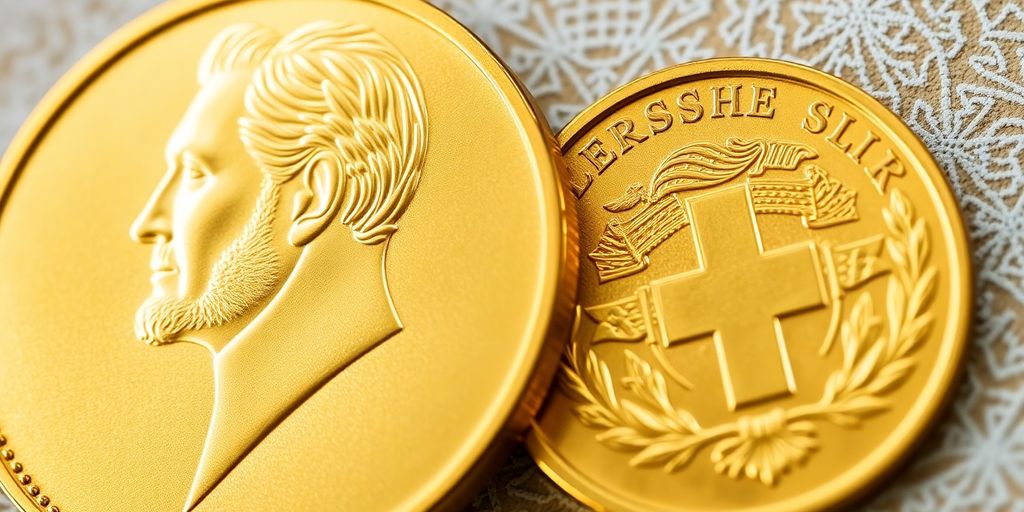
La Mexican 50 Peso gold coin is often presented as a bullion coin, mainly because of its rather substantial weight of 41,67 grams. It is quite popular in France, perhaps a little too much in my opinion, as its premium is currently zero. This means that its price is very close to its intrinsic value in gold. This is a bit of a shame because it limits its upside potential, at least as far as the premium is concerned. Compared to a coin like the Napoleon 20 Francs Gold, which has a strong history and recognition, the 50 Mexican pesos is less anchored in French culture, even if it remains an interesting investment piece for its pure gold content.
Composition and Weight
- Gross weight : 41,67 grams
- Fine gold content: 37,5 grams (or 900 thousandths)
- Diameter: 37 mm
- Thickness : 2,7 mm
Advantages and disadvantages
- Advantage:
- Significant gold weight, making it easy to identify as a gold reserve.
- Premium currently low, so the price is very close to the price of gold.
- Internationally recognized.
- Disadvantages:
- Zero bonus, which limits the potential for bonus earnings.
- Less cultural recognition in France compared to French coins like the Napoleon 20 Francs Gold.
- Its weight may make it less practical for small transactions or for very small-scale diversification.
Comparison with the Napoleon 20 Francs Gold
While the Napoleon 20 Francs Gold is an iconic historical coin in France, the Mexican 50 Pesos is more of a modern bullion coinThe Napoleon, with its various effigies, has a premium that can vary but often remains low for the most common types, making it also very linked to its weight in gold. The choice will depend on your strategy: if you are looking for a coin with a strong history and local recognition, the Napoleon is a good choice. If you prefer a coin with a more substantial gold weight and a zero premium for the moment, the Mexican 50 Pesos can also be of interest, although you should keep an eye on the evolution of its premium.
South African Krugerrand
Key Features
Le South African Krugerrand is a very popular gold investment coin, first minted in 1967. It is recognized worldwide and appreciated for its simplicity. Unlike many other bullion coins, the Krugerrand has no face value. Its value is directly linked to the price of gold. It is important to note that the Krugerrand is minted from a 22-karat gold alloy, which is 91,67% pure gold, making it slightly more scratch-resistant than pure gold coins. It weighs just over one ounce to compensate for this slight dilution.
Available sizes
Initially, the Krugerrand was only available in a one-ounce version. However, due to demand, the South African Mint expanded its range. Since 1980, you can find Krugerrands in several sizes:
- One ounce (oz)
- Half an ounce (1/2 oz)
- A quarter of an ounce (1/4 oz)
- One tenth of an ounce (1/10 oz)
This allows investors to choose the size that best fits their budget and investment objectives.
Pros and cons
The Krugerrand's main advantage is its international recognition and liquidity. It is an easy coin to buy and resell on the global gold market. Its premium is generally very low, meaning its price is very close to the intrinsic value of the gold it contains. However, due to its apartheid history, the Krugerrand may have been subject to boycotts in some countries in the past, although this is less of an issue today. It is also important to note that the Krugerrand is not a legal tender coin, which may have tax implications depending on the jurisdiction. It is always a good idea to check the resale conditions for legal tender coins, as they are often VAT-exempt.
The Krugerrand is often compared to other bullion coins such as the Canadian Maple Leaf or the British Sovereign. Each has its own unique characteristics in terms of purity, design, and premium.
Investing in the Krugerrand
For those new to investing in gold coins, the Krugerrand is a solid option. Its simplicity and wide availability make it an affordable choice. It's always advisable to compare prices from different vendors to get the best value for your money. Gold coins like the Krugerrand are often considered a good way to diversify your assets and protect against inflation. Interestingly, South African gold coins are among the most sought-after for resale, alongside French classics like the Napoleon. South African gold coins are a safe bet.
Liberty 20 dollars
Features and Interest
The 20 dollar Liberty coin, also known as the “Double Eagle“, is an American bullion coin that was minted between 1850 and 1933. It contains nearly 30 grams of fine gold (0,9675 troy ounces), making it a substantial coin. Its design is quite distinctive, with Lady Liberty's profile on the obverse and an eagle on the reverse, hence its nickname.
It is particularly interesting for investors looking to diversify their portfolio with recognized American coins. Its gold content is standardized, making it easier to evaluate relative to the gold price. Furthermore, like many American gold coins, it enjoys good liquidity on the international market. It is a coin that has survived various economic periods, which gives it a certain resilience.
Points to consider
- Purity of gold: The coin is usually struck in a 90% gold alloy (21,6 carats), which is a little less pure than some modern coins, but quite standard for bullion coins of this era.
- Numismatic value: Some minting years or varieties may have a numismatic value greater than their mere weight in gold, especially if they are in excellent condition. It is therefore important to check the year and condition of the coin carefully.
- Availability: Although rarer than the Napoleons, the $20 Liberty can still be found on the market. Its price can vary depending on its rarity and condition.
It is important to note that most of the 20 Liberty dollars in circulation today were minted before 1933. Coins minted after this date, especially those from 1933, are extremely rare and are the subject of very specialized collections.
Comparison with other parts
Compared to a 20 Franc Napoleon, the 20 Dollar Liberty represents a larger amount of gold. This can be an advantage if you want to hold larger amounts of gold in a single coin. However, the Napoleon, with its lighter weight, can offer more flexibility for partial transactions or sales. The Napoleon is very well-known in France, while the $20 Liberty is a classic in the American and international markets. The choice will therefore depend on your personal preferences and investment strategy.
Indian 10 dollars
Le contextte historique
The American $10 coin, often called the “Indian Head” or “Indian,” has an interesting history dating back to the early 20th century. It was introduced to replace the older $10 Liberty Head coins. The design of the “Indian Head” coin is quite unique, depicting a Native American on the obverse and an eagle on the reverse. It is particularly appreciated for its distinctive design and its connection to American history.
Technical characteristics and composition
- Gross weight : 16,718 grams
- Purity: 90% gold (21,6 carats)
- Fine gold weight: 15,046 grams
- Diameter: 27 mm
Why choose the 10 dollar Indian Head?
Although the 20 Swiss Francs Gold While a great starter coin, the $10 Indian Head also offers significant benefits for a new investor. Its value is closely tied to that of gold, making it a good way to gain exposure to the precious metals market. Additionally, its smaller size compared to a full ounce can make it more accessible in terms of initial cost. It is also considered a solid investment coin, with good market liquidity.
Comparison with other parts
Compared to coins like the Napoleon, the $10 Indian Head has a lower gold purity (90% versus 900‰ for some Napoleons, but often less for older ones). However, its premium (the difference between its intrinsic value and its sale price) is generally more stable and less subject to fluctuations than that of some older or numismatic coins. It positions itself as an attractive alternative to traditional European coins, offering geographical and historical diversification.
American Buffalo
The American Buffalo
Launched in 2006, just before the financial crisis, the American Buffalo is a coin that carries within it a piece of American history. On one side, we see a Native American in profile, and on the other, a bison. It's truly a distillation of America.
Initially, it only existed in a one-ounce gold version, but since 2008, it has also been available in ½ ounce, ¼ ounce, and 1/10 ounce denominations. What makes it particularly interesting for investors is its purity: 999,9‰ gold, or 24 carats. Be careful, this high purity makes it a little tricky to handle, but it's also what makes it an excellent coin for investing your money.
- Exceptional purity of 999,9 ‰ gold.
- Iconic American design.
- Available in multiple sizes (1 oz, 1/2 oz, 1/4 oz, 1/10 oz).
- Good liquidity in the market.
The high purity of the American Buffalo, although making it more fragile, is a major asset for those seeking a fine gold investment. Its international recognition and connection to American history make it a solid choice for beginners.
If you are looking for a piece that combines beauty, history and purity, the American Buffalo might just be the one for you.
20 Tunisian Francs
Characteristics and Latin Monetary Union
The Tunisian 20 Franc gold coin shares the same physical characteristics as the French 20 Franc Napoleon. It was minted as part of the Latin Monetary Union, a monetary agreement that brought together several countries around France between 1865 and 1927. The goal was to create a common monetary base to facilitate transactions, much like the Euro today, but well before its creation. Other countries such as Belgium, Italy, Greece, and even some Eastern European and Latin American countries joined this union. These coins are therefore interchangeable and have a very similar value to French Napoleons, especially if they are in good condition.
Premium and Liquidity
Like the Napoleon, the Tunisian 20 Franc coin is relatively common. Its premium—the difference between its intrinsic value (based on the gold price) and its selling price—is generally low and comparable to that of the Napoleon. This makes it an attractive option for investors looking to acquire physical gold without paying too high a premium. Its recognition, inherited from the Latin Monetary Union, also ensures good liquidity, meaning it is fairly easy to resell on the market. It is always a good idea to check the current gold price to estimate its value. For more information on gold coins, you can consult French gold coins.
Points to consider
- Identity with the Napoleon: Physically identical to the Napoleon 20F, it enjoys the same recognition.
- Latin Monetary Union: Part of a historical monetary system that ensures a certain uniformity.
- Low premium: Its price is very close to the value of the gold it contains, which is an advantage for the investor.
- Liquidity: Easy to buy and sell in the gold market.
It's important to note that, as with all gold coins, you should avoid cleaning them. Cleaning can damage the patina, which is a natural protective layer that forms over time and can even increase the coin's value in the eyes of collectors. If a coin is really dirty, it's best to leave it as is or consult a professional.
The 20 Tunisian Francs are gold coins that have a high value. If you own these coins or want to know more about their price, our website is here to help. We offer you the opportunity to discover the current price of these coins and how to easily sell or buy them. Come visit us to get all the necessary information on the 20 Tunisian Francs.
So, Napoleon or 20 Swiss Francs to start with?
Finally, Choosing between the Napoleon and the 20 Swiss Francs to start with is a bit like choosing between two good tools. The Napoleon is the safe bet, the one we all know, easy to resell everywhere. The 20 Swiss Franc, on the other hand, has the advantage of often having a lower premium, which means that you pay almost the pure price for gold. Both are recognized investment coins, and their value is quite close, especially when the premium is low, as is often the case today. The important thing is to look at the price of the day and choose the one that seems most accessible and easiest for you. Remember, gold is above all a way to diversify and protect yourself. So, make your choice calmly, the main thing is to get started!
Frequently Asked Questions
Which gold coin is best to start with?
To begin with, the Napoleon 20 Francs is a very good option. It's a world-renowned French coin that's easy to buy and sell. Its value is fairly stable, making it ideal for beginners. It's also very easy to resell if necessary.
Why is the Napoleon 20 Francs so famous?
The Napoleon gold coin is very popular in France. It has a long history, having been minted between 1853 and 1870. It is widely recognized, which helps when buying or selling it. Its value doesn't fluctuate much, so it's a good choice for beginners.
Should you clean your gold coins?
It's best not to clean gold coins. Cleaning can damage the coin and lower its value. If a coin is dirty, it's best to seek expert advice. Patina, the layer that forms over time, is part of the coin's history and can even increase its value.
How to choose a gold coin to invest in?
When investing, it is advisable to choose coins whose price is as close as possible to their gold value. This means that the 'premium' (the difference between the coin's price and the value of the gold it contains) should be as low as possible. This gives the coin greater potential for increasing its value.
What is the Latin Union?
The Latin Union was an agreement between several countries, including France, between 1865 and 1927. They wanted to have a common currency to facilitate trade. Coins minted during this period, such as the French Napoleon, the Italian Lira, and the Swiss Franc, have very similar characteristics.
How big is the 'premium' for a gold coin?
In general, it's best to focus on gold coins that have a low premium. This means the coin's price is very close to the value of the gold it contains. Coins like the Napoleon 20 Franc or the Swiss Franc 20 Franc often have a very low premium, making them attractive to investors.